

In an increasingly dynamic and often distributed professional landscape, the ability for companies to effectively communicate with their internal stakeholders is not merely an administrative task but a strategic imperative. As businesses navigate complex markets, rapid technological advancements, and evolving employee expectations, the traditional methods of information dissemination often fall short, leading to disconnected teams, missed opportunities, and a diluted corporate culture. The challenge for many organizations lies in having crucial internal updates, milestones, and narratives without a dedicated, engaging channel to share them. This gap frequently results in what could be termed a “corporate borefest” – uninspired, text-heavy emails that fail to capture attention or foster genuine connection. The answer, increasingly recognized by industry leaders, is a well-designed and thoughtfully curated company newsletter.
The essence of a successful internal newsletter transcends mere information delivery; it lies in sharing content that is genuinely valuable, interesting, and beneficial to the specific employees and teams it targets. It transforms mundane updates into engaging narratives, fostering a sense of community, purpose, and alignment across departments. This article delves into 21 distinct company newsletter examples, categorized by their primary purpose, offering a comprehensive framework for organizations to revolutionize their internal communication strategy. Alongside these examples, we explore design inspirations and the underlying principles that make each approach effective, emphasizing the critical role of dedicated tools in their creation and distribution.
Defining the Modern Company Newsletter: A Strategic Communication Hub
At its core, a company newsletter is a recurring internal email publication designed exclusively for employees and teams, sharing business updates, celebrating milestones, recounting stories, and facilitating feedback. Unlike one-off announcements or external marketing campaigns, its branded, high-quality nature positions it as a sophisticated internal publication. Industry analysts frequently underscore the distinction between internal and external newsletters, highlighting that while both leverage email marketing tools, their audiences, content focus, and objectives are fundamentally different. An internal newsletter aims to build culture, inform, and engage employees, while an external newsletter targets customers with marketing updates.
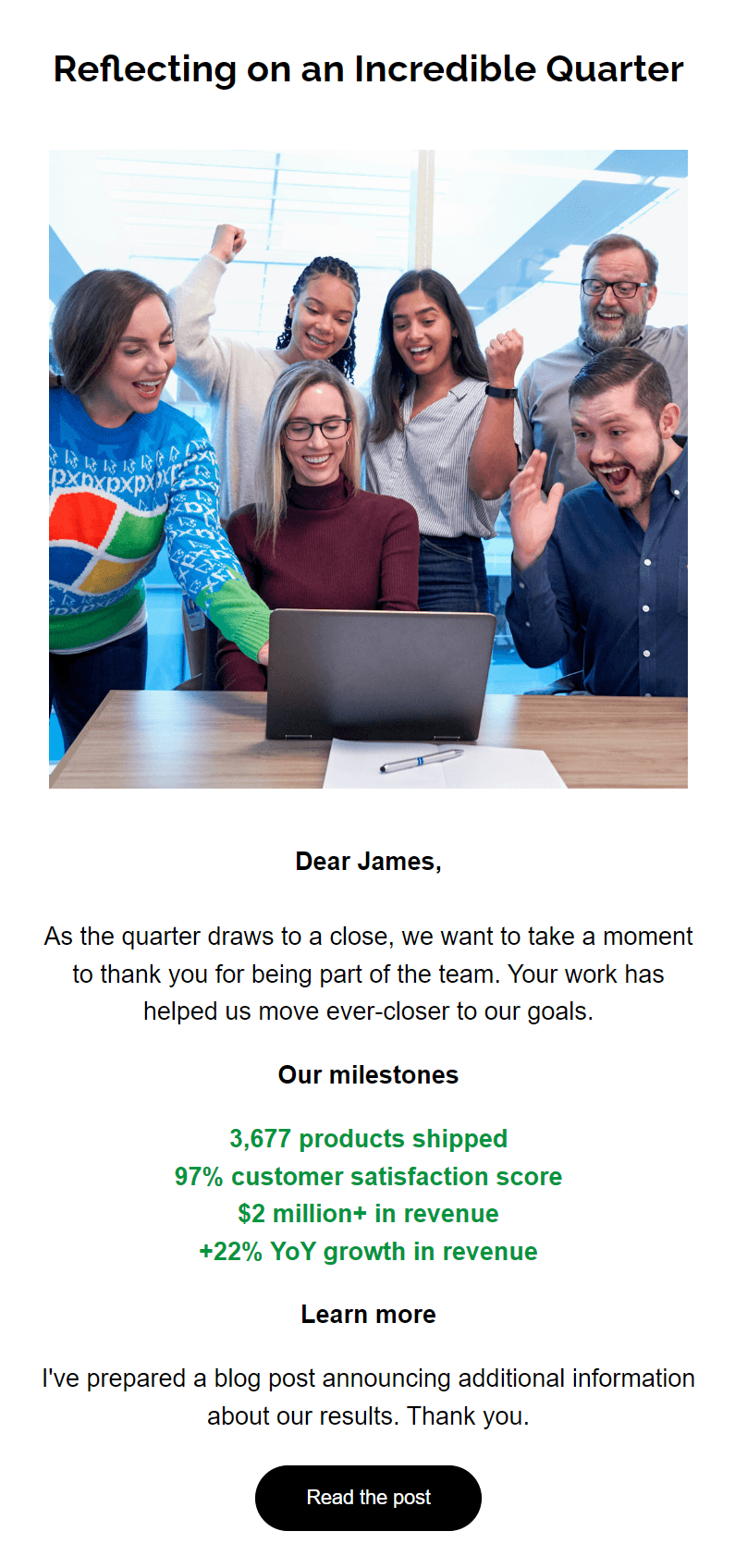
Creating a professional internal newsletter necessitates the use of a robust email marketing platform, such as Omnisend. Such tools provide the infrastructure for designing visually appealing layouts, managing subscriber segments (e.g., specific departments or all employees), and executing targeted campaigns. For instance, a newsletter crafted within a platform like Omnisend might lead with a compelling team image to establish rapport, followed by visually digestible highlights of business milestones, product shipments, revenue growth, or customer satisfaction metrics. The recurring aspect – whether weekly, monthly, or quarterly – is paramount, establishing a predictable cadence that employees come to expect and rely upon for critical internal intelligence.
Strategic Pillars of Engaging Internal Newsletters: 21 Exemplary Approaches
To move beyond the ‘borefest’ and create a truly impactful internal communication channel, newsletters must be strategically crafted. We group 21 compelling examples by their overarching purpose, providing a roadmap for content creation.
I. Fostering Corporate Transparency and Alignment (Company Updates)
Transparent and consistent company updates are crucial for maintaining employee trust and ensuring organizational alignment. Industry reports indicate that companies with transparent internal communications experience a significant increase in employee trust and a greater sense of shared purpose.
-
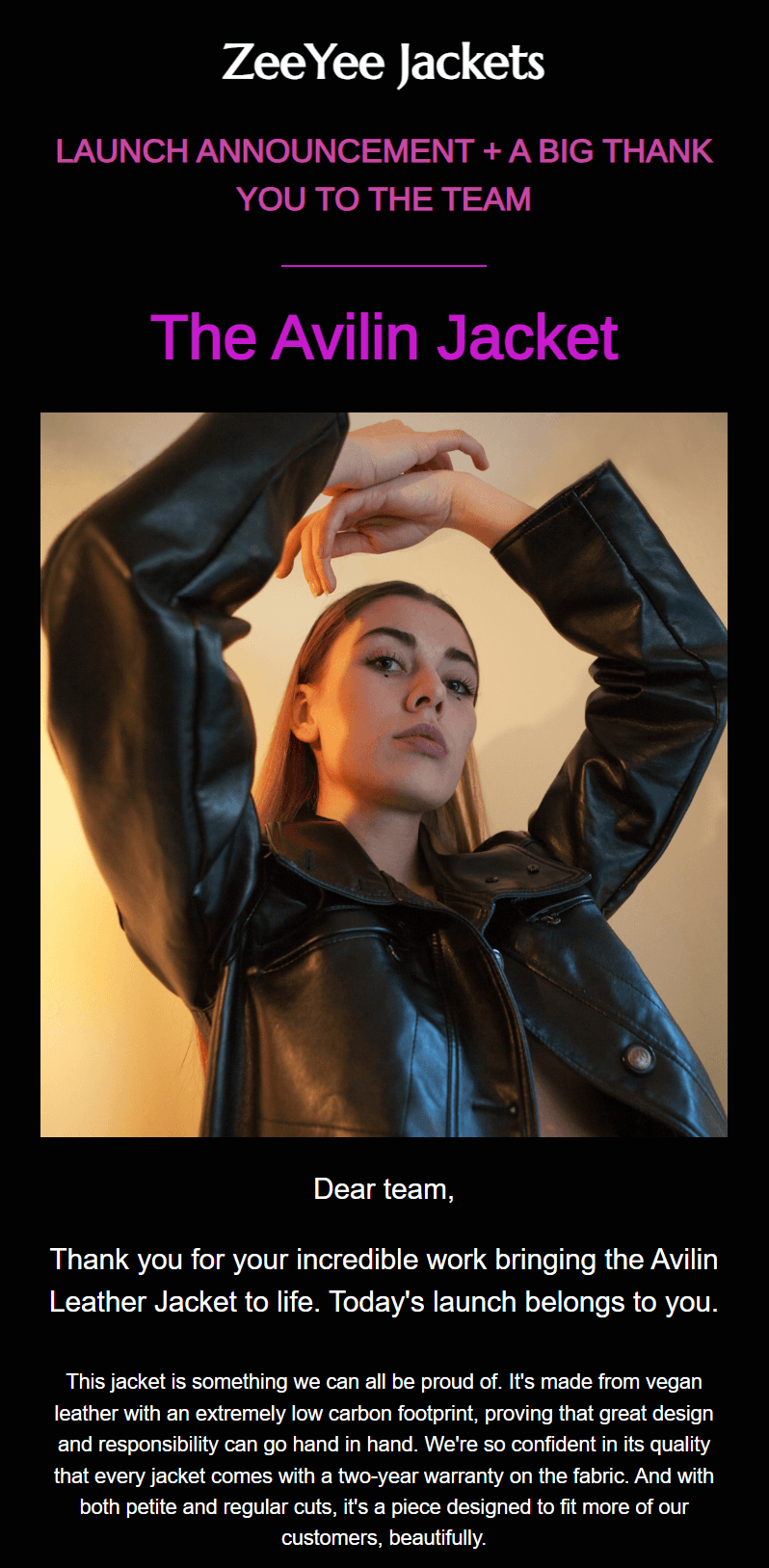
Product and Service Launch Announcements: Any new product or service launch represents a significant organizational milestone. A dedicated newsletter, or a prominent section within a routine one, can extensively cover these events. Subject lines incorporating “Launch,” “Announcing,” or “Introducing” immediately set the context. A hero image of the product, coupled with content that captures the excitement and highlights team contributions, is essential. These are particularly valuable for sales, product development, and marketing teams, providing crucial information on launch dates and availability. A well-designed announcement, such as one featuring a new jacket with accompanying praise for the development team, underscores collective achievement.
-
Milestones and Achievements: For fast-moving companies tracking specific goals, a newsletter dedicated to milestones and achievements can effectively communicate progress and results across relevant departments. This keeps everyone informed and reinforces collective effort. Crucially, data points should be presented early and clearly, avoiding the need for employees to scroll extensively. Whether tracking customer satisfaction, development timelines, or sales figures, these newsletters serve as powerful motivators and evidence of collective success.
-
Leadership and Team Changes: Changes in company structure, including new hires, role adjustments, or departures, require clear and timely communication. These newsletters are primarily informational, ensuring employees can adapt workflows and expectations. Descriptive subject lines like “A New Member is Joining Our Team” or “New Hire: Welcome to [Brand Name, Name]” are effective. Including a photo of the individual or the team fosters a visual connection and facilitates integration. According to HR analysts, smooth communication during such transitions is critical for maintaining team stability and morale.
II. Cultivating Employee Recognition and Connection (Employee Spotlights)
Employee recognition is a powerful driver of morale and productivity. Communication specialists often highlight that consistent recognition can significantly reduce employee turnover and boost engagement.
-
Monthly Employee Feature: Highlighting individual employees offers a human touch, allowing team members to share their stories and become more recognizable across the organization. This can involve personal aspects like hobbies or remain strictly business-focused, depending on company culture. For direct-to-consumer (DTC) brands, a more human approach often builds stronger team rapport. A feature spotlighting an HR Manager, detailing their work and hobbies alongside a high-quality photo, exemplifies this approach.
-
“A Day in the Life” Series: When individual features might become repetitive, a “Day in the Life” series offers a fresh perspective. Leading with subject lines like “Inside the [Department],” these story-style emails, enriched with employee quotes and images, educate different teams about each other’s work and interdependencies. This series is particularly effective for breaking down silos and fostering cross-functional understanding, especially in companies with diverse and intricate operational departments.
-
Work Anniversary Highlights: These limited series newsletters celebrate significant employee milestones—from one-year anniversaries to retirements or returns from leave. They differ from general features by focusing specifically on the duration and journey within the company. Such recognition makes employees feel valued, creating moments of connection and reinforcing a positive company culture. Studies show that companies with robust recognition programs experience higher employee satisfaction and retention rates.
III. Building Community and External Awareness (Community and External Coverage)
Newsletters focused on culture and community strengthen internal bonds and provide insights into external relationships.
-
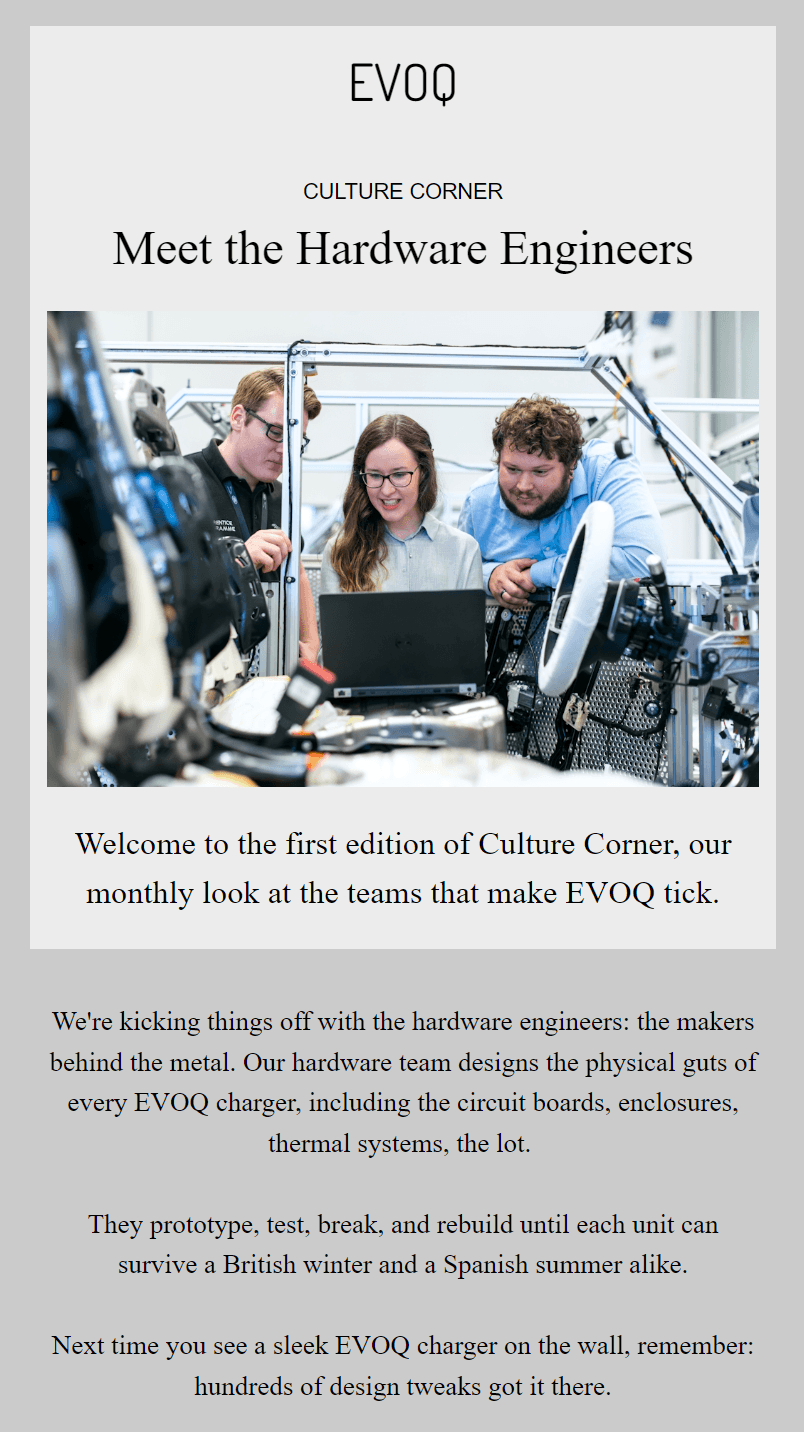
Culture Corner: Published monthly, a “Culture Corner” newsletter highlights the work of different teams and departments, explaining their contributions to the company’s broader mission. This helps colleagues understand diverse roles and appreciate the bigger picture. It’s particularly engaging for companies with complex or unique products, where understanding the engineering, development, or creative processes can be fascinating. A newsletter featuring engineers at work, using a professional design, underscores the value of intricate contributions.

-
Event Coverage and Recaps: Company events, conferences, or outings generate significant internal buzz. A series of newsletters—before, during, and after the event—can build anticipation, provide real-time updates, and offer a comprehensive recap. Post-event newsletters, often including links to photo galleries, ensure that those who couldn’t attend still feel included and informed, reinforcing internal marketing efforts.
-
Partner and Supplier Coverage: Extending beyond internal teams, this series focuses on external partners and suppliers who are crucial to the company’s operations. For businesses like print-on-demand stores, featuring suppliers of packaging or materials builds stronger relationships and educates employees on the broader ecosystem. These newsletters should be collaborative, prioritizing the partner’s story through interviews and photos, showcasing a transparent and valued supply chain.
IV. Empowering Growth and Development (Learning and Development)
Investing in employee growth through learning and development (L&D) initiatives is critical for skill enhancement and talent retention. Data suggests that employees are significantly more likely to stay with companies that invest in their professional growth.
-
Monthly Employee Recommendation: Encouraging employees to submit their favorite blogs, books, or podcasts for review fosters a culture of shared learning. This democratic approach allows teams to discover new content outside of official company recommendations. Guiding these recommendations, for example, by asking employees to explore a specific learning platform and share their insights, adds structure and relevance. These newsletters work well for companies with limited internal content, ensuring fresh, engaging material. A newsletter featuring an employee’s book recommendation, with a split image of the book and the employee, demonstrates this concept.
-
Skill of the Month: This newsletter promotes specific skills, linking to free learning platforms or offering company-sponsored courses. Adding social proof through employee quotes and highlighting the relevance of the skill for internal promotions can significantly boost engagement. It’s an excellent strategy for companies aiming to build a highly skilled workforce, directly impacting productivity and job satisfaction.
-
Certification/Accreditation Spotlight: For companies operating in highly regulated industries (e.g., supplements, electronics), celebrating certifications and accreditations in a newsletter reinforces quality standards and leadership. This not only spreads knowledge internally but also assures suppliers of continued adherence to expectations, differentiating the brand through reliability.
V. Illuminating Innovation and Operations (Behind the Scenes)
Providing behind-the-scenes glimpses offers new insights, fostering curiosity and appreciation for various projects.
-
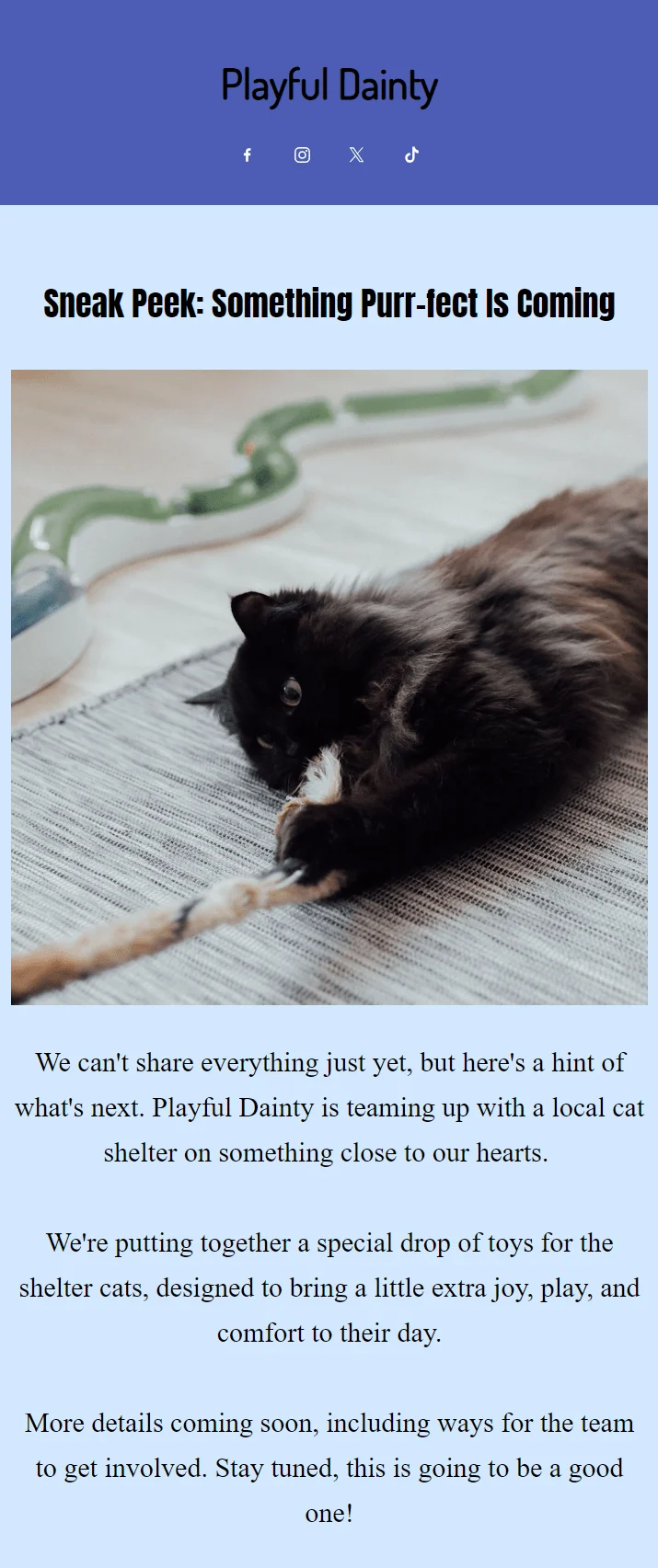
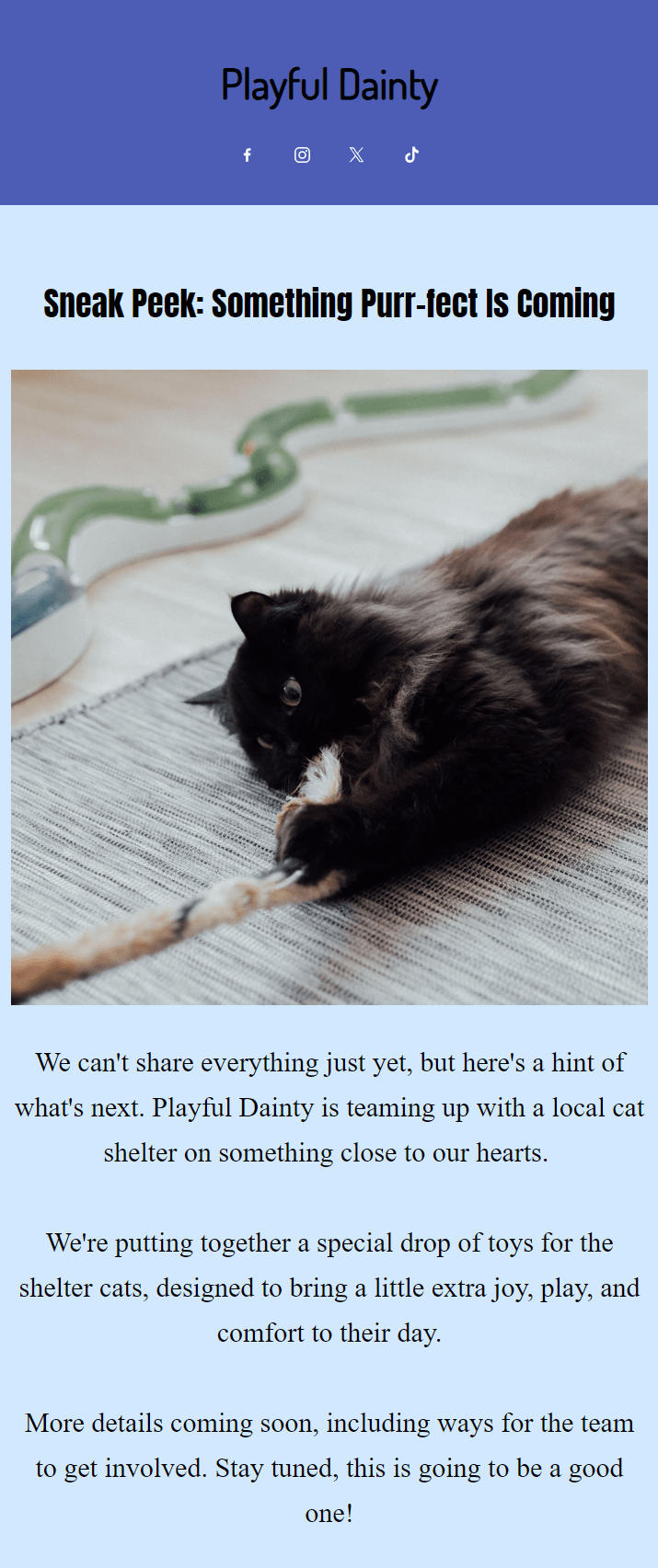
Sneak Peeks: This newsletter offers a teaser into upcoming projects, charitable initiatives, sponsorships, or internal happiness programs. It encourages employees to stay tuned for more updates, creating anticipation. A sneak peek into a pet brand’s collaboration with a local cat shelter, visually appealing with a relevant image, exemplifies how to generate internal buzz around ongoing projects and external collaborations.
-
Video Tours: Leveraging video is a highly engaging way to showcase internal happenings. Newsletters can embed video thumbnails, link to video platforms, or use GIFs as previews for departmental tours, employee interviews, or process demonstrations. Subject lines incorporating “Watch” or “Video” prepare the reader for interactive content. This is particularly effective for manufacturers or e-commerce stores with tangible products and hands-on processes.
-
Challenge Stories: Openly discussing challenges faced and overcome in projects fosters a learning culture and encourages proactive problem-solving. Being frank about obstacles makes stories more relatable and interesting. Subject lines like “How We Solved…” or “Behind the Scenes of…” pique curiosity. The newsletter template should adopt a documentary feel, with real-world photos, quotes, and a clear narrative progression from “The Challenge” to “The Solution.” This approach prevents problems from stagnating and encourages open dialogue.
VI. Driving Engagement and Continuous Improvement (Feedback and Engagement)
Feedback mechanisms are vital for understanding employee sentiment and driving continuous improvement. Surveys indicate that employees who feel their feedback is heard are significantly more engaged.

-
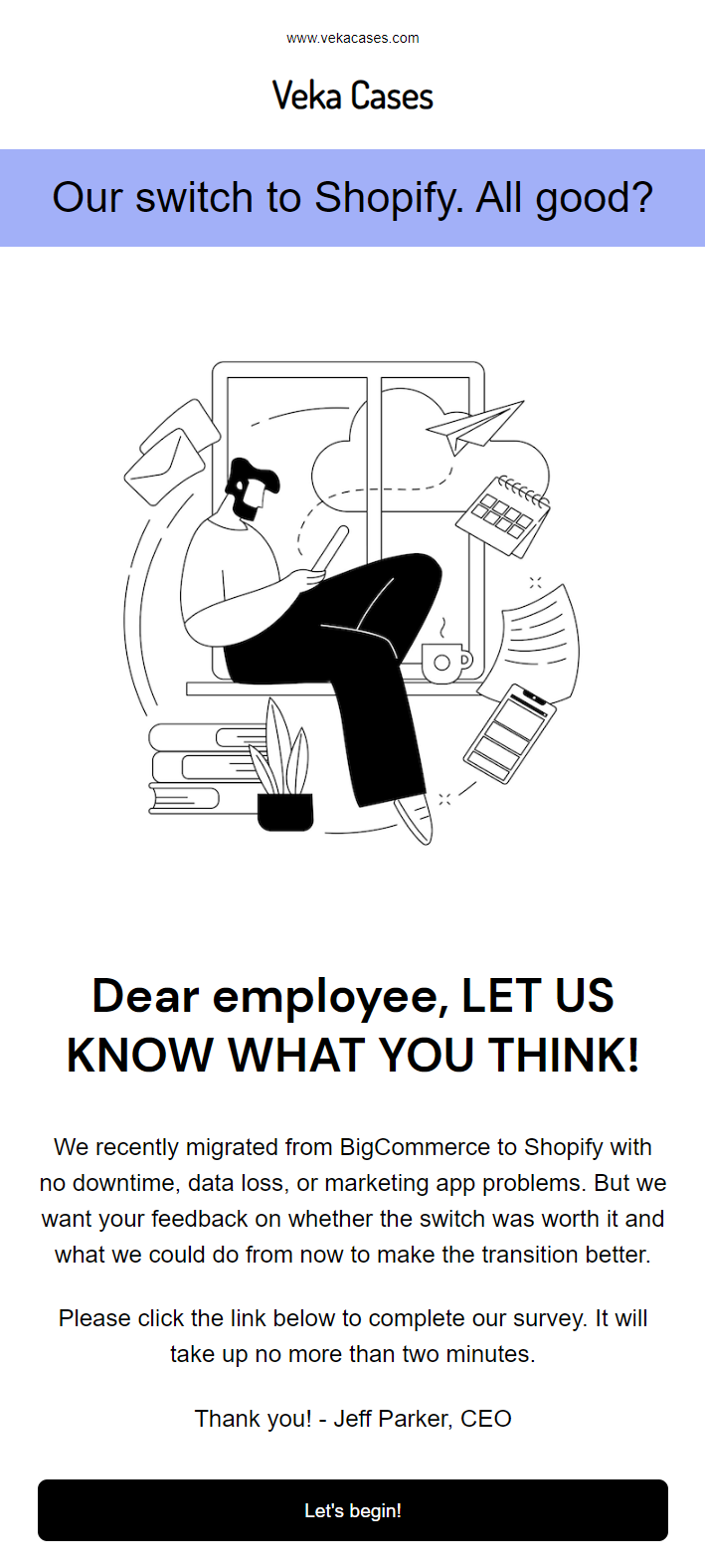
Employee Surveys: A newsletter dedicated to collecting employee feedback is invaluable for gauging sentiment following product updates, policy changes, or other significant company developments. Subject lines clearly stating “Survey” or “Leave Your Feedback” ensure high participation. A minimalist design with ample whitespace, like an internal survey email from Veka Cases announcing a Shopify migration, helps draw attention to the core purpose.
-
Customer Feedback Highlights: Bridging the gap between employees and customers, this newsletter shares positive customer feedback, illustrating how team efforts contribute to high satisfaction ratings. This provides a motivational lift, connecting individual contributions to tangible external impact. A warm subject line like “What Our Customers Are Saying” and a quote from a team leader thanking everyone reinforce the message. E-commerce businesses collecting extensive post-purchase reviews can easily leverage this for internal inspiration.
-
Performance Reviews (Internal): These newsletters provide a synopsis of team performance, ideally personalized per team. For instance, a marketing team might receive updates on email marketing conversion rates, while a packing team gets average fulfillment times. The content should focus on positive achievements and be contextualized, avoiding demoralizing data. Bullet points or clearly distinguishable sections for data are recommended, with subject lines such as “Results From…” or “Team Performance.” This is best suited for data-led companies with performance targets, ensuring the frequency aligns with team preferences.
VII. Prioritizing Well-being and Seasonal Connectivity (Well-being and Seasonal)
A holistic approach to employee well-being and seasonal connectivity fosters a positive and inclusive work environment.
-
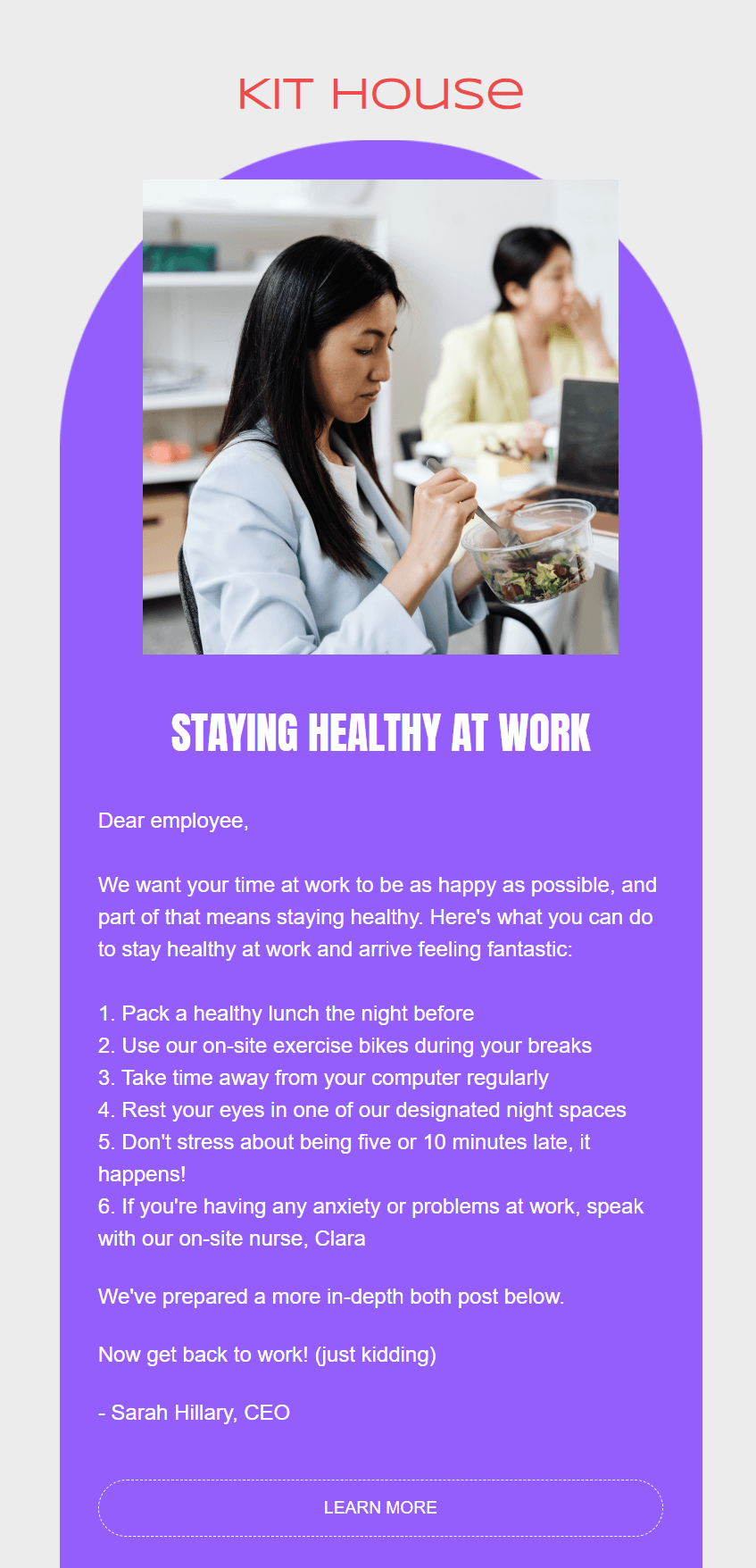
Health and Wellness Tips: Offering practical, seasonally relevant advice (e.g., hydration tips for summer, beating winter slump, maximizing lunch breaks) demonstrates a company’s commitment to employee well-being. Including guidance from qualified experts and leveraging internal company advantages as talking points adds credibility. This is particularly beneficial for building a positive work environment and encouraging productivity, especially in smaller teams. A newsletter from KIT HOUSE providing five tips for staying healthy at work, featuring a relevant image, serves as an excellent example.
-
Holiday Coverage: Holiday newsletters are quick wins for boosting morale and fostering a sense of community. Planning for major holidays relevant to the team allows for diverse content, including advice, film recommendations, team appreciation messages, and exclusive staff discount codes. For diverse teams, covering a mix of holidays and inviting employees to share their celebrations promotes inclusivity.
-
Motivational Stories: Sharing stories from employees about overcoming challenges or bouncing back from setbacks can be incredibly inspiring. These narratives should be relatable and anchored in genuine experience, avoiding hollow corporate platitudes. Such newsletters are particularly effective for teams experiencing morale or performance issues, serving to reignite motivation and reinforce resilience.
Architecting and Distributing Impactful Newsletters
Crafting a professional company newsletter requires a structured approach to content creation, design, and distribution. It moves beyond simply “getting writing” to a deliberate process that delivers substance and value.
Content Strategy: Begin with an editorial calendar, planning topics well in advance. Consider your audience segments and tailor content accordingly. Each newsletter should have a clear purpose and a call to action, whether it’s to read more, provide feedback, or celebrate a success.
Design Principles: A company newsletter is a high-quality publication, not a plain text email. It requires strong branding, a clear visual hierarchy, and mobile responsiveness. Use high-quality images and a consistent layout. The visual appeal significantly impacts engagement and perceived professionalism.
Writing with Impact: Employ a clear, concise, and engaging writing style. Use headings, subheadings, and bullet points to break up text and improve readability. The tone should be appropriate for the topic – professional for updates, celebratory for achievements, and empathetic for well-being content.
Distribution Logistics: The core of distribution lies in an effective email marketing platform. Such tools allow for the creation of dedicated employee segments, ensuring that newsletters reach the intended internal audience without cluttering external marketing lists.
Leveraging Technology for Seamless Internal Communications: The Omnisend Advantage
Implementing a sophisticated internal communication strategy, particularly through newsletters, is significantly streamlined by leveraging specialized technology. Omnisend, widely recognized as an omnichannel marketing tool for e-commerce, is equally adept at facilitating robust internal communication. Its core capabilities, designed for customer-facing emails, translate seamlessly to internal applications.
Omnisend’s platform offers over 250 pre-built email templates, providing a professional design foundation from the outset. Companies can easily apply their brand assets, logos, and color schemes, ensuring consistency with corporate identity. The drag-and-drop email builder simplifies the design process, allowing communication teams to create visually rich and engaging newsletters without extensive coding knowledge.
Furthermore, Omnisend’s advanced segmentation features are crucial for internal communications. Companies can upload spreadsheets of employee email addresses or provide a sign-up form for employees to opt-in, creating precise segments for targeted messaging. This ensures that relevant content reaches the right teams, preventing information overload and enhancing personalization.
For organizations seeking to further automate and optimize their internal newsletter creation, Omnisend’s AI features, such as Omnisend MCP (Marketing Campaign Power-up), integrate with AI models like Claude and ChatGPT. This allows users to prompt AI to draft newsletter content, suggest subject lines, and even incorporate recent data for copy inspiration, significantly reducing the manual effort involved in campaign creation.
The process within Omnisend typically involves:
- Navigating to the “Campaigns” section.
- Selecting to create a new “Email” campaign.
- Defining the campaign name and entering a subject line.
- Choosing from the extensive library of email templates to begin design.
- Saving the design and selecting the appropriate employee segment as recipients.
- Reviewing the campaign details.
- Finally, scheduling for later or sending immediately.
This structured approach, supported by powerful technological tools, transforms the often-cumbersome task of internal communication into an efficient, engaging, and highly impactful process.
The Broader Implications: Fostering a Cohesive and Productive Workforce
The strategic implementation of company newsletters extends far beyond mere information sharing. It is a vital component of fostering a cohesive, engaged, and productive workforce. In an era where employee engagement directly correlates with organizational success, well-crafted internal newsletters play a pivotal role in building strong company culture, enhancing employee retention, and aligning teams with corporate objectives.
By consistently delivering valuable content—from celebrating company milestones and recognizing individual contributions to sharing learning opportunities and fostering well-being—companies can cultivate an environment where employees feel informed, valued, and connected. The flexibility to tailor content, whether taking a strict professional approach for financial updates or a more candid tone for health tips, allows organizations to address the diverse needs of their workforce. Ultimately, leveraging tools like Omnisend’s intuitive platform and its vast array of templates enables companies to create, send, and schedule internal newsletters that employees not only read but genuinely look forward to, turning internal communication into a powerful strategic asset.








