Microsoft Ads has significantly advanced its ad targeting capabilities, now allowing advertisers to leverage granular LinkedIn profile data, specifically job seniority levels, within both Search and Audience campaigns. This strategic expansion marks a pivotal moment for marketers seeking unparalleled precision in reaching professional audiences, particularly within the competitive business-to-business (B2B) sector. The update extends existing LinkedIn-based targeting options, providing a more refined approach to identifying and engaging key decision-makers and influencers across the globe.
The Evolution of Precision Targeting in Microsoft Ads
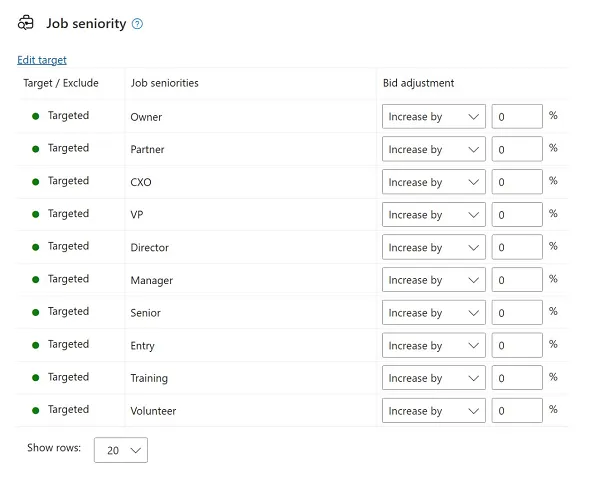
The integration of LinkedIn’s robust professional network data into Microsoft Ads is not entirely new, but this latest enhancement represents a substantial deepening of that synergy. For some time, Microsoft Ads has permitted targeting based on broad LinkedIn data points such as company, industry, and job function. However, the introduction of job seniority as a filter, available at both the campaign and ad group levels, elevates this capacity to a new echelon of specificity. Marketers can now delineate their target audience across 10 distinct levels of seniority, ranging from entry-level positions to C-suite executives, owners, and partners. This granular control is designed to ensure that promotional messages resonate precisely with the intended recipients, optimizing ad spend and maximizing return on investment (ROI). The enhanced targeting options are currently being rolled out across selected markets in the Americas, EMEA (Europe, Middle East, and Africa), and APAC (Asia-Pacific) regions, underscoring Microsoft’s global commitment to empowering its advertising partners.
This move comes at a time when digital advertisers are grappling with an increasingly complex landscape, characterized by heightened demands for data privacy, the deprecation of third-party cookies, and the relentless pursuit of more effective audience segmentation. In this environment, first-party data, especially from a professional network like LinkedIn, becomes an invaluable asset. Microsoft’s acquisition of LinkedIn in December 2016 for approximately $26.2 billion was a landmark event, driven by the vision of creating an integrated ecosystem that leverages professional insights across its suite of products and services. Initial integrations focused on enhancing products like Microsoft Dynamics 365 with Sales Navigator capabilities and enriching Microsoft 365 profiles. The steady progression of LinkedIn data integration into Microsoft Ads reflects a deliberate strategy to solidify its position as a leading platform for B2B advertising, offering a unique value proposition that competitors like Google and Meta cannot directly replicate due to their lack of a comparably structured professional social network.
Unpacking the Seniority Filters: A Strategic Advantage for B2B Marketers
The 10 levels of seniority now available for targeting within Microsoft Ads are designed to mirror typical corporate hierarchies, allowing for highly nuanced campaign strategies. These levels, as reported by Search Engine Land and indicated by the provided image, include:
- Entry: Individuals at the very beginning of their professional careers.
- Training: Professionals engaged in specific training or development programs.
- Senior: Experienced professionals, often individual contributors with specialized expertise, but not yet in management roles.
- Manager: Those overseeing teams, projects, or specific operational functions.
- Director: Leaders responsible for departments, significant projects, or broader functional areas.
- VP (Vice President): Senior leaders typically heading larger divisions, strategic initiatives, or key organizational pillars.
- CXO (Chief Executive Officer, Chief Financial Officer, Chief Marketing Officer, etc.): Top-tier executives responsible for overall company strategy, performance, and leadership.
- Partner: Individuals who are part-owners or senior principals in firms, commonly seen in professional services like consulting, law, or accounting.
- Owner: Entrepreneurs or proprietors of businesses, ranging from small business owners to founders of larger enterprises.
- Unpaid: Potentially volunteers, interns, or retired professionals whose profiles indicate an unpaid role, offering a filter for non-commercial or specific community engagement targeting.
For B2B marketers, this level of specificity is transformative. Consider a company offering advanced cybersecurity solutions for large enterprises. Instead of broadly targeting “IT professionals” or “security specialists,” they can now precisely aim for “CXO” or “VP” level individuals within the IT or Security departments of large corporations, recognizing these as the ultimate decision-makers for substantial infrastructure investments. Conversely, a professional development platform might target “Entry-level” or “Senior” professionals seeking to acquire new skills or advance their careers. This capability dramatically reduces wasted ad impressions and ensures that marketing messages are seen by individuals who possess the authority, budget, or specific need for a particular product or service.

The ability to tailor ad copy, landing pages, and even calls to action based on a prospect’s seniority level offers an unprecedented opportunity for personalization at scale. A message for a CXO might focus on strategic impact, ROI, competitive advantage, and long-term vision, while a message for a Manager might emphasize operational efficiency, team productivity, ease of implementation, and problem-solving. This contextually relevant messaging significantly increases the likelihood of engagement and conversion, making ad campaigns more effective and cost-efficient. The granular control also allows for more strategic budget allocation, ensuring that higher-value prospects receive more focused and potentially higher-bid ad placements.
The Broader Context: Data-Driven Advertising in a Privacy-Conscious Era
The expansion of LinkedIn targeting capabilities within Microsoft Ads underscores a larger, critical trend in digital advertising: the imperative for more intelligent, data-driven approaches amidst a rapidly evolving privacy landscape. As global privacy regulations like the General Data Protection Regulation (GDPR) in Europe and the California Consumer Privacy Act (CCPA) continue to shape how personal data can be collected and utilized, platforms with robust first-party data ecosystems gain a significant competitive advantage. Microsoft, through its ownership of LinkedIn, possesses a vast trove of self-declared professional data that is inherently valuable for B2B marketing. This data is largely consent-based, as users actively create and maintain their profiles, making it a powerful resource in an era where third-party cookies are phasing out. The shift towards first-party data strategies is becoming paramount for advertisers to maintain effective targeting without infringing on user privacy.
However, the effectiveness of any data-driven targeting mechanism hinges on the accuracy and veracity of the underlying data. The original article rightly points out a crucial consideration: the honesty and accuracy of LinkedIn users in listing their profile details. Unlike verified government IDs or financial records, LinkedIn profiles are primarily self-reported. While the vast majority of professionals strive for accuracy on a platform central to their career identity, discrepancies or exaggerations can arise. This raises valid questions about the extent to which marketers can implicitly trust the seniority data without additional layers of verification.
LinkedIn is actively addressing these concerns through initiatives like its free profile verification process. This process allows users to confirm their identity via third-party support partners, earning a “verified” checkmark on their profile. While this verification primarily confirms the individual’s identity rather than the absolute accuracy of their job title or seniority, it is a significant step towards building greater trust and credibility within the network. For advertisers, targeting verified profiles could offer an additional layer of assurance that they are reaching legitimate professionals, even if the specific job role accuracy remains a nuanced challenge. The implication is that while the platform provides the tools, marketers must still exercise diligence, perhaps through A/B testing different audience segments or combining seniority filters with other targeting parameters (e.g., industry, company size, skills) to further refine their audience and mitigate potential inaccuracies.
Market Implications and Competitive Landscape
This enhancement solidifies Microsoft Ads’ position as an increasingly powerful contender in the digital advertising arena, particularly for B2B. While Google Ads dominates the search advertising market overall, holding an estimated 80-90% market share in paid search, and Meta (Facebook, Instagram) leads in social media advertising, neither possesses a direct equivalent to LinkedIn’s uniquely structured professional network data. This gives Microsoft a distinct and potent selling proposition for B2B advertisers. For businesses whose primary customers are other businesses, the ability to precisely target individuals based on their professional seniority on a platform that also offers search and audience network reach is a compelling proposition that sets it apart.
Industry analysts are likely to view this as a strategic move that could increasingly shift B2B ad spend. Companies that previously relied on broader demographic or interest-based targeting on other platforms may now find Microsoft Ads a more efficient and effective channel for their B2B campaigns. The increased precision could lead to higher conversion rates, lower customer acquisition costs, and ultimately, greater ROI for B2B advertisers, making Microsoft Ads a more attractive option for a segment of the market where precision is paramount.

According to various market reports, Microsoft Ads has been steadily growing its market share, albeit from a smaller base compared to its rivals. This kind of feature differentiation is crucial for accelerating that growth. For instance, while Google holds an overwhelming majority of search ad revenue, Microsoft Ads has carved out a significant niche, particularly among professional users who frequently utilize Microsoft’s ecosystem (Windows, Office, Edge browser). The integration of LinkedIn data capitalizes on this inherent user base, providing a powerful incentive for advertisers already engaged with Microsoft’s enterprise solutions to expand their ad spend on the platform. The estimated global search advertising market is projected to reach over $200 billion in the coming years, and even a modest shift of B2B budgets towards Microsoft Ads could represent a substantial financial gain.
Moreover, this development could spur innovation among competitors. While they may not have LinkedIn-equivalent data, they might seek to enhance their own B2B targeting capabilities through partnerships, advanced contextual targeting, or AI-driven audience segmentation based on other signals. The constant push for more precise and effective advertising tools benefits the entire industry, driving platforms to offer greater value to advertisers. The evolving competitive landscape will likely see other platforms exploring their own forms of professional data integration or developing more sophisticated inference models to approximate similar targeting capabilities.
Anticipated Reactions and Future Outlook
While no official statements from Microsoft Ads representatives regarding this specific update were available in the initial report, one can logically infer the company’s perspective. Microsoft would likely emphasize how this enhancement empowers marketers with unprecedented control over their B2B audience targeting, driving greater efficiency and effectiveness. They would highlight the unique synergy between LinkedIn’s professional data and Microsoft Ads’ robust campaign management tools, positioning it as a distinct competitive advantage in the competitive B2B advertising space. A hypothetical statement from a Microsoft Ads spokesperson might underscore their commitment to providing advertisers with innovative tools that respect user privacy while maximizing campaign performance.
From the perspective of B2B marketers, the reaction is likely to be one of cautious optimism. The promise of highly granular targeting is exciting, offering the potential to streamline lead generation and sales cycles, especially for high-value enterprise sales. However, the aforementioned concerns regarding data accuracy will necessitate careful testing and optimization. Savvy marketers will likely:
- Pilot Campaigns: Start with smaller budgets to test the effectiveness and conversion rates of seniority targeting across different product or service offerings.
- A/B Test: Compare the performance of seniority-targeted campaigns against broader demographic or interest-based targeting methods to identify optimal strategies.
- Combine Filters: Layer seniority targeting with other attributes like industry, company size, specific job titles, and even inferred interests to create hyper-targeted segments, thereby mitigating potential inaccuracies from single-data-point reliance.
- Monitor Metrics Closely: Pay meticulous attention to key performance indicators (KPIs) such as conversion rates, cost per lead (CPL), cost per acquisition (CPA), and overall return on ad spend (ROAS) specific to these new targeting segments. This data-driven approach will be crucial for validating the efficacy of the new features.
- Adapt Creative: Develop highly tailored ad copy and visuals that resonate specifically with each seniority level, acknowledging their unique priorities and challenges.
Looking ahead, this integration could be just one step in a longer roadmap for leveraging LinkedIn data within the broader Microsoft ecosystem. One could foresee future enhancements that include targeting based on specific skills listed on LinkedIn profiles, engagement with particular groups or content on the platform, or even career path trajectories. Such advancements would further solidify Microsoft Ads’ unique position in the B2B digital advertising landscape, making it an indispensable tool for businesses aiming to connect with professionals at every stage of their career journey. The potential for integrating LinkedIn Learning data for professional development advertisers, or Sales Navigator insights for hyper-personalized outreach, could unlock even more sophisticated targeting models.
The ongoing evolution of digital advertising demands continuous innovation in targeting capabilities, balancing the need for precision with stringent privacy considerations. Microsoft Ads’ latest update, by harnessing the power of LinkedIn’s professional network, exemplifies this evolving dynamic. It presents a significant opportunity for B2B marketers to refine their strategies, but also underscores the enduring importance of data quality and the need for advertisers to remain agile and analytical in their approach to campaign management. As the digital advertising ecosystem continues to mature, platforms that can offer verified, contextually relevant, and granular targeting options will undoubtedly lead the way, shaping the future of how businesses connect with their most valuable audiences in an increasingly complex and data-driven world.