A landing page is a standalone web page meticulously crafted with a singular objective: to prompt visitors to perform one specific action. This deliberate design strips away navigation and other potential distractions, focusing all attention on a single, clear call to action. The effectiveness and structure of such a page are intrinsically tied to the desired outcome, whether it’s gathering email addresses, selling a product, promoting an event, or announcing a pre-launch. Selecting the appropriate type of landing page is paramount, as a mismatch between the page and its objective is a leading cause of underperformance in digital campaigns.
Recent research from AWeber underscores the critical role of landing pages, revealing that over 90% of small business owners leveraging them consider them important or very important to their marketing strategy. This consensus indicates that the challenge for businesses is no longer if they should use landing pages, but which type to deploy and when for maximum impact. For those new to the concept, a landing page serves as a dedicated digital doorway, designed to capture specific visitor intent. For seasoned marketers, understanding the nuances of each type is key to optimizing conversion funnels and maximizing return on investment. This article delves into 14 distinct types of landing pages, outlining their purpose, efficacy, and optimal application scenarios.
Foundational Lead Generation & Engagement Pages
These landing page types are primarily focused on capturing visitor information or engaging them with valuable content, laying the groundwork for future communication and conversions.
1. Webinar Landing Page
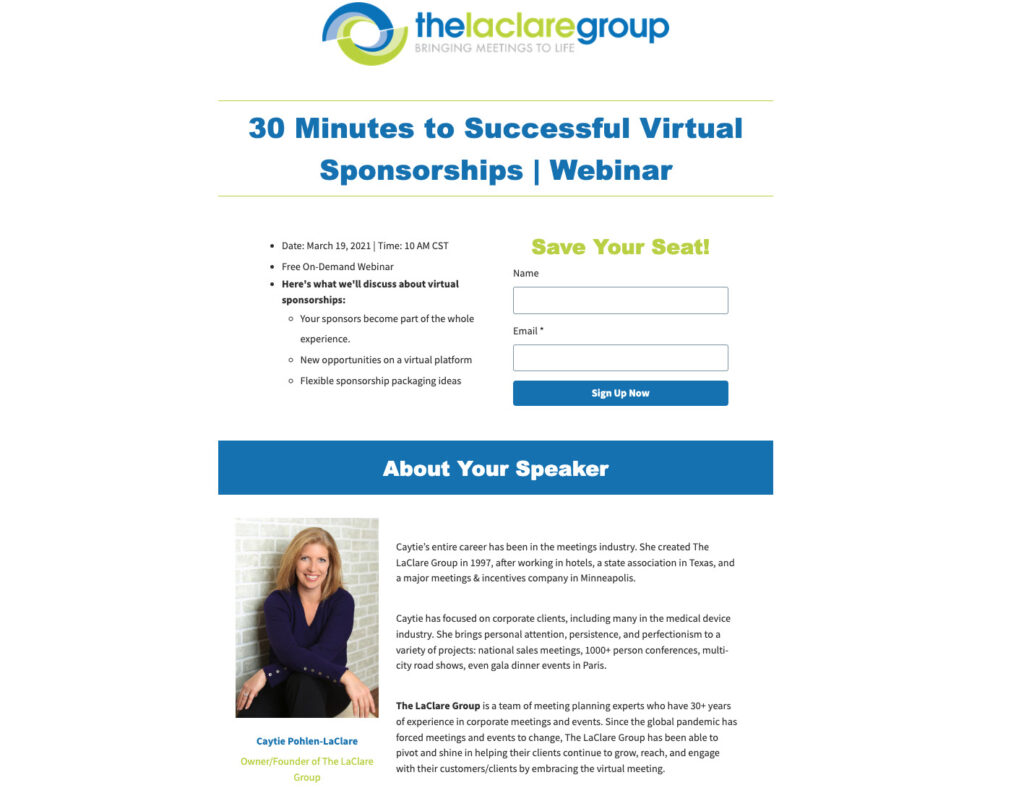
A webinar registration page is specifically engineered to promote an upcoming live or recorded online event and facilitate sign-ups. It provides essential information, including the webinar’s core topics, the presenter’s expertise, the date and time, and compelling reasons for attendance. Industry best practices suggest that the most potent webinar pages prioritize the attendee’s prospective learning outcomes over extensive speaker biographies. For instance, a statement like “You’ll master the exact steps to setting up your first email automation” resonates more deeply than a list of the presenter’s academic credentials. Speaker bios, while valuable for credibility, are best positioned after the core value proposition has been established.
Why It Works: Attendees register for webinars driven by the anticipated transformation or knowledge gain, not primarily by the identity of the speaker. A registration page that highlights these benefits – answering the fundamental question, “What’s in it for me?” – consistently achieves higher conversion rates. This approach taps into the visitor’s self-interest, making the registration feel like a direct path to solving a problem or acquiring a desired skill.
When to Use It: This page is indispensable when hosting any live or on-demand webinar, providing a dedicated and optimized channel for driving registrations. Strategic promotion of these pages through email campaigns, social media, and paid advertisements can significantly boost attendance.
2. Ebook Landing Page
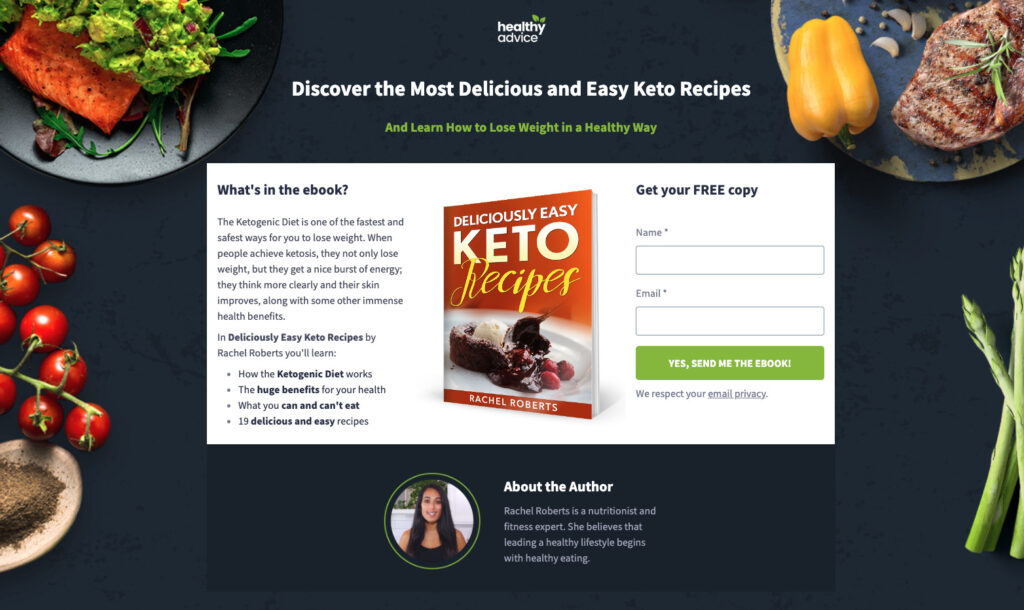
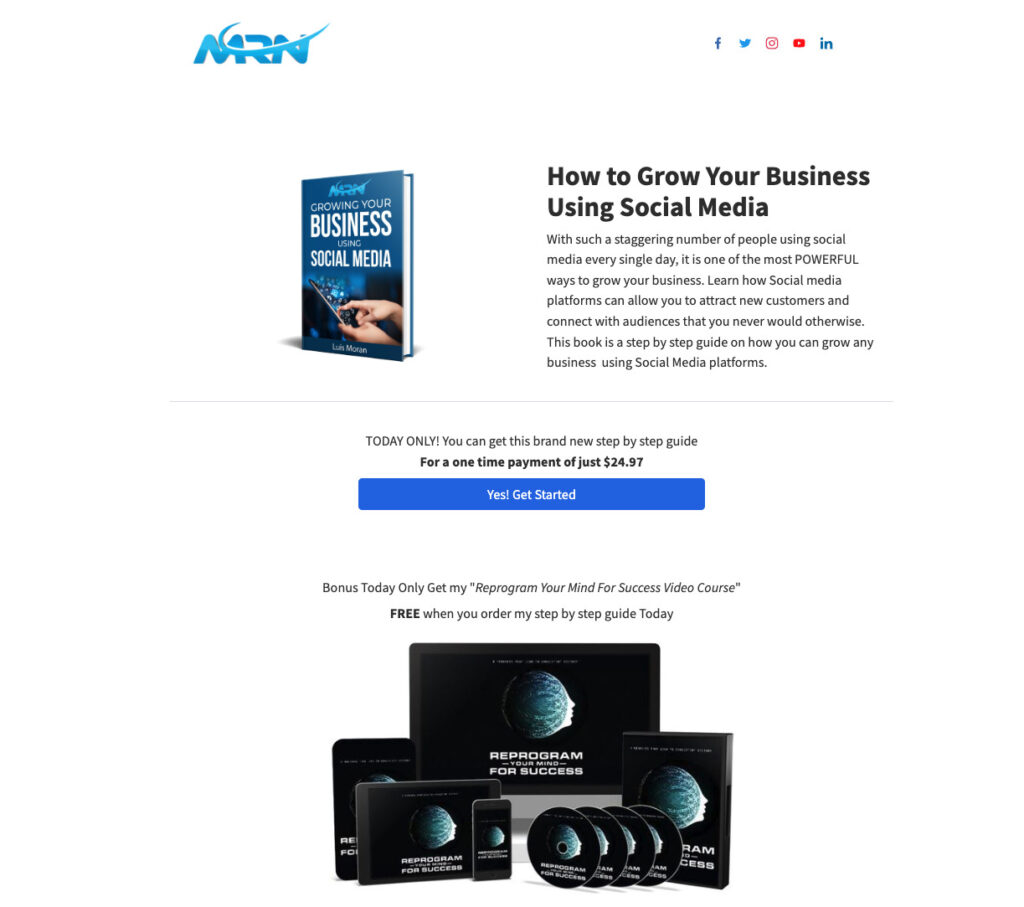
An ebook landing page is a specialized destination designed to promote and distribute an electronic book. It serves as a central hub where visitors can explore the ebook’s content, understand its benefits, and proceed with either purchasing or downloading it. This type of page is crucial for authors, thought leaders, and businesses looking to leverage long-form content.
Why It Works: Ebooks function as powerful lead magnets or direct revenue streams. For aspiring entrepreneurs, selling ebooks online bypasses traditional publishing hurdles, offering a direct-to-consumer model. As lead magnets, ebooks provide substantial value in exchange for contact information, establishing the brand’s authority and expertise. The page effectively conveys the depth of knowledge contained within the ebook, positioning it as a valuable resource.
When to Use It: Deploy an ebook landing page when releasing a new ebook for sale or when using an ebook as a lead magnet to cultivate an email list. It’s particularly effective for demonstrating thought leadership, generating qualified leads, and expanding content reach.
3. Lead Magnet Landing Page
A lead magnet landing page offers a specific, valuable resource in exchange for a visitor’s email address. These resources can vary widely, from templates, checklists, and free courses to comprehensive toolkits or any downloadable content that provides immediate, tangible value. Unlike more generic lead capture pages, the content itself is the primary draw here. An effective lead magnet page emphasizes the desired outcome or solution the visitor will gain from the resource, rather than focusing on the brand delivering it.
Why It Works: This page converts effectively because the inherent value of the offer drives the exchange. When the resource directly addresses a current pain point or need of the target audience, providing an email address feels like a fair and worthwhile transaction, not an obstacle. The page’s role is to powerfully convey the resource’s value, allowing the offer to do the heavy lifting in terms of conversion.
When to Use It: Utilize a lead magnet page whenever you have created a resource that genuinely resonates with your audience’s needs. This is one of the most efficient methods to build an email list populated by individuals already interested in your niche or topic, forming a highly engaged subscriber base.
4. Squeeze Page
A squeeze page is a highly streamlined lead capture page, minimalist in its design and singular in its purpose: to collect an email address. Characterized by its brevity, it typically features only a compelling headline, one or two concise sentences of copy, an email input field, and a prominent call-to-action button. It explicitly avoids lengthy descriptions or detailed benefit lists.
Why It Works: The power of a squeeze page lies in its extreme simplicity. By removing virtually all elements that could cause hesitation or decision fatigue, it presents visitors with a stark choice: opt-in or leave. This frictionless design is highly effective for maintaining a low cost per lead, especially when driving paid traffic, where every click is a financial investment.
When to Use It: Squeeze pages are ideal for paid advertising campaigns where the objective is to rapidly acquire email addresses at the lowest possible cost. They are also effective for capturing emails from a “warm” audience that is already familiar with your brand or offer, requiring minimal persuasion.
Direct Sales & E-commerce Pages
These landing pages are designed with a clear sales objective, facilitating direct transactions or guiding visitors toward a purchase decision.
5. Ecommerce Landing Page
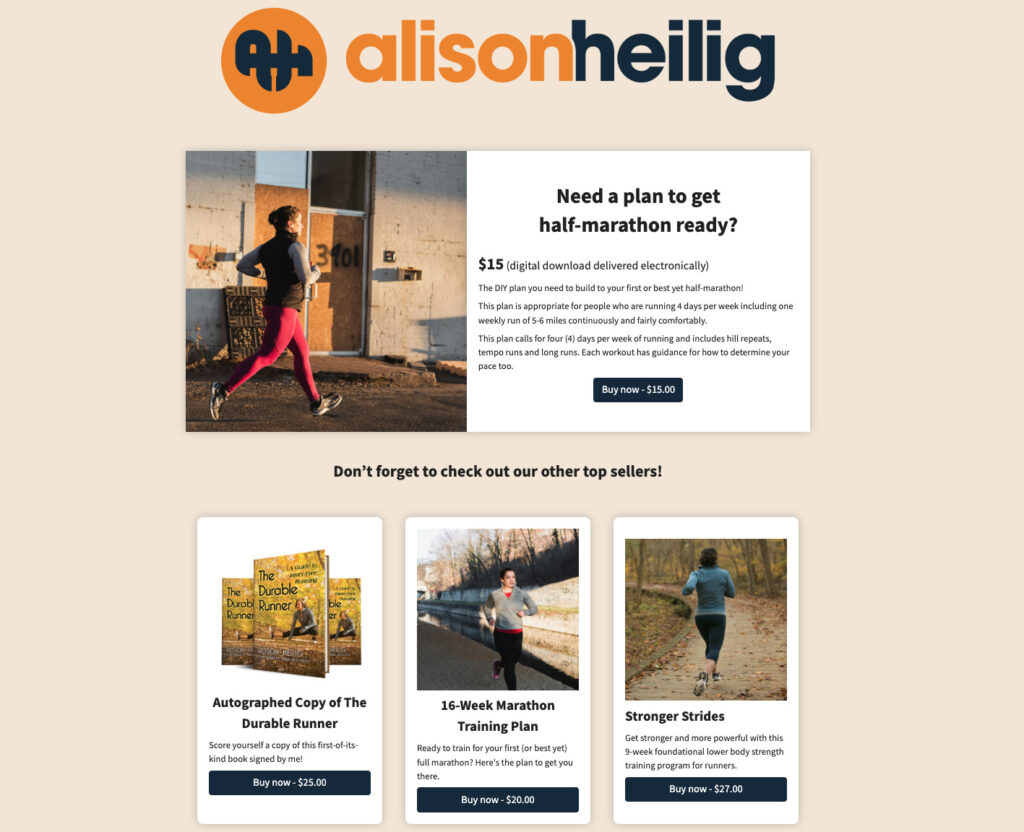
An ecommerce landing page is dedicated to showcasing a specific product or a focused category of products. Unlike a broad product catalog or a general homepage, it is optimized to convert traffic originating from a particular source, such as a paid advertisement. Directing traffic from a paid ad to a tailored ecommerce landing page generally yields a significantly higher conversion rate than sending it to a generic shop page.
Why It Works: A full product catalog or homepage can overwhelm visitors with too many choices, a phenomenon known as decision paralysis, which often reduces conversion rates. An ecommerce landing page eliminates this optionality, presenting a focused offer: one product, one clear value proposition, and one explicit action. This concentrated approach is the primary driver behind its superior conversion performance.
When to Use It: Employ an ecommerce landing page when running paid advertisements to sell a specific product, or when a marketing campaign requires a dedicated page that aligns precisely with the campaign’s message, rather than a generalized retail experience.
6. Click-Through Landing Page
A click-through landing page does not solicit information or require an immediate transaction. Its sole function is to “warm up” the visitor, building interest and confidence before they proceed to a purchase or sign-up page. It acts as an intermediary step, devoid of forms or direct transactional elements, focusing purely on informative content designed to nurture intent. Common formats include free trial offers, detailed product walkthroughs, or feature comparison guides.
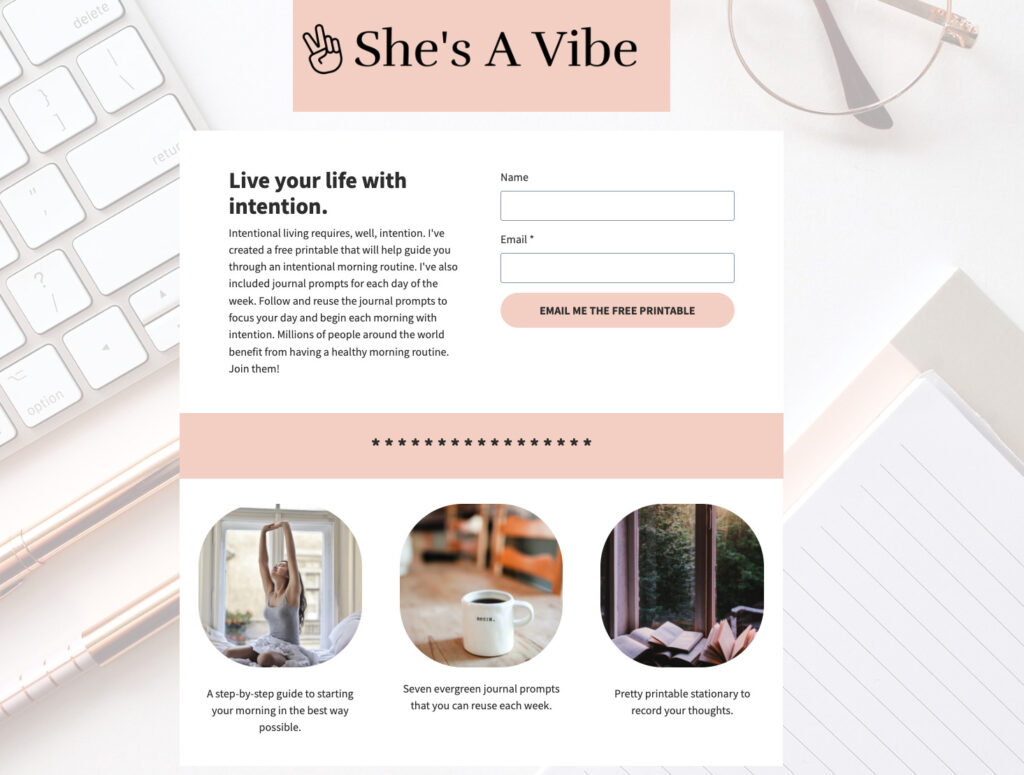
Why It Works: Cold traffic rarely converts directly on a high-commitment purchase page. A click-through page provides a crucial transitional phase where visitors can thoroughly understand an offer without the immediate pressure of commitment. By the time they reach the final purchase or sign-up page, they are already pre-qualified and more engaged, having actively expressed interest in the preceding step. This significantly reduces bounce rates on critical conversion pages.
When to Use It: This type of page is essential when your product or service necessitates a degree of explanation before a customer is prepared to buy. If your paid traffic exhibits high drop-off rates on direct purchase pages, a click-through page can effectively bridge that knowledge and trust gap, guiding prospects through the sales funnel more smoothly.
Platform-Specific & Engagement Nurturing Pages
These landing pages are tailored for specific traffic sources or content formats, focusing on audience engagement and long-term relationship building.
7. PPC Landing Page
A PPC (pay-per-click) landing page is meticulously designed for traffic originating from paid search advertisements. Its fundamental principle is message match: the page content, headline, and offer must align precisely with the keyword or ad copy that led the visitor there. For instance, a user clicking an ad for “email newsletters for restaurants” will quickly abandon a generic email marketing page. Google’s Quality Score algorithm also heavily rewards this message alignment, leading to lower cost-per-click and improved ad rankings.
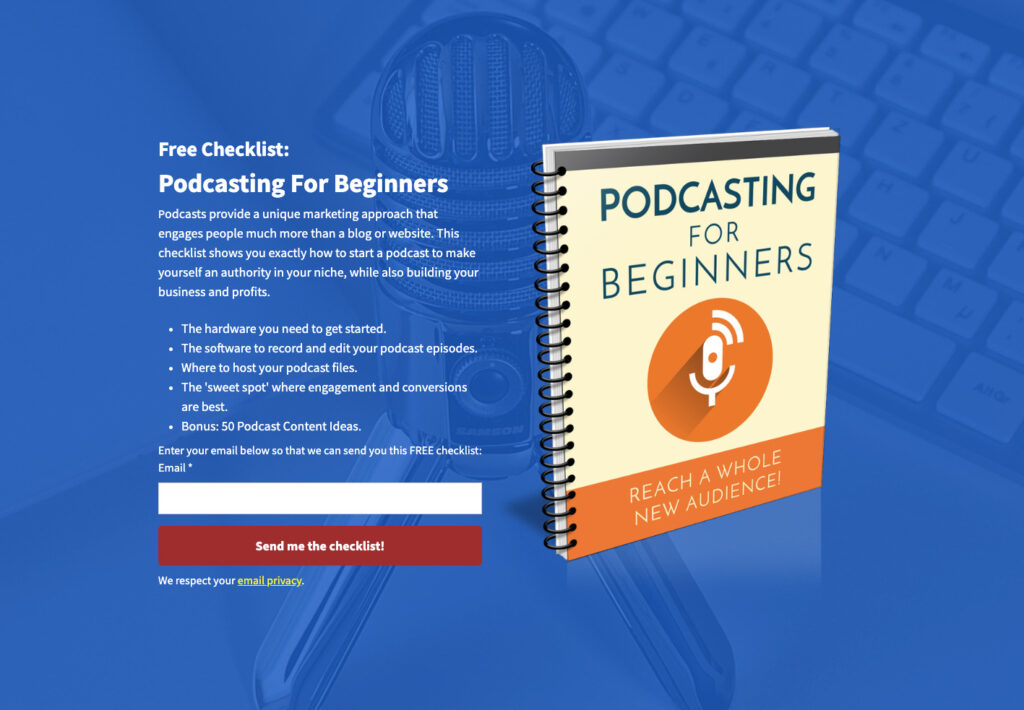
Why It Works: Paid traffic represents a direct financial investment. Any visitor landing on a page that deviates from their initial search intent or ad promise constitutes wasted ad spend. A PPC landing page safeguards this investment by delivering exactly what the advertisement promised, reinforcing relevance. This precision not only drives higher conversion rates but also positively impacts Quality Score, optimizing campaign efficiency and reducing advertising costs.
When to Use It: This page type is mandatory for every paid search campaign. Each distinct ad group or keyword theme should ideally have its own bespoke PPC landing page, rather than directing traffic to a general homepage or a less relevant site section.
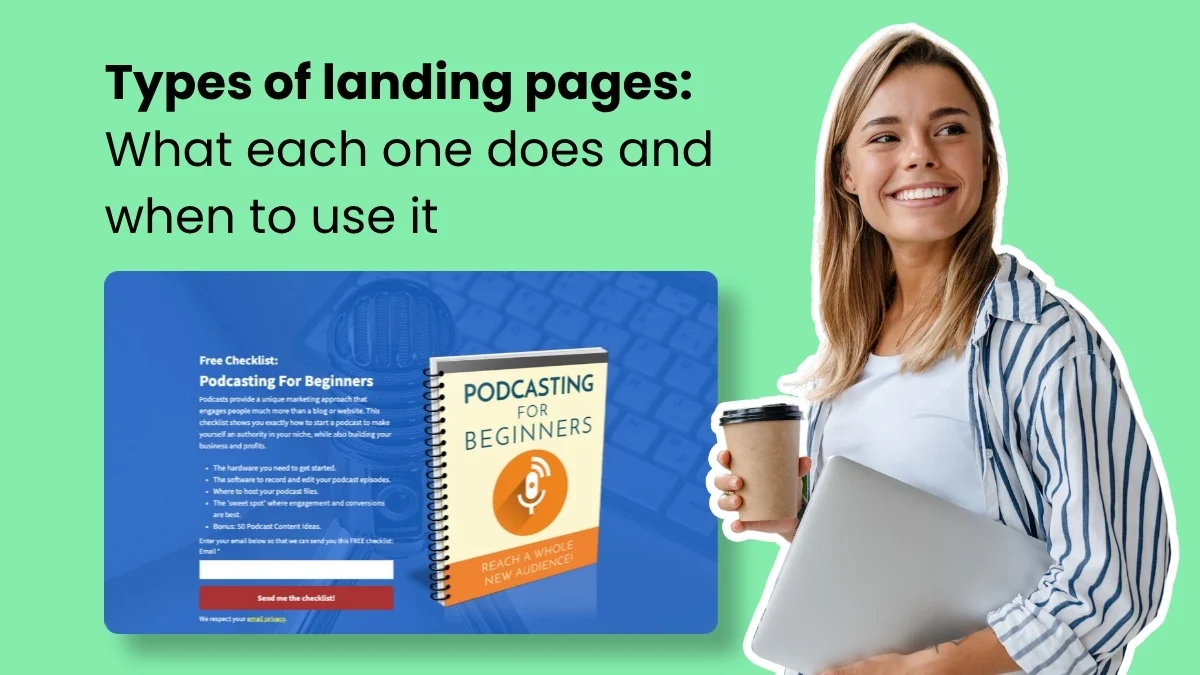
8. Podcast Landing Page
A podcast landing page is designed to promote a specific podcast show or individual episode, offering listeners a direct pathway to subscribe or join an email list for updates. A crucial strategic objective here is to migrate podcast listeners from streaming platforms onto a owned email list.
Why It Works: While streaming platforms offer broad reach, they ultimately control audience access and distribution. An email list, conversely, provides a direct communication channel with listeners, immune to algorithmic changes or platform restrictions. A podcast landing page effectively converts a casual listener into a direct subscriber, enabling creators to announce new episodes, share bonus content, promote products, and foster a deeper, more direct relationship without relying on third-party platforms.
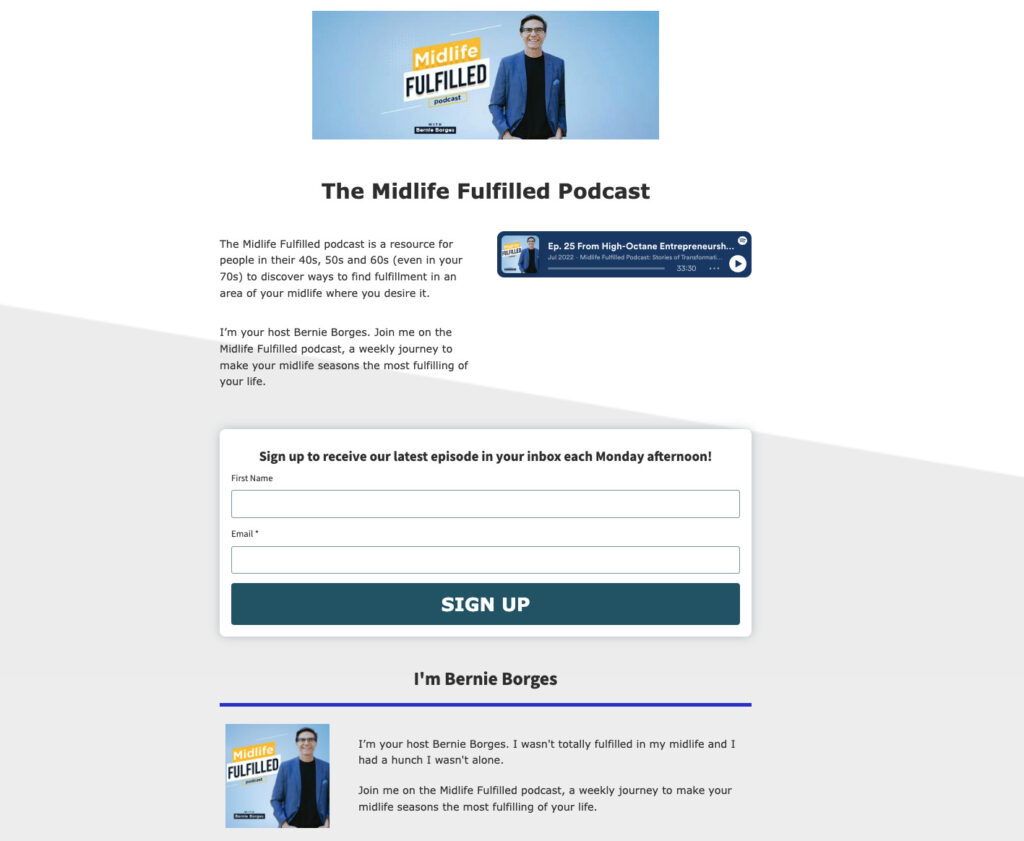
When to Use It: This page is indispensable for podcasters focused on audience growth and building a direct relationship beyond the confines of streaming platforms. It establishes a valuable, owned audience asset.
9. Video Landing Page
A video landing page leverages video as the primary medium for conveying its message. This video might be a product demonstration, a compilation of testimonials, a concise explainer, or a brand story. While supplementary text provides context and reinforcement, the video remains the central element.
Why It Works: Video possesses a unique ability to eliminate hesitation by demonstrating concepts or products in action, often surpassing the clarity of written copy alone. It accelerates trust-building, particularly for complex offers, high-value products, or brands that rely heavily on personality and credibility. A visitor who watches a two-minute product demonstration typically grasps the offering more thoroughly than one who reads several paragraphs of descriptive text, leading to higher engagement and conversion rates.
When to Use It: Employ a video landing page when your offer has a strong visual component, when your target audience demonstrates a preference for video content, or when the objective is to establish a strong personal connection and build trust before requesting a conversion.
10. Link-in-Bio Landing Page
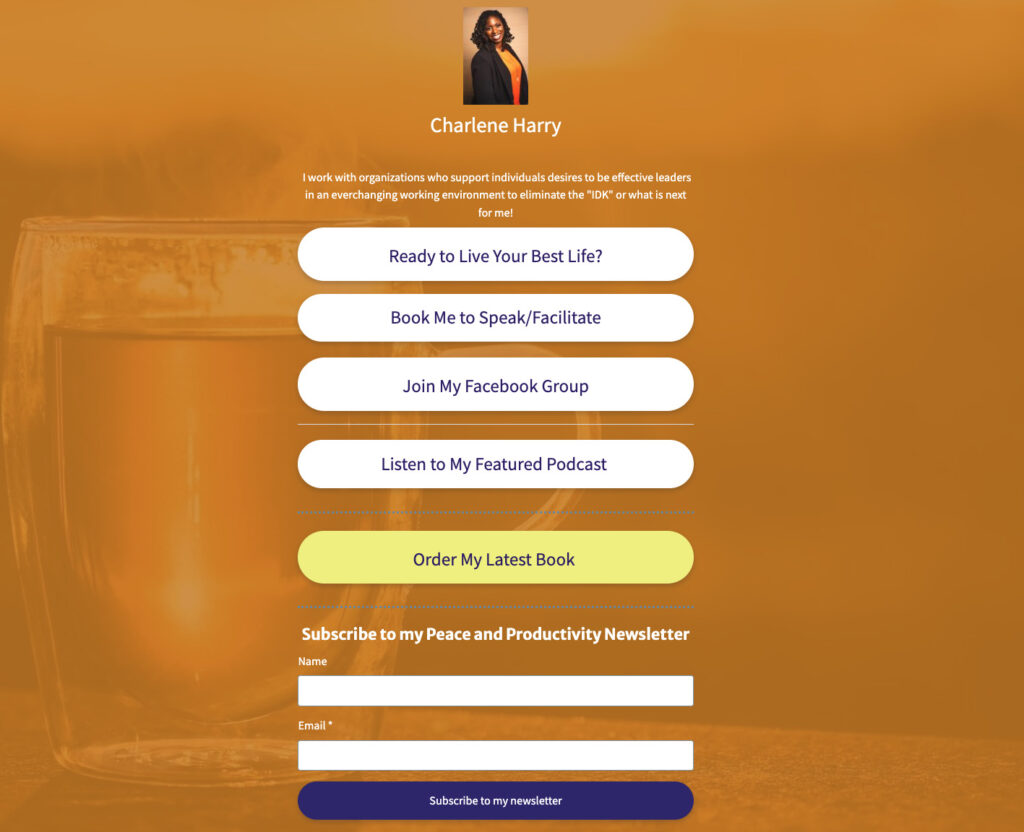
A link-in-bio page is a single, centralized web page designed to host multiple links. Given that most social media platforms restrict users to a single clickable link in their profile biography, this page acts as a versatile hub. From a single URL, it can direct followers to a newsletter sign-up, product pages, the latest content, booking forms, or other key destinations.
Why It Works: Social media platforms provide immense reach but impose limitations on external navigation. A link-in-bio page circumvents this constraint, allowing users to consolidate all their important links into one accessible destination. Instead of having to choose between linking to a newsletter or a new product, creators and businesses can offer access to their entire digital ecosystem, ensuring followers can easily find what they’re looking for.
When to Use It: This page is essential for individuals and brands actively engaged on platforms like Instagram, TikTok, or X (formerly Twitter) who need a single, comprehensive destination to guide followers toward multiple desired actions or resources.
11. Facebook Landing Page
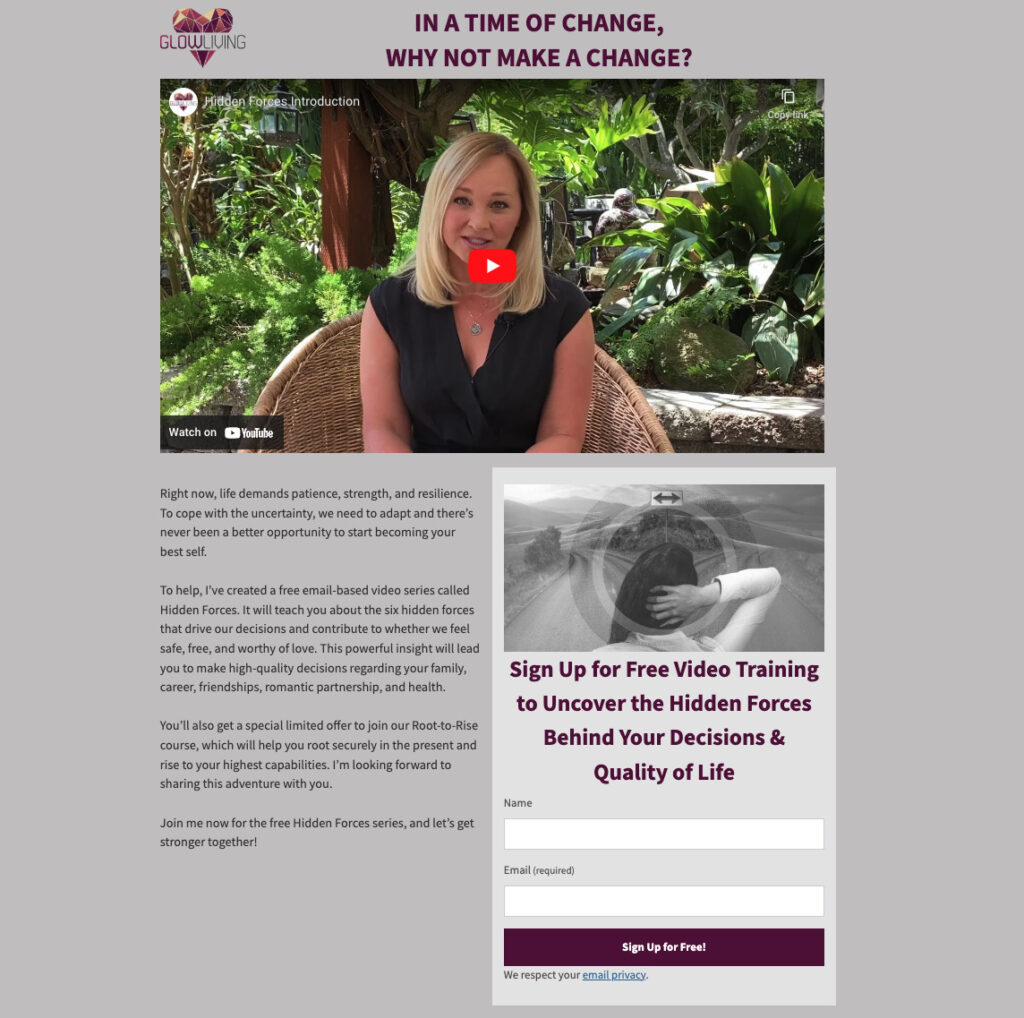
A Facebook landing page is specifically optimized for traffic originating from Facebook ads or a Facebook profile. Its core mission is to convert social media followers into email subscribers or direct buyers.
Why It Works: The reach and engagement on Facebook are effectively “rented.” The platform dictates who sees your content and can alter algorithms at any time. Building an email list, however, creates an owned audience asset, providing a direct, algorithm-proof line of communication. A Facebook landing page serves as the crucial bridge, transforming transient social media interactions into a durable, directly controllable audience that can be nurtured and monetized over time. Studies consistently show that converting social followers to email subscribers significantly increases long-term customer value.
When to Use It: This page type is indispensable when running Facebook ad campaigns or when the strategic goal is to convert your social media following into a robust, owned subscriber list.
Strategic & Post-Conversion Pages
These landing pages serve unique strategic purposes, either building anticipation before a launch or optimizing the experience after a conversion has occurred.
12. Pre-Launch Landing Page
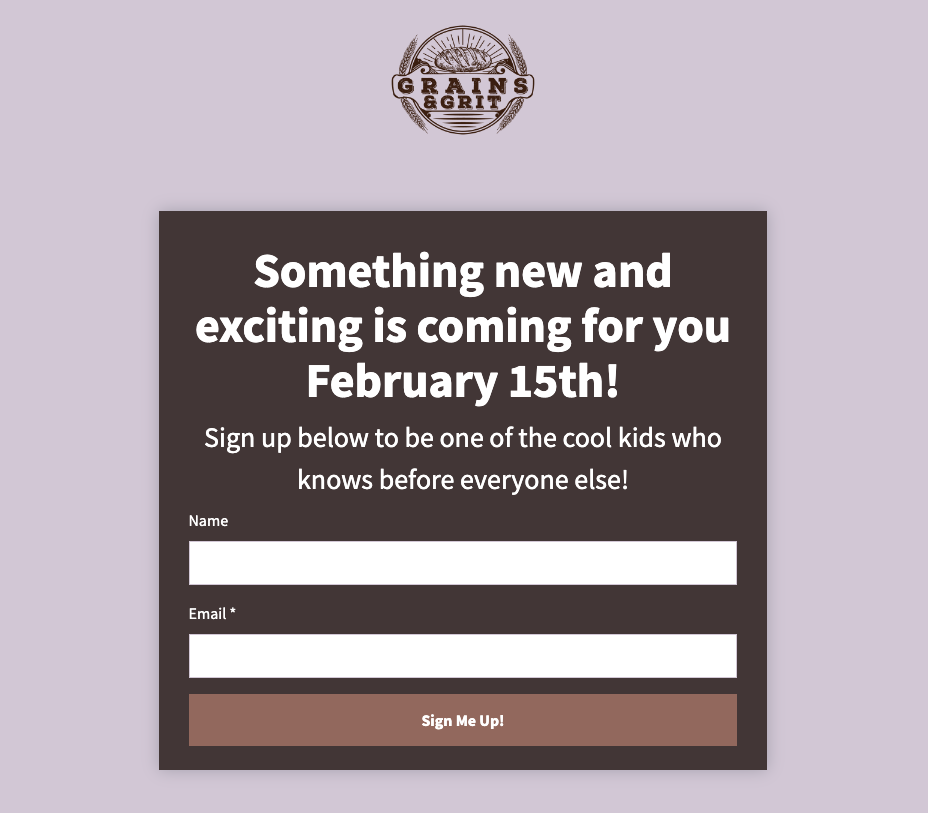
A pre-launch landing page is deployed to generate interest and build anticipation for a product, service, or feature before its official release. It functions as a mechanism to collect email addresses from individuals eager to be notified upon launch, and crucially, it serves as a valuable tool to gauge market demand before significant resources are committed to development.
Why It Works: This page serves a dual purpose: it cultivates an initial audience that will be receptive to marketing efforts on launch day, and it validates the underlying idea. Generating a substantial number of sign-ups prior to a product’s existence provides concrete evidence of market interest, reducing the risk associated with full-scale development. Conversely, slow sign-up rates offer early warning signals, allowing for adjustments before substantial investment. A list of 500 pre-launch opt-ins often holds more value than 5,000 post-launch sign-ups, as those early subscribers explicitly demonstrated demand before the offering was even fully realized.
When to Use It: Implement a pre-launch page before any significant product, service, or feature introduction. It effectively transforms nascent interest into an actionable list of potential customers, ready to engage from day one.
13. Thank You Page
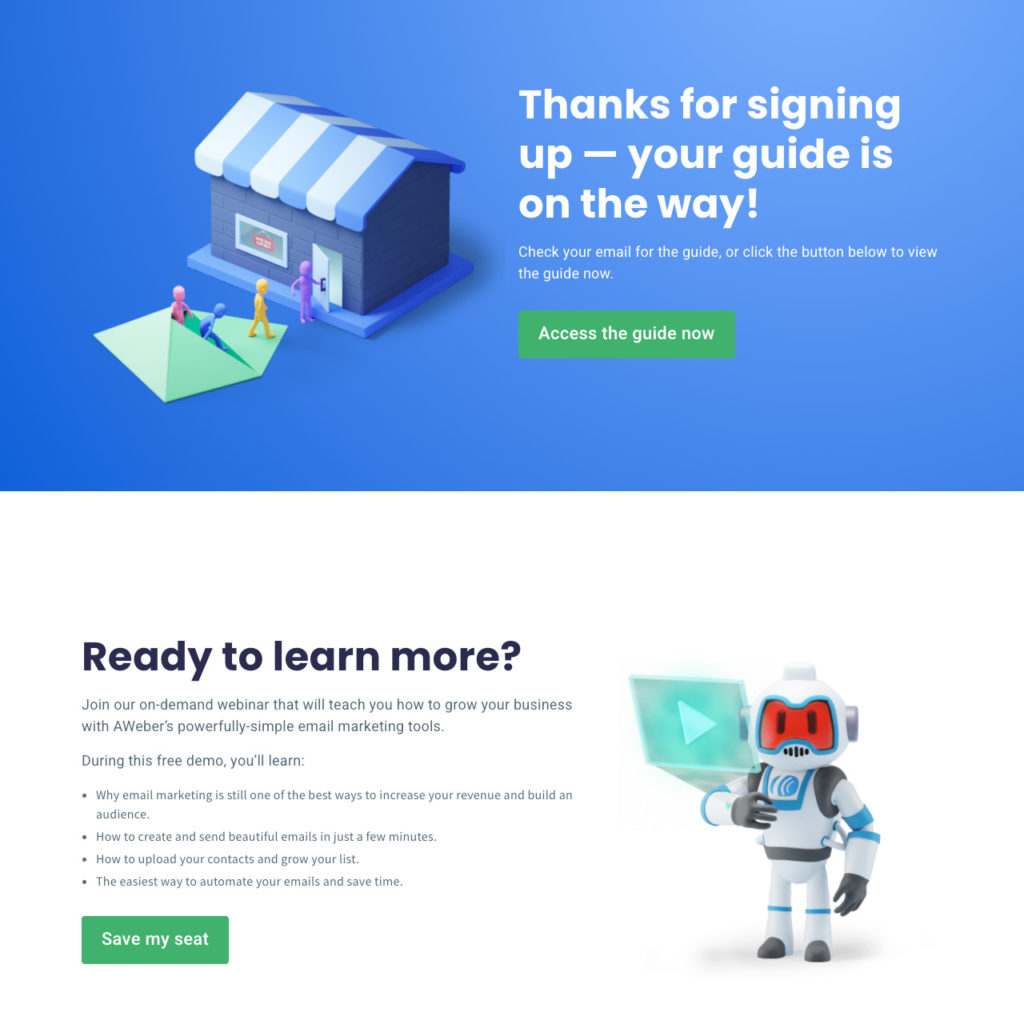
A thank you page appears immediately after a visitor completes a desired conversion action, such as signing up for a newsletter, downloading a resource, or making a purchase. Its primary role is to confirm the successful completion of the action and clearly outline the subsequent steps.
Why It Works: Most thank you pages are underutilized, despite presenting a golden opportunity. A visitor who has just converted is at their peak level of engagement and commitment within the marketing funnel. This is the optimal moment to present a related offer, invite them to book a consultation, encourage social sharing, or guide them towards the next logical step in their journey. A thoughtfully designed thank you page can transform a single conversion into a second, whether it’s an upsell, a cross-sell, a referral, or deeper engagement.
When to Use It: A dedicated thank you page should follow every form submission, purchase, or sign-up. It’s a critical component of a well-structured conversion funnel, ensuring a positive user experience and maximizing ongoing engagement.
Choosing the Right Landing Page Type
The selection of the appropriate landing page type is a direct consequence of your primary marketing objective. For instance:
- To acquire email subscribers: Opt for a Lead Capture page, Squeeze page, or Lead Magnet page.
- To warm up cold traffic before a purchase: A Click-Through page is ideal.
- For direct sales: Use a Sales page for high-ticket items or an Ecommerce page for specific products.
- To promote an event: A Webinar Registration page or Pre-Launch page is most effective.
- For paid search campaigns: A dedicated PPC Landing Page is essential for message match and efficiency.
The most common pitfall leading to landing page underperformance is attempting to achieve too many goals with a single page. Focusing on one clear objective and designing a page tailored to that goal is the cornerstone of effective conversion strategy.
Advancements in Landing Page Creation: AWeber’s AI Landing Page Builder
The landscape of landing page creation is rapidly evolving with technological advancements. AWeber’s upcoming AI Landing Page Builder is poised to revolutionize the speed and efficiency with which businesses can deploy high-converting pages. This innovative tool shifts the paradigm from selecting and customizing existing templates to simply describing the desired page. Users articulate their vision – including layout, copy, imagery, and signup form requirements – and the AI autonomously constructs the entire page. Critically, every subscriber acquired through these AI-generated pages is seamlessly integrated into the user’s AWeber list, ready for immediate engagement through welcome emails and subsequent automation.
This AI-powered builder is designed to accommodate every type of landing page discussed, from a lead magnet page for a free checklist to a webinar registration page or a pre-launch page for an upcoming product. Its capability extends to recreating existing landing pages from a simple screenshot, automatically incorporating branding, copy, and offers. Furthermore, the AI can directly edit images based on descriptive commands, eliminating the need for tedious stock photo searches or starting over from scratch. This promises to significantly democratize access to sophisticated landing page design and optimization.
Key Considerations for Landing Page Success
Understanding the various types of landing pages is fundamental, but optimizing their performance requires attention to several key principles. Lead capture landing pages stand out as the most widely adopted type across industries. Their prevalence stems from their primary function: collecting visitor contact information, often in exchange for a valuable, free resource. Given the relatively low commitment required from the visitor compared to a direct purchase, lead capture pages consistently achieve higher conversion rates, making them indispensable for nearly every business aiming to grow its audience.
While both squeeze pages and lead capture pages aim to gather email addresses, they differ significantly in their approach and complexity. A standard lead capture page typically provides more detailed information, featuring a compelling headline, a description of benefits, a visual representation of the offer, and a form with multiple fields. In contrast, a squeeze page is intentionally minimalist, stripped down to a headline, one or two lines of copy, a single email field, and a button. This extreme brevity is particularly effective for paid traffic, where reducing friction and cognitive load directly translates to a lower cost per lead.
For businesses focused on building a robust email list, squeeze pages, lead capture pages, and lead magnet pages are the most potent tools. Squeeze pages excel with paid traffic due to their low-commitment design, optimizing for cost-efficiency. Lead capture pages offer versatility across both paid and organic traffic sources, providing a balanced approach to information and conversion. Lead magnet pages are exceptionally effective when a business can offer a highly desirable resource, such as an exclusive checklist, a comprehensive ebook, or a specialized template, directly addressing a clear need within their target audience. The strategic application of these diverse landing page types is critical for businesses navigating the competitive digital landscape, ensuring every visitor interaction is optimized for conversion.