

AWeber, a long-standing player in the email marketing sector, announced on June 3, 2026, the launch of its groundbreaking AI Signup Form Builder, a tool poised to fundamentally alter how businesses approach lead generation and subscriber acquisition. This innovation moves beyond the conventional reliance on pre-designed templates, offering a sophisticated artificial intelligence solution that generates bespoke signup forms tailored to individual business needs, branding, and specific campaign objectives from inception. The company positions this development as a significant leap forward, addressing the inherent limitations and inefficiencies associated with generic templates that often require extensive manual customization.
For decades, online signup forms have served as the critical gateway for businesses to build their email lists, capture leads, and initiate customer relationships. From rudimentary HTML forms coded manually to the advent of drag-and-drop builders and extensive template galleries, the evolution of form creation has continuously sought to streamline this essential marketing function. Templates emerged as a popular solution, promising speed and accessibility, particularly for small businesses and individuals without specialized design or coding skills. However, as digital marketing matured and brand identity became paramount, the generic nature of these templates began to present a significant challenge. Businesses found themselves spending considerable time and resources adapting pre-built structures, rewriting headlines, adjusting fields, and modifying layouts to align with their unique brand voice and specific offers. This process, often described as “starting from someone else’s form and working backward,” frequently led to compromises in design, copy, and overall effectiveness.
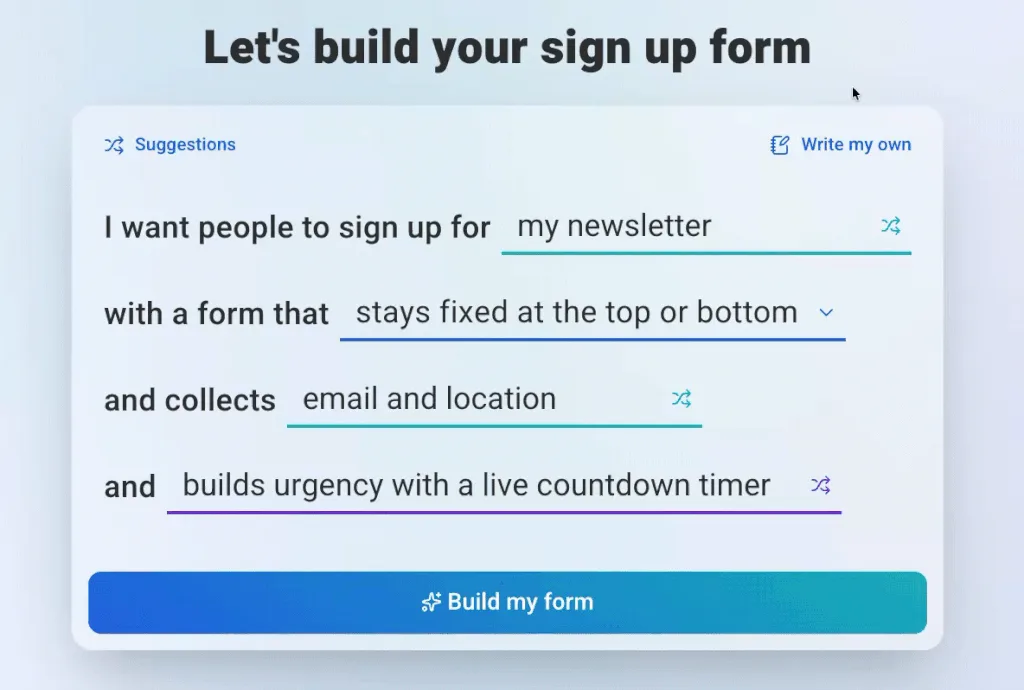
The AI Signup Form Builder by AWeber aims to disrupt this paradigm by leveraging advanced artificial intelligence to create highly personalized forms from the ground up. Instead of selecting and modifying a template, users can now describe their requirements in plain language, upload a screenshot of an inspirational design, or respond to a series of guided prompts. This approach promises to deliver a form that is “built for your specific business from the start,” eliminating the time-consuming process of template hunting, generic copy overwriting, and extensive post-generation customization.
The Inherent Shortcomings of Traditional Templates
While templates offer a convenient starting point, their fundamental design principle—to cater to the broadest possible audience—ironically makes them a poor fit for specialized business needs. Every template arrives with a default headline, a standard field set, and a layout optimized for general use, not for a specific brand or offer. A common scenario involves a business offering a niche five-day email course on advanced dog training receiving a template headlined “Subscribe to our newsletter.” The disconnect between the generic template and the specific value proposition necessitates substantial re-engineering. Similarly, a minimalist brand might find itself presented with a two-column layout, or a business requiring only an email address might receive a form with three unnecessary fields.
The gap between a generic template and a truly effective, brand-aligned form is not trivial. It demands significant effort in copywriting to refine the call-to-action and messaging, design decisions to ensure visual harmony, and careful consideration of field logic to optimize conversion rates. Industry data suggests that marketers often spend upwards of an hour customizing a single form template to meet specific campaign requirements. This customization time, when aggregated across multiple campaigns and forms, can quickly negate the initial perceived time-saving benefits of using a template. In many cases, the effort expended in adapting a template surpasses the time it would take to design a custom form from scratch, provided a clear vision and efficient tools.

Furthermore, templates can introduce an anchoring bias into the creative process. By starting with a pre-defined structure, marketers and designers are often unconsciously constrained by its existing elements, leading to adaptive thinking rather than innovative design. This can stifle the development of truly unique and audience-centric forms, as the focus shifts from “what does my audience need?” to “how can I make this template work?” The result can be forms that, while functional, lack the distinctiveness and persuasive power required to stand out in a crowded digital landscape.
A New Frontier: AWeber’s AI Signup Form Builder in Detail
AWeber’s AI Signup Form Builder introduces three primary methods for generating custom forms, each designed to maximize efficiency and personalization:
-
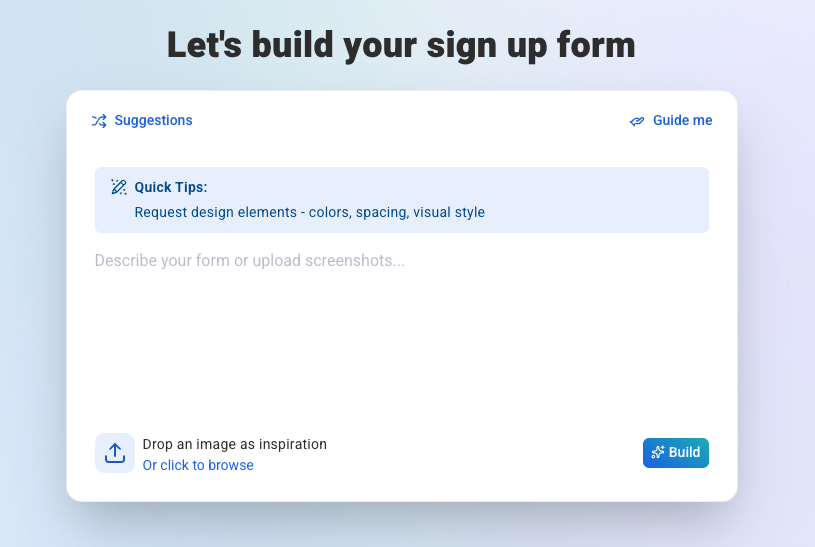
Descriptive Input: Users can articulate their requirements in natural language, much like interacting with a human designer. For example, a user might type, “A simple one-field form for a free guide on meal planning for busy parents.” The AI then processes this description, understanding the intent, target audience, and offer. It subsequently generates a form featuring a relevant headline (e.g., “Unlock Stress-Free Meal Planning: Get Your Free Guide!”), appropriate fields (likely just an email address for the guide), and persuasive copy tailored to the busy parent demographic. This method significantly reduces the cognitive load on the user, as they merely describe their vision rather than manipulate design elements.
-
Screenshot Upload: Recognizing that visual inspiration often drives design, the builder allows users to upload a screenshot of any online form they admire. The AI’s advanced image recognition capabilities analyze the screenshot, identifying structural cues, layout patterns, color schemes, and field arrangements. It then uses these insights as a stylistic blueprint to produce a new form, customized with the user’s specific brand elements and content. This feature transforms inspiration into practical application, allowing businesses to leverage effective designs they encounter without the painstaking manual reconstruction or direct imitation. It offers the creative shortcut without the brand mismatch.
-
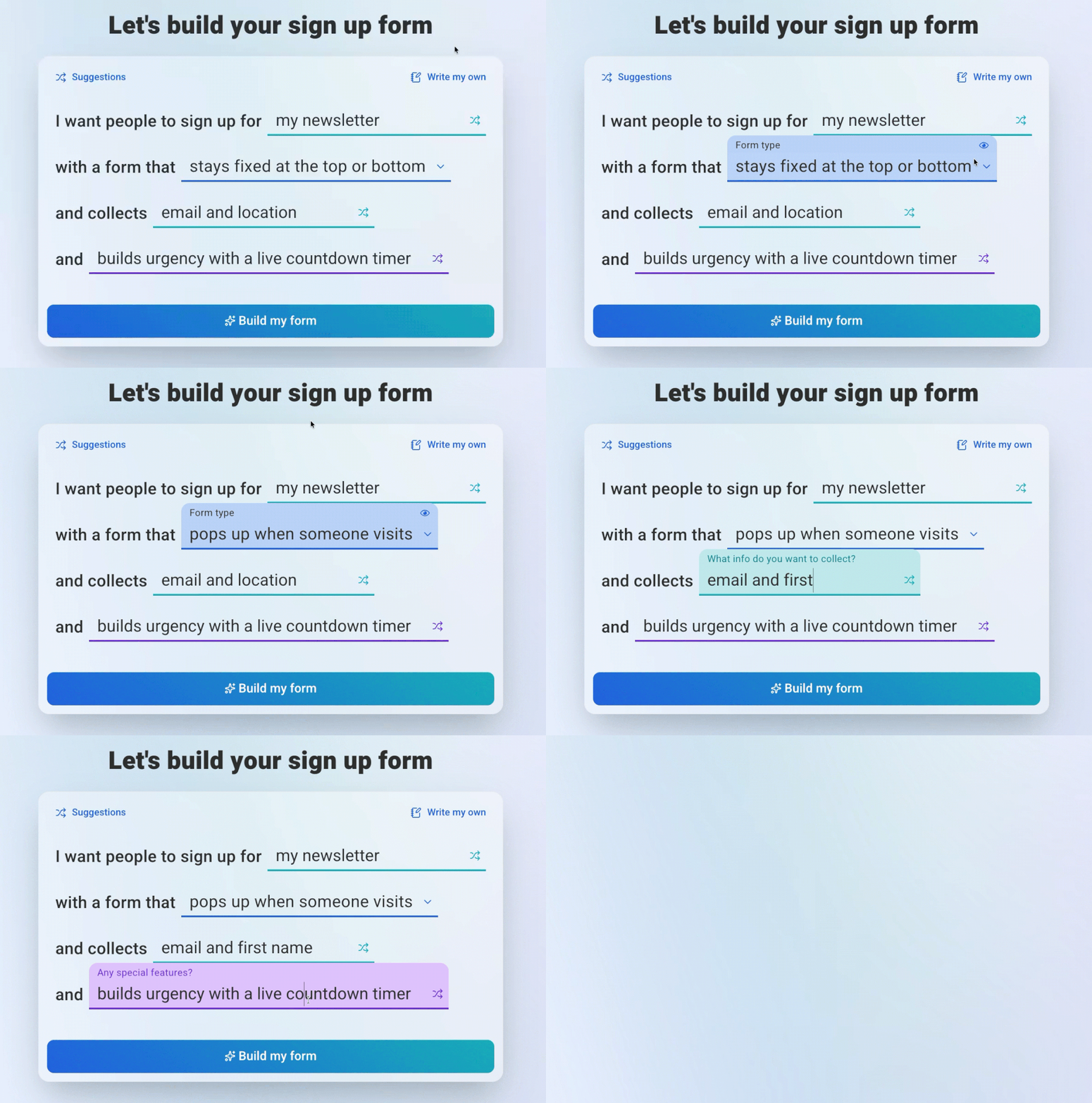
Guided Prompts: For users who prefer a more structured approach, the builder offers a series of guided prompts. By answering a few targeted questions about their audience, the specific offer, and their conversion goals, the AI meticulously assembles a form. These specific inputs ensure that the output is highly aligned with the user’s strategic objectives. For instance, questions might cover the industry, the value proposition, desired subscriber information, and preferred call-to-action. This method is particularly beneficial for users who may not have a clear visual design in mind but understand their marketing objectives.
A key differentiator of AWeber’s AI builder is its conversational refinement capability. After the initial generation, users can interact with the AI to make further adjustments using plain language commands. Requests like “shorten the headline,” “add a checkbox for terms and conditions,” or “change the button text to ‘Get Instant Access'” are processed in real-time, with the form updating dynamically. This iterative, conversational approach eliminates the need to navigate complex settings panels or field editors, dramatically accelerating the revision process and making form design accessible to marketers of all technical proficiencies.
Comparative Advantage: AI vs. Drag-and-Drop Builders
While drag-and-drop builders represented a significant improvement over manual coding, they still require users to actively build and arrange elements. The AWeber AI Form Builder, in contrast, generates the form. This fundamental difference translates into unmatched speed and quality. A comparison highlights that an AI-generated form, precisely tailored to a specific offer and brand, can be created in minutes, whereas even a proficient user might spend significantly longer customizing a template or building from scratch with a drag-and-drop interface. This efficiency is critical for businesses operating in fast-paced digital environments, allowing them to deploy campaigns rapidly and react to market trends with agility.
Broader Market Implications and Supporting Data
The introduction of AWeber’s AI Signup Form Builder aligns with a broader industry trend toward integrating artificial intelligence into marketing automation and content creation. A 2024 report by Gartner predicted that by 2026, 80% of marketers would be using generative AI for content creation, a significant jump from less than 5% in 2023. While this statistic primarily concerns textual content, it underscores the increasing reliance on AI to streamline and enhance various marketing functions, including design and user experience elements like signup forms.
The shift from fixed template galleries to dynamic AI generation represents a move towards hyper-personalization at scale. Data from numerous marketing studies consistently shows that personalized experiences lead to higher engagement and conversion rates. A report by Epsilon indicated that 80% of consumers are more likely to make a purchase when brands offer personalized experiences. While this often refers to content and product recommendations, it extends to the initial touchpoint: the signup form. A form that genuinely resonates with a user’s specific need and matches the brand’s unique voice is inherently more persuasive than a generic alternative.
For small to medium-sized businesses (SMBs), this technology democratizes access to high-quality, custom design. Historically, achieving bespoke forms required either a dedicated design team, freelance designers, or significant time investment from internal marketing personnel. The AI builder empowers SMBs to create professional-grade forms quickly and affordably, allowing them to compete more effectively with larger enterprises that have greater resources. This levels the playing field, making sophisticated marketing tools accessible to a wider array of entrepreneurs and small business owners.
Statements and Reactions from AWeber
Sean Tinney, a content marketer at AWeber and a key voice in the company’s communication, emphasized the transformative nature of this release. “A signup form template sounds like a shortcut. It isn’t. You end up working backward, trying to force someone else’s design to fit your vision,” Tinney stated. “Our AI Signup Form Builder changes that equation entirely. We’re empowering our users to start with their vision, and let the AI build a form that’s intrinsically theirs, right from the first click.”
Further echoing this sentiment, AWeber’s CEO, Chris Forrest, commented on the strategic importance of the AI integration. “This isn’t just about making forms easier to build; it’s about making them more effective. We believe that by removing the friction and compromise associated with templates, we can significantly improve our customers’ lead generation efforts and ultimately, their business growth,” Forrest explained. “The AI Signup Form Builder is a testament to AWeber’s commitment to innovation and to providing intuitive, powerful tools that truly move the needle for entrepreneurs and small businesses.”
When Templates Retain Value: Inspiration, Not Imitation
While the AI builder reduces the reliance on templates for direct implementation, AWeber acknowledges that templates, or indeed any existing form, can still serve a valuable purpose: inspiration. If a form catches a marketer’s eye, whether for its layout, call-to-action, or field structure, it holds creative merit. This is precisely where the screenshot upload feature of the AI Signup Form Builder becomes invaluable. Users can capture the essence of what captivated them, upload it, and then describe their own business needs. The AI then extracts the structural and aesthetic cues from the inspirational design and applies them to generate a form that is uniquely theirs. This process ensures users gain the benefit of creative shortcuts without the pitfalls of direct imitation or brand mismatch.
Building the Future of Lead Generation
The launch of AWeber’s AI Signup Form Builder marks a pivotal moment in the evolution of email marketing tools. By shifting the paradigm from template adaptation to AI-driven generation, AWeber is not only enhancing efficiency but also fostering a new era of hyper-personalized and brand-aligned lead capture. This technology empowers businesses of all sizes to craft highly effective signup forms in minutes, ensuring that the first interaction with potential subscribers is impactful and truly reflective of their brand’s identity and value proposition.
Businesses looking to streamline their lead generation processes and elevate their subscriber acquisition strategies are encouraged to explore this new capability. AWeber offers a free 14-day trial, inviting users to experience firsthand the speed and quality of an AI-generated signup form. The promise is clear: build your first form in minutes, free from template compromises, and ensure your welcome email reaches new subscribers the moment they sign up, setting the stage for strong, lasting customer relationships.








