


The calendar divergence of Mother’s Day observances across the globe presents a unique strategic advantage for email marketers. While the United Kingdom typically celebrates Mother’s Day in mid-March, coinciding with the fourth Sunday of Lent, the United States and a significant portion of Western Europe commemorate the occasion in May. This two-month gap offers an invaluable preview for marketers preparing for the later celebration, providing a real-time testing ground to observe successful strategies, identify pitfalls, and adapt to the ever-shifting dynamics of inbox management, the rise of artificial intelligence (AI), and prevailing economic pressures. This analysis delves into critical tactics that “Mother’s Day in May” senders should rigorously consider, drawing lessons from the earlier UK campaigns to optimize engagement and conversion.
The Global Calendar Anomaly and Its Strategic Imperative

Mother’s Day, as celebrated in the UK, has historical roots tied to “Mothering Sunday,” a Christian tradition dating back to the 16th century. It falls three weeks before Easter Sunday, making its date variable. In contrast, the US version, established in the early 20th century, is fixed on the second Sunday of May, a secular observance quickly adopted by many other nations. This calendrical difference is not merely a cultural curiosity but a potent tactical window for digital marketers. The UK’s earlier observance serves as a de facto pilot program, allowing brands targeting May celebrations to analyze campaign performance metrics, creative approaches, and deliverability challenges without the risk of real-time market impact. It enables agile adjustments, from refining subject lines and call-to-actions to re-evaluating segmentation strategies and offer structures, thereby mitigating risks and maximizing potential returns for the larger May market.
Evolving Inbox Dynamics: The Imperative of Subscriber Control and Experience
The digital landscape is increasingly characterized by stringent privacy regulations, sophisticated spam filters, and user demand for greater control over their digital experience. Marketers must move beyond one-size-fits-all approaches, particularly for sensitive seasonal campaigns.

Rethinking Opt-Out Strategies: Beyond the Blanket Apology
During the initial phases of the COVID-19 pandemic, a prevalent trend emerged: email campaigns offering subscribers the option to opt out of communications related to potentially sensitive events like Mother’s Day or Valentine’s Day. While initially perceived as a compassionate gesture, this practice has evolved into a standard, albeit double-edged, sword. Critics argue that these proactive opt-out emails can inadvertently highlight and reinforce the very occasions some subscribers might prefer to overlook, potentially causing distress or annoyance. Instead of broadcasting these messages, the contemporary best practice involves integrating such choices directly into a comprehensive preference center. Brands like Hotel Chocolat exemplify this by allowing subscribers to proactively manage their content preferences, including opting out of specific seasonal promotions, on their own terms and at their leisure. This shifts control to the user, enhancing their overall experience and fostering a more positive brand perception. Studies indicate that offering granular control over email frequency and content can reduce unsubscribe rates by up to 20-30%, demonstrating a clear link between user autonomy and list health.
Empowering Subscribers: The Broader Spectrum of Preference Management
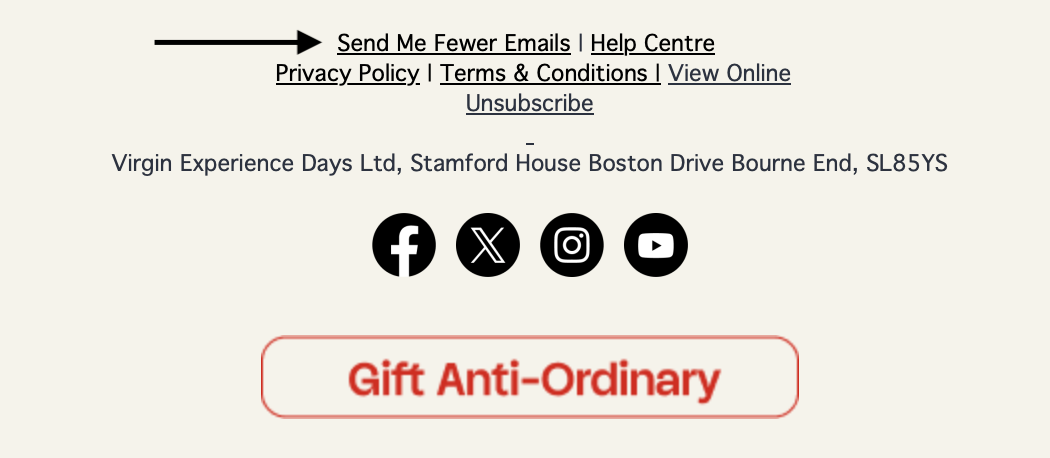
The principle of subscriber control extends far beyond sensitive events. “Too many emails” consistently ranks as the leading reason for unsubscribes and spam complaints, impacting sender reputation and deliverability. Forward-thinking brands are addressing this head-on by offering more flexible subscription options. Virgin Experience Days, for instance, provides a “send me fewer emails” option, allowing subscribers to reduce frequency with a single click rather than committing to a full unsubscribe. This proactive approach acknowledges user fatigue and offers a middle ground, preserving the subscriber relationship.
Furthermore, a significant trend observed in 2026 is the deployment of dedicated campaigns specifically promoting preference centers. Brands running standalone email campaigns to highlight the available subscriber controls report a tangible boost in engagement and a reduction in churn. By offering choices over content categories (e.g., promotions, newsletters, product updates) and frequency, marketers empower subscribers, thereby increasing the relevance of received communications and fostering deeper, more sustained engagement. This strategy aligns with growing consumer expectations for personalized experiences, where 71% of consumers expect companies to deliver personalized interactions, and 76% get frustrated when this doesn’t happen.
Visual Dominance: Capturing Attention in a Crowded Inbox
In an era of information overload, where attention spans are fleeting, striking imagery remains a cornerstone of effective email marketing. While AI-generated email summaries might offer a glimpse into content without an open, the visual impact of an email’s design and imagery continues to be a powerful driver of engagement and brand reinforcement.
The Power of First Impressions: Preview Panes and Gmail Annotations
Many subscribers utilize preview panes to quickly assess email content, making the top fold and its visual elements paramount. More critically, Google’s Gmail Annotations now dynamically select and display compelling images directly within the Promotions tab, providing a visual hook even before the email is opened. This feature transforms the inbox from a purely textual list into a visually rich shopping window, underscoring the necessity of high-quality, impactful visuals.

Brands demonstrating excellence in this area include Belvedere, whose image of a gift bag adorned with roses and vodka instantly captivates. Cartier cleverly re-imagines its iconic butterfly logo using the very jewelry pieces it promotes, creating an artistic and brand-aligned visual narrative. Such examples highlight how premium, creative imagery not only grabs attention but also communicates brand identity and product value instantaneously. Investing in professional photography, graphic design, and even short, engaging GIFs (like Pizza Express’s example) can significantly elevate open rates and click-through rates, distinguishing a brand in a competitive inbox.
Encouraging Deeper Engagement: The Art of the Scroll
Despite the emphasis on above-the-fold content, research consistently shows that a significant portion of email recipients—often fewer than half—venture below the initial view. This “fold barrier” means valuable content, offers, and brand stories often go unseen. Modern email design, however, is adapting to explicitly encourage deeper interaction.

Breaking the Fold: Creative Scrolling Prompts
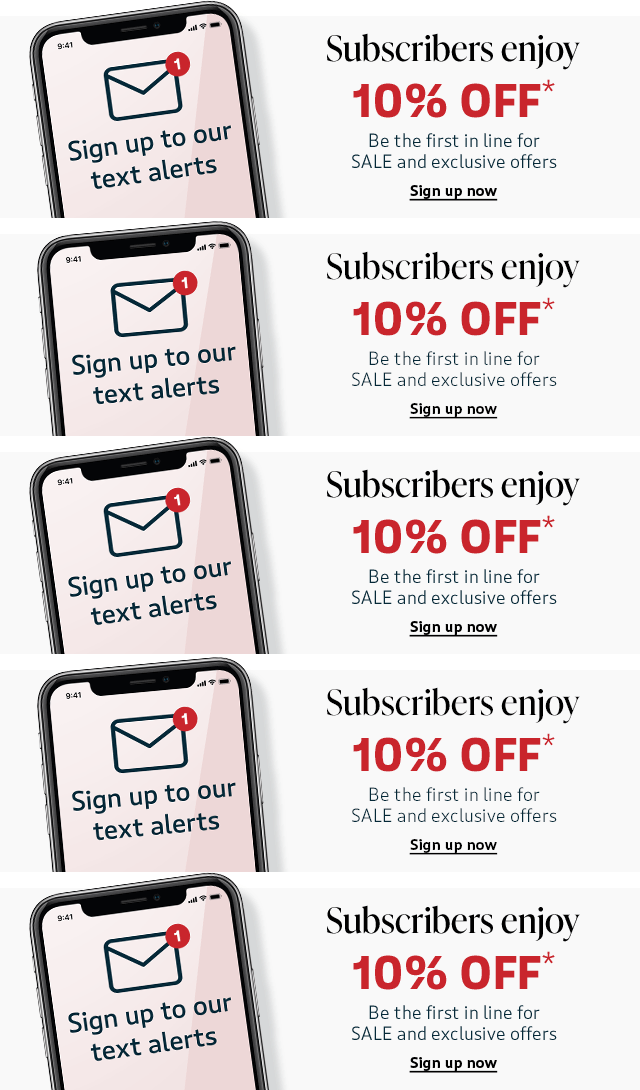
Marketers are increasingly employing innovative techniques to prompt subscribers to scroll. This includes subtle text-based nudges (“Scroll down for more,” “Discover our full collection”), prominent arrows, or engaging micro-animations that imply more content lies below. Bloom & Wild, for instance, goes a step further by gamifying the experience: “Scroll to see how to win” creates an irresistible incentive for readers to explore further, effectively transforming a passive viewing experience into an active discovery. These tactics are vital in ensuring that the full breadth of a campaign’s message and offerings reaches the intended audience, maximizing content visibility and engagement metrics.
Sparking Inspiration: Guiding the Gifting Journey
The act of buying a gift for a loved one, especially on an emotionally charged occasion like Mother’s Day, can be fraught with pressure and stress. For many consumers, the desire to choose the “perfect” gift is intense, making helpful guidance and inspiration highly valued.

Curated Experiences and Personalized Recommendations
Inspiration emails play a crucial role in alleviating this stress. Interflora excels in this domain, framing their communications with empathetic messaging: “Don’t worry, we’re here to help. Here are a few top tips for a beautiful and stress-free Mother’s Day.” Their emails often feature a concise gift-finder quiz, offering personalized recommendations based on the recipient’s preferences or the sender’s budget. They also provide suggestions for heartfelt card messages, reminders about international delivery options, and inclusive prompts to celebrate all types of mothers, including “the mom of your little ones.” The inclusion of “most popular blooms” or “trending now” sections, as seen with Charlotte Tilbury’s “Shop Trending Now” feature displaying top-viewed products, leverages social proof and simplifies the decision-making process for overwhelmed shoppers. These strategies not only facilitate purchases but also position the brand as a helpful, understanding partner in the gifting journey.
Multi-Channel Synergy: Amplifying Reach Beyond the Inbox
In today’s fragmented digital landscape, a truly successful marketing program is inherently multi-channel. While email remains foundational, other channels like mobile SMS, social media, and in-app notifications play vital supporting roles, especially in the context of deliverability challenges and evolving consumer behaviors.
SMS as a Strategic Companion to Email
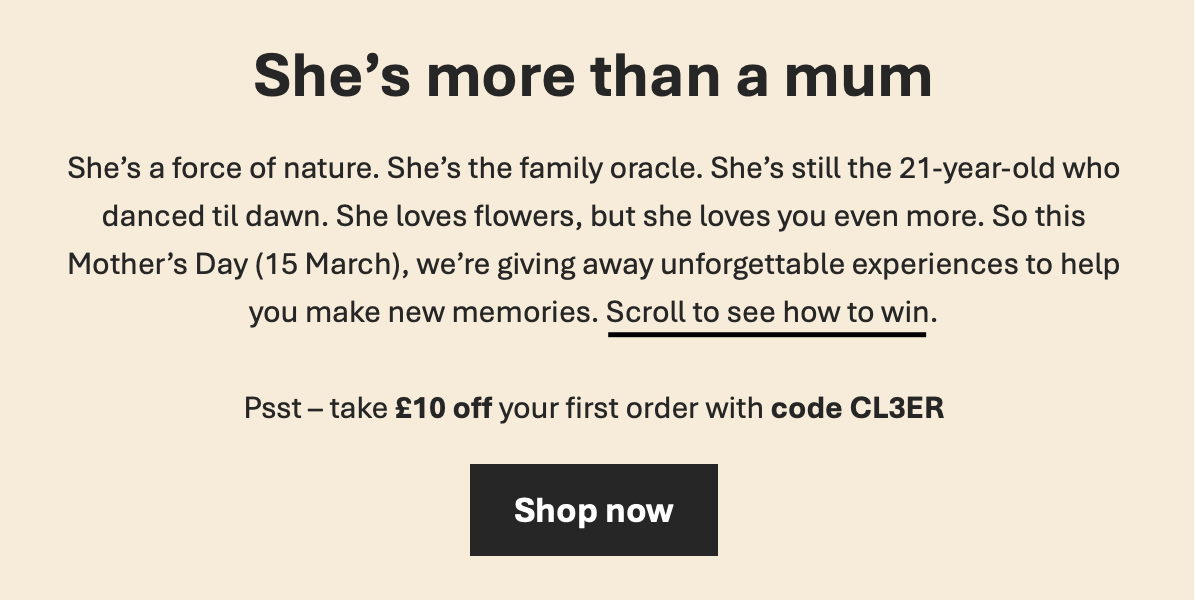
Consumers often prefer mobile channels for transactional messages such as receipts, shipping updates, and delivery notifications. Brands like Cotton Traders effectively integrate SMS opt-ins, often using clever micro-animations to encourage sign-ups for these essential post-purchase communications. However, SMS is also emerging as a critical tool to combat the de-prioritization of marketing emails within increasingly sophisticated inboxes, particularly Gmail’s relevance-sorted Promotions tab.
As observed in recent Valentine’s Day and April Fools’ campaigns, date-sensitive promotional emails can easily get buried beneath messages Gmail deems more relevant. A well-timed SMS, such as “Don’t miss our Mother’s Day promotion—check your inbox today!”, can serve as a powerful nudge, driving subscribers directly to the email. SMS boasts significantly higher open rates (often exceeding 90%) compared to email, making it an effective channel for critical, time-sensitive alerts. This synergistic approach ensures that even if an email is initially overlooked, an SMS reminder can re-engage the subscriber, preserving the campaign’s visibility and impact.
Leveraging Gmail Annotations for Enhanced Visibility
Complementing SMS, Gmail Annotations are an indispensable part of a marketer’s relevance toolkit. By specifying details like discounts, expiration dates, and product previews within the email’s metadata, senders can help Gmail categorize and display their content more effectively. Properly annotated emails may even earn a coveted “Featured Deal” card at the top of the Promotions tab, providing unparalleled visibility and a significant boost in engagement. This strategic use of platform-specific features is crucial for navigating modern inbox algorithms and maximizing campaign performance.

Driving Early Conversions: Incentivizing Proactive Shopping
For high-stakes, time-sensitive events like Mother’s Day, encouraging early purchases offers mutual benefits. It alleviates pressure on a brand’s e-commerce infrastructure, customer service teams, and fulfillment logistics, while simultaneously providing a tangible advantage to customers.
The Win-Win of Early Bird Offers
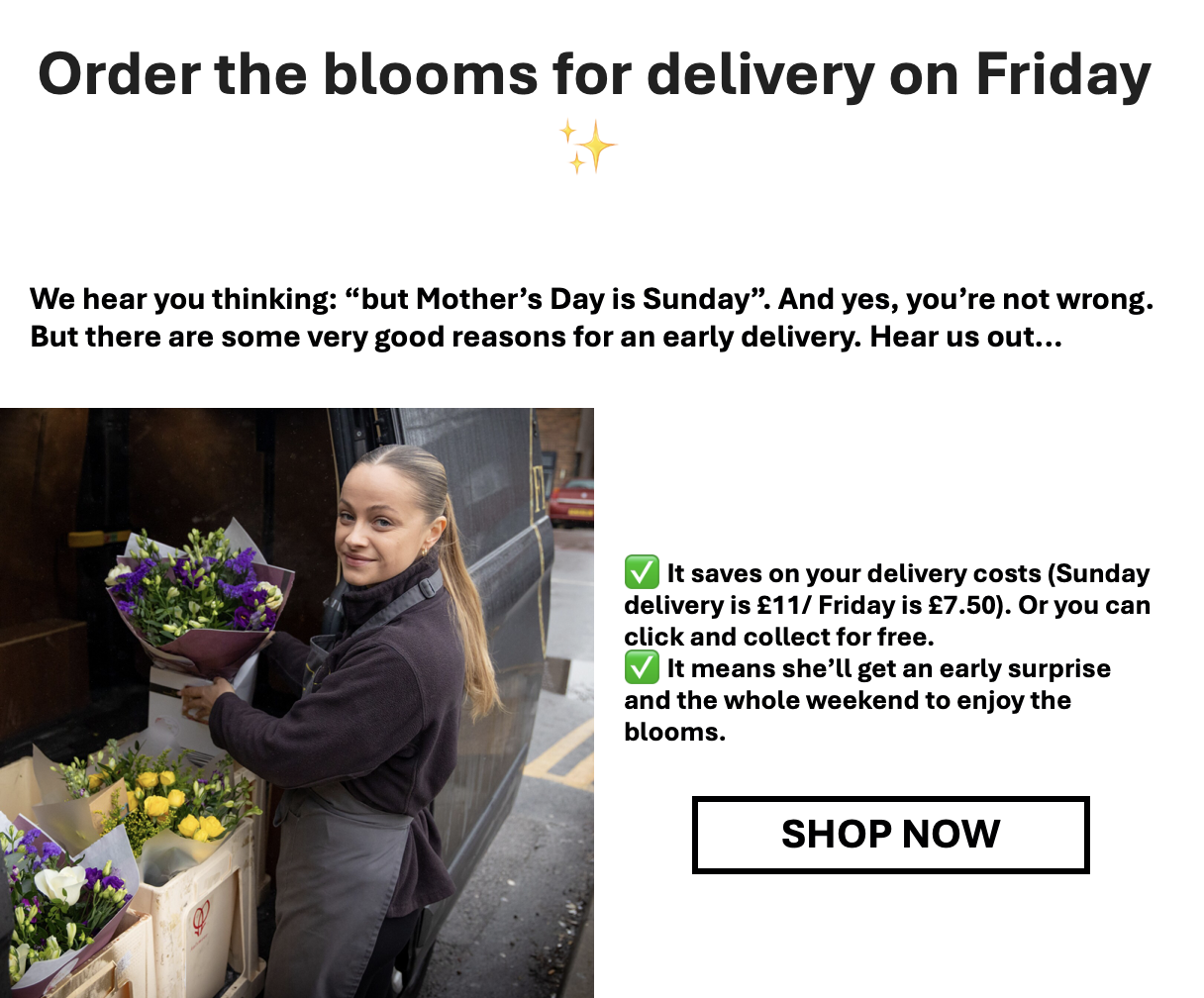
Interflora masterfully implements this strategy by offering incentives for advance orders. Their messaging often highlights benefits such as “order early for cheaper delivery” and the thoughtful advantage that “mom gets to enjoy her flowers for the full weekend.” This approach transforms an operational benefit for the brand into a genuine value proposition for the customer, turning a potential last-minute scramble into a relaxed, thoughtful purchase. Early bird discounts, free expedited shipping, or exclusive gift bundles for pre-orders are all effective tactics to shift purchasing behavior earlier in the campaign cycle, ensuring smoother operations and happier customers. Data suggests that early bird offers can boost conversion rates by 15-20% during peak holiday seasons.

Cultivating Customer Loyalty: The Power of Reminders and Retention
Beyond immediate sales, strategic email marketing for Mother’s Day can also foster long-term customer relationships and loyalty. Recognizing that not all customers are hyper-organized, brands can offer invaluable services that simplify future gifting occasions.
The “Remember the Date!” Service
For the segment of the population prone to forgetting important dates, a proactive reminder service is a game-changer. Interflora, once again, leads by example, offering an account-based reminder service where customers can set advance notifications for a range of special events, including birthdays, anniversaries, and future Mother’s Days. These reminders can be customized for timing (e.g., two weeks out, one month out) and often come with an incentive, such as a discount for orders placed through the service. This feature transforms a transactional interaction into a relationship-building tool, ensuring repeat business and cementing brand loyalty by solving a common customer pain point. Such loyalty programs can increase customer lifetime value by as much as 30%.
Maintaining Relevance: Post-Event Content Management
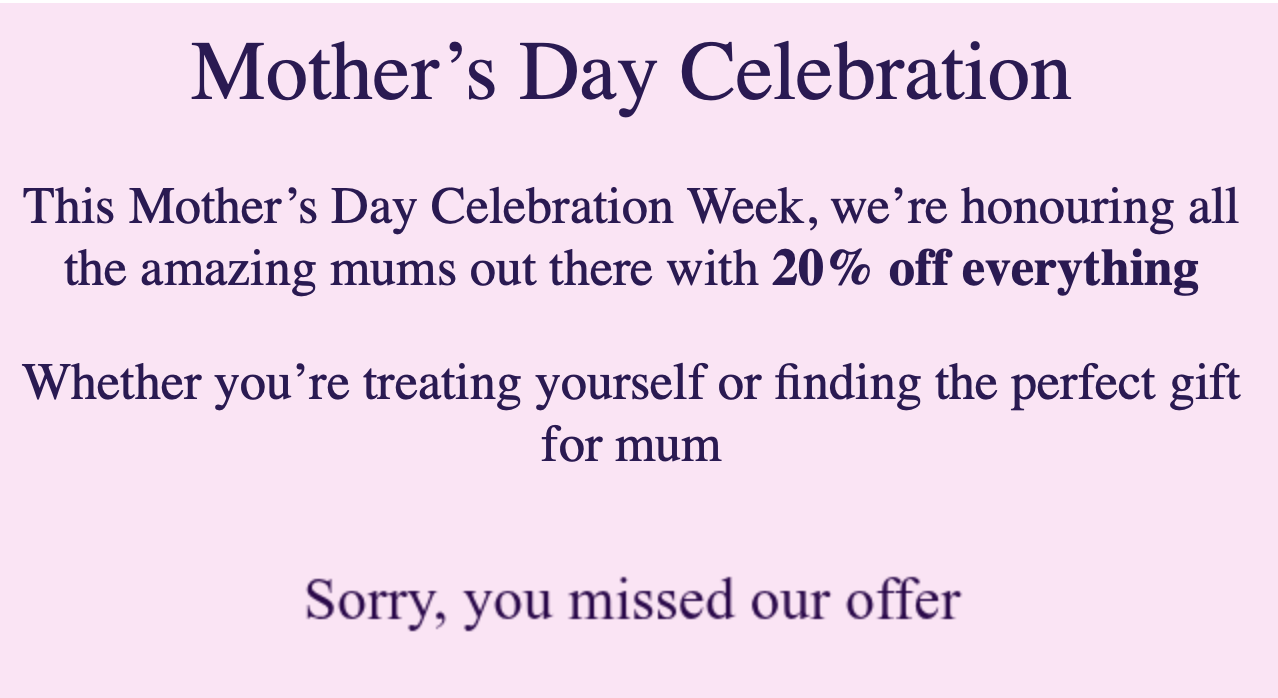
Once Mother’s Day has passed, the relevance of promotional emails tied to the event rapidly diminishes. Lingering, expired offers can lead to increased email deletions, or worse, spam complaints, which negatively impact sender reputation.
Dynamic Content Replacement
Smart marketers employ dynamic content strategies to seamlessly swap out expired promotional material. This ensures that emails remain relevant and engaging even after the specific event has concluded. Look Fabulous Forever, for example, aimed to replace their Mother’s Day promotion with new, timely content. While their execution could have been further optimized by directly redirecting to an upcoming event like Easter, the underlying instinct to replace rather than let outdated content persist is crucial. Utilizing content blocks that automatically update based on dates or user segments keeps the email experience fresh and continuously valuable, preventing subscriber fatigue and maintaining a positive sender score.
The Integrity of Deliverability: Avoiding System Manipulation
A persistent misconception among some marketers is the belief that landing emails in the “Primary” inbox tab (for Gmail users) inherently guarantees greater visibility and engagement compared to the “Promotions” tab. This has led some brands, like The White Company, to actively encourage customers to manually recategorize their emails as “Primary.”
Understanding Inbox Categorization and ISP Intent
However, industry experts, including representatives from Gmail, Microsoft, and Yahoo, consistently caution against any attempts to “game the system.” These email service providers (ESPs) have sophisticated algorithms designed to categorize emails based on content, sender behavior, and user interaction. Promotional emails are, by design, intended for the Promotions tab, where subscribers expect to find commercial communications. Attempting to force marketing emails into the Primary tab can be counterproductive, leading to penalties such such as lower deliverability rates, increased spam flagging, and a damaged sender reputation. ISPs prioritize user experience, and any attempt to circumvent their categorization logic is viewed negatively. Marketers should focus on creating high-quality, relevant content that genuinely engages subscribers within the Promotions tab, rather than trying to manipulate inbox placement. The Promotions tab is not a disadvantage; it’s where engaged shoppers look for deals and updates.

The Criticality of Localization: A Final Warning for Global Brands
Revisiting the core premise of the calendar disparity, a crucial bonus tip for non-UK senders with UK customers is to avoid sending Mother’s Day promotions in May. This seemingly obvious point is often overlooked, leading to significant marketing missteps.
Geographic Segmentation: A Non-Negotiable Practice
Sending Mother’s Day promotions to UK customers in May, two months after their actual observance, is a reliable recipe for high complaint rates, unsubscribes, and severe damage to sender reputation. This highlights the absolute necessity of robust geographic segmentation in email marketing. Global brands must ensure their campaigns are meticulously localized, not just in language and currency, but critically in adherence to local cultural dates and observances. Failing to do so demonstrates a lack of attention to detail and disrespect for local customs, undermining trust and diminishing brand equity. Implementing precise audience segmentation based on geographical data is paramount for maintaining relevance and avoiding costly errors in international marketing efforts.
Learning from History: Fine-Tuning for Future Success
The adage often attributed to Winston Churchill, “Those who fail to learn from history are doomed to repeat it,” holds profound relevance for email marketers navigating seasonal campaigns. The UK’s earlier Mother’s Day celebration provides an unparalleled opportunity for global senders to conduct a live market test, gathering invaluable data and insights before the larger May event. By diligently analyzing the performance of UK campaigns—what resonated with audiences, what fell flat, how deliverability was impacted by new AI filters, and how economic conditions influenced purchasing behavior—marketers can fine-tune their strategies, creative assets, and segmentation for maximum impact. This proactive approach ensures that Mother’s Day campaigns in May are not only well-received but also contribute positively to long-term brand health and customer relationships in an increasingly complex digital ecosystem. To further enhance email program effectiveness, marketers are encouraged to consult comprehensive resources such as the recently published Litmus State of Email 2026 report, which offers cutting-edge insights and best practices for optimizing email performance in the evolving digital landscape.








