On June 3, 2026, Google DeepMind announced the official release of Gemma 4 12B Unified, a mid-sized open-source multimodal model designed to fundamentally change how developers implement artificial intelligence on local hardware. This latest addition to the Gemma 4 family marks a significant architectural shift, moving toward a “unified” design that processes text, images, audio, and video within a single, encoder-free framework. By optimizing for a 256K context window while maintaining a footprint small enough for modern laptops, Google is positioning the 12B Unified model as the primary engine for the next generation of local agentic workflows.
The release of the 12B Unified model addresses a critical structural gap in the Gemma 4 lineup, which originally debuted earlier in the year. While previous iterations of the Gemma series utilized separate encoders for different media types—relying on external vision or audio processing units before feeding data into the core large language model (LLM)—the 12B Unified model integrates these capabilities directly into the embedding space. This streamlining reduces pipeline complexity, lowers latency, and simplifies the fine-tuning process for developers seeking to build comprehensive AI assistants that can “see” and “hear” without requiring massive data center infrastructure.
A Strategic Timeline: The Evolution of Gemma 4
The rollout of the Gemma 4 ecosystem has been a calculated, multi-stage release strategy designed to capture various segments of the hardware market. To understand the significance of the June 3rd announcement, it is necessary to look at the chronology of the Gemma 4 lifecycle:
- March 31, 2026: Google launches the initial Gemma 4 family, featuring the E2B and E4B edge-class models for mobile devices, alongside the 31B dense model and the 26B A4B Mixture-of-Experts (MoE) model for high-end workstations and enterprise servers.
- April 16, 2026: Google introduces Multi-Token Prediction (MTP) drafters for the Gemma 4 family. This technical update allowed for speculative decoding, significantly increasing the generation speed of the models by predicting multiple future tokens simultaneously.
- June 3, 2026: The release of Gemma 4 12B Unified. This model acts as the “missing link,” providing a level of reasoning and multimodal depth that surpasses the edge models while remaining significantly more accessible than the 26B or 31B variants.
This phased approach highlights Google’s intent to dominate the “local AI” space, offering a model size for every conceivable use case, from a smartphone-based assistant to a researcher’s local dev box.
Architectural Innovation: The Shift to Encoder-Free Multimodality
The most striking technical advancement in the Gemma 4 12B Unified model is its encoder-free architecture. Historically, multimodal models have functioned like a modular assembly: a vision encoder (such as CLIP) processes an image, an audio encoder (such as Whisper) processes sound, and their outputs are then “translated” for the LLM.
Gemma 4 12B Unified abandons this modularity in favor of a direct projection method. For vision processing, the model utilizes a compact 35-million parameter vision embedder. Instead of a deep, multi-layer vision tower, raw 48×48 pixel patches are projected into the LLM’s hidden dimension through a single matrix multiplication. Spatial information is preserved through factorized coordinate lookup matrices, allowing the model to understand the layout of a document or the composition of a scene with minimal computational overhead.
The audio processing follows a similar logic. Google has removed the Conformer-based audio encoders found in smaller Gemma 4 variants. The 12B model instead slices raw 16 kHz audio into 40-millisecond frames, which are then linearly projected into the input space. This unified token loop means that text, pixels, and waveforms are all treated as native “languages” by the transformer, allowing for more fluid cross-modal reasoning.
Performance Benchmarks and Technical Specifications
The 11.95-billion parameter model is built with 48 layers and a 262K vocabulary. It utilizes a hybrid attention mechanism, which is becoming a hallmark of Google’s efficient transformer designs. This mechanism interleaves local sliding window attention (at a 1024-token scale) with full global attention. By ensuring the final layer is always global, the model maintains high-quality coherence across its massive 256K context window while reducing the memory bottlenecks typically associated with long-form data processing.
In terms of performance, the Gemma 4 12B Unified model demonstrates a significant leap over its predecessors and competitors in the mid-range category. According to official Google DeepMind benchmarks, the instruction-tuned version of the model achieves:
- MMLU Pro: 77.2% (Surpassing the Gemma 3 27B model’s 67.6%)
- AIME 2026 (No Tools): 77.5% (A massive jump from the E4B model’s 42.5%)
- GPQA Diamond: 78.8% (Indicating high-level graduate-level reasoning)
- MMMU Pro: 69.1% (A specialized benchmark for multimodal understanding)
- LiveCodeBench v6: 72.0%
These figures suggest that the 12B Unified model is not merely a “lite” version of the larger models but a highly optimized specialist. Its performance in math (MATH-Vision at 79.7%) and coding (Codeforces ELO of 1659) makes it a viable candidate for local software development agents that need to interpret both code and UI screenshots.
Ecosystem Integration and Developer Accessibility
Google has ensured that the Gemma 4 12B Unified model is deeply integrated into the existing AI developer ecosystem from day one. The model weights are available on Hugging Face and Kaggle, and it is supported by a wide array of local deployment tools.
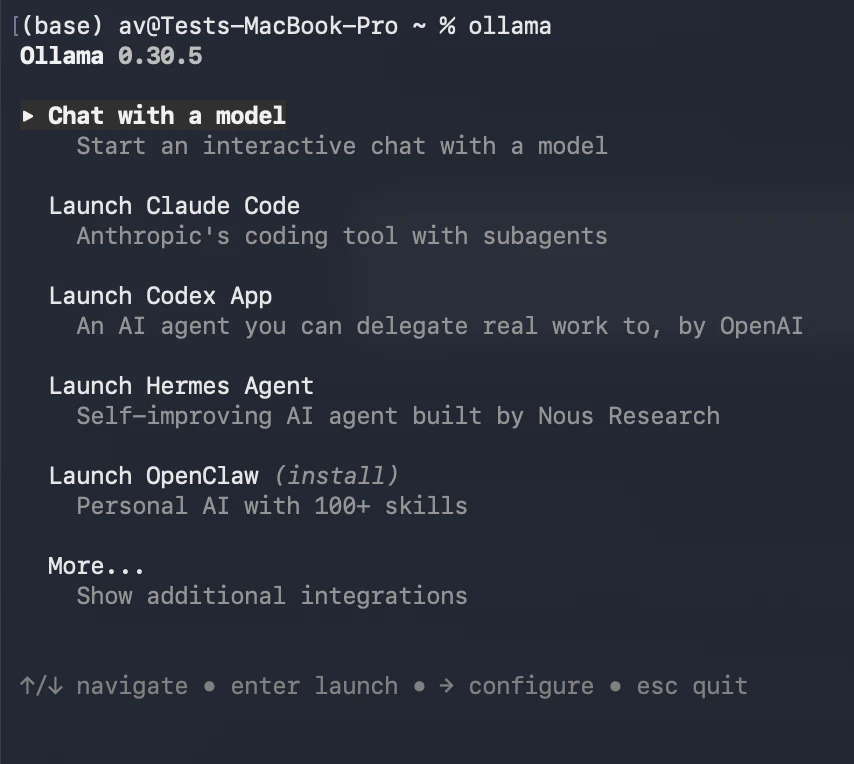
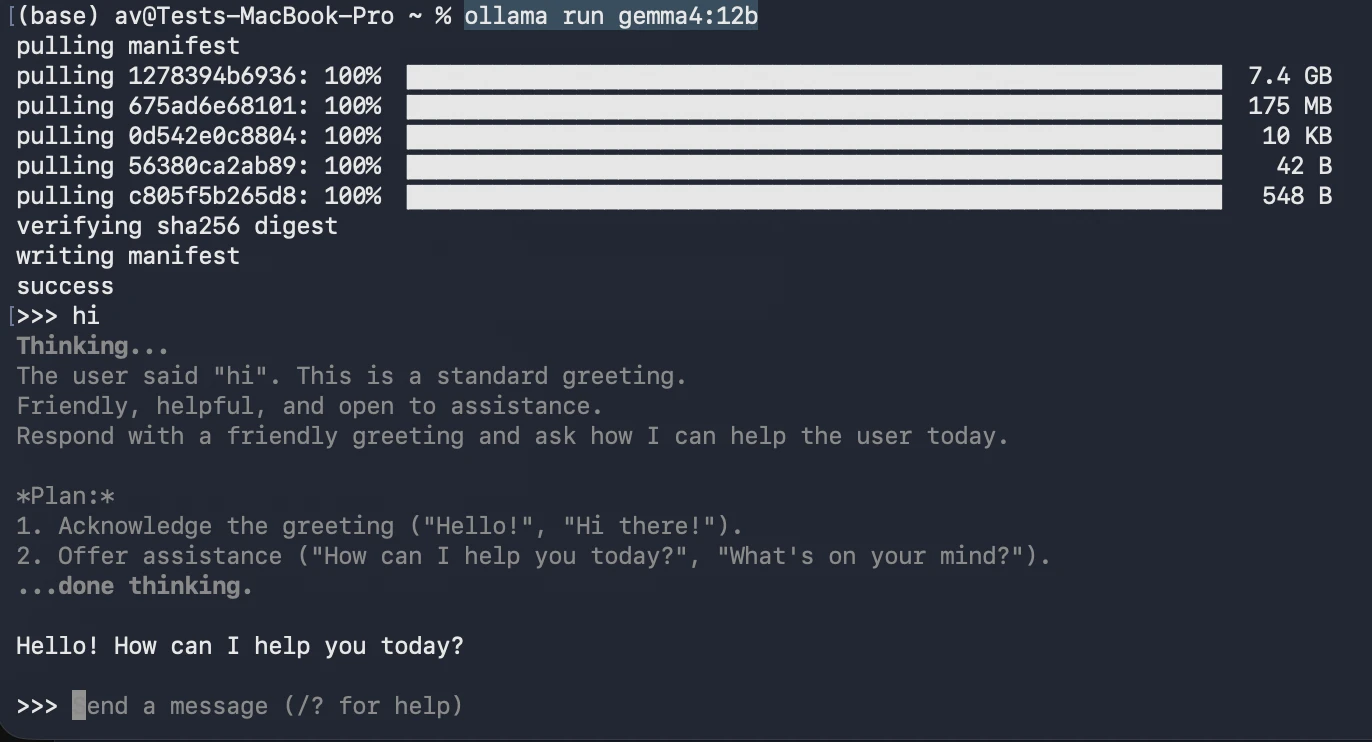
Industry standard tools such as Ollama and LM Studio have already updated their libraries to support the 12B Unified model, allowing users to run the model on consumer-grade hardware with a single command. The model’s “drafter-ready” status also means it can be paired with MTP drafters to achieve lower latency, making real-time voice interaction and “agentic” loops—where the AI performs tasks on a computer—far more responsive.
For enterprise and specialized developers, the unified architecture offers a distinct advantage in fine-tuning. Because the model lacks separate encoders, the entire multimodal loop can be tuned in a single pass. This reduces the complexity of training the model on proprietary datasets, such as medical imaging paired with diagnostic reports or specialized legal documents with complex formatting.
Industry Reactions and Market Implications
The release has sparked a range of reactions from the AI community. Analysts suggest that Google is making a strategic play to prevent Meta’s Llama series from monopolizing the open-weights market. By offering a “Unified” model that handles audio and video natively—something many other open models still struggle with—Google is providing a more complete toolkit for developers.
“The move to an encoder-free design is a bold bet on the efficiency of the transformer architecture,” said one independent AI researcher. “It suggests that Google believes the LLM itself is powerful enough to handle raw sensory data if the projection is handled correctly. This significantly lowers the barrier for building truly multimodal local apps.”
However, some critics point to the “gap” mentioned in the model’s release notes regarding Google’s broader strategy. While Gemma provides powerful open weights, Google’s most advanced “Gemini” models remain behind proprietary APIs. The 12B Unified model is seen by some as a “bridge” to keep developers within the Google ecosystem, even if they are working locally.
Broader Impact: The Future of Agentic AI
The launch of Gemma 4 12B Unified is more than just a technical update; it represents a shift in the philosophy of AI deployment. By focusing on a “laptop-first” model that does not compromise on multimodal capabilities, Google is enabling a future where AI agents can operate with a high degree of privacy and autonomy.
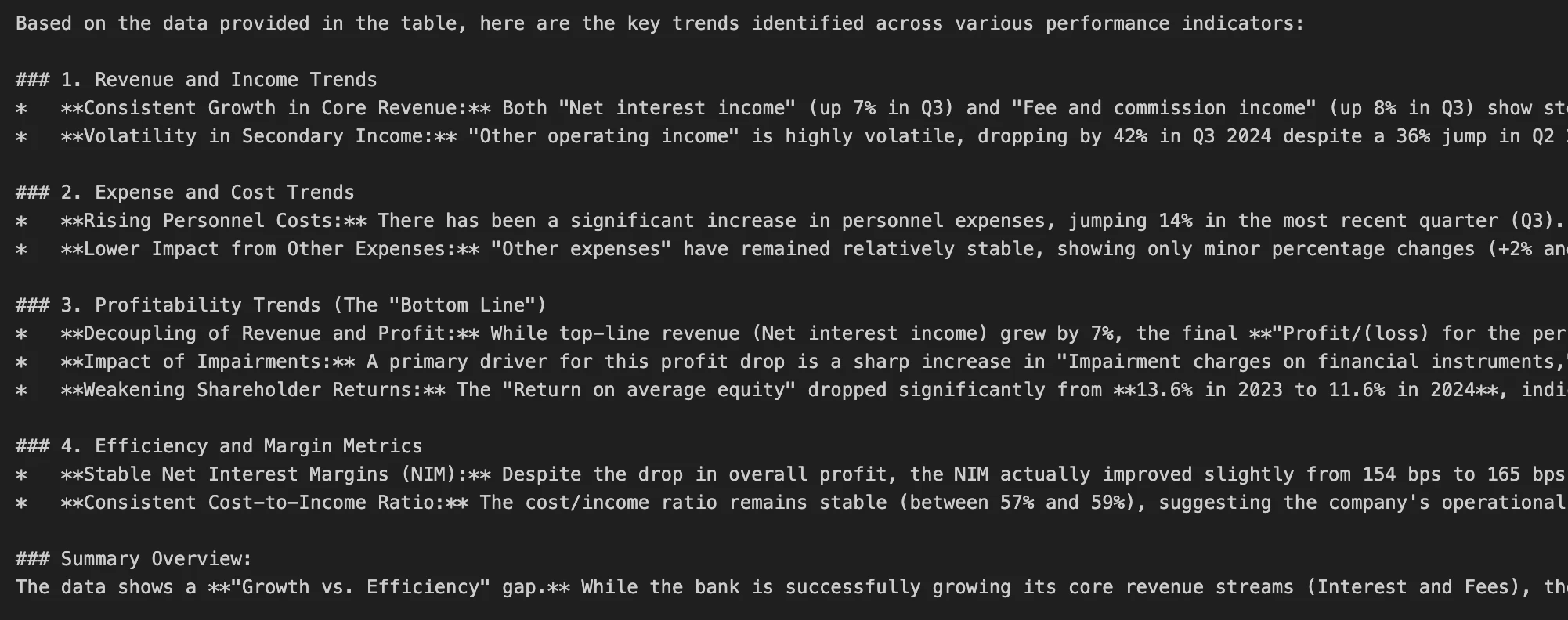
Local deployment means that sensitive data—such as financial tables, personal videos, or private conversations—never needs to leave the user’s machine. The model’s ability to process these diverse inputs locally, combined with its strong reasoning scores, makes it an ideal candidate for personal executive assistants, local research tools, and secure coding environments.
As the AI industry moves away from purely text-based interactions toward “agentic” systems—AI that can see a screen, hear a command, and execute a multi-step task—the Gemma 4 12B Unified model provides the necessary foundation. It offers a balance of memory efficiency and cognitive power that was previously unavailable in the open-source landscape.
Conclusion
With the release of Gemma 4 12B Unified, Google DeepMind has delivered a versatile, high-performance model that simplifies the complexity of multimodal AI. By merging text, image, and audio into a single architecture, Google has removed the friction that has long hindered local AI development. As developers begin to integrate this model into their workflows, the focus will likely shift from what AI can do in the cloud to what it can accomplish directly on the devices we use every day. The 12B Unified model stands as a testament to the rapid maturation of the Gemma family and a clear indicator of Google’s commitment to the open-weights community.