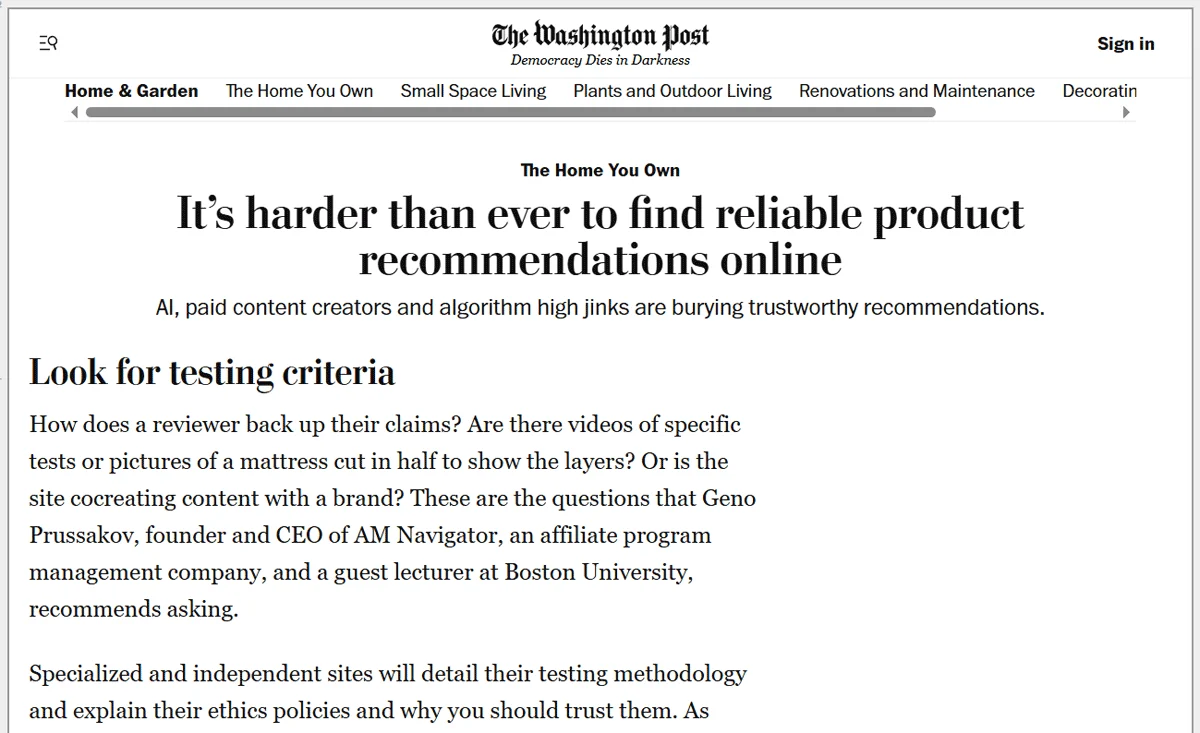
The digital publishing landscape has undergone a seismic shift over the last decade, transitioning from a primary reliance on display advertising to a sophisticated model of “commerce content.” This evolution was recently highlighted in a January 2025 report by The Washington Post, which examined the growing prevalence of product recommendation lists—often titled “The Best of [Category]”—published by high-authority media outlets. As traditional revenue streams like print subscriptions and banner ads continue to dwindle, major media organizations have increasingly leveraged their search engine authority to monetize consumer intent through affiliate marketing. While these lists are often presented as objective editorial advice, the underlying financial arrangements between publishers and brands have raised critical questions regarding consumer trust, editorial integrity, and the transparency of the modern digital economy.
The Rise of Commerce Content in Modern Journalism
For nearly a century, the “church and state” divide in journalism—the strict separation between editorial content and advertising—was considered the industry standard. However, the economic pressures of the 21st century have blurred these lines. Today, many of the world’s most respected media brands have established dedicated “commerce” or “reviews” divisions. These departments are tasked with producing content that is specifically designed to rank high in search engine results and drive affiliate sales.
The mechanism is straightforward: when a reader clicks a link in a product roundup and makes a purchase, the publisher receives a commission from the merchant. This model has proven so lucrative that it now accounts for a significant portion of the annual revenue for companies such as The New York Times (through Wirecutter), Vox Media (through The Strategist), and Dotdash Meredith. While these organizations maintain that their reviews are independent, the reality of the business model introduces a potential conflict of interest. If a media outlet only recommends products from brands with which they have an affiliate agreement, the “best” product for the consumer may be omitted in favor of the most “profitable” product for the publisher.
The Mechanics of Media-Driven Product Vetting
Despite the inherent financial incentives, industry experts and affiliate program managers note that reputable media outlets often employ rigorous standards before putting their brand name behind a recommendation. The vetting process typically involves four distinct layers of evaluation:
- Independent Editorial Testing: Many large publishers operate dedicated testing labs. For example, Wirecutter employs hundreds of writers and researchers who spend thousands of hours testing physical products, from air purifiers to mattress toppers, often using scientific instruments to measure performance.
- Expert Consultation: When a publisher lacks in-house expertise for a specific niche, such as specialized medical equipment or high-end audio gear, they frequently hire external subject matter experts or consultants to provide an objective assessment.
- Audience Sentiment Analysis: Publishers often look beyond their own tests to see how the broader public perceives a product. This includes analyzing verified purchaser reviews on third-party platforms to ensure that the product’s long-term reliability matches its initial performance.
- Merchant Reliability Checks: Before entering an affiliate partnership, publishers often vet the merchant itself. This includes evaluating the brand’s shipping speed, return policies, and customer service reputation to ensure that the reader’s post-click experience reflects well on the media outlet.
However, the industry also acknowledges that financial arrangements can influence rankings. Factors such as placement fees (where a brand pays to be at the top of a list), inflated affiliate commission rates, or guaranteed EPC (Earnings Per Click) metrics can sometimes weigh into the final presentation of a “Best of” list.
Chronology of the Affiliate Marketing Boom in Media
The integration of affiliate marketing into mainstream media did not happen overnight. It is the result of a twenty-year evolution in digital strategy:
- 2000–2010: The era of the “niche blogger.” Affiliate marketing was largely the domain of individual enthusiasts and coupon websites. Major media outlets viewed affiliate links as “low-brow” and potentially damaging to their brand.
- 2011: The New York Times acquires About.com (later becoming Dotdash), signaling a growing interest in service journalism and intent-based search traffic.
- 2016: The New York Times acquires Wirecutter for approximately $30 million. This acquisition is widely cited as the turning point when “commerce content” became a legitimate and sought-after revenue stream for legacy media.
- 2018–2021: A period of massive consolidation. Large media conglomerates began launching “Best of” verticals (e.g., CNN Underscored, Forbes Advisor, Fortune Recommends) specifically to capture high-intent search traffic for lucrative keywords like “best credit cards” or “best home insurance.”
- 2023–2025: The “Parasite SEO” controversy. Smaller, independent review sites began to protest as major media outlets used their massive domain authority to dominate search results for product reviews, often outranking specialized sites that had performed more in-depth testing. This led to the January 2025 Washington Post investigation into the reliability of these lists.
Supporting Data and Market Impact
The scale of the affiliate marketing industry reflects its importance to the media ecosystem. According to data from Statista and the Performance Marketing Association (PMA), affiliate marketing spend in the United States alone was projected to reach $15.7 billion by the end of 2024.

Furthermore, a study by Rakuten Advertising found that nearly 80% of brands now utilize affiliate programs to drive sales. For publishers, the conversion rates for “commerce content” are significantly higher than those of traditional display ads. While a banner ad might have a click-through rate (CTR) of less than 0.1%, a well-crafted product recommendation list can see conversion rates exceeding 5% to 10% for highly motivated shoppers.
However, consumer trust remains a volatile variable. A 2024 survey on digital media ethics indicated that while 65% of consumers start their buying journey with a search for “best [product],” only 38% “completely trust” the recommendations found on major media sites once they realize those sites are earning commissions from the sales.
Regulatory Landscape and Official Responses
The Federal Trade Commission (FTC) has become increasingly active in regulating this space. The FTC’s “Endorsement Guides,” updated significantly in recent years, require that any publisher receiving compensation for a recommendation must provide a “clear and conspicuous” disclosure.
In response to the growing scrutiny, industry bodies like the Interactive Advertising Bureau (IAB) have advocated for clearer labeling. Many publishers have responded by placing disclosure statements at the very top of their articles, explicitly stating that they may earn a commission if a reader purchases through their links. Despite these efforts, critics argue that the disclosures are often written in fine print or designed to be overlooked, leading to calls for stricter enforcement and more standardized labeling across the internet.
Strategies for Discerning Consumers
As the line between editorial and advertising continues to thin, consumers are encouraged to adopt a more skeptical approach to online shopping. Industry experts suggest four primary strategies for evaluating the validity of a product recommendation:
- Cross-Reference Across Multiple Outlets: If the same product is ranked #1 by three different major media organizations, each with its own testing methodology, the recommendation is likely more reliable.
- Search for Non-Affiliate Reviews: Consumers should look for reviews on platforms that do not use affiliate links, such as enthusiast forums (e.g., Reddit) or specialized YouTube channels that disclose their source of products.
- Verify Testing Methodology: A trustworthy recommendation should clearly explain how the product was tested. If an article lacks specific data points, photos of the product in use, or a description of the testing environment, it may be a “thin” review based solely on marketing materials.
- Check for Conflicts of Interest: Users should look for the affiliate disclosure. If a list only includes products from one parent company or a limited group of advertisers, it should be treated as a curated advertisement rather than an objective review.
Broader Implications for the Future of Search
The dominance of big media in the product recommendation space has broader implications for the future of the internet. As Google and other search engines prioritize high-authority domains, smaller, independent reviewers are being pushed out of the first page of search results. This “winner-take-all” dynamic could lead to a homogenization of product recommendations, where only the brands that can afford to pay high commissions or placement fees to major media outlets receive visibility.
Furthermore, the rise of Artificial Intelligence (AI) in search—such as Google’s Search Generative Experience (SGE)—is beginning to summarize these media-driven lists directly in the search results. This could potentially decouple the recommendation from the publisher’s brand entirely, further complicating the relationship between the reader, the media outlet, and the advertiser.
In conclusion, while the involvement of big media in product recommendations has brought a level of professionalization and rigorous testing to the world of affiliate marketing, it has also introduced complex ethical dilemmas. As long as the economic model of digital journalism relies on transaction-based revenue, the burden of discernment will remain, in large part, with the consumer. The challenge for the media industry moving forward will be to maintain the “authority” they are currently monetizing by ensuring that their editorial integrity is never sacrificed for a higher commission rate.