

The landscape of digital optimization has undergone a fundamental transformation, moving away from the simplistic evaluation of surface-level interactions toward a sophisticated model of business-driven experimentation. While traditional A/B testing often focused on easily quantifiable but ultimately superficial metrics—such as click-through rates, email open rates, or button color preferences—modern advanced experimentation targets the core logic that dictates commercial success. This shift represents a transition from “tactical testing” to “strategic experimentation,” where the primary objectives are long-term retention, lifetime value (LTV), and revenue optimization.
In the current high-stakes digital economy, organizations are increasingly moving beyond the question of “which design performs better” to ask deeper, more complex questions regarding user psychology and product-market fit. Advanced A/B testing allows firms to experiment with pricing structures, onboarding sequences, feature rollouts, and paywall timing. By testing the underlying decisions that influence user behavior, companies can build a compounding growth engine rather than a mere backlog of incremental UI improvements.
The Evolution of Digital Experimentation: A Chronology
To understand the current state of advanced A/B testing, it is essential to view its development through the lens of technological progress and data maturity.

The Era of Visual Optimization (2000–2010): Early experimentation was largely confined to the “front-end.” Marketers focused on “low-hanging fruit,” such as changing the color of a Call-to-Action (CTA) button or testing two different headlines. Data was often siloed, and statistical significance was frequently misunderstood or ignored.
The Era of Segmentation and Personalization (2011–2018): As tracking technology improved, teams began to realize that “averages lie.” The industry shifted toward segment-specific testing, acknowledging that a mobile user in London might react differently to a promotion than a desktop user in New York. This period saw the rise of sophisticated client-side testing tools.

The Era of Full-Stack and Algorithmic Experimentation (2019–Present): Today, experimentation has moved to the backend. With server-side testing and feature flagging, companies can test pricing algorithms, recommendation engines, and core product architecture. The integration of Artificial Intelligence (AI) and variance-reduction techniques like CUPED has enabled faster, more reliable decision-making.
Core Fundamentals of Advanced Experimentation
The transition to advanced experimentation requires a departure from traditional mindsets. Industry experts, including Andres Pinate, emphasize that a real experimentation system is an operating model rather than a collection of disparate tests. It requires a clear business thesis, disciplined hypothesis generation, and a process that treats learning as an organizational asset.
Behavioral Signals vs. Surface Metrics
Basic testing relies on proxy metrics—scroll depth or form completions—which often fail to correlate with actual revenue. Advanced teams utilize deep behavioral data, such as backend event logs, cohort drop-off patterns, and cross-session behavior. By integrating behavioral science into the experimentation framework, organizations can develop higher-quality hypotheses that address the “why” behind user actions rather than just the “what.”
The Three-Layer Metric Framework
A hallmark of a mature testing program is the definition of three distinct metric layers before any experiment is launched:
- Primary Metric: The main business outcome the test is designed to move (e.g., Conversion to Paid).
- Guardrail Metrics: Essential indicators that must not be negatively impacted (e.g., Cancellation rates or Page Load Speed).
- Secondary Metrics: Supporting data points that help explain the movement in the primary metric (e.g., Average Order Value).
Advanced Methodologies and Statistical Techniques
For organizations with high traffic and complex user journeys, standard A/B testing is often insufficient. Advanced methodologies allow for more nuanced analysis and faster iteration.
Multivariate Testing (MVT)
Unlike A/B testing, which isolates a single variable, MVT tests multiple elements simultaneously—such as headlines, images, and CTAs—to identify the optimal combination. This approach is vital when interactions between elements are suspected to influence behavior more than any single component in isolation. However, MVT requires significant traffic to reach statistical significance across all possible variations.

Multi-Armed Bandit (MAB) Algorithms
In traditional A/B testing, traffic is split evenly until a winner is declared, which can lead to “regret”—the loss of potential conversions from the underperforming variant. MAB algorithms dynamically shift traffic toward the winning variant during the test. This is particularly effective for time-sensitive campaigns, such as Black Friday promotions, where waiting for a fixed end-date would result in lost revenue.
Variance Reduction via CUPED
Controlled-experiment Using Pre-Experiment Data (CUPED) is a statistical technique used by elite data science teams at companies like Netflix and Microsoft. By using historical data to filter out existing variance in the user base, CUPED allows teams to reach statistical significance faster and with smaller sample sizes. It is often cited as the clearest signal of an organization’s experimentation maturity.

Interleaving
Commonly used in recommendation systems, interleaving mixes results from two different algorithms into a single list shown to the user. By observing which items the user interacts with, the system can determine algorithm preference with far less traffic than a traditional A/B split. Because this happens at the ranking layer, it necessitates a server-side infrastructure.
High-Impact Testing Surfaces and Case Study Analysis
The efficacy of advanced experimentation is best demonstrated through its application in high-leverage areas of the business.

Pricing and Revenue Logic
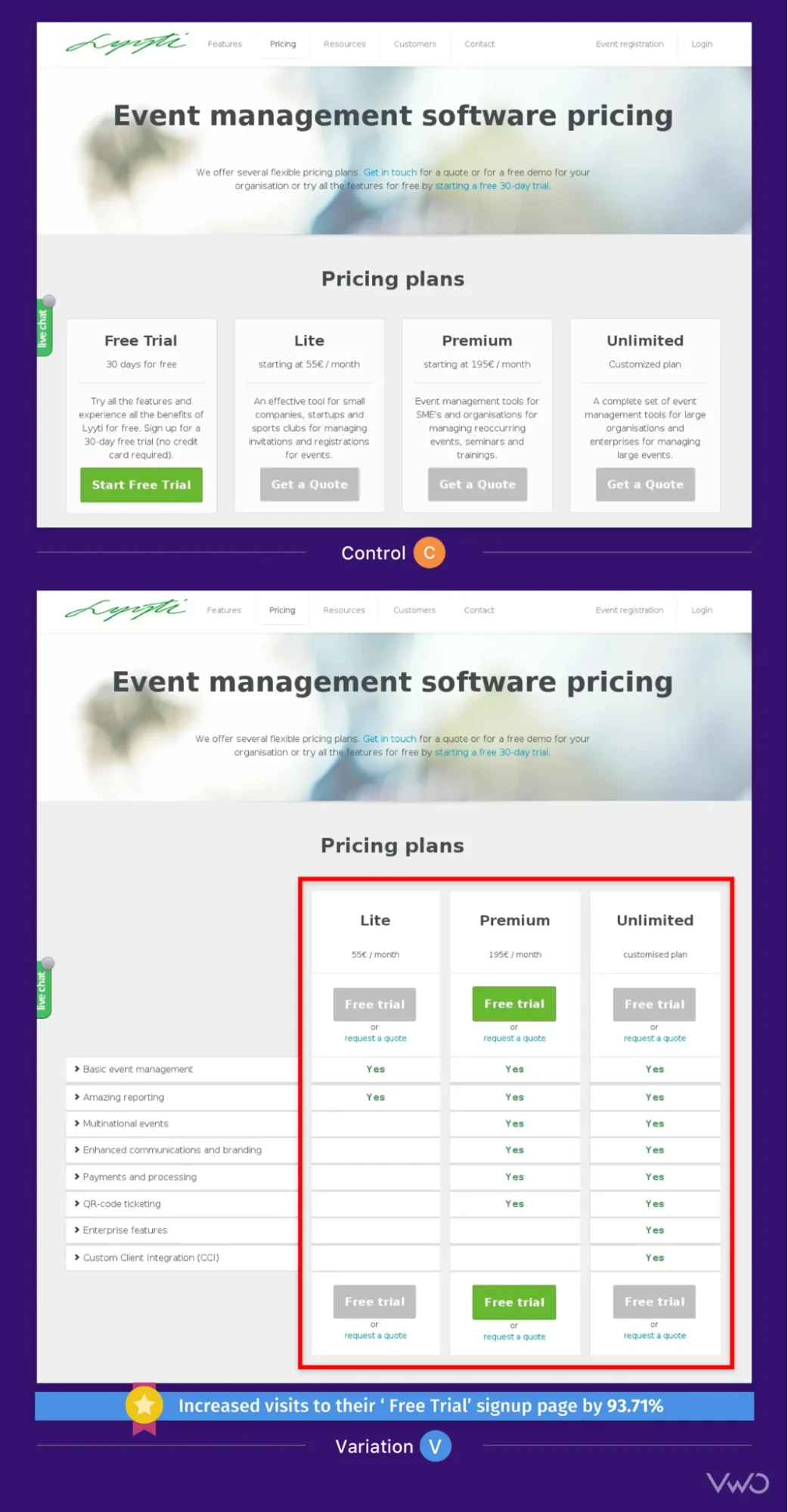
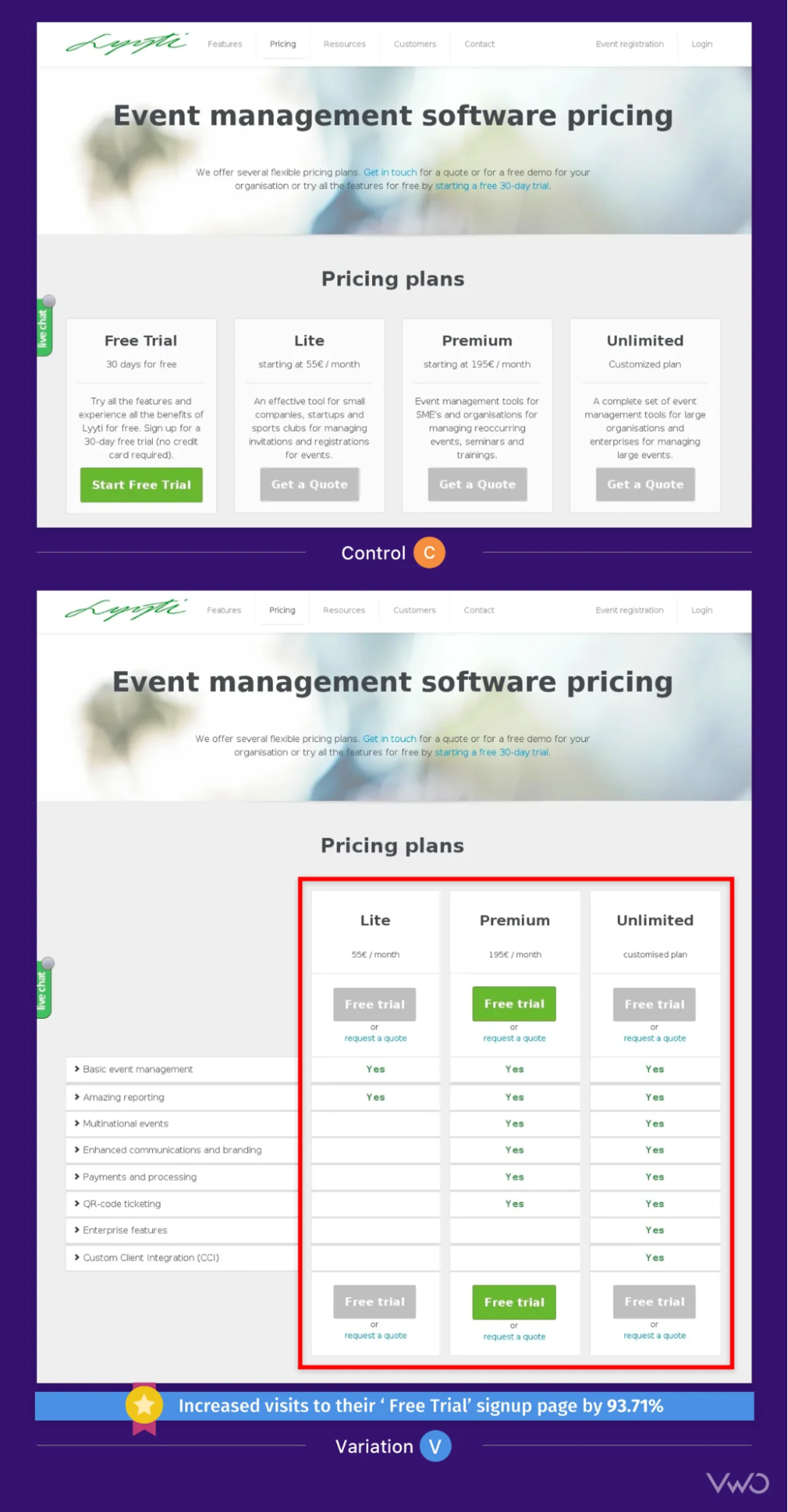
Pricing pages offer the highest leverage for optimization. Minor changes in how plans are anchored or how “monthly vs. annual” options are presented can lead to massive shifts in Average Order Value (AOV). For instance, the event management platform Lyyti simplified its pricing structure by aligning all CTAs around free trials and highlighting specific features based on heatmap data. This strategic shift resulted in a 93.71% increase in conversions, proving that clarity and intent-alignment outperform simple aesthetic changes.
Checkout Flow Sequencing
Optimization in the checkout phase focuses on the “when” rather than the “what.” Advanced teams test the sequencing of steps to build trust before asking for commitment. Meliá Hotels utilized feature experimentation to test an additional step in their booking funnel. By rolling the change out progressively—starting at 5% of traffic—they achieved a 1.85% uplift in revenue per visitor without increasing drop-off rates, demonstrating the value of controlled, server-side rollouts.
Onboarding and Activation
For Software-as-a-Service (SaaS) companies, the “activation moment” is the primary predictor of long-term retention. Advanced testing in this area involves tailoring onboarding paths to specific user personas. AURUM, for example, implemented a series of structured A/B tests across its onboarding journey, resulting in a four-fold increase in user activation.
Mobile-Specific Multivariate Testing
Mobile users exhibit distinct behavioral patterns that desktop-centric tests often fail to capture. Tough Mudder identified that key event details were often buried on mobile screens. By using MVT to redesign the mobile header and list structures, they achieved a 9% uplift in session value, highlighting the necessity of treating mobile as a distinct testing surface.

The Role of Infrastructure and AI in Scaling Growth
Advanced experimentation is impossible without a robust technical foundation. The modern toolset must bridge the gap between marketing agility and engineering stability.
Server-Side Testing and Feature Flagging
By moving experimentation to the backend, teams can test changes that do not involve UI components, such as search algorithms or database queries. Feature flagging allows for “dark launches,” where a feature is deployed to the production environment but only toggled on for a specific segment of users. This minimizes risk and allows for seamless rollbacks if guardrail metrics are triggered.

AI-Led Vibe Experimentation and Copilots
The emergence of AI has introduced two significant changes to the field. First, AI-powered engines can now automate the generation of variations and identify high-potential audience segments within massive datasets. Second, as the manual burden of setting up tests decreases, the human role is shifting toward strategic judgment. AI “copilots” are increasingly used to surface insights from qualitative data, such as session recordings and surveys, turning “vibes” into testable hypotheses.
Strategic Implications and Future Outlook
The broader implication of advanced A/B testing is the inevitable convergence of marketing, product, and data science. In a mature organization, experimentation is no longer a “marketing project” but a core component of the product development lifecycle.

As privacy regulations tighten and third-party cookies disappear, first-party experimentation becomes the most reliable way to understand customer intent. Organizations that invest in a “system of learning” rather than a “system of testing” will find themselves better equipped to navigate market volatility. The goal is no longer just to find a “winning” version of a webpage, but to build an institutional memory that compounds intelligence over time, leading to sustainable, data-driven growth.
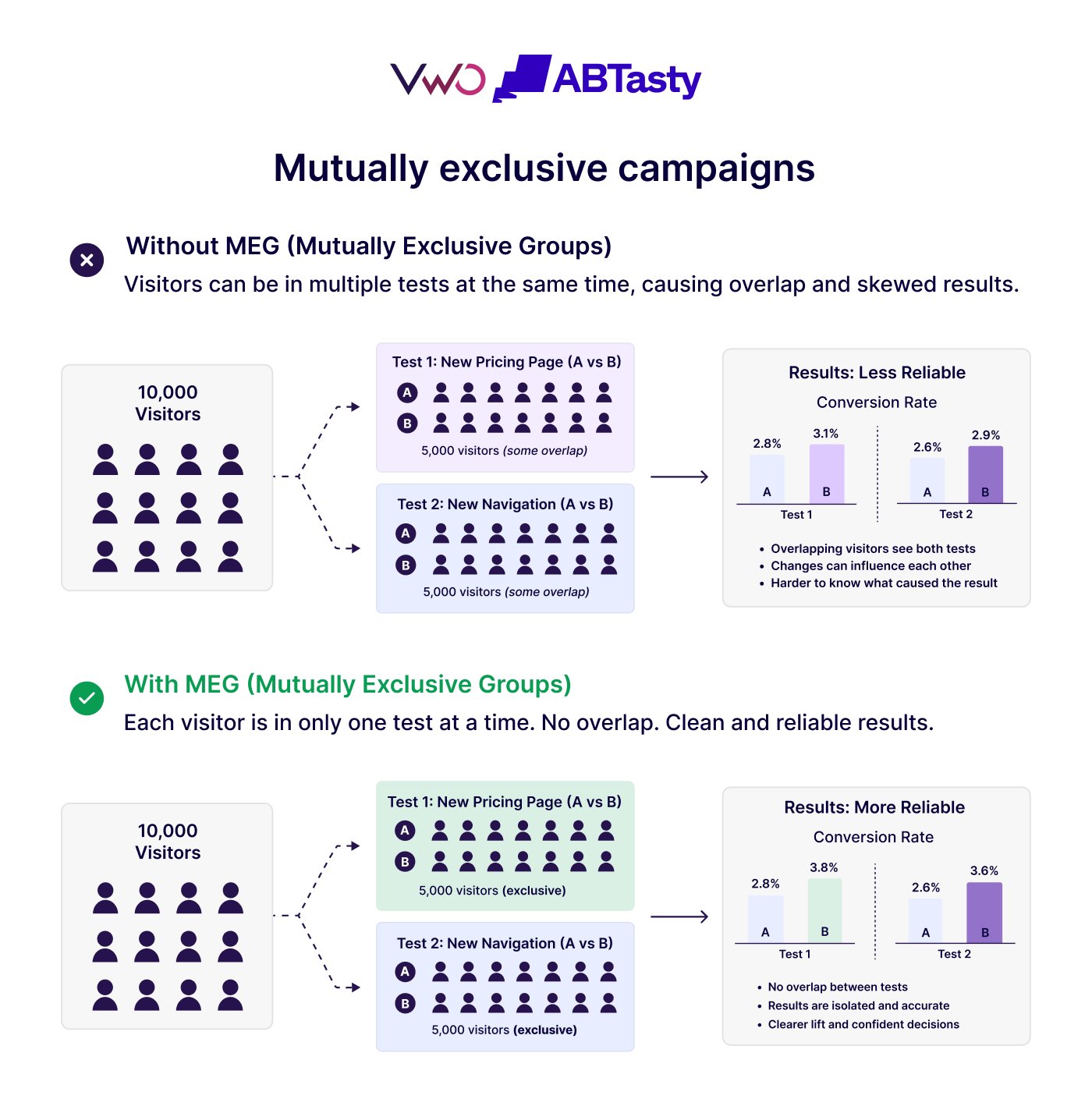
By integrating behavioral analytics, server-side infrastructure, and advanced statistical models, businesses can move beyond incrementalism. The future of the industry lies in the ability to run mutually exclusive, high-velocity campaigns that respect the complexity of the user journey while maintaining the rigorous standards of scientific inquiry.







