

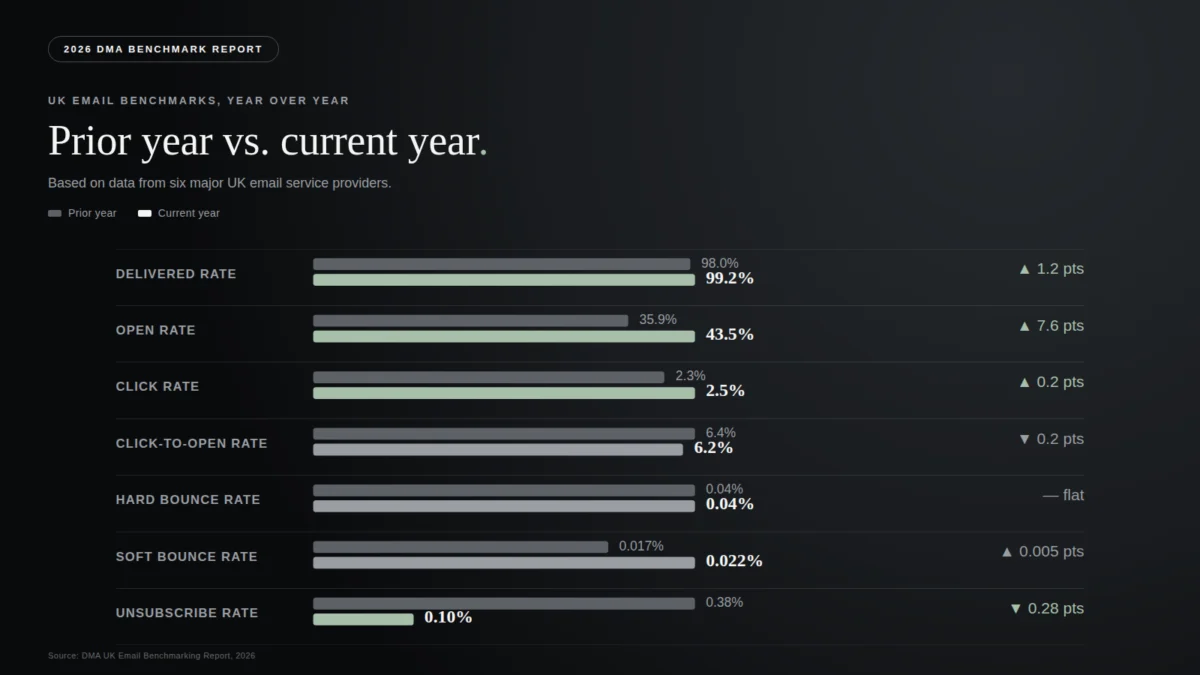
The latest DMA UK Email Benchmarking Report, sponsored by Validity, offers an indispensable lens into the dynamic and increasingly competitive landscape of email marketing. Far from being a static channel, email continues to evolve, demanding sophisticated strategies and granular insights to differentiate "good" performance from truly "great" results. This year’s report, leveraging an extensive dataset compiled from six major email service providers, provides the most robust and complete overview of UK email performance to date, offering crucial benchmarks for marketers aiming to maximize the substantial revenue potential of this enduring digital channel. The findings underscore a pivotal moment for email practitioners, where technological advancements, shifting consumer behaviours, and stricter platform requirements necessitate a re-evaluation of traditional metrics and optimization approaches.
The Enduring Power of Email: A Positive Outlook Amidst Change
Despite the proliferation of new communication channels and the ever-present challenge of digital noise, email marketing in the UK continues to demonstrate remarkable resilience and growth. The report paints an overwhelmingly positive picture year-over-year, indicating a healthy channel that marketers are successfully leveraging for engagement and conversion. While specific metrics can fluctuate, the overarching trend points to an incremental improvement across key performance indicators. For instance, average delivered rates have seen a slight but significant uptick, moving from an already high 98.9% to an impressive 99.2% nationally. This marginal improvement, when scaled across millions of emails, signifies enhanced list hygiene and improved sender practices across the board. Similarly, general engagement metrics, including unique opens (though now viewed with increased scrutiny) and click-through rates, have either held steady or experienced modest increases, reflecting a continuous effort by brands to refine their messaging and targeting strategies. This consistent performance solidifies email’s position not merely as a communication tool, but as a critical revenue driver and relationship builder for businesses of all sizes. The ability of email to adapt to changing privacy landscapes and integrate with emerging technologies further cements its foundational role in the digital marketing ecosystem.
Sectoral Disparities and Strategic Adjustments
A deeper dive into the report’s findings reveals significant variance in performance across different industry sectors, highlighting the need for tailored strategies rather than a one-size-fits-all approach. While the overall picture is positive, certain sectors face unique challenges and opportunities. Retail and travel, for example, registered the lowest click-through rates, at 1.0 percent and 1.2 percent respectively. This seemingly low performance, however, warrants a nuanced interpretation rather than immediate alarm, a point elaborated upon later in the report regarding AI’s influence. It suggests that while direct clicks might be lower, the intent behind those clicks could be higher, or that the customer journey involves multiple touchpoints beyond the initial email click. Conversely, the B2B sector exhibited the most pronounced improvement in delivered rates, climbing sharply from 90.7 percent to an impressive 95.6 percent. This substantial gain is a clear indicator that B2B marketers have significantly sharpened their acquisition strategies and list hygiene practices, actively cleaning databases and ensuring higher quality, permission-based subscriber lists. Such diligence directly translates into better sender reputation and reduced bounce rates, laying a stronger foundation for effective communication. These sectoral insights are crucial for marketers to benchmark their performance accurately and to identify areas for strategic focus, whether it’s optimizing content for direct response in high-volume sectors or bolstering list quality in B2B environments. Understanding these nuances allows for more effective resource allocation and campaign design.
Beyond Delivery Rates: The Imperative of Inbox Placement
One of the most critical distinctions illuminated by the report is the fundamental difference between "delivery" and "deliverability." While a 99.2 percent delivered rate appears robust, it merely indicates that an email was accepted by the recipient’s mail server. It offers no guarantee that the email actually landed in the intended inbox, rather than being shunted to a spam folder or blocked entirely. This crucial metric is known as the Inbox Placement Rate (IPR), and it stands as the ultimate determinant of whether an email investment translates into tangible revenue. Globally, average IPRs hover around 87 percent, implying that approximately one in eight legitimate, permission-based marketing emails never reaches the primary inbox. The UK average IPR, while slightly higher at around 91 percent, has experienced a concerning decline of more than two percentage points. This downward trend is largely attributed to mailbox providers, such as Microsoft (which commands roughly 30 percent of UK inboxes), increasingly tightening their enforcement of bulk sender requirements and employing more sophisticated spam filters.
The implications of a declining IPR are profound. Even the most meticulously crafted email, with compelling content and attractive offers, is rendered ineffective if it doesn’t reach the subscriber’s inbox. For marketing leaders focused on return on investment (ROI), IPR should be the primary metric under scrutiny. A typical sender operating at a 90 percent inbox placement rate has an immediate, double-digit revenue uplift available simply by improving their IPR, without needing to invest further in content creation, design, or campaign strategy. Improving IPR involves a multifaceted approach, including maintaining a pristine sender reputation, rigorously authenticating emails using protocols like SPF (Sender Policy Framework), DKIM (DomainKeys Identified Mail), and DMARC (Domain-based Message Authentication, Reporting, and Conformance), and consistently practicing stringent list hygiene to remove inactive or problematic addresses. Neglecting IPR is akin to investing heavily in advertising creative only for the ads to never be displayed to the target audience.
AI’s Shifting Influence on Click-Through Rates
The report highlights a fascinating and complex evolution in how email click-through rates (CTRs) are being generated and perceived, largely driven by the increasing integration of artificial intelligence (AI) into email clients and operating systems. While overall clicks have seen only a modest increase year-over-year, a more significant and disruptive shift is occurring beneath the surface. AI-generated email summaries, now a feature in several prominent email platforms, are increasingly capable of identifying and surfacing key call-to-action links directly within the inbox preview, even before a subscriber formally opens the message. This innovation can undoubtedly drive immediate traffic to a brand’s website or specific landing page. However, it also introduces a new dynamic: senders are, in essence, ceding the initial click decision to an AI’s algorithmic judgment about which link is most relevant or important.
This AI-driven phenomenon likely offers a partial explanation for the seemingly weak sectoral click numbers observed in retail and travel. It is improbable that these robust sectors genuinely experienced a halving of their click performance year-over-year. A more plausible interpretation is that AI summaries and virtual assistants are curating fewer, but potentially higher-intent, clicks. Subscribers are being directed to the most pertinent links without the need to engage with the full email content, leading to a concentration of clicks on specific, high-value actions. This shift underscores that the real narrative isn’t necessarily one of declining performance, but rather an urgent and pressing need for more sophisticated attribution models. Traditional last-click attribution, which assigns 100% of the credit to the final click before conversion, becomes increasingly insufficient in an environment where AI intermediates the initial engagement. Marketers must now embrace multi-touch attribution, integrating email data with broader customer journey analytics, CRM systems, and sales data to accurately understand the full impact of their email campaigns and the subtle influence of AI in guiding user behavior. This adaptation is crucial for accurately valuing email’s contribution to the sales funnel and optimizing content for both human and AI interpretation.
The "Brand Billboard" Effect: Valuing Inactive Subscribers

A significant revelation from the report challenges conventional wisdom regarding list segmentation and the perceived value of inactive subscribers. Virtually every email program carries a segment of inactive subscribers, often constituting as much as 50 percent of the total mailing list. Historically, marketers have been hesitant to mail to these segments, primarily due to concerns about potentially harming their sender reputation and deliverability metrics through low engagement rates. However, this reluctance overlooks a powerful, albeit indirect, function of email: its role as a "brand billboard" in the inbox.
Even when subscribers do not open or click an email, the mere presence of the sender’s name and subject line in their inbox serves as a continuous brand impression. This passive exposure fosters brand recall and can influence behavior in myriad ways beyond direct email engagement. Inactive subscribers might, for example, visit a brand’s physical store, conduct an independent search for a product review, or navigate directly to the brand’s website through other channels, all influenced by the subliminal reinforcement provided by email exposure. When these alternative responses are comprehensively factored into the revenue equation, inactive subscribers can astonishingly account for approximately 25 percent of an email program’s total revenue. This substantial contribution is driven predominantly by brand reputation and latent recall rather than immediate, measurable engagement within the email itself. This finding presents a compelling case for re-evaluating list suppression strategies and the overall valuation of email programs. It suggests that a blanket suppression of inactive segments might inadvertently remove a significant, albeit indirect, revenue stream. Instead, marketers should consider carefully crafted re-engagement campaigns or specific "brand awareness" sends to these segments, always balancing potential engagement benefits with the need to maintain a healthy sender reputation.
The Evolving Role of Open Rates as a Metric
The utility of open rates as a reliable indicator of email engagement has been significantly diminished by recent technological advancements and privacy changes. While once a cornerstone metric, the report, supported by external data, suggests that open rates are no longer as useful or accurate as they once were, though they are not entirely without value. Zeta Global, a key contributor to this year’s report, recently published data indicating that unique opens might be inflated, with a reported 40 percent unique open rate contrasting sharply with a "true open" rate of just 11 percent, after stripping out mailbox provider inflation and bot activity. This implies that roughly three-quarters of recorded opens may not represent genuine human engagement.
Validity’s own observations corroborate this trend. In Q1, many of its customers reported substantial drops in Gmail open rates. These declines were largely attributable to changes in Gmail’s image-fetching behavior and broader inbox updates, rather than a genuine collapse in subscriber engagement. Crucially, click rates for the same customers remained steady over the same period, providing strong evidence that subscribers had not disengaged from the content or offers. The shift towards Apple Mail Privacy Protection (MPP), which pre-fetches and caches email content, including tracking pixels, further obscures the accuracy of open rates across a significant portion of the audience. Despite these challenges, open rates still possess some directional value. They remain useful for relative comparisons in A/B tests (an 80 percent open rate still outperforms a 60 percent rate under identical testing conditions). Moreover, for Apple-based traffic specifically, an open is only recorded when a message has successfully achieved inbox placement, offering a limited indicator of deliverability for that segment. However, marketing leaders must definitively move away from treating open rate as a standalone, absolute success metric, instead focusing on more reliable indicators of intent and conversion.
From A/B Testing to Continuous Optimization with AI
The traditional paradigm of A/B testing, where marketers meticulously test one variable at a time over discrete cycles, is rapidly losing relevance in today’s fast-paced, data-rich environment. The exponential growth in processing power and the advancements in artificial intelligence and machine learning have fundamentally transformed the possibilities for email program optimization. It is now feasible to treat an entire email program as a continuous testing environment, where improvements are identified, analyzed, and implemented automatically, often in real-time, rather than being confined to scheduled test cycles. This continuous optimization approach allows for dynamic content personalization, adaptive send times, and predictive segmentation, enabling marketers to react to micro-trends and individual subscriber behaviors with unprecedented agility.
In this new paradigm, the emphasis shifts from traditional, reactive testing to proactive, AI-driven learning. While measurement remains paramount, the focus expands beyond simple opens and clicks to a more comprehensive suite of signals. These include, but are not limited to:
- Reply Signals: Tracking responses to emails, especially in B2B contexts, indicating genuine engagement and interest.
- Forward Rates: Measuring how often subscribers share content, reflecting high perceived value.
- Scroll Depth and Time Spent: Indicators of content consumption within the email, especially in longer-form newsletters.
- Conversion Rates: The ultimate measure of direct ROI, tracking completed purchases, sign-ups, or downloads.
- Unsubscribe and Complaint Rates: Critical negative signals indicating content fatigue or relevance issues.
- Engagement Velocity: How quickly subscribers engage after an email is sent, reflecting immediacy of interest.
- Customer Lifetime Value (CLV): A long-term metric influenced by sustained email engagement.
These advanced signals support a newer, more holistic Key Performance Indicator (KPI) that is increasingly vital for reporting to the C-suite: Return on Relationship (RoR). Unlike last-touch attribution models, which often misrepresent the true impact of ongoing engagement, RoR tracks the cumulative effect of opens, clicks, repeat purchases, and customer retention over time. It captures the essence of whether a history of consistent, valuable email engagement is actively building enough trust and affinity to make the next message worth opening, the next offer worth considering, and the customer worth retaining. RoR moves beyond transactional thinking to emphasize the long-term, strategic value of email in fostering deep customer loyalty and sustainable growth.
Strategic Imperatives for Modern Email Marketing
Translating these evolving benchmarks and insights into actionable strategies is paramount for revenue leaders aiming to future-proof their email marketing efforts. The DMA UK Email Benchmarking Report clearly delineates several key priorities that stand out for organizations looking to elevate their email programs from merely functional to truly transformative:
- Prioritize and Actively Manage Inbox Placement Rate (IPR): This is the foundational imperative. Without reaching the inbox, all other marketing efforts are moot. Marketers must invest in robust deliverability monitoring tools, adhere to best practices for sender reputation management, implement strong authentication protocols (SPF, DKIM, DMARC), and maintain rigorous list hygiene. A dedicated focus on IPR can unlock immediate, significant revenue gains without requiring changes to content or creative.
- Adapt Measurement and Attribution to AI-Driven Engagement: The rise of AI-generated email summaries necessitates a shift away from over-reliance on traditional click-through rates as the sole measure of intent. Marketers must implement advanced, multi-touch attribution models that account for AI’s role in guiding user behavior and integrate email data with broader customer journey analytics. Understanding the quality and intent behind clicks, rather than just the volume, will be critical.
- Strategically Leverage the Brand-Building Power of the Email Channel: Recognize and capitalize on the "brand billboard" effect. Inactive subscribers are not valueless; they contribute significantly to revenue through brand recall and indirect engagement. Develop nuanced list management strategies that differentiate between truly disengaged subscribers and those who passively absorb brand messages, exploring careful re-engagement tactics rather than immediate suppression.
- Embrace Continuous, AI-Assisted Optimization: Move beyond static A/B testing cycles. Leverage AI and machine learning to create a dynamic, continuously optimizing email program. This involves real-time personalization, predictive segmentation, and adaptive send times, allowing for rapid iteration and maximized relevance for each individual subscriber.
- Shift Focus to Holistic KPIs like Return on Relationship (RoR): For C-suite reporting and long-term strategic planning, traditional metrics like opens and clicks are insufficient. Adopt comprehensive KPIs like RoR that measure the cumulative impact of engagement on customer loyalty, retention, and lifetime value. This provides a more accurate and compelling narrative of email’s strategic contribution to the business.
Programs built to measure the right things—inbox placement, reply signals, customer lifetime value, and relationship strength, rather than just superficial opens and clicks—are the ones destined to emerge as the new leaders in subsequent benchmarking reports. Forward-thinking teams, particularly those leveraging advanced platforms like Validity Engage, are already embedding this kind of continuous, AI-assisted optimization into their daily program management. This proactive approach transforms annual benchmarks from a mere report card into an ongoing practice of refinement and strategic advantage, ensuring email remains a powerful and evolving engine for business growth.








