PubMatic, a leading sell-side platform (SSP), has announced a significant shift in the digital advertising landscape, revealing that its AgenticOS platform has successfully executed over 30 fully autonomous, end-to-end agentic campaigns. This development marks a departure from agentic ad tech being exclusively confined to direct ad buys, signaling a broader integration of artificial intelligence into programmatic advertising workflows. The news was shared by PubMatic CEO Rajeev Goel during the company’s first-quarter earnings call on Thursday, May 8th, 2026.
The widespread adoption of these advanced AI-driven campaigns is already demonstrating tangible results, not only for PubMatic’s financial performance but also for its clients. Goel highlighted that buyers leveraging AgenticOS are experiencing an average improvement of 30% to 40% in their cost per mille (CPM) rates. Furthermore, the efficiency gains from these autonomous campaigns allow buyers to access approximately 40% more publisher inventory, largely attributed to the elimination of fees from intermediary ad tech providers when deals are executed end-to-end through PubMatic’s platform. Goel drew a parallel between AgenticOS and the sophisticated systems employed by “walled gardens” to enhance ad performance, emphasizing its role in streamlining the ad tech supply chain.
This strategic push into agentic advertising is a cornerstone of PubMatic’s growth strategy. In the first quarter of 2026, the company reported an 80% year-over-year increase in its emerging revenue category, driven by the scaling of AI-powered deals. This category now constitutes 14% of PubMatic’s total revenue. The overall company revenue for Q1 2026 reached $62.6 million, reflecting a 13% year-over-year growth. This expansion was further supported by double-digit year-over-year growth in monetized impressions, with Connected TV (CTV) as a standalone category seeing an 18% increase and mobile app revenue growing by an impressive 25%.
The Agentic Advantage: Efficiency and Innovation
PubMatic’s AgenticOS platform is engineered to optimize the entire advertising transaction lifecycle, from campaign setup and targeting to execution and reporting. By automating complex decision-making processes and leveraging advanced AI algorithms, the platform aims to reduce operational overhead and enhance campaign effectiveness. The “end-to-end” nature of these agentic campaigns means that the entire process, from the advertiser’s initial brief to the final ad delivery and measurement, is managed autonomously by AI, significantly reducing the need for human intervention.
Goel elaborated on the efficiency gains, stating, “It’s a single layer of technology, and it looks a lot like what the walled gardens leverage to drive ad performance.” This implies that PubMatic is democratizing access to sophisticated AI capabilities previously exclusive to major tech giants, enabling a broader range of advertisers and publishers to benefit from advanced automation.
Beyond autonomous campaign execution, PubMatic is also bolstering its data and connectivity offerings. The company’s Activate direct-to-buyer connection has seen its business triple since Q1 2025, facilitating more direct relationships between advertisers and publishers. Simultaneously, its Connect data platform has expanded its network to include over 300 data and commerce media partners, including prominent names like Walmart Connect and PayPal Ads, providing advertisers with richer targeting capabilities and publishers with more monetization opportunities.
The robust growth in PubMatic’s mobile app business, up 25% year-over-year, also contributed significantly to the company’s performance. This growth, combined with omnichannel video, accounted for 79% of PubMatic’s Q1 revenue. The SSP has solidified its position in the mobile ecosystem through integrations with the three leading mediation platforms: AppLovin Max, Google AdMob, and Unity LevelPlay. This comprehensive integration grants PubMatic access to over 90% of global mobile SDK inventory, positioning it as a key player in the mobile advertising space.
A notable innovation highlighted by Goel is AgenticOS’s Creative Innovation Suite. This AI-powered tool is designed to generate consistent creative assets tailored for viewers across CTV, mobile, and online display touchpoints. Agencies such as Horizon Media, Crossmedia, and Kelly Scott Madison have already adopted this suite, indicating a growing demand for AI-driven creative solutions that can maintain brand consistency across diverse advertising channels.
Investor Sentiment and AI’s Pervasive Impact
Despite the strong growth figures and the promising advancements in agentic AI, some investors have expressed skepticism regarding the sustainability of true revenue growth from this emerging business segment. A common concern raised during the earnings call was that even with over 1,000 direct publisher deals and more than 30 end-to-end autonomous campaigns running through AgenticOS, this still represents “an immaterial percentage” of PubMatic’s overall business.
In response to these concerns, PubMatic CFO Steve Pantelick emphasized that the impact of AI extends beyond direct campaign automation. He explained that AI is also being deployed to enhance operational efficiencies across PubMatic’s business, such as enabling publishers to set up and troubleshoot campaigns more rapidly. Pantelick expressed confidence that these broader AI-driven improvements, alongside continued growth in mobile and CTV, will sustain double-digit revenue growth.
This perspective suggests a more holistic integration of AI within PubMatic’s operations, aiming to drive incremental value across multiple facets of its service offering. The company’s reaffirmation of its Q4 projection for double-digit growth in the latter half of 2026 further underscores its optimistic outlook.
Navigating DSP Competition and Market Headwinds
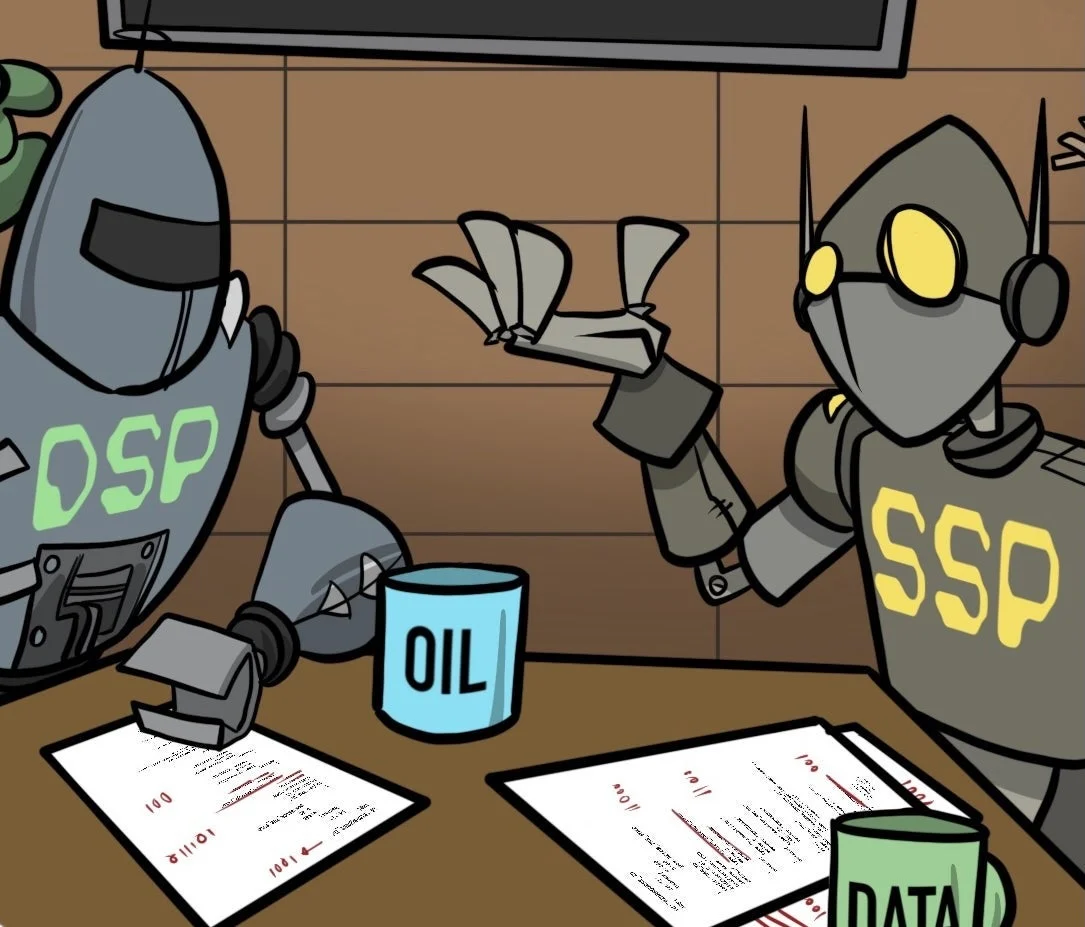
While PubMatic is championing its AI initiatives, the company is also contending with persistent challenges in the programmatic ecosystem, particularly the ongoing competition between Demand-Side Platforms (DSPs) and Supply-Side Platforms (SSPs) for direct advertiser business.
A significant headwind mentioned by PubMatic involved a major, unnamed DSP—widely understood to be The Trade Desk—reducing its spend on PubMatic’s SSP. This reduction is likely a consequence of the DSP’s increasing adoption of its own direct-to-publisher solution, OpenPath, which bypasses SSPs. This dynamic contributed to a 12% year-over-year decline in PubMatic’s U.S. revenue during Q1 2026. However, this decline was partially offset by robust growth in other regions, with the Asia-Pacific region experiencing a 25% increase and Europe, the Middle East, and Africa (EMEA) seeing 10% growth.
The impact of this unnamed DSP’s reduced activity is expected to continue affecting PubMatic’s earnings in the second quarter, with the company projecting a revenue decrease of between 2% and 4% for Q2 2026. Investors sought further clarification on the extent of this DSP’s impact, to which Pantelick responded that revenue from the DSP in question actually exceeded expectations in Q1 due to PubMatic’s proactive efforts to “optimize our platform to meet the needs of this buyer.” The company anticipates fully lapping the financial impact of this DSP’s reduced activity by the third quarter of 2026.
To mitigate the loss of business from this particular DSP, PubMatic has been actively diversifying its partnerships. The company added over 50 new DSPs to its partner roster in the past year and saw a 20% increase in integrations with mid-market DSPs in Q1 2026. Furthermore, PubMatic secured a significant integration with Amazon DSP during the quarter. This collaboration involves incorporating Amazon’s Dynamic Traffic Engine, which has reportedly boosted publisher CPMs by up to 10% since its implementation.
Future Trajectory and Strategic Outlook
Looking ahead, PubMatic faces the immediate task of filling key executive roles, with the departure of Kyle Dozeman, CRO of the Americas, and Paulina Klimenko, Chief Growth Officer. Goel indicated that the company is exploring options to consolidate some of their responsibilities into a new, singular global Chief Revenue Officer (CRO) position.
PubMatic’s strategic vision includes a continued focus on serving mid-market, performance-oriented DSPs and midsize independent agencies. Goel noted that these entities have demonstrated a faster adoption rate of AI solutions compared to larger, established agency holding companies. This suggests a deliberate targeting of segments that are more agile and receptive to innovation.
In a move that aligns with industry trends, PubMatic is also expressing keen interest in collaborating with emerging AI giants like OpenAI. As platforms like ChatGPT become more accessible for advertising, PubMatic aims to be at the forefront of monetizing this new inventory. Goel revealed that PubMatic has been actively experimenting with smaller AI players such as Kontext and Dappier, and is “already innovating on the ad formats and appropriate signals to monetize that kind of inventory.”
The company’s strategic outlook is further bolstered by the ambitious revenue targets set by OpenAI, which aims to generate $100 billion in advertising revenue by 2030. Goel views this ambitious goal as a clear indication that OpenAI will require partnerships with established platforms like PubMatic to achieve such scale. “It’s going to be an ecosystem-wide effort for them to get to that level,” he stated, underscoring the collaborative nature of the future advertising landscape. This forward-looking approach positions PubMatic to capitalize on the evolving AI-driven advertising ecosystem.