

The rapid integration of generative artificial intelligence into the global marketing landscape has fundamentally altered the workflow of creative professionals, leading to a critical reevaluation of what constitutes “quality” in the digital age. As adoption rates for large language models (LLMs) surge among marketing and sales teams, a clear divide has emerged between those using AI as a mere automation tool and those leveraging it as a sophisticated strategic partner. To understand the current trajectory of this technology, an analysis of the methodologies employed by five of the world’s most respected copywriters—Bob Bly, Kim Krause Schwalm, David Deutsch, Lorrie Morgan, and Anita Siek—reveals a consensus that while AI is an unparalleled research assistant, the human element remains the ultimate competitive advantage in high-stakes revenue generation.
The Chronology of AI Adoption in Content Creation
The timeline of AI’s impact on copywriting can be traced back to the early 2010s with basic predictive text and grammar tools, but the true paradigm shift occurred in late 2022 with the public release of OpenAI’s ChatGPT. Within months, the marketing industry moved from skepticism to a state of rapid experimentation.
By mid-2023, the emergence of GPT-4 and competitors like Anthropic’s Claude 3.5 provided writers with tools capable of more nuanced reasoning. According to industry data from the 2024 State of Marketing Report, over 70% of marketers now utilize AI for some form of content generation, yet only 22% report having a formal strategy for its implementation. This gap between usage and strategy is where elite copywriters are currently focusing their efforts, moving beyond simple prompts to complex “human-in-the-loop” systems.
High-Stakes vs. Low-Stakes: A Strategic Framework
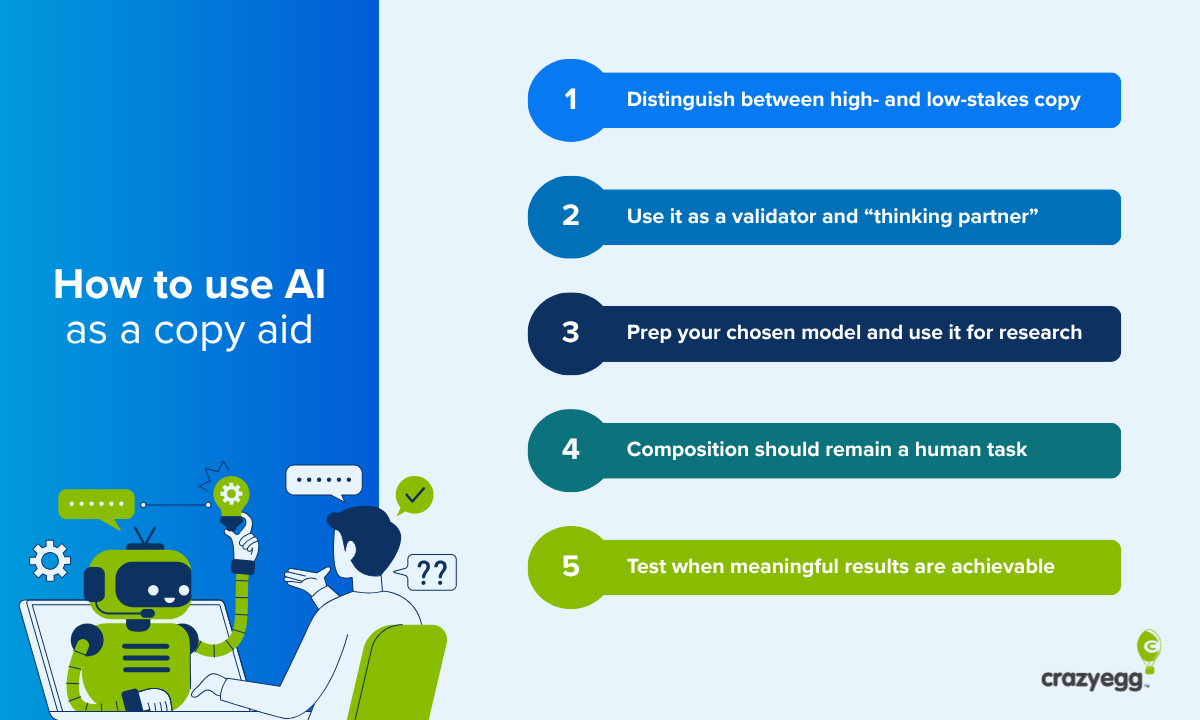
A recurring theme among industry veterans is the distinction between copy that is “revenue-critical” and copy that is “tangential.” Bob Bly, an American Writers & Artists Institute Copywriter of the Year and author of The Copywriting Handbook, argues that the current state of AI remains “axiomatically inferior” to human writing in scenarios where direct response results are paramount.
Bly’s framework suggests that for local advertisements or internal memos—low-stakes copy—AI is a cost-effective solution. However, for “A-list” direct mail packages or video sales letters (VSLs) where millions of dollars in ad spend are at risk, human intuition is non-negotiable. “AI cannot make original stories and experiences,” Bly notes, emphasizing that the technology’s tendency to “regurgitate” existing narratives makes it a poor fit for the original storytelling required to break through market saturation.
AI as a “Thinking Partner”: Research and Validation
While hesitant to let AI handle the final composition, top-tier writers are increasingly using it as a “thinking partner” to vet “Big Ideas.” This involves using the model to stress-test a concept before committing weeks to a draft.
Bob Bly cites an example involving a financial newsletter promotion. By asking an AI model to predict the economic consequences of a closure of the Strait of Hormuz, he was able to identify specific market sectors—such as oil field equipment—that he had not previously considered. In this context, AI acts not as the creator, but as a validator of an embryonic human idea, ensuring there is enough “meat on the legs” to sustain a long-form promotion.
Similarly, Kim Krause Schwalm, renowned for outperforming “unbeatable” controls in the health and finance niches, uses AI to automate the “grunt work” of research. Schwalm utilizes a proprietary “Prism exercise” to build target prospect profiles. While she continues to perform manual research in forums and reviews to capture the “raw, emotionally hard-hitting language” of customers, she uses AI as a secondary check. “It helps me make sure I didn’t miss anything,” she explains, though she cautions that AI’s internal outputs are often “dry and almost clinical.”
The Industrialization of Testing: David Deutsch’s Methodology
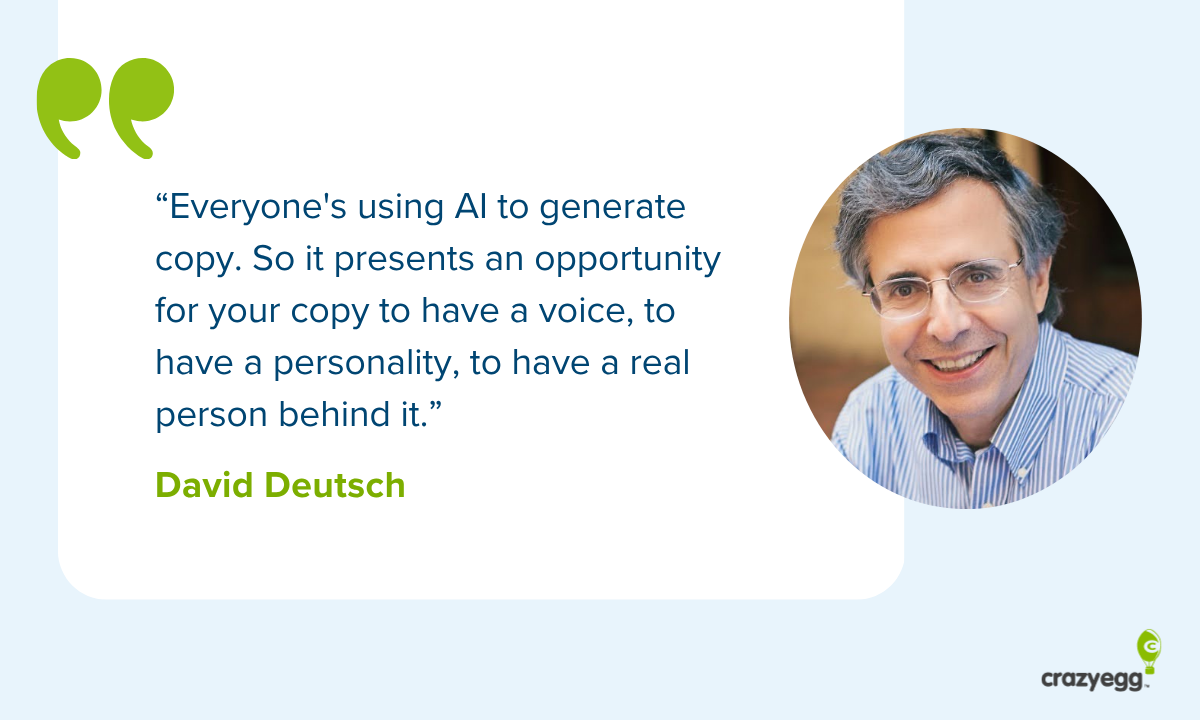
David Deutsch, who has generated over $1 billion in sales through his copy, provides a look at how AI can be used to scale testing in ways previously impossible for human teams. Deutsch advocates for a “proactive” approach to AI, where the writer protects their cognitive skills by thinking first and prompting second.
However, in high-volume environments, Deutsch employs a four-step system:
- Foundational Frameworks: Feeding the AI established copywriting principles such as Eugene Schwartz’s “Stages of Awareness” or the AIDA (Attention, Interest, Desire, Action) formula.
- Automated Deep Research: Using AI to scrape and analyze competition and sentiment on platforms like Reddit.
- Distillation: Converting that research into a highly specific brief that the AI can easily interpret.
- Mass Testing: Generating dozens of AI variants to test against a human control.
“I’d rather take 100 shots at the target,” Deutsch says, noting that in a purely statistical environment, the “AI-ness” of the voice matters less than the conversion data. This represents a shift from copywriting as a craft to copywriting as a data-driven engineering problem.
The Rise of “Algorithm Aversion” and the Human Premium
As the internet becomes increasingly saturated with AI-generated “slop,” experts like Lorrie Morgan warn of a growing consumer backlash known as “algorithm aversion.” Morgan, who has been mentored by legends like Gary Halbert and John Carlton, notes that many businesses that replaced their writers with AI in early 2023 were forced to rehire them months later after seeing a decline in engagement.
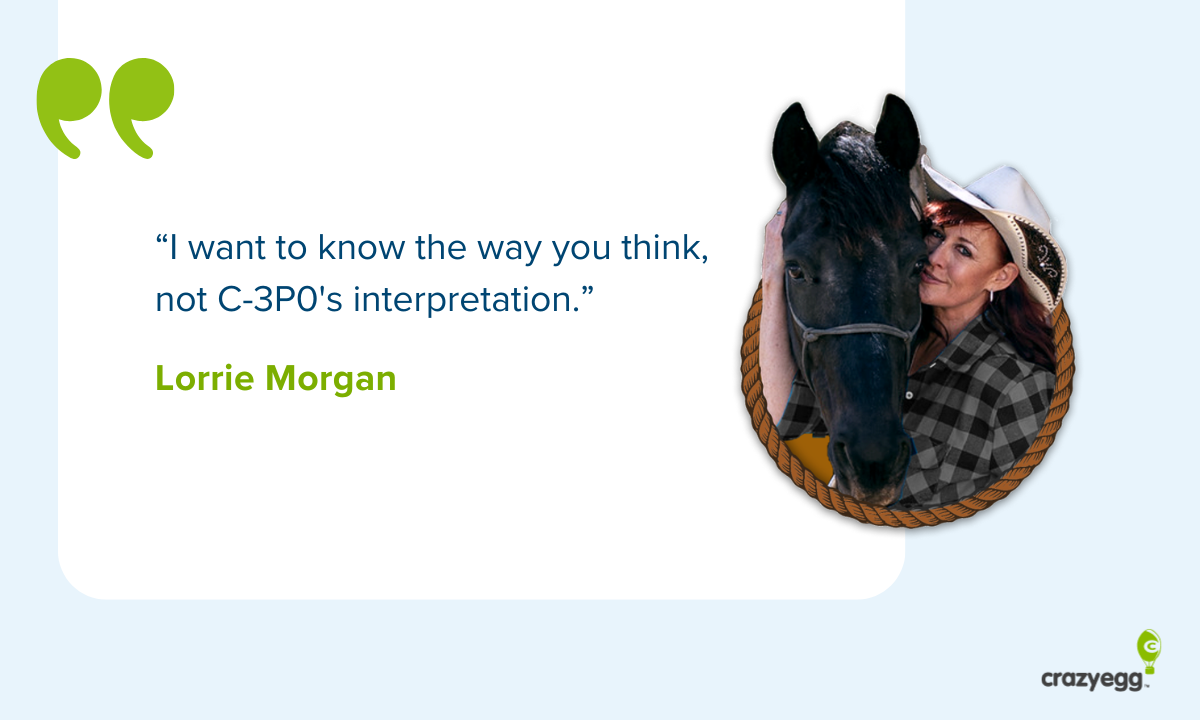
“AI never has a bad day,” Morgan observes. “That frictionless optimism is exactly what makes it feel inhuman. Readers trust writers who’ve actually been through something.” Her critique centers on the “homogenization” of AI models. Over time, regardless of the prompt, the models tend to revert to the same safe, predictable patterns. To counter this, Morgan uses AI only for brainstorming and outlines, insisting that the final draft must be “cleaned up” by a human to remove the “C-3PO” tone.
Behavioral Psychology and Custom Systems: Anita Siek’s “FETTIBot”
Anita Siek, founder of the copywriting house Wordfetti, represents the new guard of copywriters who view AI as an “amplifier” rather than a replacement. Her approach integrates behavioral psychology with custom-trained models.
Siek’s agency developed “FETTIBot,” an AI trained on nine years of proprietary intellectual property, including specific marketing frameworks and messaging strategies. By feeding the AI unique “lived context” and strategic IP, Siek ensures the output is not generic. “When you lean on AI to do your thinking, you’re ultimately saying AI is the expert and you’re the intern,” she says. Her methodology suggests that the future of the industry lies in “human-trained” bots that can scale a specific writer’s voice and psychological approach without losing the nuance of the brand’s identity.
Data Analysis: The Impact on Professional Roles
Supporting data suggests that the role of the copywriter is evolving from “writer” to “editor-in-chief” and “prompt engineer.” A study by the Harvard Business School on the impact of AI on high-skilled creative tasks found that while AI can increase productivity by up to 40%, the quality of the output is heavily dependent on the “domain expertise” of the user. Inexperienced writers often produce subpar results because they cannot recognize the subtle hallucinations or clichés in the AI’s output.
Furthermore, the “human premium” is becoming a quantifiable asset. Brands that openly advertise “human-written” content are seeing higher trust scores in certain demographics, particularly in industries where empathy and lived experience are critical, such as mental health, high-end coaching, and luxury goods.
Future Implications: A Hybrid Reality
The consensus among the world’s top copywriters points toward a hybrid future. The technology has reached a point of “well-demarcated abilities”: it is excellent at critiquing, summarizing, and generating variations, but it lacks the “emotional intelligence” to sense customer resistance in real-time or to weave together complex, original narratives.
For the marketing industry at large, the implications are clear:
- The Death of “Average” Copy: AI has set a new floor for content. Serviceable, mediocre copy is now a commodity.
- The Rise of Strategy: Success in the AI era depends on the “clarity of the brief” and the strategic thinking that precedes the prompt.
- Cognitive Preservation: Professionals must be wary of “over-reliance,” which David Deutsch warns can lead to a decline in the mental muscles required for deep problem-solving.
In conclusion, while AI tools are undeniably powerful, they remain tools of amplification. The businesses and writers who will thrive in the coming years are those who treat AI as a sophisticated intern—capable of immense speed and data processing—while retaining the role of the expert strategist who provides the soul, the story, and the psychological “hook” that drives human action.







