

The definition of website analysis has undergone a fundamental transformation as the digital landscape moves toward a more integrated, AI-centric environment. Historically, analyzing a website was a straightforward process focused on monitoring traffic volume, keyword rankings, page load speeds, and basic conversion rates. However, in 2026, these metrics represent only a fraction of a site’s true performance. Today’s buyers discover brands through a fragmented journey that includes traditional Google searches, comparisons within Large Language Models (LLMs) like ChatGPT, brand summaries in AI Overviews, and direct recommendations from specialized answer engines such as Perplexity. Consequently, modern website analysis must evaluate not only how humans interact with a page but also how machines read and interpret its content to serve it to potential customers.
The Paradigm Shift in Digital Discovery
The transition from traditional search to “answer-based” discovery has necessitated a total overhaul of auditing methodologies. In the previous decade, search engine optimization (SEO) was the primary driver of visibility. While SEO remains a cornerstone, the rise of generative AI has introduced “machine readability” and “credibility signals” as critical KPIs. Website analysis now functions as a comprehensive health checkup that ensures a digital property is optimized for the way people search, compare, and purchase in an era dominated by virtual agents.
Industry data highlights the urgency of this shift. Research from Gartner recently predicted that traditional search engine volume would drop by approximately 25% by 2026 as users increasingly migrate toward AI chatbots and virtual agents for information gathering. Furthermore, a study by the Pew Research Center indicated a significant shift in user behavior: when an AI summary appears in search results, users click on a traditional link in only 8% of visits, compared to a 15% click-through rate when no AI summary is present. This data suggests that websites must now fight for visibility within the AI-generated summaries themselves, rather than just the blue links below them.
A Chronology of Website Analysis Metrics
To understand the current state of website analysis, it is essential to view the evolution of digital performance measurement over the last three decades:
- 1995–2005: The Era of Hits and Pageviews. Analysis was rudimentary, focusing on server logs and raw traffic numbers.
- 2006–2015: The SEO and Social Media Boom. The focus shifted to keyword density, backlink profiles, and social sharing metrics. Google Analytics became the industry standard for tracking user paths.
- 2016–2023: The Experience and Mobile Era. Core Web Vitals, mobile-first indexing, and user experience (UX) became the primary drivers of ranking and conversion.
- 2024–2026: The AI and Intent Era. Analysis now centers on “AI visibility,” conversational relevance, and the elimination of conversion friction across multi-platform journeys.
Core Pillar 1: Search and AI Visibility Analysis
Before a business can analyze what users do on its site, it must first determine if those users can find the site at all. In 2026, visibility analysis is bifurcated into traditional SEO and AI Search visibility.
Traditional Search Performance
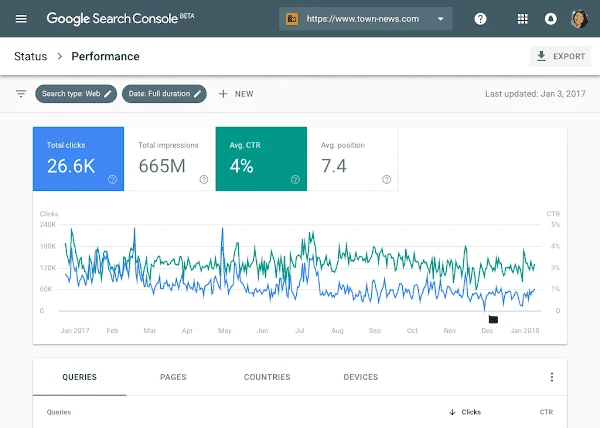
Using tools like Google Search Console remains vital for assessing health. Analysts must examine the “Performance” report, comparing rolling three-month periods to identify fluctuations in clicks, impressions, and average positions. Key areas of focus include identifying pages with high impressions but low click-through rates (CTR), which often signals a disconnect between the user’s intent and the page’s meta-information.
AI Search and Answer Engine Optimization (AEO)
Beyond Google, brands must now audit their presence in AI tools like ChatGPT, Gemini, Copilot, and Perplexity. This involves “query testing”—manually or programmatically asking these tools questions that a potential buyer would ask. For instance, a company selling conversion rate optimization (CRO) software would not just search for its brand name; it would analyze how AI agents respond to prompts such as “Which CRO tool is best for enterprise e-commerce?” or “Compare the pricing and features of top-rated A/B testing platforms.” If a brand is not appearing in these summaries, the website analysis must identify gaps in structured data, schema markup, or authoritative content that prevents LLMs from “reading” the site effectively.
Core Pillar 2: User Behavior and the Qualitative-Quantitative Balance
Once a visitor lands on a site, the analysis shifts to understanding their psychological and physical interaction with the interface. This requires a 360-degree approach to Conversion Rate Optimization (CRO).
Quantitative Data
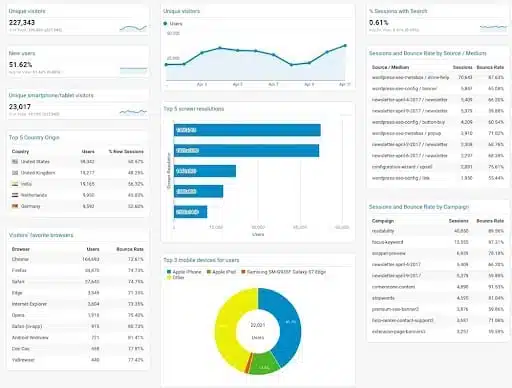
Quantitative insights provide the “what” of user behavior. Tools such as Google Analytics 4 (GA4) or Similarweb allow analysts to measure numerical values like session duration, bounce rates, and the number of visitors per page. These metrics provide a high-level view of which pages are retaining interest and which are failing to engage.
Qualitative Data
Qualitative insights provide the “why.” To truly understand user friction, analysts utilize heatmaps, scroll maps, and session recordings through platforms like FigPii or Hotjar. These tools reveal where users are clicking, how far they are scrolling, and at what point they exhibit “rage clicks” or abandoned sessions. For example, a scroll map might reveal that 80% of users drop off before reaching a critical call-to-action (CTA), indicating a need for a structural redesign of the page layout.
Core Pillar 3: Technical Health and Functionality Assessment
A website’s technical foundation is the primary gatekeeper for both search engines and users. A functionality assessment seeks to answer three critical questions:
- Are the website functions discoverable?
- Can visitors use those functions easily?
- Are all links and buttons operational?
Technical debt, such as broken links or non-responsive buttons, creates immediate friction. This is particularly damaging in a “mobile-everything” world where users expect instantaneous feedback. Analysts use tools like Qualaroo or UserTesting to gather direct feedback on whether the interface is intuitive or frustrating.
Core Pillar 4: Heuristic Analysis and Expert Review
Beyond automated tools, a comprehensive analysis requires a “Heuristic Evaluation”—an expert review based on established usability principles. The industry standard remains Jakob Nielsen’s 10 Usability Heuristics, which include:

- Visibility of system status: Keeping users informed about what is going on (e.g., progress bars).
- Match between system and the real world: Using language and concepts familiar to the user rather than system-oriented terms.
- User control and freedom: Providing a clear “emergency exit” to leave an unwanted state without an extended dialogue.
- Consistency and standards: Ensuring users do not have to wonder whether different words, situations, or actions mean the same thing.
- Error prevention: Designing the site so that problems are unlikely to occur in the first place.
By auditing a site against these ten rules, designers can identify subtle design flaws that automated crawlers might miss but which significantly impact the user’s cognitive load.
Core Pillar 5: Content Quality and Trust Signals
In an era of AI-generated spam, content quality has become a primary ranking factor. Website analysis must evaluate whether content is informative, engaging, and aligned with the target audience’s specific pain points. Analysts look for “Trust Signals”—elements such as author biographies, clear citations, updated “last modified” dates, and visible security badges. For LLMs to recommend a site, the content must demonstrate E-E-A-T (Experience, Expertise, Authoritativeness, and Trustworthiness).
The Role of Competitive Analysis
A point of contention among digital strategists is the necessity of competitive analysis. However, in a crowded market, understanding the “underserved segment” is a significant advantage. Competitive audits focus on three primary areas:
- Organic Traffic Gaps: Using Ahrefs or Semrush to identify keywords for which competitors rank but the primary site does not.
- Customer Demographics: Utilizing Similarweb to understand the global ranking and audience interests of competitors, which can reveal new market opportunities.
- Paid Strategy (PPC): Tools like iSpionage allow analysts to see which keywords competitors are bidding on and for how long. A long-running ad campaign usually indicates a profitable funnel that may be worth emulating or countering.
Strategic Implementation: The Six-Step Roadmap
To conduct a successful website analysis, organizations should follow a structured roadmap:
- Define Objectives: Establish clear baselines, such as reducing cart abandonment by 10% or increasing AI visibility for specific product queries.
- Select Tools: Choose a stack that covers SEO (Search Console), CRO (FigPii), and Usability (Heurix).
- Map the Journey: Define the ideal customer path from the first touchpoint (AI summary or search result) to the final conversion.
- Collect Data: Gather both numerical data (GA4) and behavioral data (session recordings).
- Address Loopholes: Implement changes based on findings, such as optimizing slow-loading pages or rewriting confusing copy.
- Maintain Consistency: Website analysis is not a one-time event; it must be a recurring habit to keep pace with algorithm updates and shifting consumer behaviors.
Implications for the Future of Business
The broader impact of these analytical shifts is profound. Businesses that fail to adapt their website analysis to include AI visibility and deep behavioral insights risk becoming “invisible” to the next generation of consumers. As AI agents become the primary intermediaries between brands and buyers, the website itself must evolve from a static digital brochure into a highly optimized data source that is as legible to a machine as it is engaging to a human.
Ultimately, the power of comprehensive website analysis lies in its ability to transform raw data into actionable strategy. By examining the intersection of search visibility, technical health, and user psychology, businesses can ensure their digital presence remains a high-performing asset in an increasingly complex technological environment. Consistently refining these areas ensures that a website not only attracts visitors but successfully guides them toward a meaningful conversion.







