

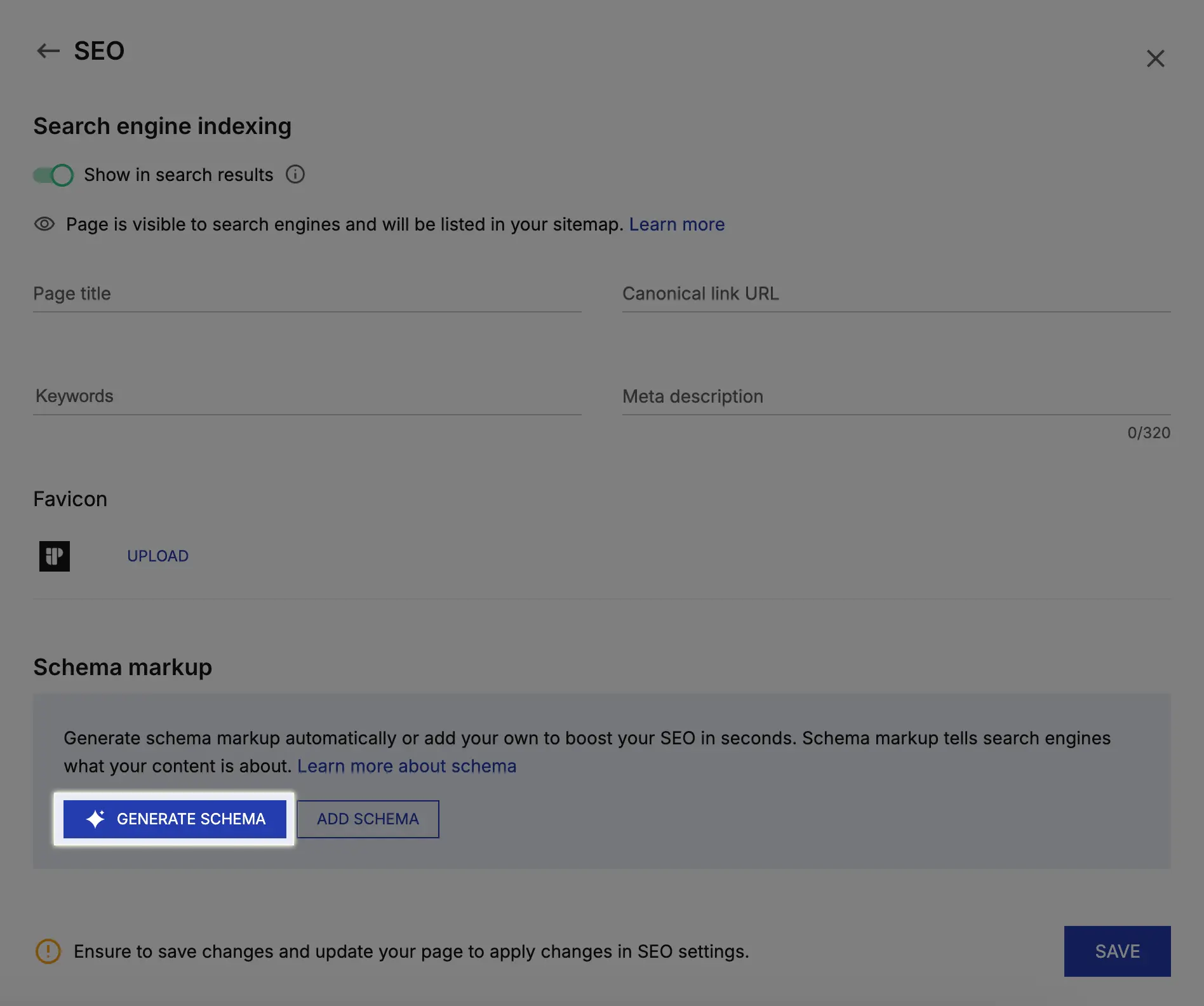
The digital marketing landscape is currently undergoing a seismic shift as brands grapple with tightening budgets and the rapid ascent of artificial intelligence in search ecosystems. In response to these pressures, Instapage, a leading landing page platform, has announced the launch of a sophisticated Schema Markup feature designed to bridge the gap between human-centric design and machine-readable data. This new functionality allows marketers to generate, validate, and deploy structured data directly within their landing page settings, bypassing the traditional need for developer intervention. As search engines like Google transition toward generative AI interfaces and AI assistants like ChatGPT and Claude become primary information sources, the ability for a webpage to communicate its core purpose through structured signals has become a prerequisite for visibility.
The introduction of this tool comes at a time when organic search is no longer just about keywords and backlinks; it is increasingly about how effectively a site’s data can be ingested by Large Language Models (LLMs) and search algorithms. By providing a streamlined, AI-driven interface for JSON-LD (JavaScript Object Notation for Linked Data) implementation, Instapage aims to democratize technical SEO, allowing small to mid-sized enterprises to compete with larger corporations that possess extensive technical resources.
The Technical Foundation of Schema Markup
Schema markup is a form of microdata that, once added to a webpage, creates an enhanced description—commonly known as a rich snippet—which appears in search results. While users see the visual elements of a landing page, such as images, headlines, and call-to-action buttons, search engines and AI systems see the underlying code. Without structured data, these systems must “guess” the context of the content. Schema markup provides an explicit vocabulary, standardized by Schema.org—a collaborative effort by Google, Bing, Yahoo, and Yandex—to define entities such as products, people, organizations, and events.
The Instapage implementation focuses on JSON-LD, the format recommended by Google. This script-based approach is easier to implement and maintain than older methods like Microdata or RDFa. The new feature includes an “Auto-detect” option, where Instapage’s internal AI analyzes the existing content of a landing page to suggest the most appropriate schema types. This reduces the margin for error, as incorrect schema implementation can lead to search engine penalties or the total omission of rich snippets.
Chronology of Search Evolution and the Path to Structured Data
The necessity of this tool can be understood through the chronological evolution of search technology over the last decade.

In the early 2010s, SEO was primarily focused on “on-page” factors like meta tags and keyword density. However, with the 2011 launch of the Schema.org initiative, the groundwork was laid for a more “semantic web.” By 2015, Google’s RankBrain began using machine learning to interpret search queries, making context more important than exact keyword matches.
The real shift began in 2020 and 2021 with the introduction of BERT and MUM (Multitask Unified Model), which allowed Google to understand the nuances of human language. However, the emergence of Search Generative Experience (SGE) and AI-powered “answers” in 2023 and 2024 changed the stakes. In this new era, search engines often provide the answer directly on the search results page rather than sending the user to a website. For a brand to be cited as the source of that answer, its data must be flawlessly organized and easily digestible by the AI. Instapage’s move to integrate AI-generated schema is a direct response to this “Answer Engine Optimization” (AEO) trend.
Supporting Data: The ROI of Structured Signals
Industry data highlights the critical nature of this update. According to recent SEO benchmarks, pages with properly implemented schema markup can see a click-through rate (CTR) increase of up to 30% compared to those without. This is largely due to the visual dominance of rich snippets—such as star ratings for products, pricing information, and FAQ dropdowns—which occupy more “real estate” on the search engine results page (SERP).
Furthermore, a study by Milestone Research indicated that while only a fraction of web results currently utilize advanced schema, those that do account for a disproportionate share of “Position Zero” rankings—the featured snippets that appear above all other organic results. In the context of AI assistants, structured data serves as the “truth set” that prevents AI hallucinations. When an AI assistant looks for a local business’s hours or a product’s specifications, it prioritizes JSON-LD data because it is considered the most authoritative and unambiguous source of information on the page.
Strategic Functionality and User Workflow
The Instapage Schema Markup tool is integrated into the SEO settings of the landing page builder. The workflow is designed to be completed in under five minutes, a significant reduction from the hours or days typically required for a developer to manually code and test schema for multiple pages.
- Selection and Generation: Users can select from a variety of schema types. The “Organization” and “Person” schemas are vital for establishing E-E-A-T (Experience, Expertise, Authoritativeness, and Trustworthiness). “Product” schema allows for the display of price, availability, and review snippets. “LocalBusiness” is essential for brick-and-mortar entities, while “FAQPage” and “Event” schemas help in capturing high-intent search traffic.
- AI-Driven Validation: One of the most significant hurdles in technical SEO is syntax errors in the code. Instapage’s tool includes a built-in validator that checks the JSON-LD against current search engine standards before the page is published. This ensures that the code is not only present but functional.
- Manual Override: For advanced SEO specialists, the tool allows for manual editing of the JSON-LD code. This provides a “best of both worlds” scenario where AI handles the heavy lifting, but human experts can fine-tune the data for specific edge cases.
Stakeholder Reactions and Industry Implications
While official statements from third-party search engines are rarely issued for specific software updates, the broader SEO community has long advocated for tools that bridge the gap between marketing and development. Marketing directors have expressed a growing frustration with the “developer bottleneck,” where critical SEO updates are delayed due to backlogs in IT departments. By moving these capabilities into the hands of the marketing team, Instapage is addressing a major operational friction point.
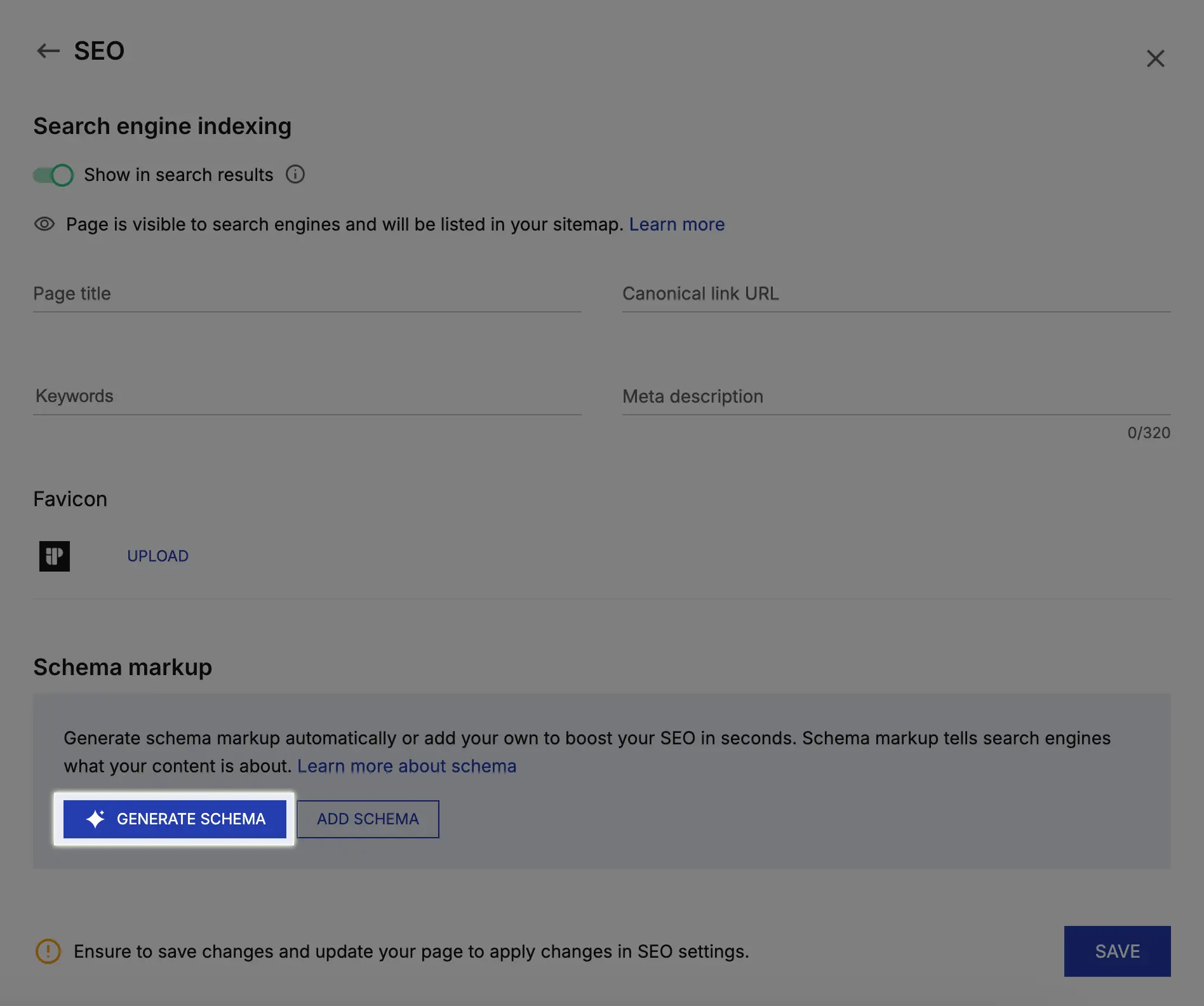
From a strategic standpoint, this launch signals a shift in the landing page industry. Platforms are no longer just “builders”; they are becoming “optimization engines.” The implication for the broader market is clear: as AI continues to change how information is consumed, the “visual-only” web is dying. The brands that succeed will be those that treat their website as a database as much as a gallery.
Analysis of Broader Impacts on the Digital Economy
The launch of the Schema Markup feature by Instapage carries several long-term implications for the digital economy. First, it levels the playing field for small businesses. Historically, rich snippets and advanced SERP features were the domain of enterprise-level companies with dedicated SEO teams. By automating the creation of complex JSON-LD, Instapage allows a local boutique or a niche B2B startup to appear just as authoritative to an algorithm as a Fortune 500 company.
Second, this move highlights the increasing “agentic” nature of the internet. We are moving toward a web where “agents” (AI bots) do the browsing for us. These agents do not “look” at a page to see if it is pretty; they scan the metadata to see if it is relevant. Instapage’s update is essentially an “API for the human-readable web,” making every landing page a structured data node that can be easily indexed and utilized by the next generation of AI tools.
Finally, there is an economic efficiency argument. As marketing budgets tighten, the cost per acquisition (CPA) on paid channels often rises. By improving organic discoverability and AI-driven recommendations through schema, brands can lower their reliance on expensive PPC (Pay-Per-Click) campaigns. The efficiency of being “found” rather than “buying” attention becomes a competitive advantage.
Conclusion
Instapage’s integration of AI-powered Schema Markup represents a pivotal moment in the evolution of landing page technology. It acknowledges that the audience for a webpage is now twofold: the human visitor and the machine indexer. By simplifying the technical complexities of structured data, Instapage is providing its users with a necessary tool to survive and thrive in an AI-first search environment. As the feature rolls out to all Instapage users, the focus will likely shift to how brands creatively use these signals to define their identity in an increasingly crowded and automated digital marketplace. For now, the message to marketers is clear: visibility is no longer guaranteed by design alone; it must be encoded.







