rifanmuazin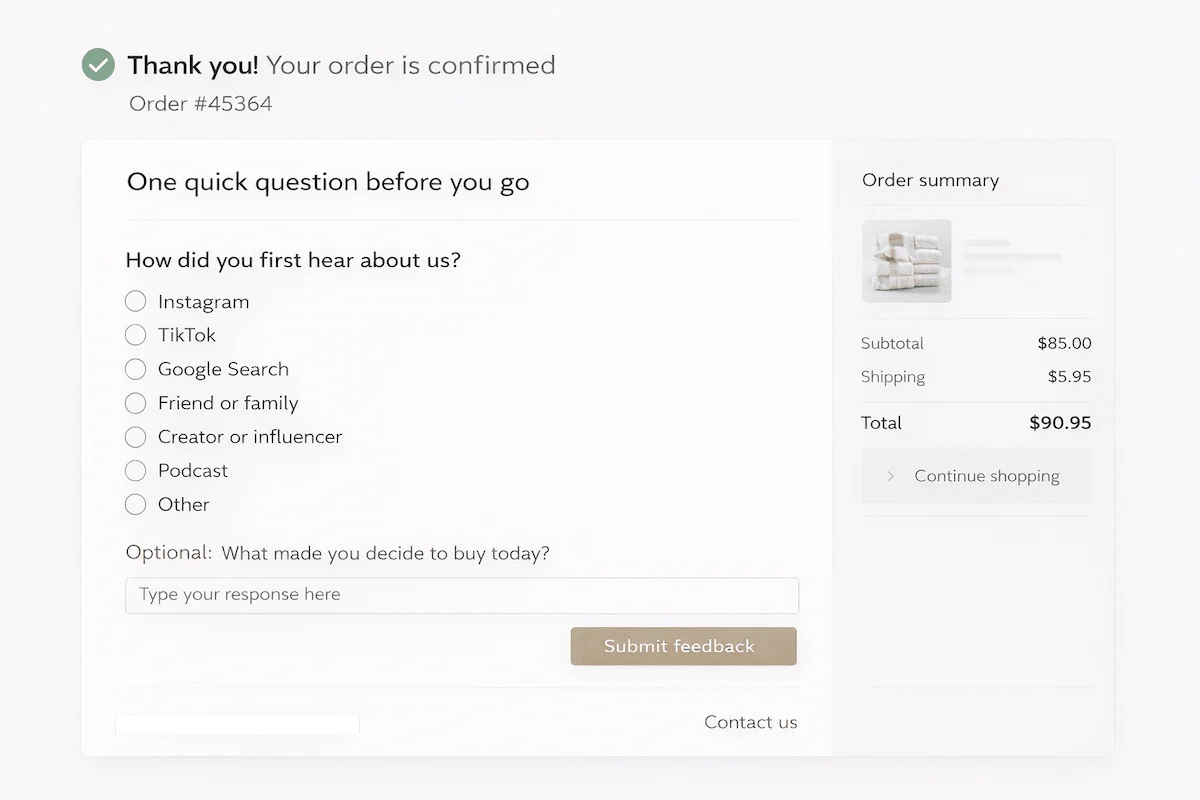
In the increasingly competitive landscape of global e-commerce and Software-as-a-Service (SaaS), the discrepancy between user behavior and user intent has become a primary hurdle for growth marketers. While quantitative analytics tools such as Google Analytics, Mixpanel, and various heatmapping softwares provide a granular look at “what” users are doing—such as where they click, how far they scroll, and at which point they exit—they consistently fail to explain the “why” behind these actions. To bridge this intelligence gap, industry leaders are increasingly turning to strategic customer feedback surveys. These tools, when deployed with precision, transform vague user dissatisfaction into actionable data, allowing brands to diagnose specific friction points within the conversion funnel.
The Quantitative-Qualitative Divide in Digital Optimization
The modern digital consumer journey is rarely linear. A shopper may land on a product detail page (PDP), interact with a gallery of images, review shipping policies, and then abruptly exit. In another scenario, a high-intent user might initiate the checkout process, only to abandon the transaction upon seeing the final price inclusive of taxes and shipping. For SaaS providers, the challenge is often found in the “activation” phase, where a user signs up for a free trial but fails to engage with the core features of the product.
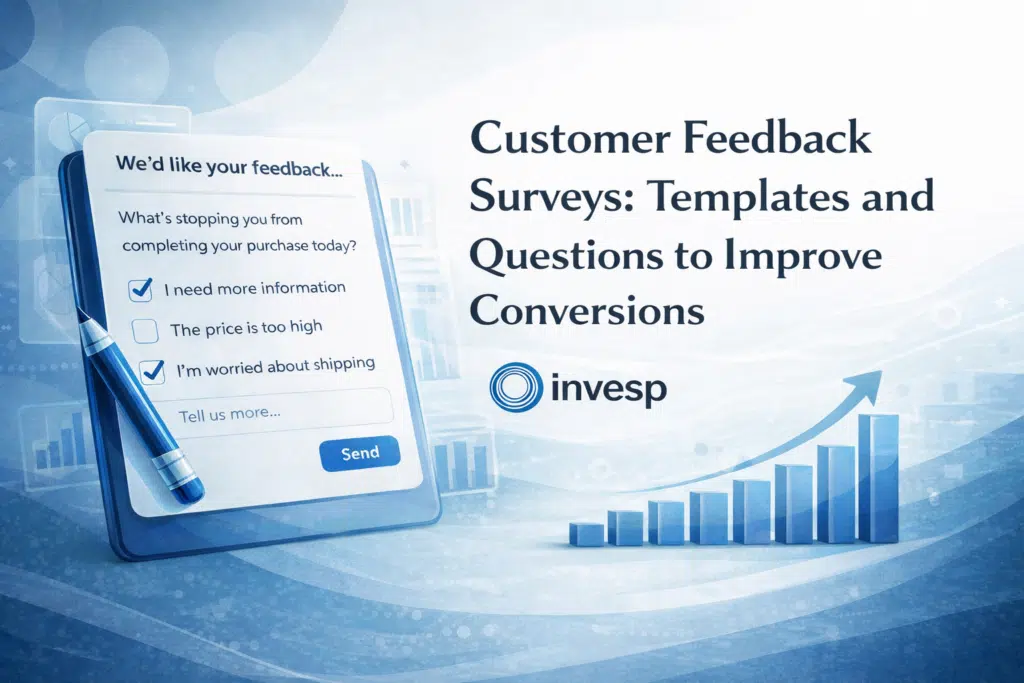
Standard analytics can flag these drop-off points, but they cannot articulate the doubt or hesitation that prompted the exit. This is where customer feedback surveys earn their strategic value. By targeting specific moments of friction, these surveys reveal the unanswered questions and psychological barriers that prevent a user from moving to the next stage of the funnel.
Addressing the Product Page UX Deficit
The product page serves as the digital storefront’s primary conversion engine. However, recent benchmarks suggest that many brands are failing to meet basic user expectations at this stage. According to research from Baymard Institute, approximately 52% of desktop e-commerce sites and 62% of mobile sites possess “mediocre” or poor product page user experiences (UX). When a shopper fails to add an item to their cart, it is frequently a result of information gaps rather than a lack of interest.
Market analysis identifies five primary reasons for “Add to Cart” hesitation:
- Unanswered Product Questions: Missing technical specifications or compatibility details.
- Shipping and Returns Uncertainty: Fear of high shipping costs or restrictive return policies.
- Price Sensitivity: The perception that the product is overpriced compared to competitors.
- Information Overload or Scarcity: A lack of clarity regarding the product’s primary value proposition.
- Comparison Shopping: The intent to research other brands before committing.
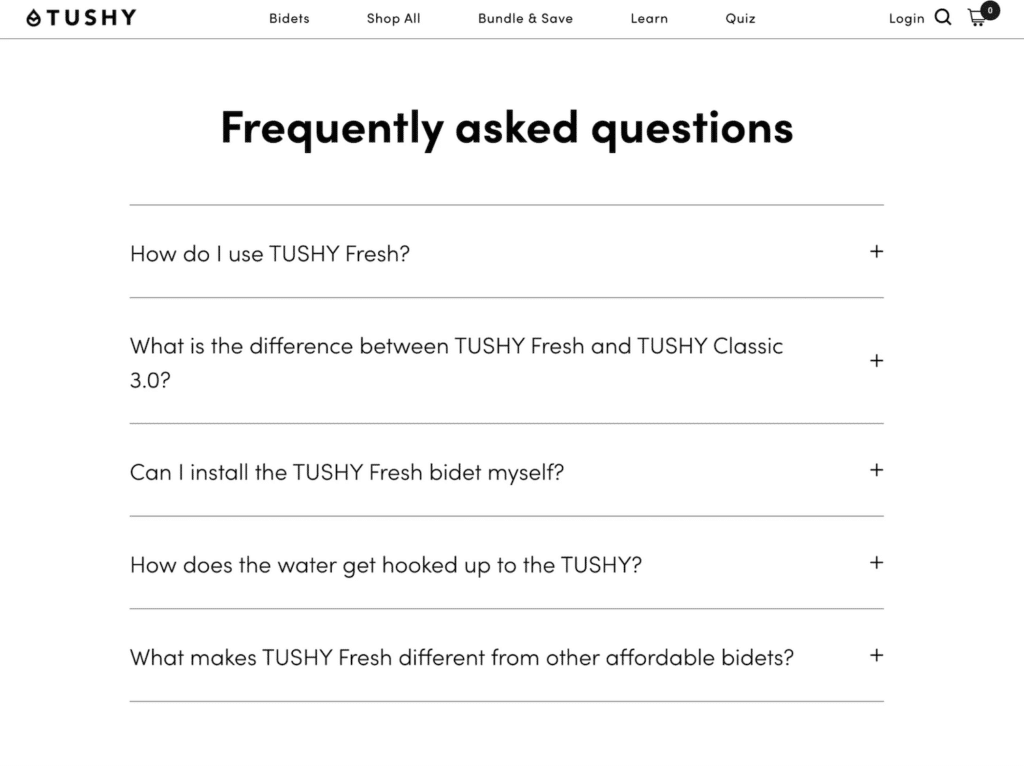
Successful brands, such as the bidet company TUSHY, have mitigated these issues by integrating Frequently Asked Questions (FAQ) directly into the product page layout. This proactive approach addresses concerns regarding installation and compatibility before the user feels the need to leave the page to seek answers elsewhere.
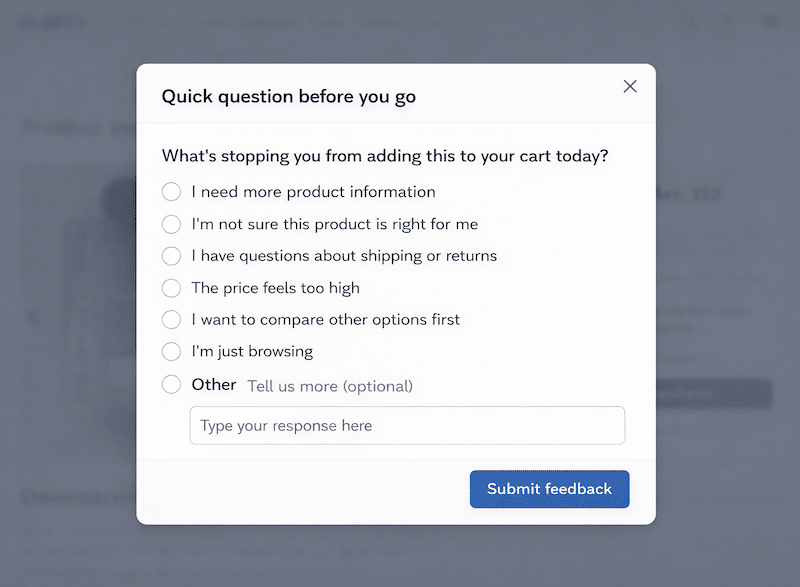
To capture this data effectively, conversion rate optimization (CRO) specialists recommend a specific survey prompt: “What’s stopping you from adding this to your cart today?” By providing multiple-choice options—such as “I have a question about the product” or “I’m worried about shipping costs”—brands can categorize friction points and prioritize site updates based on the volume of specific complaints.
The Economic Impact of Checkout Abandonment
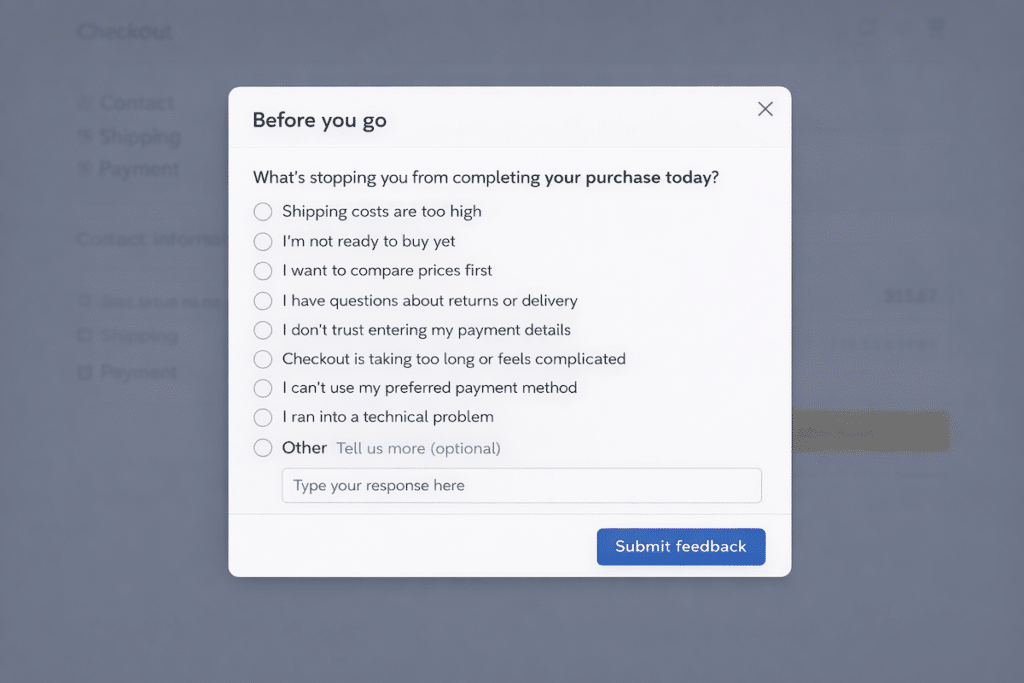
The most significant loss of potential revenue occurs at the checkout stage. Data from the Baymard Institute indicates an average cart abandonment rate of 70.19%. At this juncture, the user has already demonstrated high intent; their exit is rarely about the product itself and almost always about the checkout experience.
The drivers of checkout abandonment are consistently tied to friction and transparency. Research highlights several recurring themes:
- Hidden Costs: Unexpected shipping fees, taxes, or service charges.
- Forced Account Creation: The requirement to create a profile before purchasing, which adds unnecessary cognitive load.
- Complexity: A checkout process that involves too many steps or fields.
- Trust Deficits: Concerns regarding the security of the payment gateway.
- Technical Errors: Website crashes or slow loading times during payment processing.
From a journalistic and analytical perspective, the “Before you go” survey at checkout is a critical diagnostic tool. It allows businesses to distinguish between “window shoppers” and those who were genuinely deterred by a functional or financial barrier. For instance, if a high percentage of users select “Shipping is too expensive,” the business has a clear mandate to re-evaluate its logistics strategy or offer a free shipping threshold.
Post-Purchase Intelligence and Attribution
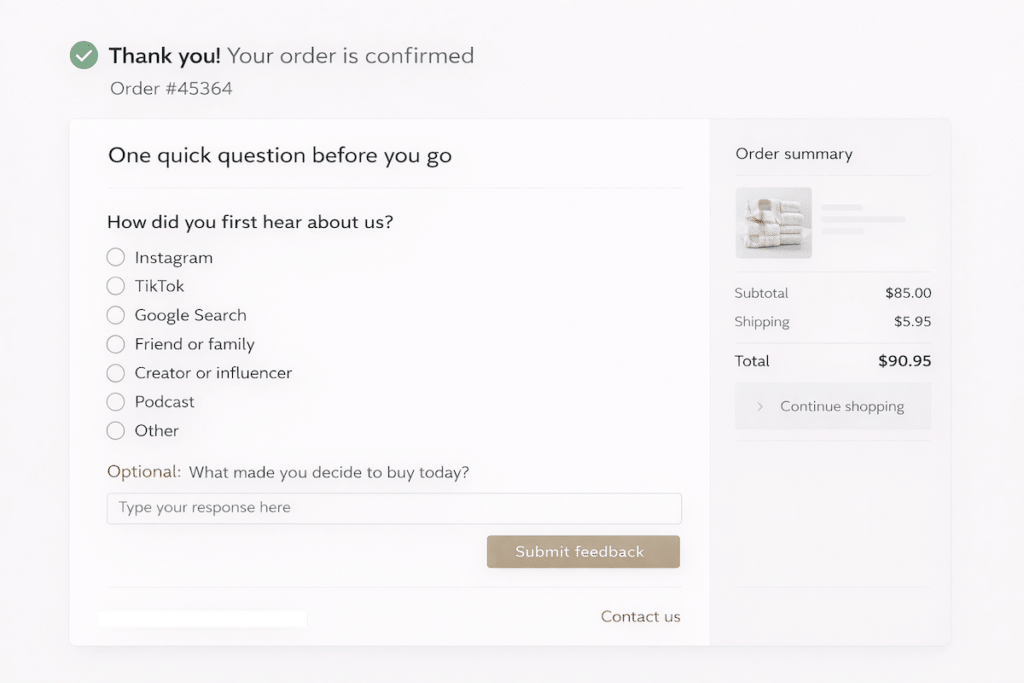
The moment immediately following a successful transaction offers a unique window into the consumer’s psyche. Post-purchase surveys are essential for understanding the “path to purchase” and identifying the specific marketing channels that drive high-value customers.
One of the most effective queries in this category is the “How Did You Hear About Us” (HDYHAU) question. This is particularly vital in an era where privacy regulations and the phasing out of third-party cookies have made digital attribution increasingly difficult. Direct feedback helps surface “Dark Social” influences—such as word-of-mouth, podcasts, and offline mentions—that traditional tracking software often misses.
A case study involving the brand Weezie demonstrated the power of this approach. By utilizing post-purchase attribution surveys, the company discovered that 35% of its revenue was driven by word-of-mouth recommendations. This insight allowed the brand to validate its brand-building efforts and adjust its marketing budget to support community-led growth, rather than over-relying on paid social media advertising.
The SaaS Activation Crisis
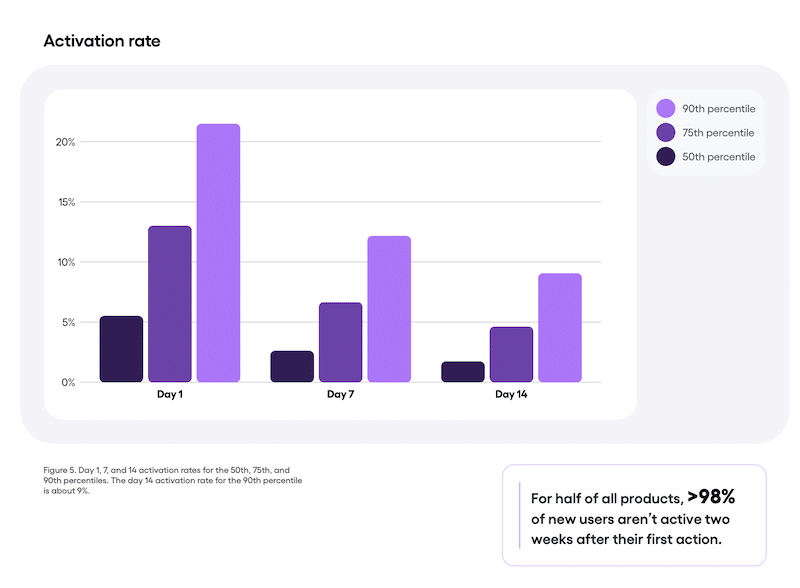
In the SaaS sector, the conversion challenge shifts from a one-time purchase to ongoing engagement. Data from Amplitude’s product benchmark report reveals a stark reality: by the 14th day of a trial, the median software product retains only 2% of its new users. Even top-tier performers rarely exceed a 9% retention rate.
This “activation gap” occurs when the “Time to Value” (TTV) is too long. If a user signs up but does not see immediate utility, they are unlikely to return. Surveys deployed during the trial phase can identify whether the setup process is too cumbersome, the interface is confusing, or the product simply lacks a clear use case for the specific user. By asking, “What’s stopping you from getting started today?”, SaaS companies can pinpoint where their onboarding flow is failing and intervene with targeted tutorials or customer support.
The High Cost of Returns and Churn
The final stage of the customer lifecycle involves retention and the mitigation of returns. In 2024, the National Retail Federation (NRF) reported that retailers expected 16.9% of annual sales to be returned, a figure that is projected to rise to 19.3% for online sales by 2025. This represents a nearly $900 billion challenge for the retail industry.
Returns and subscription cancellations are typically the result of an “expectation mismatch.” This could be due to:
- Poor Product Fit: Particularly in apparel and furniture.
- Quality Discrepancies: The product did not match the online description or images.
- Delivery Issues: Items arriving damaged or late.
- Pricing/Value Perception: The customer found a better deal or felt the value did not justify the ongoing cost.
Strategic exit surveys for cancellations or returns must be concise. By identifying the “main reason” for the departure, companies can determine if the issue lies in their marketing (over-promising), their manufacturing (quality control), or their logistics (shipping speed).
Best Practices for Survey Design and Execution
To ensure that customer feedback is statistically significant and useful for CRO, the design of the survey itself must follow rigorous standards. Industry experts suggest several core principles:
- Specificity Over Breadth: Avoid vague questions like “How was your experience?” instead, ask “What one thing nearly stopped you from buying today?”
- Low Friction Formats: Use multiple-choice options to reduce the effort required to respond, while providing an optional text box for qualitative nuance.
- Timing and Context: A survey about product features should appear on the product page, while a survey about shipping should appear during checkout.
- Action-Oriented Queries: Only ask questions that can lead to a specific change in business strategy or website design.
Broader Implications for the Digital Economy
The shift toward zero-party data—information that a customer intentionally and proactively shares with a brand—represents a fundamental change in how digital businesses operate. As traditional tracking methods become less reliable, the ability to engage in a direct “conversation” with the consumer via feedback surveys becomes a competitive advantage.
The implications are clear: businesses that rely solely on quantitative data are operating with a blind spot. By integrating qualitative feedback loops throughout the customer journey, organizations can move beyond mere observation and begin to understand the psychological drivers of their audience. This leads to more than just improved conversion rates; it fosters a customer-centric culture that reduces churn, lowers return rates, and builds long-term brand loyalty in an increasingly volatile market.