rifanmuazin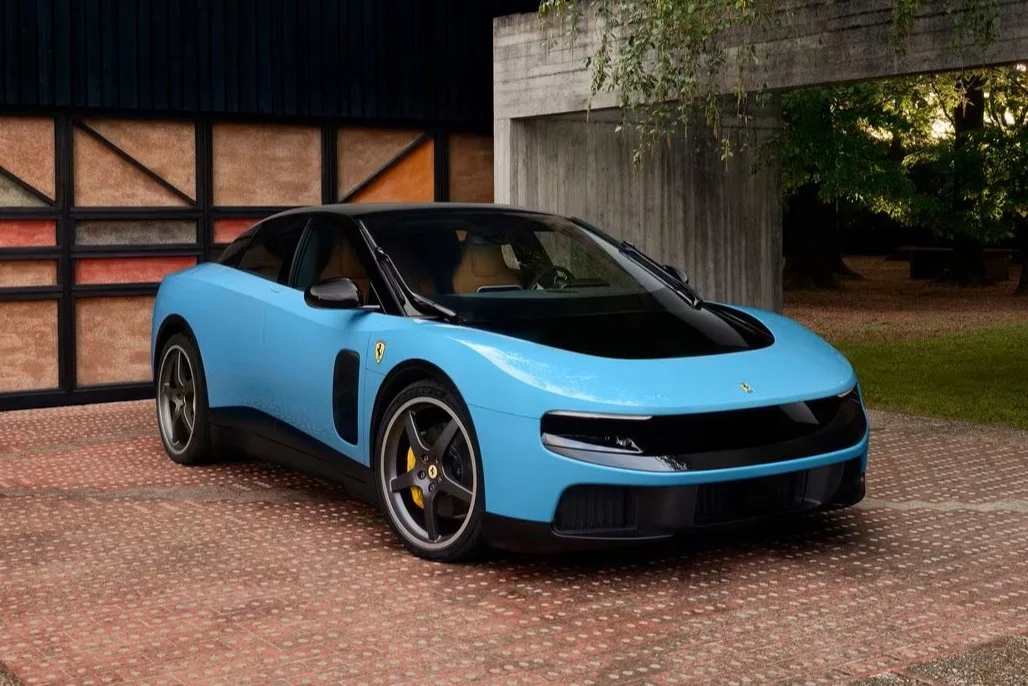
The storied Italian automaker Ferrari has officially entered the era of full electrification with the unveiling of the Luce, its first-ever all-electric vehicle, yet the debut has been met with a volatile mixture of investor skepticism and public derision. Named after the Italian word for “light,” the Luce represents a radical departure for the Maranello-based marque, featuring a design spearheaded by former Apple design chief Jony Ive. Despite the vehicle’s high-performance specifications—including a 0-to-60 mph acceleration time of just 2.5 seconds—the market’s reaction was swift and punishing. Following the reveal and the subsequent social media backlash regarding the car’s aesthetics, Ferrari N.V. (RACE) saw its market capitalization contract by approximately $5 billion, signaling a precarious start to the brand’s most significant technological transition in its 79-year history.
The Luce: A Technical and Design Departure
The Ferrari Luce arrives with a staggering starting price of $640,000, positioning it at the upper echelon of the luxury electric vehicle (EV) market. Unlike the traditional low-slung, mid-engine silhouettes that have defined Ferrari for decades, the Luce is a four-door, five-seat grand tourer. This configuration is intended to broaden the brand’s utility and appeal to a new demographic of ultra-high-net-worth individuals who prioritize sustainable technology alongside performance.
The partnership with Jony Ive and his creative collective, LoveFrom, was intended to bring a “minimalist and ethereal” aesthetic to the brand. Ive, famous for his work on the iPhone and iMac, opted for a streamlined, aerodynamic form that eschews many of the aggressive vents and sharp angles found on Ferrari’s internal combustion engine (ICE) models. While the car boasts cutting-edge battery technology and a chassis composed of advanced lightweight composites, the visual result has become a lightning rod for criticism.
During an exclusive interview with CNBC following the launch, Ferrari CEO Benedetto Vigna defended the vehicle’s design and its role in the company’s portfolio. Vigna emphasized that the Luce was engineered not just to satisfy the existing “Ferraristi” but to capture “new clients who might not have considered buying a Ferrari in the past.” This strategy, however, has raised concerns among purists who fear the brand is sacrificing its DNA in exchange for market expansion.
Market Volatility and Investor Anxiety
The $5 billion drop in market value reflects deeper anxieties within the investment community regarding the profitability and brand equity of legacy luxury automakers transitioning to EVs. Historically, Ferrari has traded more like a luxury fashion house—such as Hermès or LVMH—than a traditional car manufacturer, maintaining high margins through extreme scarcity and the emotional allure of its high-revving V12 and V8 engines.
Analysts suggest that the Luce’s reception highlights a “valuation risk.” If Ferrari loses its status as a manufacturer of “mechanical art” and becomes a producer of high-end consumer electronics on wheels, its premium price-to-earnings (P/E) ratio could come under pressure. The $640,000 price tag is nearly double that of some of its gasoline-powered counterparts, and investors are questioning whether the demand for a quiet, electric Ferrari will match the fervor for its traditional, visceral models.
The Social Media Crisis: Aesthetics and Brand Perception
The immediate catalyst for the stock’s decline appeared to be a wave of viral criticism across social media platforms. On X (formerly Twitter), Reddit, and Instagram, the Luce became the subject of widespread mockery. The most damaging comparisons involved the Nissan Leaf, a mass-market electric hatchback that retails for approximately $30,000. Critics pointed to the Luce’s rounded roofline and headlights as being “un-Ferrari-like,” with one viral post contrasting the $640,000 Luce with a $35,000 Leaf, garnering millions of impressions.
While Ferrari has traditionally been able to ignore the opinions of the general public, focusing instead on its exclusive list of collectors, the digital age has changed the calculus of brand equity. The value of a Ferrari is derived in part from its “aspirational” status—the fact that it is globally recognized as a pinnacle of design and performance. When the general public begins to view a new model as an aesthetic failure, the “social signal” of owning the vehicle is diminished, potentially cooling demand even among those who can afford it.
Chronology of Ferrari’s Electrification Journey
The road to the Luce has been several years in the making, marked by a cautious but deliberate shift toward a multi-energy future:
- September 2021: Ferrari announces a long-term partnership with Jony Ive and Marc Newson’s LoveFrom. The collaboration is described as a meeting of “Italian excellence and world-renowned creativity.”
- June 2022: At its Capital Markets Day, Ferrari leadership commits to a goal of 40% full-electric and 40% hybrid models by 2030. CEO Benedetto Vigna promises that the first EV will be “unique” and “a true Ferrari.”
- 2024–2025: Spy shots of camouflaged prototypes begin appearing near Maranello. Rumors circulate about a “blank canvas” approach to the vehicle’s architecture.
- May 25, 2026: The Ferrari Luce is officially unveiled at a private event in Maranello, followed by a global digital launch. Social media reactions turn negative within hours.
- May 26, 2026: Ferrari shares tumble on the New York and Milan exchanges. Vigna takes to CNBC and LinkedIn to manage the narrative, framing the backlash as a natural reaction to “radical innovation.”
Executive Defense and the “Innovation Consensus”
In the face of the market rout, Benedetto Vigna has remained steadfast. In a post on LinkedIn, he addressed the controversy by invoking the history of disruptive design. “We need to bear in mind that true innovation does not look for immediate consensus, nor does it stem from the ordinary,” Vigna stated. He argued that radical breakthroughs inherently challenge the status quo and that the Luce was the result of “re-imagining the future from a completely blank canvas.”
Vigna’s stance mirrors that of other tech-centric CEOs who view early criticism as a badge of honor. By positioning the Luce as a “bold risk,” Ferrari is attempting to pivot the conversation from “design failure” to “visionary leadership.” The company maintains that the Luce is just the first step in a broader strategy to redefine luxury mobility for the 21st century, ensuring that the marque remains relevant as global regulations shift away from internal combustion.
Broader Impact and Industry Implications
The Luce controversy serves as a cautionary tale for the entire ultra-luxury automotive sector. Brands like Lamborghini, Bentley, and Aston Martin are all currently navigating the transition to electric powertrains. The challenge is two-fold: how to replicate the “soul” of a gasoline engine in a silent electric motor, and how to maintain a distinct design language when aerodynamic efficiency (essential for EV range) often dictates a specific, homogenous shape.
For Ferrari, the stakes are particularly high. The brand’s identity is inextricably linked to the sound and fury of its engines. While the Luce offers blistering speed, the loss of the acoustic experience must be compensated for by extraordinary design and “driving emotion.” If the design fails to captivate, the brand risks becoming just another high-performance EV in an increasingly crowded market that includes the likes of the Porsche Taycan, the Lucid Air, and the Rimac Nevera.
Related Corporate Developments: BP and Media Trends
As Ferrari grapples with its EV transition, other sectors of the global economy are facing their own leadership and branding shifts. In the energy sector, BP has recently made headlines with the ousting of its chairman. This move comes at a time when the oil giant is attempting to project a sense of stability and continuity despite a fluctuating global energy market and internal pressures regarding its own “green” transition. The leadership change at BP highlights the volatility currently facing companies that are forced to balance traditional profit centers with the long-term necessity of decarbonization.
Meanwhile, in the realm of media and public relations, the intersection of celebrity and politics continues to evolve. Spencer Pratt, the reality television veteran, has launched a campaign for Mayor of Los Angeles that utilizes “new media twists.” Pratt’s strategy involves a heavy reliance on direct-to-consumer social media engagement, bypassing traditional journalistic gatekeepers. This trend mirrors the challenges faced by Ferrari; both entities are finding that in the modern era, the “narrative” is often controlled more by viral social media sentiment than by official press releases or corporate manifestos.
Analysis of the Path Forward
For Ferrari, the coming months will be a test of the brand’s resilience. The company has a history of surviving—and eventually thriving after—controversial launches. When Ferrari released the Purosangue, its first SUV, many critics claimed the brand was “selling its soul.” However, the model became a commercial triumph with a multi-year waiting list.
The Luce, however, represents a more fundamental shift. It is not just a new body style; it is a new philosophy. To recover the $5 billion in lost market value, Ferrari must prove that the Luce is more than just a “designer EV.” It must demonstrate that the car offers a driving experience that justifies its $640,000 price tag and that its design will age into a classic rather than remain a meme.
The company’s ability to ignore the “noise” on Reddit and X will depend on the strength of its order book. If Ferrari’s core clients—the collectors who maintain multi-million dollar garages—embrace the Luce, the stock will likely recover. But if the “Nissan Leaf” comparisons begin to resonate with the buyers themselves, Ferrari may find that the “light” of the Luce has cast an unwelcome shadow over the brand’s future. In the high-stakes world of luxury, perception is reality, and for now, the perception of Ferrari’s electric future remains under intense scrutiny.