rifanmuazin
Google has fundamentally altered the landscape of software engineering with the unveiling of Antigravity 2.0 at the annual I/O 2026 conference on May 19. Moving beyond the paradigm of simple AI-assisted coding, the tech giant introduced a comprehensive platform pivot centered on multi-agent orchestration. This release marks a strategic escalation in the competitive “Agentic coding” race, placing Google in direct competition with established tools such as Cursor and GitHub Copilot by offering a development model where users direct autonomous agents rather than merely interacting with an autocomplete engine.
The Evolution of Antigravity: From IDE Plugin to Standalone Ecosystem
The original Antigravity platform, released in November 2025 alongside Gemini 3, was initially conceived as a free Integrated Development Environment (IDE) tailored for agentic assistance. While capable, Antigravity 1.0 operated largely as a smart assistant within a familiar interface, functioning essentially as a specialized fork of existing IDE architectures. Antigravity 2.0, however, represents a complete architectural departure.
Designed from the ground up as a standalone desktop application, Antigravity 2.0 has no shared codebase with its predecessor. The 1.0 version remains available for legacy users, but Google has designated 2.0 as its flagship development environment. The core philosophy has shifted from providing a “smart editor” to building a “mission control” for agent orchestration. In this new workflow, developers act as architects and reviewers, overseeing multiple agents that work in parallel to design, code, and deploy production-ready applications.
Technical Architecture and Core Features of the 2.0 Platform
The transition to Antigravity 2.0 introduces five distinct pillars designed to cover the entire development lifecycle, from local prototyping to enterprise-scale deployment.
1. The Standalone Desktop Application
The centerpiece of the release is the desktop application, which serves as the primary hub for coordinating complex workflows. Unlike traditional IDEs, the Antigravity 2.0 interface is built to manage several agents running simultaneously. This allows for the creation of custom sub-agent workflows and the scheduling of background tasks.
A significant innovation within the app is the persistent background process capability. Historically, AI agents required constant prompting for each specific action. Antigravity 2.0 introduces scheduled tasks, allowing an agent to operate as a continuous process—monitoring repositories, running tests, or performing maintenance without manual intervention. Additionally, the app features native voice command integration, aligning the development environment with Google’s broader ecosystem updates in Workspace and Gemini.
2. The Antigravity Command Line Interface (CLI)
Recognizing the preference of many developers for terminal-based workflows, Google has introduced a new CLI written entirely in Go. This tool is designed for high-performance execution and serves as the successor to the Gemini CLI. Google announced a hard cutoff date of June 18, 2026, for consumer access to the Gemini CLI, affecting AI Pro, AI Ultra, and free-tier users.
The new Antigravity CLI retains familiar features such as Agent Skills, Hooks, and Subagents, though these have been rebranded as “Antigravity plugins.” Because the CLI and the desktop application run on the same underlying agent harness, updates to the core agent logic are reflected across both interfaces simultaneously, ensuring feature parity regardless of the user’s preferred entry point.
3. The Antigravity Software Development Kit (SDK)
The release includes an SDK that provides programmatic access to the same agent harness used by Google’s internal teams. Optimized for Gemini models, the SDK allows engineering teams to embed Antigravity-style agent behaviors into their own products and infrastructure. This is particularly relevant for organizations requiring high degrees of data sovereignty, as it allows agents to run within private environments without a mandatory reliance on Google Cloud.
4. Managed Agents via Gemini API
For backend developers, the Managed Agents feature offers a simplified path to agentic execution. Through a single API call, developers can spin up an agent that reasons through problems, utilizes various tools, and executes code within an isolated, secure Linux environment. This feature utilizes the new “Interactions API,” which manages state and memory for long-running agent tasks.
5. Gemini Enterprise Agent Platform Integration
Google Cloud customers can now connect Antigravity directly to existing cloud projects. This enterprise-grade path ensures that agent workflows remain compliant with corporate access controls and maintain a comprehensive audit trail. This integration is vital for large-scale teams that require transparency and security when deploying autonomous agents within a production infrastructure.
Hardware and Model Performance: The Gemini 3.5 Flash Advantage
The entire Antigravity 2.0 ecosystem is powered by Gemini 3.5 Flash, a model specifically optimized for the low-latency demands of multi-agent orchestration. Google’s internal benchmarks suggest that Gemini 3.5 Flash outperforms Gemini 3.1 Pro across most metrics while operating at approximately four times the speed of competing frontier models.
This speed is not merely a luxury but a functional requirement for the platform. When running ten or more agents in parallel, model latency becomes cumulative. Google researchers noted that a seemingly minor 200ms difference in response time per call can escalate into several seconds of lag when agents are interacting in a complex feedback loop. Notably, Gemini 3.5 Flash was co-developed using the Antigravity platform itself, representing a “dogfooding” approach where Google’s engineers used the same agentic workflows now available to the public.
Chronology of the Agentic Development Race
The release of Antigravity 2.0 follows a rapid timeline of advancements in the AI-assisted coding sector:
- November 2025: Google launches Antigravity 1.0 as a response to the growing popularity of AI-native editors.
- February 2026: Launch of Gemini 3.1 Pro, enhancing the reasoning capabilities of the Antigravity 1.0 IDE.
- May 19, 2026: Official unveiling of Antigravity 2.0 at I/O, shifting from an IDE to a standalone platform.
- June 18, 2026: Scheduled retirement of the Gemini CLI, forcing a transition to the Go-based Antigravity CLI.
Industry Impact and Market Reaction
The most discussed moment of the I/O 2026 keynote involved a live demonstration by Varun Mohan. Using Antigravity 2.0’s parallel agent capabilities, the team successfully built a working operating system core from scratch. The entire process consumed less than $1,000 in compute costs and culminated in a live execution of a Doom clone running on the newly generated OS.
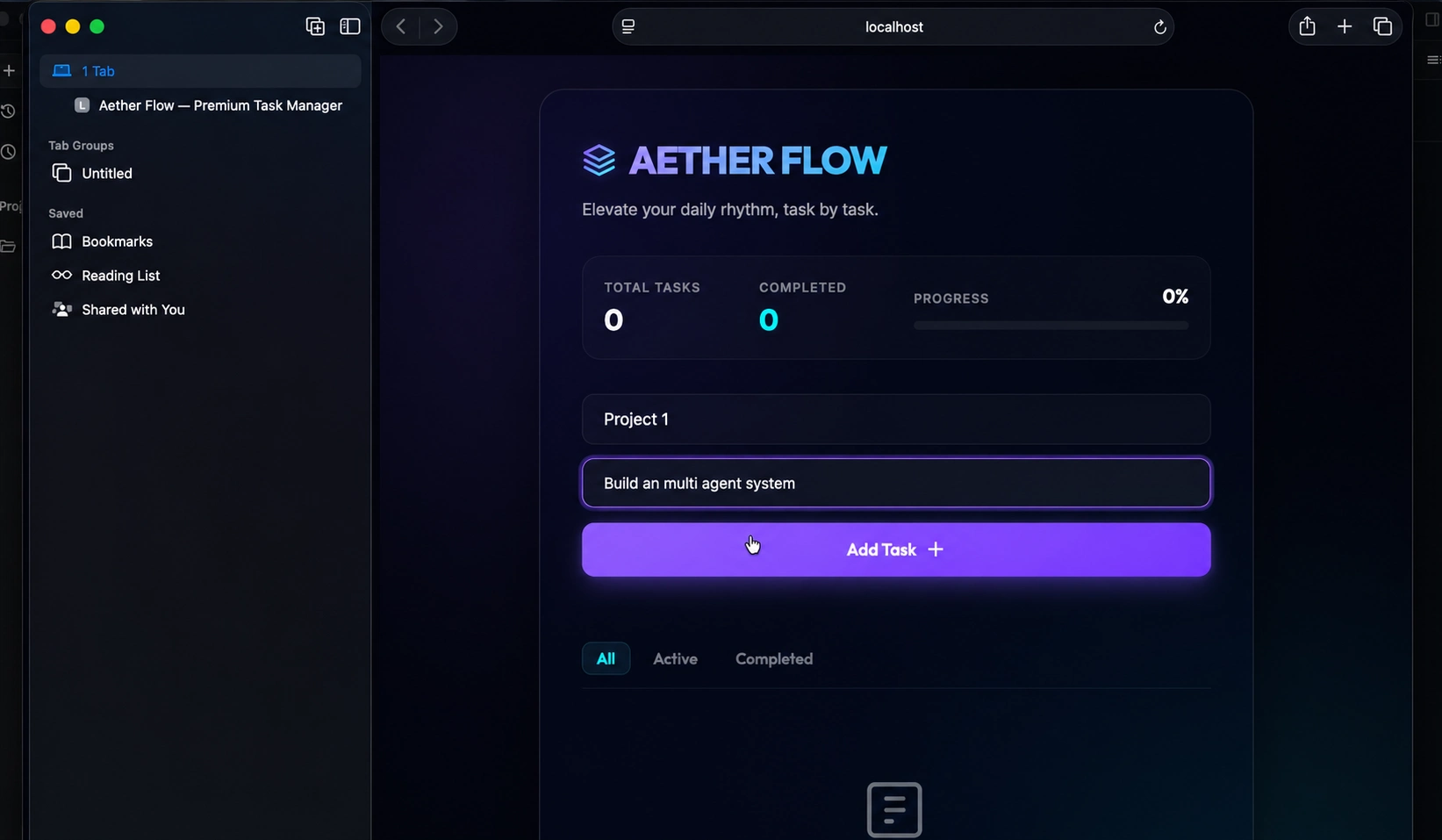
Industry analysts suggest that this demonstration proves the viability of “Review-Driven Development” (RDD). In this mode, agents are granted the autonomy to navigate complex codebases and suggest meaningful changes, but they require human approval before final implementation. This “human-in-the-loop” architecture is designed to mitigate the risks associated with autonomous code generation while maximizing productivity.
The pricing structure for Antigravity 2.0 also signals Google’s intent to capture various segments of the market. While a free tier exists, the introduction of AI Ultra ($100/mo) and AI Ultra Premium ($200/mo) tiers targets professional and enterprise developers who require higher rate limits and access to specialized models like Claude Sonnet 4.5 and GPT-OSS within the Antigravity interface.
Strategic Implications for the Developer Workforce
The shift toward multi-agent orchestration raises significant questions about the future of the software engineering profession. Antigravity 2.0 positions the developer as a “Manager of Agents” rather than a “Writer of Code.” The inclusion of features like the “Agent Manager” and “Artifacts” (task lists, implementation plans, and code diffs) suggests a future where the primary skill set involves architectural oversight and rigorous review.
Furthermore, the integration of Antigravity with AI Studio allows for the native building of Android applications, further lowering the barrier to entry for mobile development. By syncing full project context across AI Studio and Antigravity, Google is creating a closed-loop ecosystem where an idea can be prototyped, refined by agents, and deployed to the Play Store with minimal manual coding.
Conclusion
Antigravity 2.0 represents Google’s most aggressive move to date in the AI development space. By moving away from the “forked IDE” model and toward a standalone, multi-surface platform (App, CLI, SDK, and API), Google has created a robust infrastructure for the next generation of software development.
The platform’s success will likely depend on how effectively developers can transition to the Review-Driven Development model and whether the performance gains of Gemini 3.5 Flash can justify the higher subscription costs for enterprise teams. However, as demonstrated at I/O 2026, the underlying technology has moved past the experimental stage, providing a functional, scalable environment for autonomous agent orchestration that could redefine the industry’s standard for productivity and software architecture.