rifanmuazin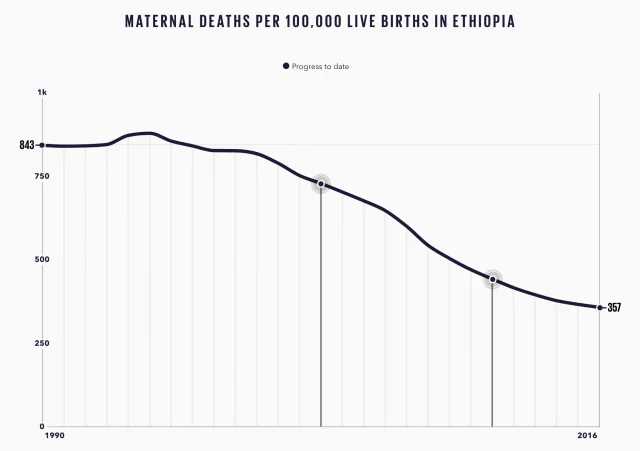
The Bill and Melinda Gates Foundation released its inaugural Goalkeepers report in 2017, establishing a new framework for tracking progress toward the United Nations Sustainable Development Goals (SDGs). The report, titled Goalkeepers: The Stories Behind the Data, serves as a comprehensive diagnostic tool designed to accelerate the global fight against poverty and preventable disease. By synthesizing vast datasets into actionable insights, the foundation aims to identify urgent systemic failures, highlight successful interventions, and standardize best practices across international development sectors. Among the most critical metrics addressed in the report is the global maternal mortality ratio, a key indicator of a nation’s healthcare infrastructure and social equity.
Maternal mortality remains one of the most significant challenges in global public health. Defined by the World Health Organization (WHO) as the death of a woman while pregnant or within 42 days of termination of pregnancy, the phenomenon is often a result of complications that are largely preventable with modern medical intervention. According to the 2015 UNICEF data cited in the Goalkeepers report, approximately 302,530 women died due to pregnancy or childbirth-related complications in a single year. This equates to a global average of 168.7 deaths per 100,000 live births. The Goalkeepers initiative emphasizes that these statistics represent more than just biological loss; they signify the destabilization of families and the increased vulnerability of surviving children, who are statistically less likely to thrive without maternal care.
The Evolution of Global Health Monitoring
The Goalkeepers report arrived at a pivotal moment in the chronology of international development. In 2000, the United Nations established the Millennium Development Goals (MDGs), which set a target (MDG 5) to reduce the maternal mortality ratio by three-quarters between 1990 and 2015. While the world did not fully achieve this ambitious target, the progress was substantial. The global maternal mortality ratio declined by approximately 44% during that 25-year period.
Following the conclusion of the MDG era, the international community transitioned to the Sustainable Development Goals (SDGs) in 2015. SDG Target 3.1 aims to reduce the global maternal mortality ratio to less than 70 per 100,000 live births by 2030. The Goalkeepers 2017 report was designed to bridge the gap between these two eras, providing a data-driven narrative to ensure that the momentum gained under the MDGs is not lost. The report tracks 18 key indicators, ranging from child mortality and HIV prevalence to financial inclusion and agricultural productivity, using the maternal mortality data as a cornerstone for evaluating health system efficacy.
Case Study: Ethiopia’s Strategic Health Interventions
A primary focus of the Goalkeepers 2017 analysis is the remarkable progress made by Ethiopia. The nation has emerged as a global leader in health transformation, particularly regarding maternal survival. Between 1990 and 2015, Ethiopia reduced its maternal mortality ratio from 843 deaths per 100,000 live births to 357. This 58% reduction is widely attributed to the Ethiopian government’s deliberate and sustained investment in rural healthcare infrastructure.
The centerpiece of Ethiopia’s success is the Health Extension Program (HEP), launched in 2003. This initiative involved the training and deployment of over 38,000 female health extension workers who were stationed in rural villages. These workers provided essential services, including prenatal care, immunization, and education on sanitation and nutrition. By bringing healthcare directly to the doorsteps of the most vulnerable populations, Ethiopia successfully bypassed the barriers of distance and cost that often prevent rural women from seeking institutional care.
The Goalkeepers report highlights that Ethiopia’s success was not merely a result of increased funding but was driven by “smart” data usage. By identifying that the majority of maternal deaths occurred in remote areas, the government was able to tailor its health policy to address specific geographic disparities. This model of identifying a problem through data and scaling a localized solution has since become a blueprint for other developing nations.
UNICEF Data and Global Disparities
While Ethiopia provides a narrative of hope, the UNICEF maternal mortality dataset reveals a landscape of stark global inequality. The data suggests that the risk of maternal death is significantly higher in low-income countries compared to high-income regions. In 2015, Sub-Saharan Africa alone accounted for roughly 66% of the world’s maternal deaths. In contrast, many European and North American nations reported ratios in the single digits, often fewer than 10 deaths per 100,000 live births.
The UNICEF data, which forms the backbone of independent analysis into the Goalkeepers report, underscores several critical insights:
- Regional Concentration: A small number of countries carry a disproportionate burden of maternal deaths. Addressing the crisis in a handful of high-burden nations could significantly lower the global average.
- The Impact of Skilled Birth Attendance: Data correlates lower mortality rates with the presence of skilled health personnel during delivery. In regions where home births without medical supervision remain the norm, mortality rates remain stubbornly high.
- The Role of Family Planning: Access to reproductive health services and contraception is a major factor in reducing maternal mortality. By preventing unintended pregnancies and allowing for adequate spacing between births, health systems can reduce the overall risk profile for women.
The use of information design in the Goalkeepers report—utilizing interactive charts, animations, and videos—aims to make this complex data accessible to a broader audience. The goal is to move beyond “procrastination” in policy-making by presenting the human stories behind the numbers, thereby creating a sense of urgency for donors and governments.
Official Responses and Strategic Solutions
In response to the findings of the Goalkeepers 2017 report, various international bodies and stakeholders have emphasized the need for continued investment in primary healthcare. Bill and Melinda Gates have frequently stated that the “efficient way to devastate communities” is to allow maternal mortality to go unchecked. Their foundation has pledged billions toward health systems strengthening, focusing on the “last mile” of service delivery.
The World Health Organization (WHO) and UNICEF have echoed these sentiments, advocating for a “human rights-based approach” to maternal health. This includes ensuring that every woman has the right to high-quality care that is respectful and free from discrimination. Following the 2017 report, there has been an increased focus on the “quality of care” rather than just the “quantity of services.” Data indicated that even when women reached health facilities, poor medical standards or lack of emergency equipment often led to fatal outcomes. Consequently, current strategies emphasize the training of midwives and the provision of essential medicines, such as oxytocin to prevent postpartum hemorrhage.
Broader Impact and the Path Toward 2030
The impact of the Goalkeepers 2017 report extends beyond health statistics; it has influenced the way the international community views data as a tool for accountability. By publishing annual updates, the Gates Foundation ensures that global leaders remain accountable for the promises made under the SDG framework. The report serves as an annual “check-up” for the planet, highlighting where the world is on track and where it is falling behind.
The implications of failing to meet maternal health targets are profound. High maternal mortality rates are often correlated with lower economic productivity and higher rates of infant mortality. When a mother dies, the “pillar” of the family is removed, often leading to a cycle of poverty that spans generations. Conversely, investing in maternal health has a multiplier effect: healthy mothers are better able to contribute to the workforce, educate their children, and participate in their communities.
As the world progresses toward the 2030 deadline for the Sustainable Development Goals, the lessons from the Goalkeepers 2017 report remain highly relevant. The focus on maternal mortality in Ethiopia demonstrates that rapid progress is possible even in resource-constrained environments, provided there is political will and data-driven strategy. The integration of UNICEF’s robust datasets with the Foundation’s storytelling capabilities has created a powerful advocacy tool that continues to shape global health policy.
The fight against maternal mortality is far from over, but the diagnostic approach championed by the Goalkeepers initiative provides a roadmap for future interventions. By identifying promising solutions and spreading best practices, the global community can continue to reduce the number of preventable deaths and move closer to a world where every pregnancy and birth is safe. The democratization of this data—making it available for researchers, journalists, and the public—ensures that the fight against poverty and ill health remains a transparent and collective effort.