rifanmuazin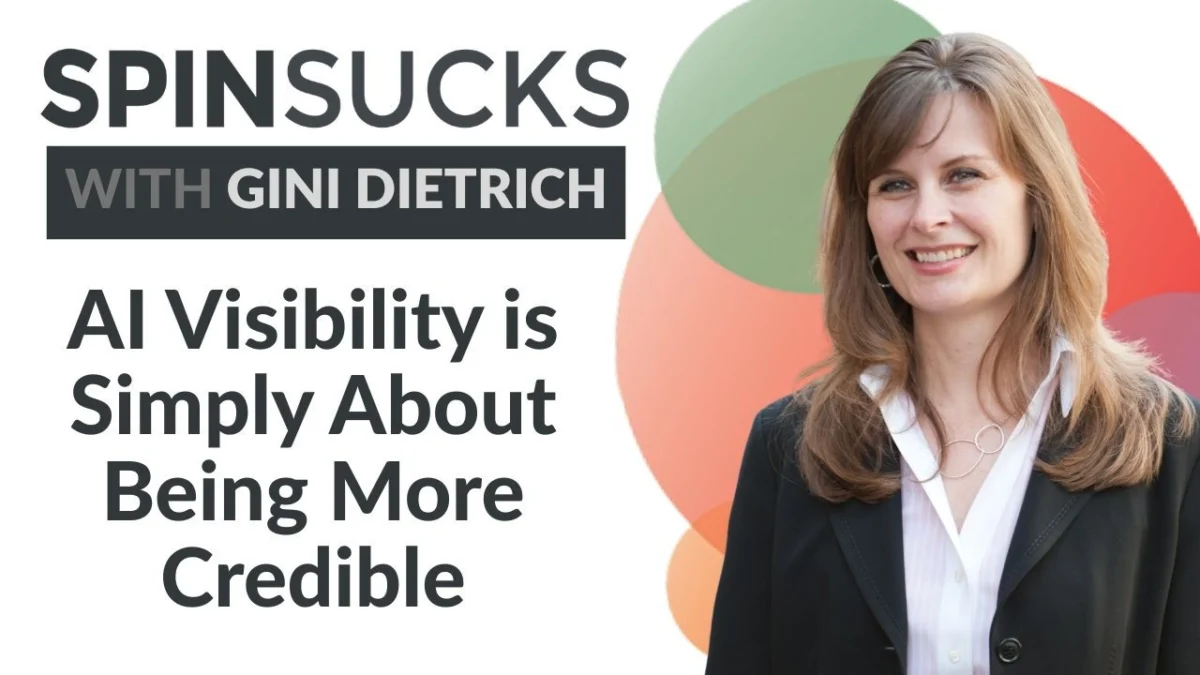
The traditional landscape of digital marketing and search engine optimization is undergoing a fundamental transformation as artificial intelligence reshapes how information is synthesized and delivered to users. For over a decade, the prevailing strategy for digital visibility was rooted in content volume—the idea that publishing more frequently would naturally lead to higher search rankings and greater brand awareness. However, as generative AI tools and AI-integrated search engines like Google’s AI Overviews and Perplexity become the primary gateways to information, the metric for success has shifted from the quantity of words produced to the credibility and structure of the expertise shared. Industry experts now argue that AI visibility is no longer a volume game, but rather a credibility game, where brands must prioritize clear, consistent, and structured expertise across both owned and earned media to remain relevant.
The Fallacy of the Content Volume Race
The emergence of generative AI has inadvertently created a “hustle culture” within marketing departments. Because AI can now generate text at a fraction of the cost and time required by human writers, many organizations have responded by flooding the internet with blog posts, social media updates, and newsletters. This strategy is built on the assumption that if AI models are summarizing the web, a brand needs to occupy as much digital real estate as possible to be included in those summaries.
However, this approach often leads to what analysts describe as “mediocre asset inflation.” When a single strategic idea is diluted into dozens of generic pieces of content, the resulting output often lacks the nuance and authority required to satisfy both human readers and machine algorithms. Professional communicators warn that responding to AI-driven pressure by producing interchangeable, fast-paced content actually diminishes a brand’s strategic value. Instead of proving expertise, high-volume, low-substance strategies prove only that a brand can operate a content factory. In an era where buyers are increasingly skeptical and overwhelmed, “perfectly fine” content is no longer a sufficient standard for visibility.
The Chronology of Search: From Keywords to Answer Engines
To understand the current shift, it is necessary to examine the evolution of information retrieval over the last two decades. In the early 2010s, search visibility was largely determined by keyword density and backlink quantity. By the mid-2010s, Google’s RankBrain and subsequent updates began prioritizing user intent and content quality.
The pivotal shift occurred in late 2022 with the public release of ChatGPT, followed quickly by the integration of Large Language Models (LLMs) into mainstream search engines. In 2023 and 2024, the introduction of Search Generative Experience (SGE) and AI Overviews signaled a move away from the traditional list of blue links toward direct answer engines. In this new environment, the goal is not just to rank first, but to be the “obvious answer” that the AI cites in its summary. This transition has birthed new disciplines such as Generative Engine Optimization (GEO) and Answer Engine Optimization (AEO), which focus on how machines parse and validate information rather than how they count keywords.
Supporting Data: The Rise of Zero-Click Search
Recent data highlights the urgency of this strategic pivot. According to research from SparkToro and search analysts, nearly 60% of Google searches now end without a click to a third-party website. This “zero-click” phenomenon is driven by AI-generated snippets and summaries that provide users with the information they need directly on the results page.
Furthermore, Gartner has predicted that by 2026, traditional search engine volume will drop by 25%, with search marketing losing market share to AI chatbots and other virtual agents. For brands, this means that if their content is not structured in a way that AI can easily cite and repeat, they risk becoming invisible in the very place where consumers are making decisions. The implication is clear: visibility is no longer about driving traffic to a website, but about ensuring the brand’s core expertise is integrated into the AI’s knowledge base.
Visibility Engineering and the System of Expertise
In response to these changes, the concept of “visibility engineering” has emerged as a framework for modern communication. This approach treats content not as a series of disconnected blog posts or PR pitches, but as a unified system of structured expertise. AI systems prioritize information that is clear, consistent, and corroborated across multiple sources.
To achieve this, brands are encouraged to move away from “freelancing” their messaging—where the CEO says one thing, the website says another, and the social media team says a third. Instead, visibility engineering requires:
- Defensible Themes: Identifying the specific areas where the brand holds genuine authority.
- Authority Anchors: Creating core “source-of-truth” content that can be repeated and referenced.
- Corroboration Loops: Ensuring that the brand’s claims are echoed by third-party validators.
The Role of Structure in Machine Interpretation
One of the most critical elements of AI visibility is how content is structured. AI models are trained to look for clarity and safety in information. A complex, poorly organized dissertation on a topic is less likely to be cited than a clear, well-structured explanation that includes definitions, proof points, and key takeaways.
Structure makes expertise usable for machines. This includes the use of technical schema, but it also refers to the editorial structure of the content. High-performing content in the AI era typically includes:
- Level-Three FAQs: Moving beyond basic “what is” questions to address complex, nuanced inquiries that reflect real buyer concerns and implementation risks.
- Clear Definitions: Providing unambiguous explanations of industry terms and proprietary frameworks.
- Citable Assets: Using proprietary data, survey results, and internal benchmarks that give AI tools something unique to reference.
Credibility Through the PESO Model: Owned and Earned Media
The synergy between owned and earned media is the cornerstone of building digital credibility. Owned media—such as a company’s website and resource library—serves as the foundation and the definitive narrative. However, self-published expertise has a “credibility ceiling.” In a skeptical market, buyers and AI tools look for third-party validation to confirm that a brand’s claims are true.
This is where earned media (PR and third-party mentions) becomes essential. When trade publications, analysts, and influencers reinforce the same themes found on a brand’s owned channels, it creates a “corroboration loop.” AI systems perceive this repetition across different domains as a signal of high authority and trustworthiness. This transition from random media coverage to strategic authority building is what distinguishes successful brands in an AI-shaped market.
Official Responses and Industry Perspectives
Gini Dietrich, founder of Spin Sucks and creator of the PESO Model, has emphasized that the shift toward AI visibility rewards disciplined communicators over content factories. “AI visibility is not about publishing more. It is about being more credible,” Dietrich noted in a recent analysis. She argues that the brands that win will be those with the clearest point of view and the most corroborated story across every platform where decisions are made.
Similarly, Noah Greenberg of Stacker has highlighted the importance of “level-three FAQs,” noting that while most brands answer beginner questions, the most valuable content addresses the deeper layers of inquiry that require judgment and critical thinking—qualities that AI tools are currently looking to extract from human experts.
Broader Impact and Future Implications
The shift from volume to credibility has significant implications for the workforce within marketing and public relations. As AI takes over the production of generic text, the value of “soft skills”—such as audience analysis, strategic framing, and the ability to synthesize complex data—will increase.
For organizations, the long-term impact of this shift will be a move toward more disciplined editorial calendars. Rather than asking how much more content needs to be published, leadership teams will need to ask whether they have made it unmistakably clear who they are and why they should be believed.
In the coming years, the digital ecosystem will likely see a “flight to quality.” As the internet becomes saturated with AI-generated noise, both human users and AI algorithms will gravitate toward sources that offer proprietary data, real-world frameworks, and verifiable evidence. The brands that invest in building a robust library of “source-of-truth” content today will be the ones that the AI engines of tomorrow choose to recommend.
Strategic Recommendations for Organizations
To adapt to the era of AI visibility, organizations should consider the following actions:
- Audit for Consistency: Ensure that all outward-facing communications, from leadership bios to media pitches, align with the brand’s core authority anchors.
- Prioritize Proprietary Data: Invest in original research and data storytelling that cannot be replicated by a simple AI prompt.
- Enhance Content Structure: Use formatting tools such as TL;DR summaries, bulleted key points, and structured FAQs to make content more “crawlable” for AI.
- Focus on Corroboration: Shift PR efforts away from one-off hits toward securing mentions in outlets that reinforce the brand’s specific expertise.
Ultimately, AI visibility is a reflection of a brand’s standing in the real world. By focusing on clarity, structure, and third-party validation, organizations can ensure that they remain the “obvious answer” in a world where machines are increasingly making the introductions.