rifanmuazin
Search Engine Optimization (SEO) in 2026 stands at a critical juncture, characterized by significant expansion rather than a fundamental overhaul of its core tenets. While traditional search engines such as Google and Bing continue to be pivotal, the domain of SEO has broadened dramatically to encompass AI-driven discovery mechanisms, dynamic social media platforms, and interactive chatbots. The bedrock principles of clarity, structured content, authority, and relevance remain immutable, yet the conduits through which these principles must be applied are rapidly proliferating. A recent survey conducted by Yoast, involving 59 SEO professionals with varying levels of experience, provides crucial insights into the industry’s navigation of these profound shifts, revealing a sector in active adaptation, with some practitioners leading the charge while others strive to keep pace.
Background and Context: A Decade of Digital Transformation Leading to 2026
The trajectory of search engine optimization has been a continuous evolution, marked by profound technological advancements and shifts in user behavior. Originating in the nascent stages of the internet with rudimentary keyword stuffing and basic link-building tactics, SEO rapidly matured to prioritize technical foundations, high-quality content, and a comprehensive user experience. Key algorithmic updates from Google, such as Panda and Penguin in the early 2010s, fundamentally reshaped the landscape by penalizing low-quality content and manipulative link schemes, thereby emphasizing content authenticity and ethical practices. Subsequent updates focusing on mobile-first indexing, Core Web Vitals, and the E-A-T (Expertise, Authoritativeness, Trustworthiness) framework further underscored the paramount importance of technical performance, user-centric design, and verifiable content credibility.
The mid-2020s witnessed an unprecedented acceleration of this transformation with the widespread adoption of Artificial Intelligence, particularly Large Language Models (LLMs) powering platforms like OpenAI’s ChatGPT, Google’s Gemini, and a host of other AI assistants and search generative experiences (SGE). This era initiated a paradigm shift away from the conventional “ten blue links” search results page towards AI-generated summaries, conversational interfaces, and increasingly multimodal search experiences that integrate text, images, and video. Concurrently, social media platforms, notably TikTok, Instagram, and even professional networks like LinkedIn, evolved into de facto search engines, particularly for younger demographics seeking product recommendations, tutorials, news, and real-time information. This convergence of AI innovation and diversifying information discovery channels has fundamentally reshaped the digital ecosystem, compelling SEO professionals to re-evaluate established strategies and adopt a more holistic, adaptable approach to online visibility. The Yoast survey offers a timely and granular perspective on how practitioners are grappling with these multifaceted and ongoing changes.
Yoast’s 2026 SEO Survey: A Glimpse into Industry Sentiment and Strategy
The comprehensive survey, which engaged 59 SEO professionals, was meticulously designed to capture prevailing industry sentiment and strategic adjustments in response to the rapidly evolving digital landscape. Respondents represented a broad spectrum of expertise, ranging from those new to the field with less than a year’s experience to seasoned veterans boasting over a decade in the industry. This deliberate inclusion of diverse experience levels allowed for nuanced insights into how different cohorts perceive and respond to the challenges and opportunities presented by the ascendancy of AI and the proliferation of new search channels. The aggregate responses collectively paint a vivid picture of an industry in dynamic transition, characterized by both cautious adaptation and proactive innovation, underscoring the urgent need for continuous learning and strategic recalibration.
SEO’s Dynamic Trajectory: Evolution as the Dominant Narrative
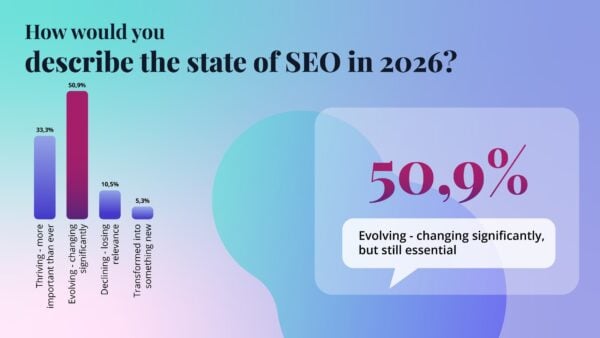
A cornerstone finding of the Yoast survey indicates a prevailing industry sentiment that SEO is undergoing a profound transformation rather than facing obsolescence. A significant fifty-one percent (51%) of respondents characterized SEO as “evolving,” while a substantial thirty-three percent (33%) held an even more optimistic view, believing it to be “thriving.” Only a marginal ten percent (10%) viewed SEO as “declining,” suggesting that fears of its demise are largely unfounded within the professional community.
This nuanced perspective highlights an industry grappling with powerful transformative forces but largely confident in its enduring relevance and adaptability. Interestingly, the perception of SEO’s vitality appeared to correlate directly with the respondents’ experience levels. Seasoned professionals, those with a decade or more in the field, were notably more inclined to view SEO as “thriving.” This suggests a deeper historical understanding of SEO’s consistent capacity for adaptation and resilience in the face of previous algorithmic shifts and technological disruptions. Conversely, newer entrants to the field more frequently described SEO as “evolving,” a reflection of their immediate experience of rapid, continuous change and the constant imperative for acquiring new skills. This divergence underscores the inherent wisdom gleaned from extensive experience, where long-term practitioners recognize change as a perpetual state of the industry rather than an existential threat.
Alex Moss, a Principal SEO at Yoast, encapsulated this sentiment, stating, “SEO has always adapted to changes in the SERP, and now it’s adapting again. The traditional SERP is gone, but SEO isn’t.” Echoing this forward-looking perspective, Carolyn Shelby, also a Principal SEO at Yoast, added, “SEO is evolving, but not because its fundamentals are breaking. The interfaces between users and information are changing. Search is no longer confined to ten blue links, but the need for structured, relevant, trustworthy content hasn’t diminished.”
Analysis and Implications: This collective outlook strongly suggests that while the tactical and operational aspects of SEO are undeniably shifting, its core strategic value in driving online visibility and engagement remains undiminished. For businesses, this implies that simply maintaining the status quo is no longer a viable option; instead, a sophisticated, dual-pronged approach is imperative, mastering both the intricate nuances of traditional search engine algorithms and the emerging dynamics of AI-driven information discovery. For SEO professionals, this translates into a continuous mandate for learning, adaptation, and skill diversification, focusing on foundational excellence while simultaneously exploring innovative applications and optimization strategies across new and evolving platforms.
The Enduring Nomenclature: “Search Engine Optimization” Retains Its Title
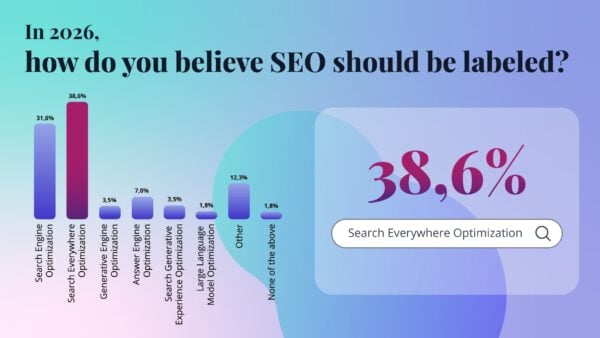
Despite the dramatic shifts in how and where search functions are performed, the internal industry debate over renaming “Search Engine Optimization” appears to lean towards retaining the established term. The survey revealed a notable preference for a rebranding, with thirty-nine percent (39%) of SEOs suggesting a new label such as “Search Everywhere Optimization.” However, a nearly equally significant thirty-two percent (32%) firmly advocated for keeping “Search Engine Optimization” intact. Even among industry veterans, a substantial forty-one percent (41%) favored “Search Everywhere Optimization,” indicating a widespread acknowledgment of SEO’s significantly expanded scope beyond conventional web search.
However, Yoast’s leading experts strongly contend that the established term, “SEO,” retains immense value and market recognition. Alex Moss emphasized, “The term ‘SEO’ will stay. The role will widen to include AI and other disciplines, but the name doesn’t need to change.” Carolyn Shelby further reinforced this perspective, stating, “The term ‘SEO’ still holds shared meaning, credibility, and market recognition. There’s no strong evidence that rebranding the discipline itself is necessary or beneficial. Responses favoring ‘Search Everywhere Optimization’ reflect where SEO outcomes now surface, not a fundamentally different practice.”
Analysis and Implications: The industry’s resistance to a complete rebranding stems from a crucial understanding: while the channels of optimization have undeniably diversified, the fundamental process of optimizing for discoverability, relevance, and authority remains consistently aligned with the original intent. The core activities—establishing robust technical foundations, creating high-quality content, fostering strong brand identity, and building verifiable authority—are still paramount. A wholesale renaming could risk fragmenting understanding, diluting the established recognition of SEO within broader business and marketing contexts, and creating unnecessary confusion for clients and stakeholders. Instead, the prevailing strategy involves broadening the definition and scope of SEO to encompass AI and social platforms, rather than abandoning a well-understood and historically significant moniker. This necessitates a concerted effort to educate stakeholders on the expanded meaning of “search engines” to include AI conversational interfaces, social media algorithms, and other emerging discovery mechanisms.