rifanmuazin
A social media approval process constitutes a methodical, step-by-step system employed by organizations to meticulously review, refine, and authorize content before its public dissemination across digital platforms. This structured approach is paramount for injecting order and rigor into the often-chaotic creative cycle, thereby preventing critical errors such as typographical mistakes, broken hyperlinks, or, more significantly, messaging that deviates from established brand guidelines or internal policies. Historically, as social media evolved from a niche marketing channel to a ubiquitous communication medium, the need for stringent content governance became increasingly apparent. Early adopters often grappled with inconsistent messaging and reactive crisis management, underscorating the necessity for proactive approval mechanisms.
The journey of a typical social media post within such a framework commences with its initial conception, often as a draft penned by a content creator or strategist. This draft then embarks on a defined trajectory, navigating through multiple internal review stages before culminating in a final, authoritative sign-off. Depending on the complexity of the organization or the sensitivity of the content, this pathway might incorporate iterative feedback loops, rigorous legal and compliance evaluations, or even intricate design adjustments. This phased progression ensures that every piece of content aligns with strategic objectives, maintains brand integrity, and adheres to regulatory standards before reaching its intended audience.
The Evolving Landscape of Social Media Management

In the contemporary digital age, where brands manage an ever-increasing volume of content across a multitude of platforms, the absence of a defined approval workflow is akin to navigating a complex terrain without a map. The sheer scale of social media operations, especially within enterprise environments, has magnified the potential for missteps. According to recent industry analyses, inefficient content creation and review processes remain a top challenge for over 60% of marketing teams, directly impacting publishing velocity and content quality. Without a clear path from ideation to publication, teams risk not only public embarrassment from errors but also significant reputational and financial repercussions.
A well-architected workflow is inherently dynamic, designed to reflect the actual operational rhythm of a team. It meticulously considers variables such as team size, publishing frequency, and the preferred communication modalities of key stakeholders. The overarching objective is not to encumber the creative process with excessive bureaucracy but to facilitate a seamless, predictable flow for the social media strategy, effectively preempting last-minute exigencies and ensuring timely, high-quality output. Ultimately, a robust social media approval process illuminates a definitive route for every post, guaranteeing that the appropriate individuals exercise oversight at precisely the right junctures.
Core Stages of an Effective Workflow
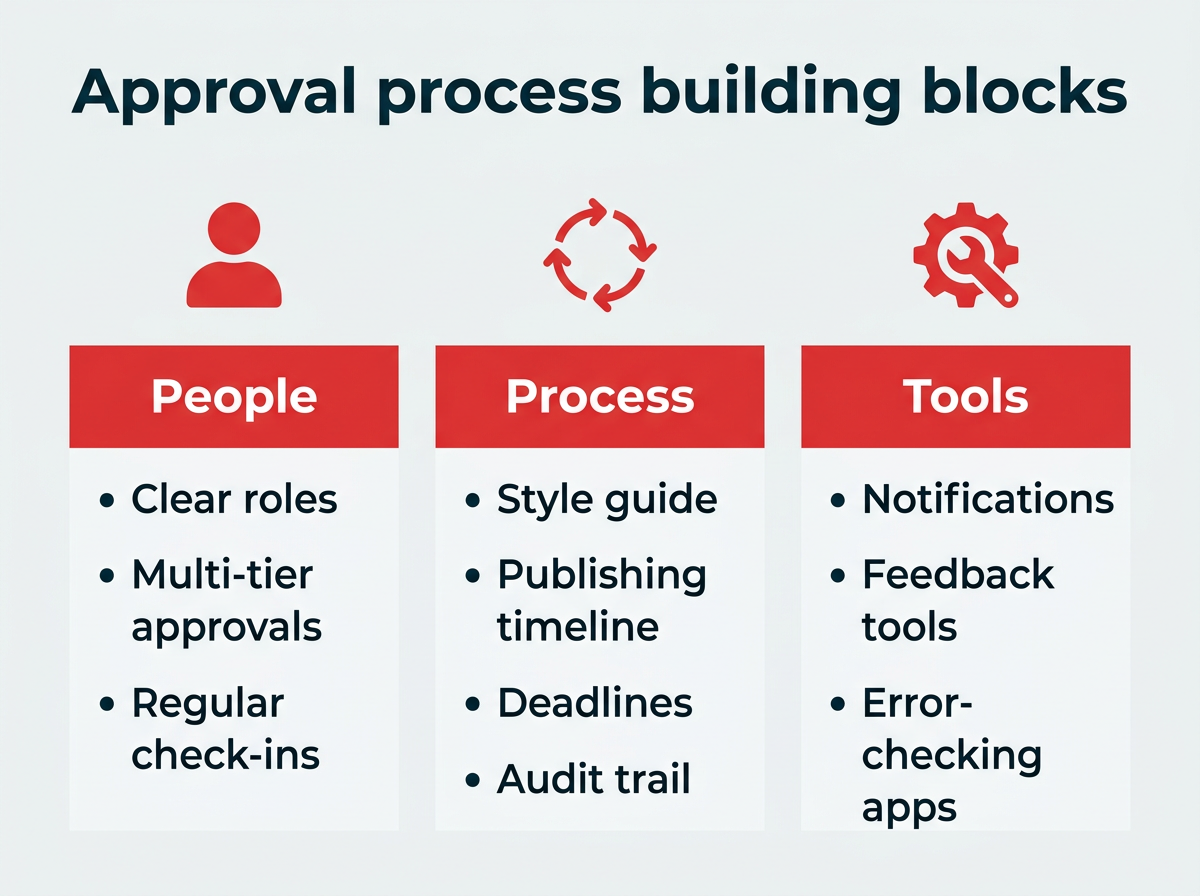
A typical social media approval workflow generally encompasses six fundamental stages, guiding content from its nascent idea to its final publication:

- Ideation: The initial phase where concepts, themes, and content outlines are brainstormed and proposed. This often involves aligning with overarching marketing campaigns and strategic goals.
- Drafting: Content creators develop the actual post, including text, visual assets, calls-to-action, and relevant links or hashtags.
- Review: Internal stakeholders, such as editors, marketing managers, or brand leads, scrutinize the draft for quality, accuracy, tone, and adherence to brand guidelines.
- Revision: Based on feedback from the review stage, the content creator makes necessary adjustments and improvements. This stage may involve multiple iterations.
- Approval: Designated approvers, who may include senior management, legal teams, or compliance officers, provide the final sign-off, granting permission for the content to proceed.
- Publishing: The approved content is scheduled and released across the intended social media channels, often via a social media management platform.
This structured progression is vital for catching errors, ensuring brand consistency, and maintaining compliance. For instance, a recent study highlighted that companies with formalized content approval processes reported a 25% reduction in publishing errors compared to those without.
Key Components of a Robust System: People, Process, and Tools
The foundation of an effective social media content approval mechanism rests upon three interconnected pillars: the right people, a clearly defined process, and appropriate technological tools.
People:
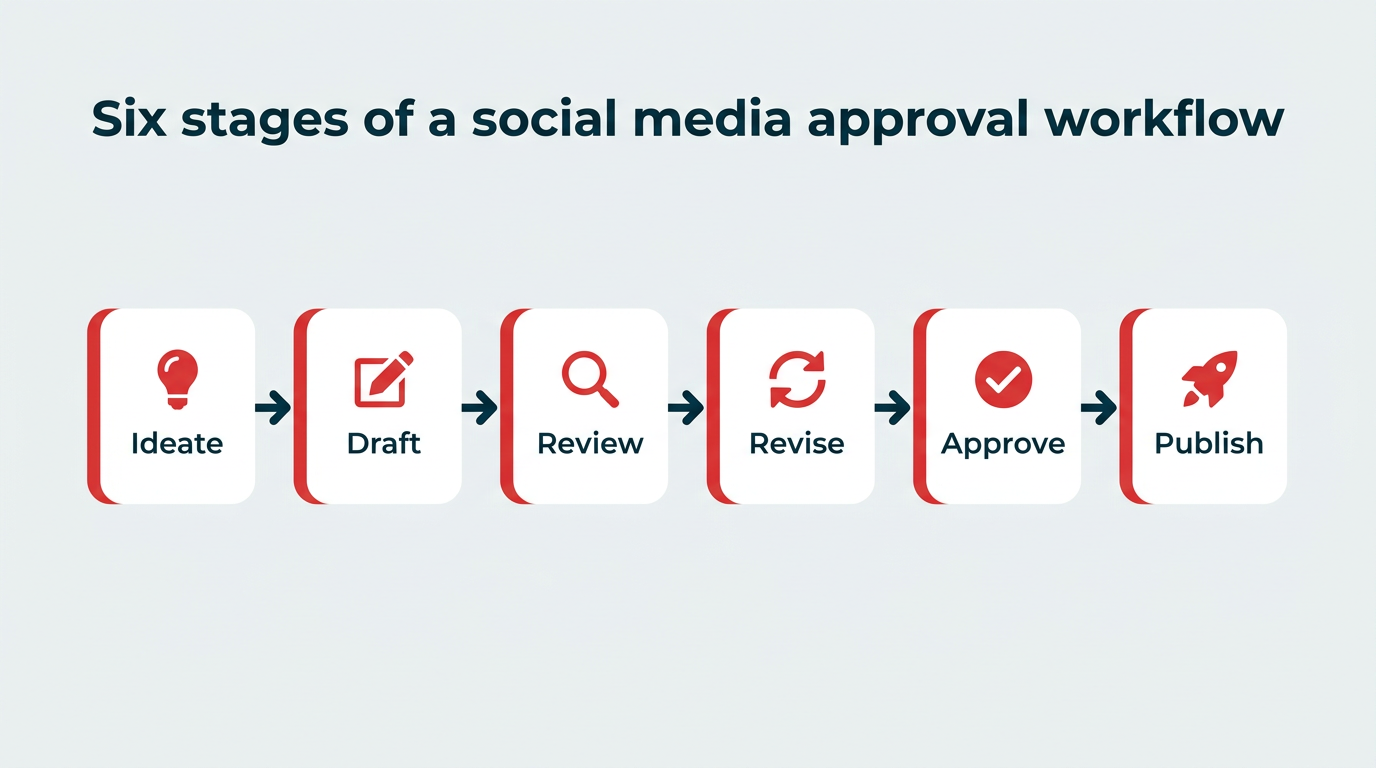
- Content Creator: Responsible for generating the initial draft.
- Editor/Reviewer: Focuses on grammatical correctness, factual accuracy, and alignment with editorial standards.
- Brand Manager: Ensures the content resonates with the brand voice, messaging, and overall identity.
- Legal/Compliance Officer: Critical in regulated industries, verifying adherence to legal requirements and industry-specific regulations.
- Final Approver: Typically a senior team lead or department head, holding ultimate accountability for the content’s release.
- Publisher/Scheduler: The individual or team responsible for scheduling and publishing the approved content.
Process:
- Clear Workflow Stages: Defined steps from ideation to publication.
- Service Level Agreements (SLAs): Established turnaround times for each stage to prevent bottlenecks.
- Feedback Mechanism: A standardized method for providing and incorporating feedback.
- Escalation Paths: Defined procedures for addressing stalled approvals or disagreements.
- Documentation: Comprehensive guidelines, policies, and criteria accessible to all stakeholders.
- Audit Trails: A record of all changes, reviews, and approvals for accountability.
Tools:
- Centralized Content Calendar: Provides a holistic view of all scheduled and pending content.
- Workflow Automation Features: Automates routing, notifications, and status updates.
- Role-Based Permissions: Ensures only authorized individuals can perform specific actions.
- In-Platform Editing & Commenting: Facilitates collaborative revisions within a single environment.
- Integrations: Connects with other essential tools (e.g., DAMs, CRM, analytics platforms).
- Version Control: Tracks changes and allows for reverting to previous versions.
Why Workflows Are Indispensable
The imperative for a social media approval workflow extends beyond mere organizational efficiency; it is a critical safeguard for brand reputation and operational integrity. Workflows serve as an essential bulwark against common pitfalls such as typos, broken links, or off-brand language, all of which are easily overlooked in the fast-paced environment of digital publishing. The involvement of multiple reviewers significantly diminishes the likelihood of such errors reaching the public sphere.
Furthermore, these systems are instrumental in fostering brand consistency. In scenarios where numerous individuals contribute content, a shared approval framework acts as a unifying force, ensuring that all published material maintains a cohesive brand voice and identity. This principle holds true for organizations of all sizes, from nascent startups to multinational corporations. The time-saving benefits are also substantial. By establishing clear guidelines and responsibilities, teams reduce the time spent chasing approvals, making last-minute edits, or rectifying post-publication errors. This efficiency is particularly vital given that delays in content creation and review continue to plague many marketing departments.
A well-defined workflow ensures that everyone involved understands:
- What their specific responsibilities entail.
- When their input is required.
- How to provide feedback effectively.
- Where content is located within the approval pipeline.
This clarity facilitates accountability, making it straightforward to trace back issues and implement corrective measures. In highly regulated industries, the approval process transforms into a critical safety net, ensuring content compliance with stringent legal and ethical standards, thereby mitigating the substantial risks of fines, legal action, or reputational damage. Finally, a structured workflow inherently incorporates mechanisms for constructive feedback, enabling content optimization before it goes live, whether it involves minor adjustments or significant strategic revisions.
For enterprise teams, the benefits are amplified:
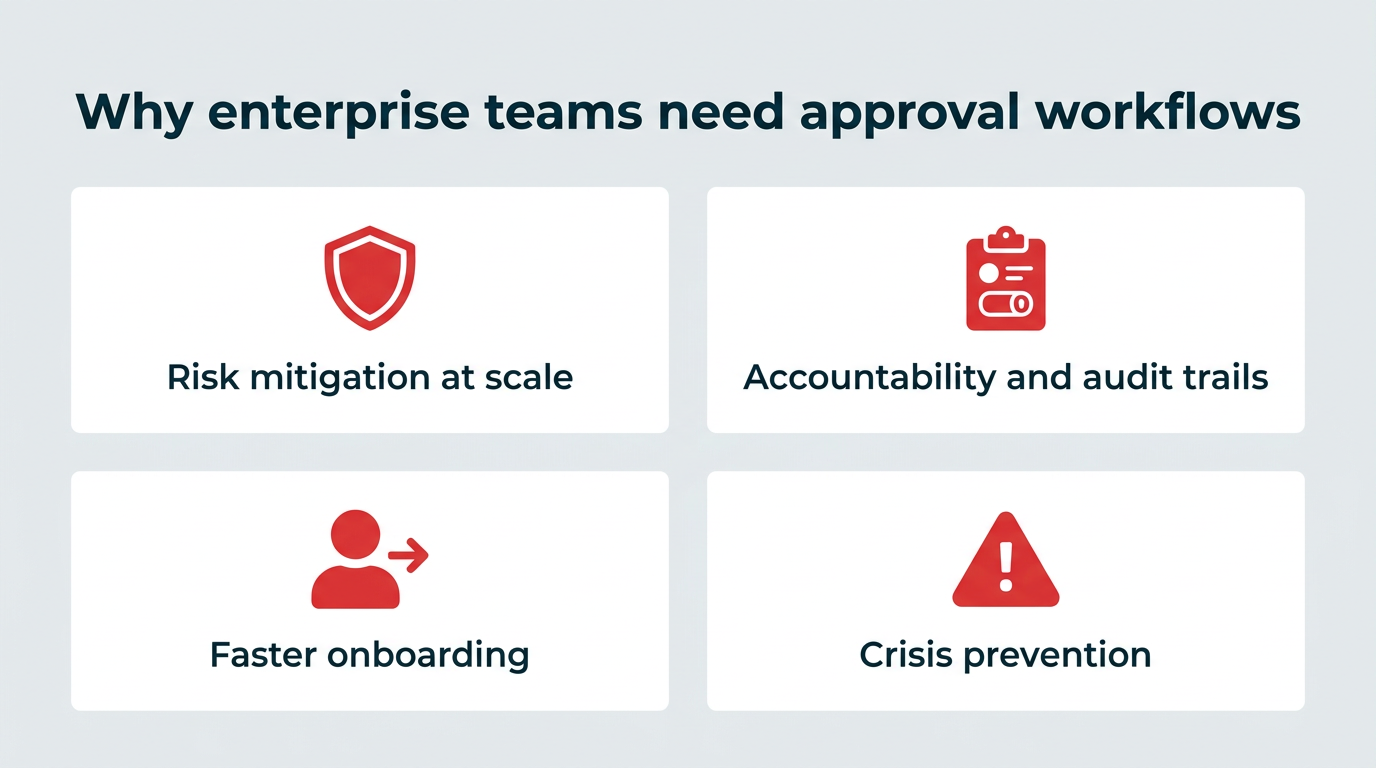
- Risk Mitigation: Proactively identifies and addresses potential compliance breaches or brand reputation threats.
- Audit Trails: Provides a documented history of all content changes and approvals, crucial for compliance and internal governance.
- Faster Onboarding: New team members can quickly understand content standards and approval protocols.
- Crisis Prevention: Ensures rapid and compliant responses during unforeseen events by having clear approval paths for sensitive communications.
- Scalability: Allows for efficient management of vast volumes of content across diverse regions and brands without sacrificing quality or control.
Categorizing Approval Workflows: A Spectrum of Approaches
Not all teams require an identical approval structure. The optimal workflow type is contingent upon factors such as team size, publishing volume, and the degree of oversight demanded by the content. Understanding the main types — linear, tiered, parallel, conditional, and hybrid — is crucial for tailoring an effective system.
-
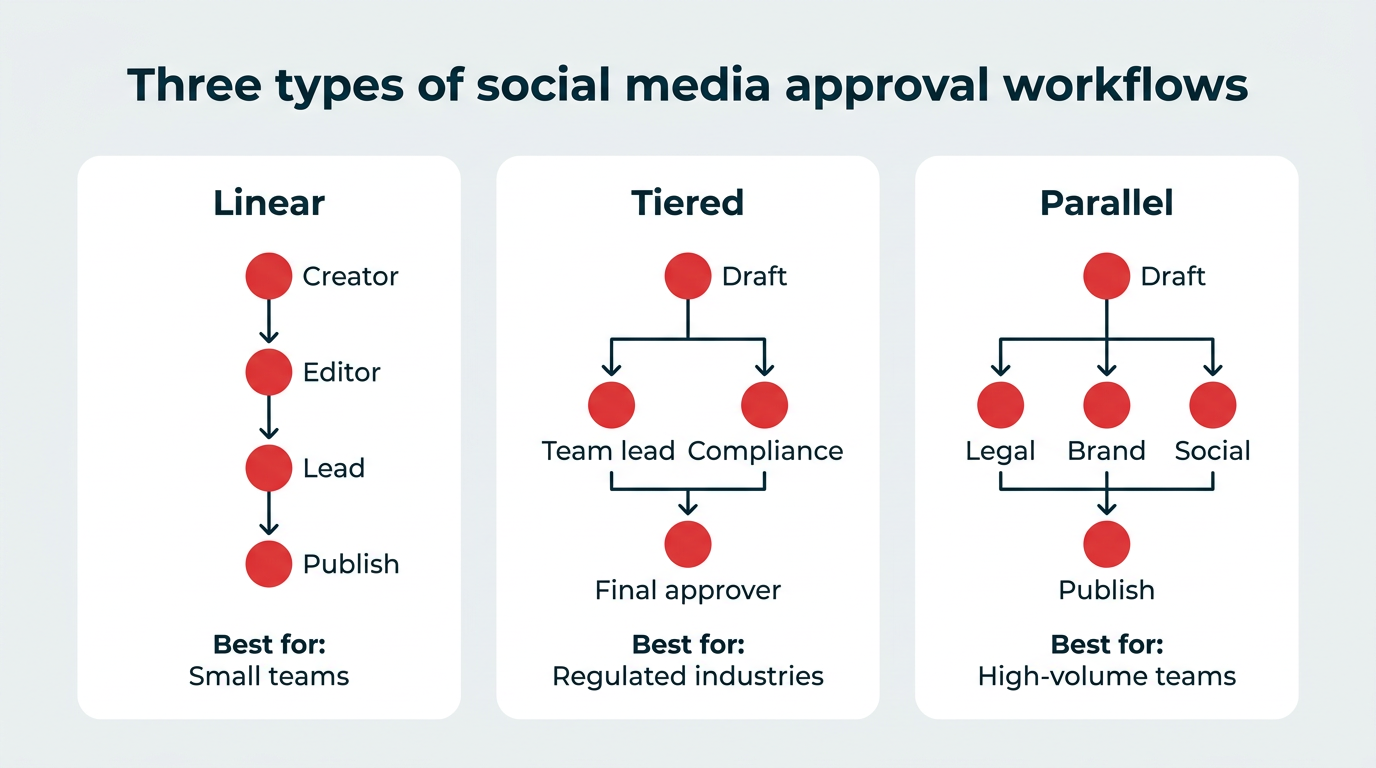
Linear Approval: Content progresses sequentially, from one reviewer to the next in a fixed order (e.g., Creator → Editor → Brand Lead → Publisher). This straightforward model is ideal for smaller teams or those with lower publishing volumes, where fewer stakeholders need to provide input. It prioritizes clarity and simplicity.
-
Tiered (Multi-Level) Approval: This workflow introduces multiple layers of sign-off. A post might require approval from a team lead, then a compliance officer, and finally a senior executive. This structure is prevalent in large enterprise organizations and highly regulated sectors like finance or healthcare, where stringent oversight is non-negotiable. Platforms like Hootsuite often offer multi-level approval features to support this complexity.
-
Parallel Approval: In this model, multiple reviewers simultaneously assess content. For instance, a legal reviewer, brand manager, and regional lead might all receive a draft at the same time. This significantly accelerates turnaround times, making it suitable for large teams with numerous stakeholders. The potential for conflicting feedback is managed by designating a final decision-maker.
-
Conditional (Exception-Based) Approval: Content follows different approval paths based on predefined criteria such as content type (e.g., organic post vs. paid ad), platform, campaign, or perceived risk level. A routine post might have a single-step approval, while a high-stakes campaign launch triggers a multi-tier review involving legal and senior leadership. This prevents unnecessary bottlenecks for low-risk content and is common in multi-brand or multi-region organizations.
-
Hybrid Approval: Many complex enterprise environments adopt a hybrid approach, combining elements from the above models. They might use linear approval for daily content, parallel review for major campaign launches, and conditional routing for compliance-sensitive posts. The critical success factor for a hybrid model is meticulous documentation of which path applies to which content type, eliminating ambiguity for the team.
Common Pitfalls and How Workflows Break Down
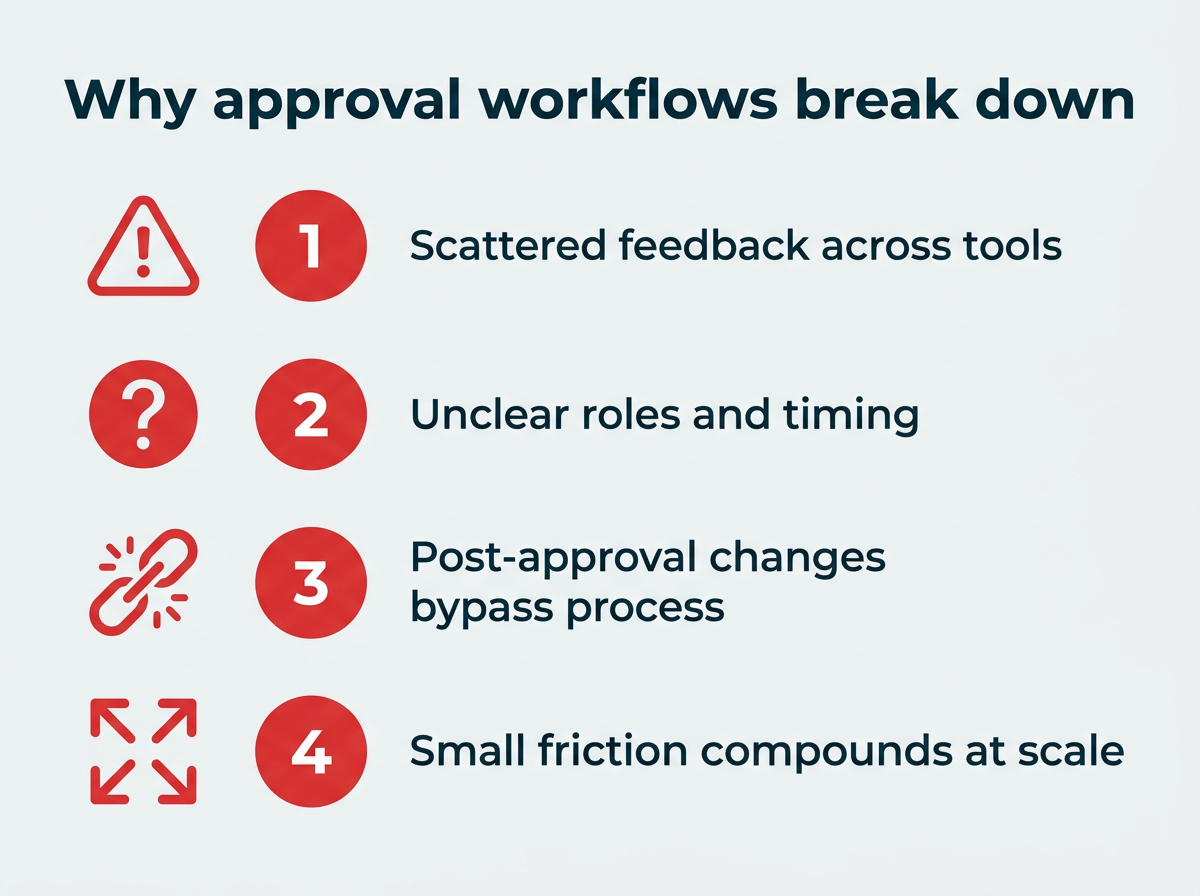
Even with the best intentions, social media approval workflows can falter. The most common reasons for breakdown typically stem from disorganization, lack of clarity, or a failure to adapt to scale.
-
Scattered Feedback: When feedback is fragmented across disparate communication channels—emails, chat platforms, document comments, or even verbal exchanges—critical input inevitably gets lost. This leads to missed edits, duplicated efforts, and significant frustration. Centralizing feedback within a dedicated social media management tool or a unified workspace is paramount to overcome this.
-
Unclear Roles and Timing: Ambiguity regarding who is responsible for reviewing content, the sequence of review, or the deadlines for feedback creates inevitable bottlenecks. Posts can languish in queues because reviewers are unaware it’s their turn, or multiple individuals might review the same draft, leading to conflicting instructions. Explicitly defining roles and setting clear deadlines at the outset is crucial.
-
Post-Approval Changes: Edits made after a final sign-off that bypass the established workflow pose a significant risk, particularly in regulated industries where unauthorized content can have severe legal consequences. Even in less stringent environments, last-minute changes can reintroduce errors the approval process was designed to prevent. Any modification post-approval should ideally trigger a re-entry into the workflow, perhaps via a fast-track path for minor edits, rather than skipping the process entirely.
.png)
-
Friction Compounding at Scale: A minor inefficiency that is barely noticeable in a small team can escalate into a major crisis at an enterprise level. Managing numerous social accounts across different regions means that even slight delays per post accumulate rapidly across hundreds of posts weekly. Scaling content operations highlights issues like unclear escalation paths, inconsistent approval criteria across brands, and a lack of centralized visibility into content status. The solution requires a workflow explicitly designed for the volume and complexity inherent in large-scale operations, not just better tools.
Building a Resilient Approval Workflow: A Six-Step Blueprint
Creating an approval workflow that withstands the pressures of real-world publishing involves a systematic approach.
-
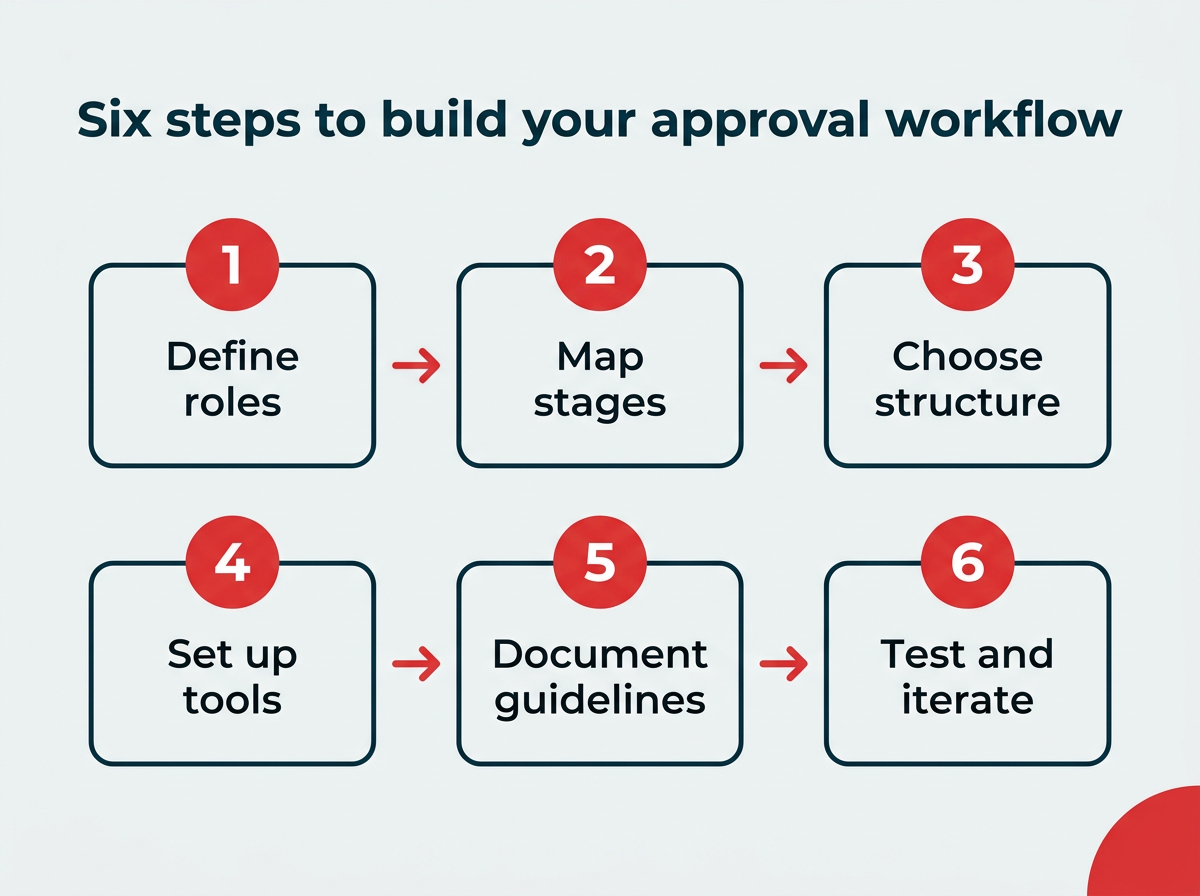
Define Roles and Responsibilities: Clarity is paramount. Every individual involved must understand their specific function before any content is drafted. Common roles include content creator, editor, brand manager, legal/compliance reviewer, final approver, and publisher. For enterprise teams, role-based permissions within a management tool are essential to prevent unauthorized actions.
-
Map Your Content Workflow Stages: Begin with the fundamental six stages (ideate, draft, review, revise, approve, publish) and customize them to fit your team’s unique requirements. Some organizations may need additional stages, such as a dedicated compliance review, while others might merge review and revision into an iterative loop. Crucially, document the expected turnaround time (SLAs) for each stage to maintain momentum.
-
Choose Your Approval Structure: Select the workflow type best suited to your team’s profile. Small teams with low volume might opt for linear approval. Enterprise organizations or those in regulated industries will benefit from tiered or conditional workflows. Large teams with many stakeholders might favor parallel approval to expedite processes. A hybrid model offers the most flexibility for complex environments.
-
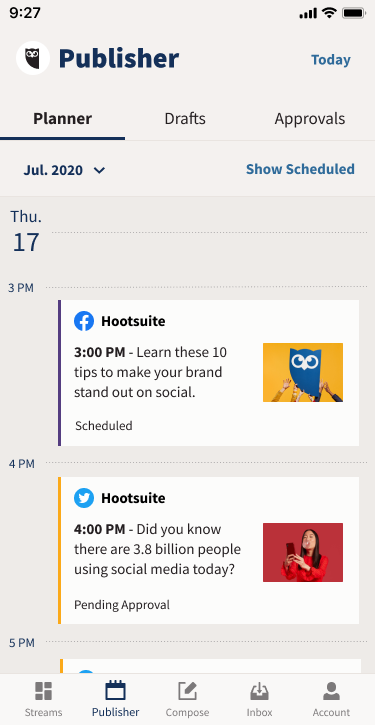
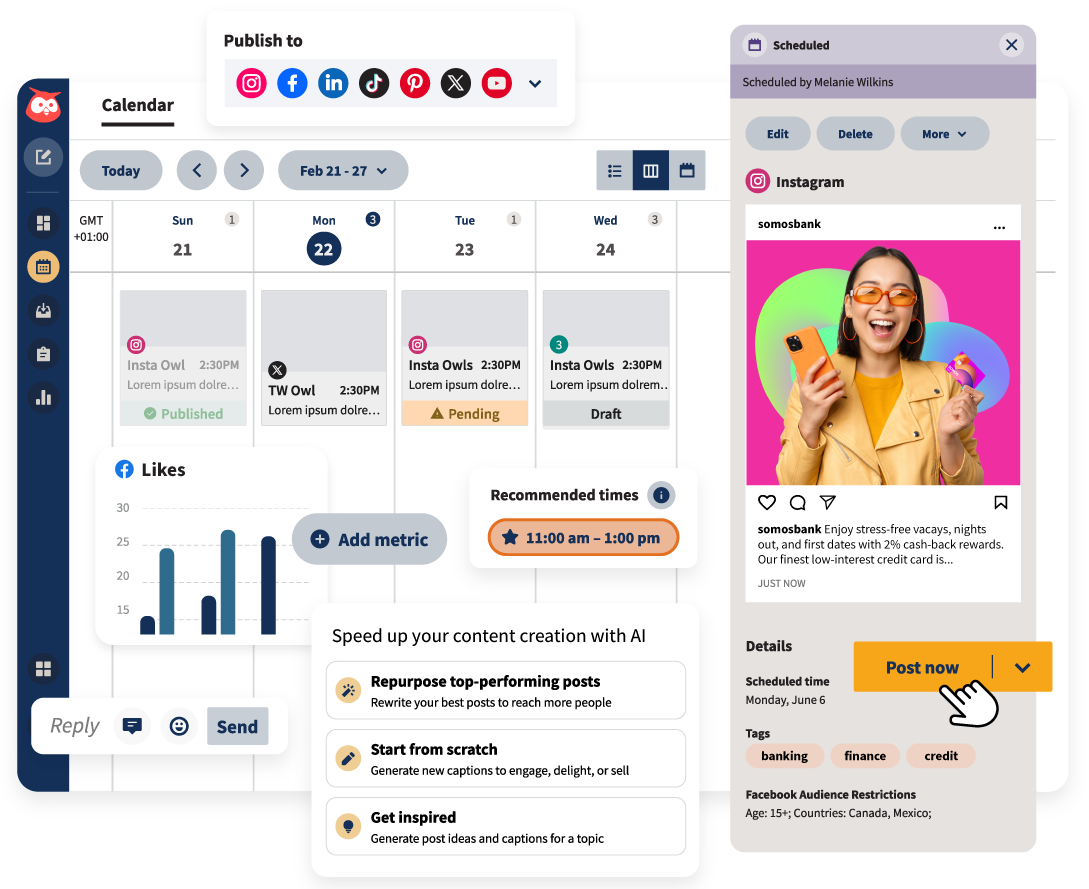
Set Up Your Tools and Permissions: Centralizing approvals within a single platform is a significant efficiency booster. The chosen tool should support configurable role-based permissions, the routing of content through predefined approval chains, and automated notifications to alert reviewers. Hootsuite, for example, offers multi-level approvals, locks approved posts to prevent unauthorized changes, and provides an audit trail of all actions.
-
Document Guidelines and Share with Your Team: Create a concise, one-page document outlining brand guidelines, approval criteria, escalation paths, and turnaround SLAs. This document should be complemented by a formal social media policy that provides governance guardrails. Share it during onboarding and review it regularly as team structures or publishing volumes evolve.
-
Test, Measure, and Iterate: Implement the workflow for a trial period. Monitor key metrics such as time-to-publish, the number of revision rounds, and identify any recurring bottlenecks. If a particular stage consistently causes delays, adjust roles, refine SLAs, or explore alternative tools. No workflow is perfect initially; continuous improvement is key to its long-term effectiveness.
Leveraging Technology: The Role of Social Media Management Platforms
The selection of the right technology is pivotal to the success of an approval workflow. Enterprise teams, in particular, require platforms that can manage complexity without sacrificing speed. Key features to prioritize include:
- Multi-Level Approvals: The ability to configure multiple tiers of reviewers.
- Customizable Approval Chains: Tailoring workflows for different brands, regions, or content types.
- Role-Based Permissions: Granular control over who can create, edit, approve, or publish.
- Audit Trails: A comprehensive log of all content changes and approvals for compliance.
- Automated Notifications: Alerts to reviewers when content is awaiting their action.
- Centralized Content Calendar: A unified view of all scheduled, pending, and published content.
- In-Platform Collaboration: Tools for commenting, editing, and version control within the platform.
- Content Locking: Preventing changes to content once approved.
- Integrations: Seamless connections with other marketing, compliance, and asset management systems.
- Mobile Access: Enabling approvals and monitoring on the go.
- AI-Assisted Content Integration: Ensuring AI-generated drafts feed directly into the established approval pipeline.
Hootsuite exemplifies a platform built to address the intricacies of enterprise approval workflows. It enables multi-level approval configurations for any social account, ensuring content passes through up to three tiers of reviewers. Role-based permissions enforce control, and once approved, posts are locked to prevent unauthorized alterations. Any subsequent changes trigger a re-entry into the approval chain, with every action meticulously logged, providing a robust audit trail. Automated notifications streamline communication, and the centralized calendar view offers complete visibility into the content pipeline across all accounts. Integration with tools like Salesforce, Adobe, and Slack further embeds approval processes into existing enterprise ecosystems.

Navigating Regulated Industries: The Imperative for Strict Compliance
In industries such as finance, healthcare, government, and pharmaceuticals, social media approvals carry exceptionally high stakes. Publishing unapproved content in these sectors is not merely a brand risk; it can lead to severe fines, legal repercussions, and even the revocation of operating licenses. Consequently, approval workflows in these environments must be hyper-attuned to regulatory requirements that extend far beyond brand consistency.
Key considerations for regulated industries include:
- Compliance Review Stage: A dedicated, mandatory stage for legal or compliance teams.
- Archiving and Record-Keeping: Tools that automatically archive all published content and approval records for audit purposes.
- Content Restrictions: Strict adherence to guidelines regarding prohibited claims, disclaimers, and data privacy.
- Expert Reviewers: Involving subject matter experts (e.g., medical professionals in healthcare) in the review process.
- Crisis Communication Protocols: Pre-approved templates and expedited workflows for time-sensitive, high-risk communications.
Industry-specific nuances further complicate matters:
- Financial Services: Adherence to SEC, FINRA, or FCA regulations regarding investment advice, financial promotions, and anti-fraud measures.
- Healthcare/Pharma: Compliance with HIPAA, FDA, and other health authority guidelines concerning patient privacy, medical claims, and drug promotion.
- Government: Strict protocols for official communications, public information, and avoiding political bias.
The ideal approval tool for regulated industries must make compliance an enforceable reality, not just an aspiration. This means embedding controls directly into the workflow, a hallmark of enterprise-grade compliance tools.
Measuring Success: Metrics for Workflow Optimization
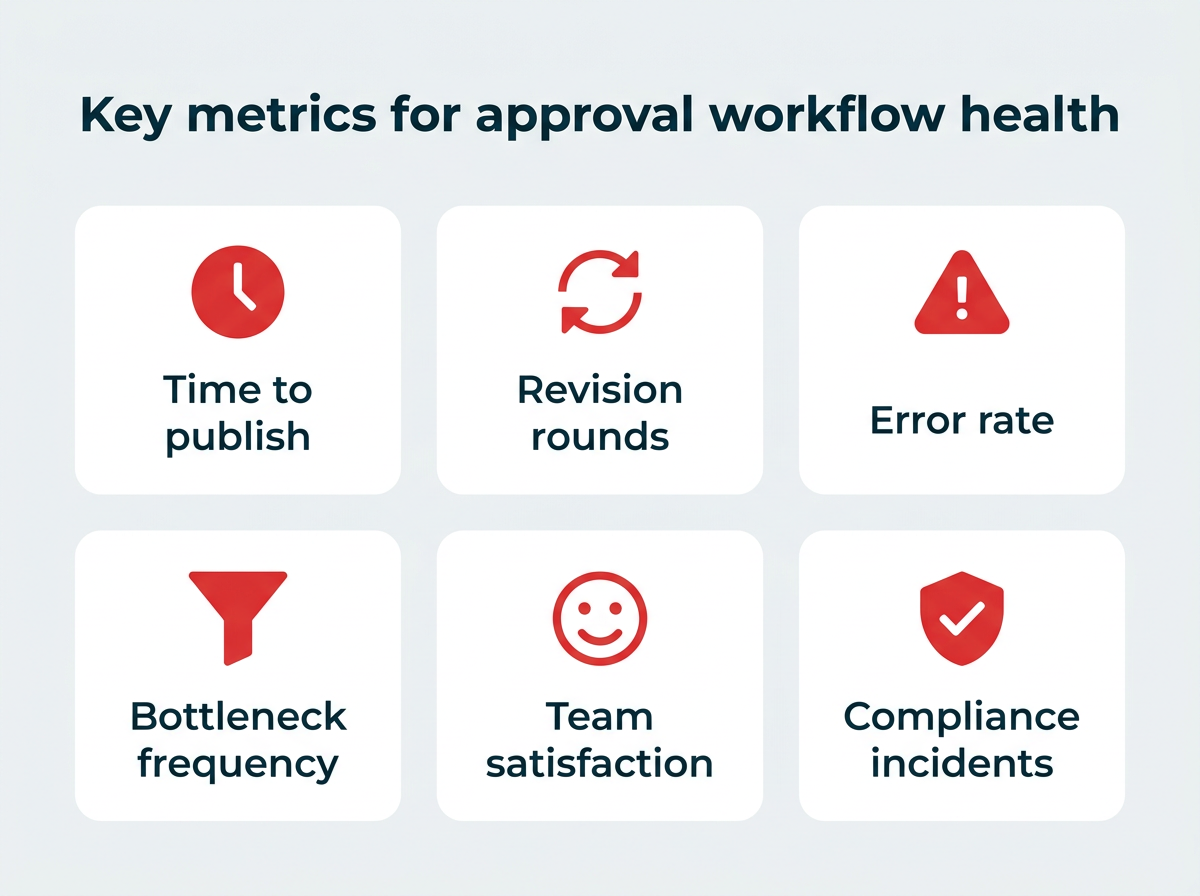
An approval workflow’s true value is reflected in its outcomes. To ascertain its effectiveness, regular tracking of key metrics is essential:
- Time to Publish: The average duration from draft submission to final publication.
- Revision Rounds: The average number of iterations a post undergoes before approval.
- Error Rate: The frequency of mistakes (typos, broken links, off-brand messaging) in published content.
- Bottleneck Frequency: Identification of stages or reviewers consistently causing delays.
- Team Satisfaction: Feedback from content creators and reviewers regarding the process’s efficiency and clarity.
- Compliance Incidents: The number of regulatory violations or brand guideline breaches.
- Content Velocity: The volume of approved content produced within a given period.
- Resource Allocation: How effectively team members’ time is utilized in the approval process.
These metrics should be reviewed quarterly to allow for iterative adjustments as team dynamics, content volume, or compliance requirements evolve.

A Practical Template for Implementation
Here is a customizable template to adapt for your team, tailoring roles, SLAs, and escalation paths to specific workflow types and compliance needs:
| Stage | Owner | Action | SLA | Escalation |
|---|---|---|---|---|
| Ideate | Content Creator | Submit content brief or topic for approval | 2-3 days before draft deadline | Escalate to Team Lead if no response in 24 hours |
| Draft | Content Creator | Write copy, select visuals, add links/hashtags | 48 hours before publish date | Flag to Editor if blocked on assets |
| Review | Editor/Reviewer | Check quality, accuracy, tone, brand alignment | 24 hours after draft submission | Auto-notify if review not started within 12 hours |
| Compliance Review | Legal/Compliance | Verify regulatory compliance and flag risks | 24 hours after editorial review | Escalate to Compliance Lead if unreviewed after 24 hours |
| Approve | Final Approver | Sign off on content for publishing | 12 hours after compliance review | Escalate to Department Head if no response |
| Publish/Schedule | Publisher | Schedule or publish approved content | Per content calendar | Re-route to Approver if last-minute changes needed |
This comprehensive framework, supported by appropriate technology and continuously refined through feedback and performance metrics, transforms social media content creation from a potential liability into a strategic asset. By embracing a disciplined approach to approvals, organizations can ensure that every message resonates powerfully, aligns perfectly with brand values, and navigates the complex digital landscape with confidence and compliance.