rifanmuazin
The annual Litmus Live conference, a seminal event for email marketers and industry professionals, provided an unprecedented look into the inner workings of the email inbox in 2026. During a highly anticipated session titled “The Inbox Decoded: How Mailbox Providers Really Think About Email,” leading figures from the world’s major mailbox providers (MBPs) – Microsoft, Google, and Yahoo – shared candid insights, demystifying common misconceptions and outlining the evolving landscape of email deliverability. This rare, unfiltered dialogue, facilitated by Validity’s Tom Bartel and Guy Hanson, offered a crucial roadmap for email marketing leaders and practitioners navigating an increasingly complex digital environment, fundamentally reshaped by artificial intelligence and stringent new authentication mandates.
The Evolving Landscape of Email Delivery: Beyond Misconceptions
A pervasive misconception among email marketers is that mailbox providers inherently act as adversaries, actively blocking legitimate brand communications. The panel unequivocally debunked this notion. Marcel Becker, Senior Director of Product Management at Yahoo, stated plainly, “We love email marketers. That’s what consumer email is about. At the end of the day, it’s very simple: send mail users want. They decide what that is, not us.” This sentiment was echoed by Ross Adams, PM Principal Architect at Microsoft, who affirmed, “Consumers want [marketing emails]. They’re ordering things. They want to know about various sales that are going on.”
Dan Givol, Group Product Manager at Google, urged marketers to adopt a consumer-centric perspective: “Today, your marketers are part of this webinar, but as soon as this is over, you become our consumers. Put that lens on as you communicate with your users and ask yourself, ‘Do I want to receive this?'” This collective emphasis underscores a fundamental shift: MBPs are not gatekeepers against commercial mail, but rather guardians of the user experience, striving to filter out unwanted noise while ensuring desired content reaches its destination.
The true challenge, as highlighted by Becker, lies in the sheer volume of malicious email. Approximately 90% of all email in circulation is classified as malicious, ranging from phishing attempts to spam and malware distribution. “Our job is not so much to identify the bad stuff,” Becker explained. “It’s more to identify the good stuff for our users.” This daunting task means MBPs are constantly refining their algorithms to distinguish legitimate senders from a vast sea of nefarious actors. Validity’s Tom Bartel encapsulated this dynamic with his two rules of deliverability: “The first rule is, as a sender, it’s not really about you—there’s ninety percent of really bad mail polluting the system. They’re not looking to punish good senders just because they feel like it. The second rule is that it is all about you. Do the fundamentals well—clear transmission, making sure the identity is correct, email authentication, DMARC. Beyond that, just send wanted mail. Don’t annoy recipients.”
Key Insights from “The Inbox Decoded”
The session delved into critical questions facing marketers, with panelists offering direct, actionable guidance.
Default Suspicion: Mailbox providers clarified that they do not view all emails as suspicious by default. While newer senders and domains face initial scrutiny due to the overwhelming volume of malicious traffic, established senders with a history of positive engagement are generally trusted. The core principle remains: if you are a legitimate sender delivering content your subscribers genuinely want, your emails are “good to go.”
Sender Evaluation Signals: Engagement stands as the paramount trust signal. MBPs meticulously track a suite of metrics including spam complaint rates, bounce rates, unsubscribe activity, and positive interactions (opens, clicks, replies). Validity’s 2026 Email Deliverability Benchmark Report revealed a significant tightening of standards, with the desired spam complaint rate now below 0.1%, a notable reduction from the previously acceptable 0.2-0.3%. This heightened sensitivity reflects the MBPs’ commitment to prioritizing user satisfaction and reducing inbox clutter.
Reputation Recovery: A common query concerns the speed of sender reputation recovery. The panelists stressed that recovery is not a passive process dependent merely on time, but an active one requiring deliberate intervention. Dan Givol described sender reputation as “a backwards-looking proxy for the way that users perceive your messages.” His advice was unequivocal: “If you don’t like what you see, take action sooner rather than later because the deeper you get in the hole, the harder it is to get out.” Tom Bartel reinforced this with a simple mantra: “Nothing changes if nothing changes.” This implies a continuous, proactive approach to monitoring and improving email practices.
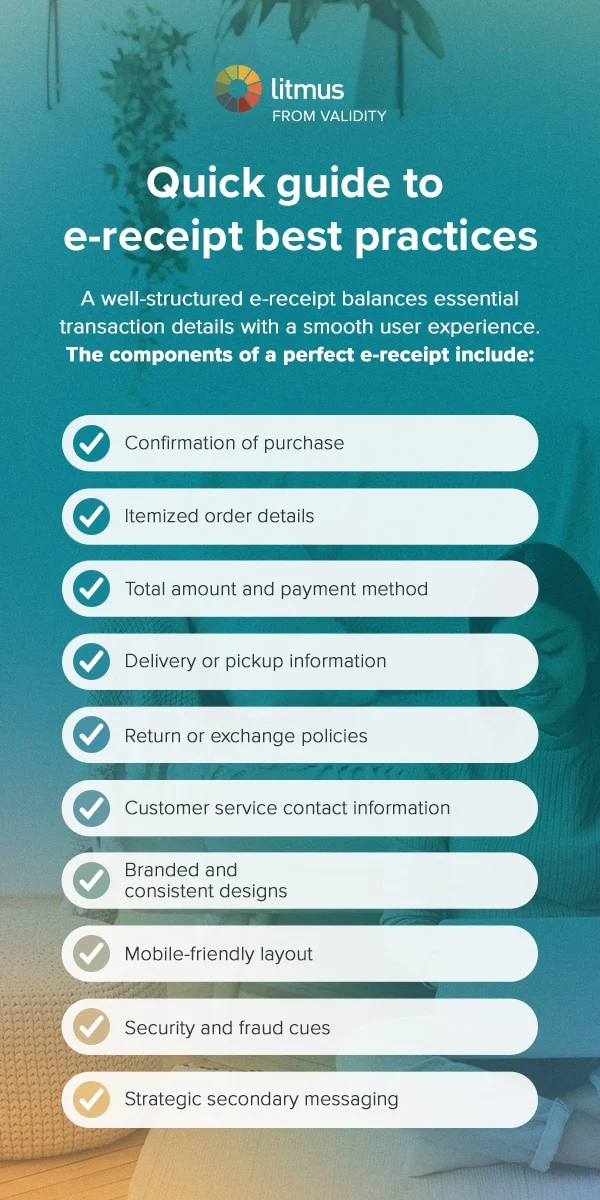
Reducing Transactional Email Complaints: Transactional emails, though often critical for customer journeys, can inadvertently attract spam complaints if not managed properly. MBPs recommend a clear segregation of email types. This involves using distinct IP addresses for different message categories (e.g., one for account notifications, another for promotional content) and separate “from” addresses (e.g., [email protected] for receipts, [email protected] for promotions). Senders should strictly avoid mixing disparate content types within a single message. Validity offers further guidance on this crucial aspect, emphasizing that clarity and consistency are key to ensuring vital transactional messages reach the inbox.

The Benefits of BIMI: Brand Indicators for Message Identification (BIMI) was highlighted as a powerful tool for visual identity and trust. BIMI allows a verified sender logo to appear alongside messages in the inbox, acting as a visual confirmation of brand authenticity. It complements existing authentication protocols like SPF, DMARC, and DKIM, providing an additional layer of assurance to email clients and users. Tom Bartel noted, “Early adoption of BIMI ensures first mover advantage. While it’s likely MBPs now see upwards of 40% of their inbound commercial email volume covered by BIMI certificates, there is still a missed opportunity to stand out in the inbox in these early (now mid) days of adoption.” Guy Hanson added that consistent, clear display names and the implementation of Apple Branded Mail further enhance recognition and trust, crucial in a crowded inbox.
Defining a “Good Sender” in 2026: Mandates and Best Practices
The panelists outlined a definitive framework for what constitutes a “good sender” in 2026, emphasizing that certain practices have evolved from recommendations to absolute requirements.
Authentication: No Longer Optional: Sender Policy Framework (SPF), DomainKeys Identified Mail (DKIM), and Domain-based Message Authentication, Reporting, and Conformance (DMARC) are no longer merely “best practices.” They are now mandatory for high-volume senders, driven by bulk sender mandates introduced by Gmail, Yahoo, and Microsoft. As of November 2025, Gmail significantly ramped up enforcement on non-compliant traffic, leading to disruptions, including temporary and permanent rejections for messages failing to meet these sender requirements. This decisive action has yielded tangible results: Validity’s benchmark data indicates that global inbox placement rose to 87.2% in 2025, a 3.7% year-over-year improvement. This upward trend, while varying by MBP, region, and industry, underscores the direct impact of robust authentication. For maximum protection and deliverability, senders are advised to set their DMARC policy to p=quarantine or, ideally, p=reject.
The Paramountcy of Email List Hygiene: High unknown user rates (hard bounces) are a clear indicator of poor email list quality, negatively impacting sender reputation with MBPs. Validity’s benchmark data revealed an average unknown user rate of 1.46% in 2025, a figure that can escalate rapidly without diligent list maintenance. Dan Givol underscored this, stating, “The hygiene of a list is critical. If you send messages to people who no longer want to receive them, they’re going to send you to spam. Take advantage of unsubscribe and other critical things that we put out there to make sure that you are getting through.” Senders must actively monitor and promptly remove hard bounces, soft bounces, and inactive recipients to preserve list integrity and maintain a healthy sender reputation.
Engagement Trumps Volume: In 2026, the era of “send more, get more” is definitively over. Relevance-sorted inboxes now prioritize emails based on individual user behavior, not merely send time. Validity’s 2026 Email Deliverability Benchmark Report specifically noted that Gmail’s promotions tab ranks emails according to the brands users interact with most. A large list filled with disengaged subscribers not only wastes budget but severely damages sender reputation. Ross Adams shared a personal anecdote: “I ordered a wallet online, and then I got bombarded with mail. That type of experience, whilst maybe good for some people, was certainly not an expectation I had.” His point highlights the critical role of email service providers (ESPs) and platforms in helping senders identify and avoid overwhelming recipients. When increasing send volume, MBP guidance advises a gradual approach, starting with the most engaged users. Guy Hanson recommended, “Regularly monitor server responses, spam rate, and the sending domain’s reputation using services like Google Postmaster Tools, Yahoo’s Sender Dashboard, and Microsoft’s SNDS. If messages start bouncing or deferring, reduce the sending volume until the SMTP error rate decreases, then increase slowly again.”

AI’s Dual Impact on the Inbox: Innovation and Threat
A dominant theme throughout the Litmus Live panel was the transformative role of Artificial Intelligence. The consensus was clear: AI is not the enemy of email; irrelevance is. Dan Givol articulated a vision where AI injects “new life into email,” leveraging the strengths of a federated open system for long-form communication and supercharging it with technology designed to predict user needs and next actions.
In 2025, MBPs introduced a wave of AI-powered inbox features aimed at enhancing the subscriber experience:
- AI-powered summaries: Condensing lengthy emails for quick comprehension.
- Smart replies: Generating contextual response suggestions.
- Priority inbox sorting: Automatically surfacing the most important messages.
- Intelligent categorization: More accurately organizing emails into relevant tabs (e.g., promotions, social).
These innovations are a boon for senders whose content genuinely resonates, enabling their messages to be highlighted and acted upon. Conversely, for those sending generic, low-relevance messages, these features represent a significant challenge, making it harder for unengaging content to cut through the noise. Validity’s Q1 2026 Marketer Survey revealed a concerning gap: nearly half of marketing teams are experimenting with AI-driven inbox optimization, yet fewer than one-third have a strategic approach. This disparity poses a substantial risk as MBPs increasingly act as AI-powered intermediaries between brands and subscribers. Marcel Becker underscored the neutrality of the technology: “Whether we use AI to amplify good or bad behavior doesn’t really matter at the end of the day. It’s a means to an end. We want senders to provide the best user experience to our mutual customers, and we want to provide the best user experience on top of that.”
Ethical Imperatives: Don’t Try to Game the System
A candid moment arose when the conversation turned to attempts by senders to manipulate AI systems. Ross Adams issued a stern warning: “Gaming is going to be your worst enemy when it comes to these AI advancements we’re making. Any of that sort of gaming is actually something we look for already. We see it in attacks and we see it coming through. So please just focus on sending the right content with the right words.” He cited the example of hidden text embedded in emails, a tactic marketers have historically used to try and influence how systems process information. “Just good content, sent the right way. The system will do the right thing with it,” Adams advised.

Dan Givol concurred, noting that while hidden text has been leveraged in email, “as we shift into AI, we’ll see less support for hidden text. Don’t stuff your emails with something that the user doesn’t see. Think about it from your own lens: when you look at something, do you say, ‘this doesn’t look right? Is this AI? Am I being spoofed?’ If we see that you’re not trying to trick the user, but you’re trying to trick our system, then we will take enforcement action on it.” This warning extends to “warming services” that simulate engagement and vendors guaranteeing primary tab placement. Tom Bartel stressed that “these reputation systems and algorithms are complex and dynamic. They’re not binary switches.” Senders should approach claims of guaranteed outcomes with extreme skepticism.
AI and the Rising Threat of Phishing
The very capabilities that empower marketers to personalize at scale are also being weaponized by malicious actors to craft more convincing fraudulent emails. Ross Adams observed that while AI may not always generate the initial phishing message, it excels at automating the follow-through once a victim falls for a scam. “They don’t have to deal with that manually anymore. Now [attackers] can automate the response back to get all the details they need.”
For legitimate brands, this creates both a significant responsibility and a strategic opportunity. As phishing emails become increasingly sophisticated and difficult to distinguish from authentic marketing messages, robust authentication and visual identity signals like BIMI transcend mere deliverability tactics; they become integral components of a comprehensive customer protection strategy. Dan Givol’s plea was direct: “Help us identify you as a good actor by doing all the things that will make you identifiable. As we shift into this larger field of threats that are going to be easier to put together, do your part by identifying yourself.”
Each major MBP has invested in providing senders with tools to monitor their performance and reputation:
- Google Postmaster Tools
- Yahoo’s Sender Dashboard
- Microsoft’s Smart Network Data Services (SNDS)
Marcel Becker emphasized the value of these resources: “I personally believe in providing meaningful and actionable data in a privacy-conscious way to senders. Stop trusting random guys on the Internet. Use the tools we actually provide because that data is a little bit more meaningful.” Ross Adams further noted Microsoft’s active expansion of SNDS to include more domain-level visibility, aiming to support smaller senders—like doctor’s offices, nonprofits, and local businesses—who often struggle with email authentication. “As a community, we should do a little bit more to make sure those small senders are being taken care of,” he added. Tom Bartel framed this collaborative approach perfectly: “Receivers are providing this data to help senders do better—to get signals, to get feedback. Think of this as teamwork, not opposition. It’s not senders versus receivers. It’s a combined effort to drive the satisfaction in what makes it to the inbox.”

The One Thing That Matters Most: User Satisfaction
As the session drew to a close, each panelist was asked to identify the single most important action a sender could consistently execute over the next year to ensure their email is desired by users. The consensus converged on a singular, powerful directive: prioritize user satisfaction through relevance and authentic engagement. This means actively listening to subscriber feedback, analyzing engagement metrics, and continually refining content and sending frequency to align with what users truly want and expect.
Takeaways for Email Marketers and Marketing Leaders
For email practitioners, the core message is clear: technical fundamentals are non-negotiable. Authentication, list hygiene, and diligent monitoring are not peripheral tasks but the bedrock upon which all successful email programs are built. Without these foundational elements, even the most creative campaigns, sophisticated segmentation, or optimized send times will fall short. The technical integrity of an email program directly impacts its reach and effectiveness.
For marketing leaders, the implications are even broader: inbox placement is fundamentally a revenue issue, not merely a technical one. Validity’s 2026 Email Deliverability Benchmark Report’s finding of an 87.2% average global inbox placement rate in 2025 means that approximately 13% of email volume never reaches its intended recipient. At scale, this translates into significant lost ROI, diminished customer engagement, and erosion of brand trust. Investing in robust deliverability strategies and empowering email teams with the necessary resources is a strategic imperative.
The email inbox in 2026 is undoubtedly more complex than ever before, shaped by advanced AI, stricter mandates, and an ever-present threat landscape. However, for brands committed to sending emails that people genuinely want to receive, the rewards—in terms of customer loyalty, engagement, and revenue—have never been greater. The insights from Litmus Live 2026 serve as a critical guide for navigating this dynamic environment, emphasizing that success hinges on authenticity, relevance, and a collaborative approach with mailbox providers.