
 rifanmuazin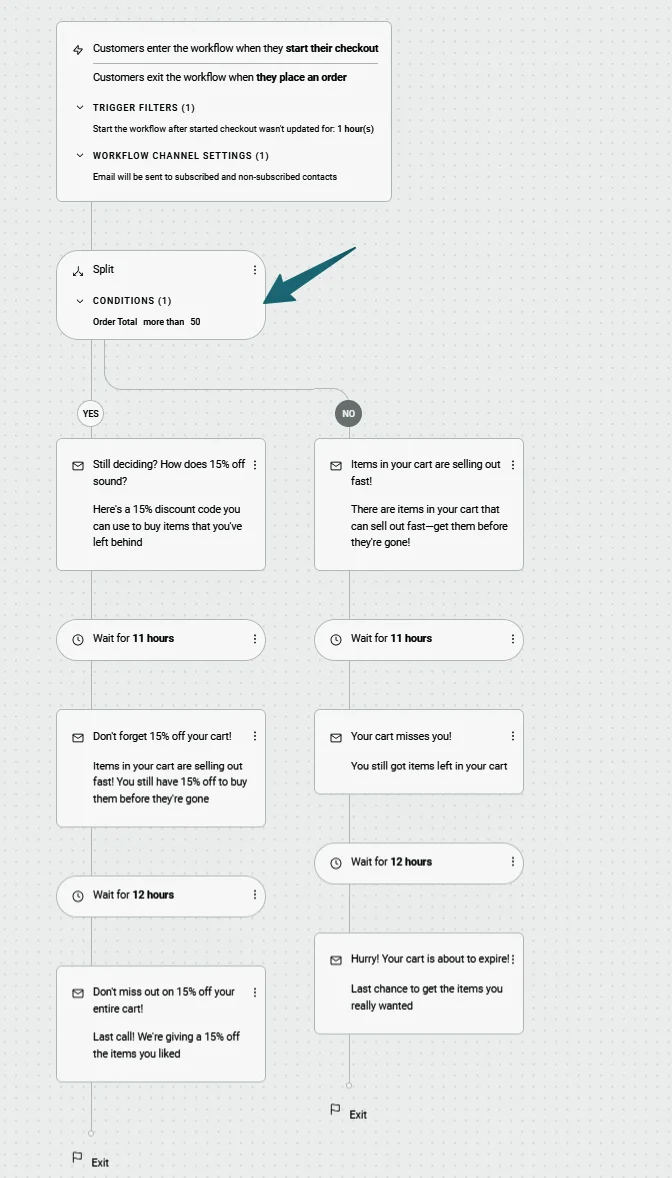
Automated email campaigns, despite comprising a mere fraction of overall email sends, are proving to be an indispensable engine for e-commerce revenue growth, according to recent industry analyses. While traditional, one-off marketing emails dominate send volumes, strategic automated sequences are generating significantly higher returns, underscoring a fundamental shift towards personalized, trigger-based communication in the digital retail landscape. This phenomenon highlights that efficiency and relevance, rather than sheer volume, are the true drivers of engagement and conversion in modern e-commerce.
The strategic implementation of email automation encompasses a variety of high-performing examples, including welcome series, abandoned cart recovery, post-purchase follow-ups, and re-engagement campaigns. Further expanding this arsenal are browse abandonment flows, loyalty automations, and seasonal triggers. These automated communications are particularly effective because they intercept customers at critical junctures of their purchasing journey, capitalizing on existing interest or addressing specific needs. For instance, an email can be deployed immediately after a new subscriber signs up, when a shopper leaves items in their cart, or after a successful purchase, tailoring the message to the customer’s most recent interaction.
A compelling illustration of this impact comes from Omnisend’s 2026 e-commerce marketing report, which revealed that automated emails constituted only 2% of all emails sent by businesses but were responsible for an astonishing 30% of total revenue. Furthermore, these automated messages earned 16 times more per send compared to conventional, one-off email campaigns. This data unequivocally demonstrates that a judicious approach to email deployment, focusing on the right message at the right time, far outweighs the efficacy of broad, untargeted mass mailings. The implication for e-commerce brands is clear: optimizing automated workflows is not just a best practice, but a critical imperative for maximizing return on investment.
The Strategic Imperative: Why Automation Matters in E-commerce
In an increasingly competitive e-commerce environment, where consumer attention is fragmented across numerous channels, the ability to deliver timely, relevant, and personalized communications is paramount. Email, often considered a traditional marketing channel, has evolved significantly with automation, becoming a powerful tool for fostering customer relationships and driving conversions. The underlying principle is simple: reach customers when their interest is highest, their intent is clearest, or when a specific action (or inaction) indicates a need for further engagement.
The rise of automation in e-commerce marketing can be traced alongside the broader digitalization of retail. Early e-commerce marketing relied heavily on batch-and-blast newsletters. However, as customer data became more accessible and marketing technology advanced, businesses recognized the potential for more sophisticated, individualized interactions. This evolution was driven by consumer demand for personalized experiences and the proven efficacy of targeted messaging. Automation platforms emerged to facilitate these complex workflows, allowing businesses to set up predefined sequences triggered by specific customer behaviors without manual intervention. This not only saves significant time and resources but also ensures consistency and precision in customer outreach.
Mapping the Customer Journey with Automated Workflows
Effective email automation strategically aligns with various stages of the customer journey, ensuring continuous engagement from initial awareness through loyalty and advocacy.
1. Welcome Email Automations: Cultivating First Impressions
Welcome automations are among the most fundamental and impactful email sequences. Triggered immediately after a user signs up for an email list or creates an account, these emails are sent when customer interest is at its peak. The primary goal is to transition new subscribers from initial interest to their first purchase, laying the groundwork for a lasting relationship. A typical welcome series spans a few days, gradually introducing the brand, its values, and perhaps a special incentive.
Timing is crucial; sending the first welcome email within minutes of sign-up can significantly boost engagement. For instance, e-commerce brand Flextail utilized its welcome automation to generate an impressive $235,000 in sales, achieving a 60% open rate and an average revenue of over $75 per order. Their strategy included a clear, single call-to-action (CTA) and a 10% discount, minimizing user confusion and directing them towards a specific action. Joy, Growth Manager at Flextail, lauded the intuitive design of automation platforms, stating, “Omnisend has a clear data pipeline and a clean UI. It’s logical to operate, and it doesn’t force you into endless micro-decisions just to build workflows that work.” Other brands like CLVmaxers have reported similarly outstanding results from their welcome flows, emphasizing factors like compelling subject lines, personalized content, and clear value propositions.
2. Abandoned Cart Email Automations: Recapturing Lost Opportunities
Abandoned cart automations are perhaps the most direct revenue-recovery strategy in e-commerce. Triggered when a shopper adds items to their cart but exits the site without completing the purchase, these emails target individuals who have demonstrated explicit buying intent. The average cart abandonment rate across industries hovers around 70%, representing a massive potential revenue loss that automation can significantly mitigate.
Best practices suggest sending two to three emails within a few hours to a day after abandonment. Segmentation is key: for higher-value carts (e.g., above $50), a discount code can be a powerful incentive, while for lower-value carts, urgency-based messaging like “Your items may sell out fast” can effectively leverage FOMO (fear of missing out). Bowy Made, for example, attributed 70% of its total revenue to its abandoned cart automation, dwarfing the contribution of regular email campaigns. Their successful strategy included a 10% discount, urgency cues (“hurry,” “valid for 48 hours only”), and clear product images with prominent CTAs. Another brand, Verpakgigant, achieved a 46.6% open rate and recovered €25,000 from 147 orders through its abandoned cart sequences, underscoring the immediate financial impact of this automation type. E-commerce agencies often prioritize setting up these flows within days of client onboarding, recognizing their rapid return on investment.
3. Post-Purchase Email Automations: Building Loyalty and Value
Post-purchase emails are pre-scheduled communications sent after a customer completes an order. These go beyond simple order confirmations and serve multiple critical functions: order tracking, product care instructions, requests for reviews or feedback, and recommendations for complementary products. Typically deployed one to seven days after purchase, these emails are crucial for enhancing customer satisfaction and increasing Average Order Value (AOV).
By recommending related products, upgrades, or bundles, post-purchase emails can significantly boost customer spend. Data from top e-commerce agencies indicates an average AOV of $44 from post-purchase strategies. Beyond revenue, these automations are instrumental in building customer loyalty. Kate Backdrop, for instance, achieved an 87% open rate on its post-purchase emails and a 1:300 ROI, with a significant portion of revenue attributed to returning customers. Naked & Famous Denim leveraged post-purchase automation specifically for feedback collection, resulting in a 36% open rate and a 10% click rate for review requests. Personalized review requests, addressing customers by name and expressing gratitude, have proven particularly effective.
4. Re-engagement and Win-back Email Automations: Revitalizing Stalled Relationships
Re-engagement and win-back emails target subscribers who have become inactive, ceasing to open emails, click links, or make purchases over a defined period (typically 30 to 90 days). The timing is critical: sending them too early might annoy active subscribers, while sending them too late risks losing the customer entirely. A balanced approach often begins with re-engagement efforts after 30 days of inactivity, adjusting the timeframe based on open rates and customer behavior.
These automations often include a “sunset policy,” which automatically removes completely disengaged subscribers to maintain a clean email list and improve deliverability. MDigital successfully used re-engagement workflows, bringing back 422 inactive subscribers and generating €1,202 in upsell revenue within 14 days by integrating online and physical store data. SM Global Shop, through A/B testing, discovered that sending win-back emails sooner rather than later significantly increased opens, clicks, and conversions, with their win-back flow converting at an impressive 51.78%. David Sung, Digital Marketing Director at SM Global Shop, emphasized the importance of continuous testing, noting how even small changes like emojis in subject lines can boost click-through rates.
5. Browse and Product Abandonment Email Automations: Nudging Early Intent
Distinct from cart abandonment, browse abandonment, and product abandonment emails are triggered when a shopper views a product page but does not add it to their cart. These emails intervene earlier in the buying journey, targeting customers who are still exploring options but haven’t yet committed to a purchase. The messaging is typically softer, serving as a gentle reminder of viewed items and highlighting product benefits or including customer reviews.
Sent shortly after the shopper leaves the product page, these emails often use casual language like “Still thinking about this?” or “Take another look.” Their effectiveness stems from personalized reminders based on the specific products viewed. Ovoko reported that its product abandonment emails generated 60% of its email marketing revenue, experiencing a 3.5x increase in messages sent and 1.9x revenue growth within a year after implementing automation tools. Mindaugas, Senior Automation Manager at Ovoko, highlighted these automations as “game-changers.” Belle Fever, another brand, achieved a 47% open rate and a 26% click rate with personalized browse abandonment emails that offered product support, recommendations, and incentives like free design previews.
6. Loyalty and Lifecycle Email Automations: Fostering Enduring Relationships
These automations extend beyond immediate sales to cultivate long-term customer relationships and increase Customer Lifetime Value (CLV). Examples include birthday discounts, anniversary rewards, VIP program invitations, loyalty point updates, and exclusive access to new products or sales. These emails are designed to keep customers engaged and feeling valued after their initial purchase, transforming transactional interactions into lasting brand affinity.
Enflow Digital’s loyalty points automation generated over $28,317 in sales, with a 70% open rate and a 12.23% click rate, by integrating its loyalty program with its email automation platform. They used conditional splits to personalize emails based on customer loyalty tiers or recent activity. Dukier, a brand that used lifecycle emails across the entire customer journey in five languages, achieved a remarkable 525% revenue growth over three years, with email automation driving 55% of its total revenue. Their VIP email, offering significant discounts and early access, proved highly effective in driving conversions.
7. Seasonal and Campaign-Based Email Automations: Maximizing Event-Driven Sales
Unlike evergreen automations that run continuously based on customer behavior, seasonal and campaign-based emails are triggered around specific events such as Black Friday, Cyber Monday (BFCM), holiday sales, or product launches. These campaigns are designed for short, impactful durations, leveraging urgency and limited-time offers to drive rapid purchases.
A typical seasonal campaign involves a sequence of teaser emails before the event, reminders during the sale, and “last chance” emails as the promotion concludes. La Machine Cycle Club effectively used seasonal automations for various campaigns, including flash sales and new collection launches, offering loyal customers early access. This strategy resulted in a 64% open rate and a 7% click rate. LEVEL8 implemented a four-stage BFCM campaign, starting with an early bird offer for VIPs, followed by general access, a Cyber Monday extension, and a final clearance. This orchestrated approach generated over $266,000 in revenue with a 223x ROI, demonstrating the immense potential of well-planned seasonal automations.
Driving Principles of High-Performing Automation
Despite their varied applications, the most effective email automations share several common characteristics:
- Personalization: Utilizing customer data (name, browsing history, purchase history) to tailor content.
- Timeliness: Sending emails at the precise moment of maximum relevance to the customer’s journey.
- Clear Call-to-Action (CTA): Guiding the customer towards a single, unambiguous next step.
- Segmentation: Grouping customers based on behavior, demographics, or purchase history to deliver highly targeted messages.
- Value Proposition: Clearly articulating the benefit or incentive for the customer to engage.
- Testing and Optimization: Continuously A/B testing elements like subject lines, content, and send times to improve performance.
Overall, the data consistently shows that email automation significantly outperforms manual campaigns in revenue generation. Agencies, for instance, report that 45% of their email revenue originates from automation, with automated emails earning nine times more per message ($5.96 vs. $0.67) than standard campaigns. Marty Bauer, Director of Agency Partnerships and E-commerce Expert at Omnisend, aptly summarizes this, stating, “What separates top agencies isn’t one big decision, but a compounding effect of small ones. Adding a channel, running tests, improving workflows, and focusing on speed – over time, those add up to much stronger results.”
Technological Facilitation: Implementing Automation Platforms
The successful deployment of sophisticated email automation relies heavily on specialized platforms designed for e-commerce. Tools like Omnisend provide pre-built workflows for common e-commerce scenarios, such as welcome series, abandoned cart reminders, and post-purchase follow-ups, enabling businesses to launch effective automations rapidly without needing extensive coding or design expertise.
These platforms typically offer intuitive drag-and-drop editors for customizing email content, allowing users to modify text, images, and buttons to align with brand aesthetics. Dynamic content capabilities further enhance personalization, ensuring that emails display products or recommendations relevant to each individual customer’s recent behavior or past purchases. Seamless integration with leading e-commerce platforms like Shopify, WooCommerce, Wix, and BigCommerce is crucial, as it allows for the synchronization of store data and the creation of highly segmented audiences based on real-time customer behavior. Many platforms also offer robust analytics and reporting features, enabling businesses to track key performance indicators such as sales, engagement rates, and channel-specific results, facilitating continuous optimization. Users of such platforms often report substantial ROI, with some platforms citing an average of $79 for every dollar spent.
Future Outlook: The Evolution of E-commerce Automation
The landscape of e-commerce email automation is continuously evolving. Future trends are likely to include deeper integration with Artificial Intelligence (AI) for hyper-personalization, predictive analytics to anticipate customer needs, and more sophisticated cross-channel orchestration that seamlessly blends email with SMS, push notifications, and social media messaging. As consumer expectations for personalized and intuitive experiences grow, the strategic adoption and continuous refinement of email automation will remain a cornerstone of successful e-commerce marketing. The ability to connect with customers meaningfully, at scale, through automated yet deeply personalized interactions, will increasingly differentiate leading brands in the digital marketplace.









