rifanmuazin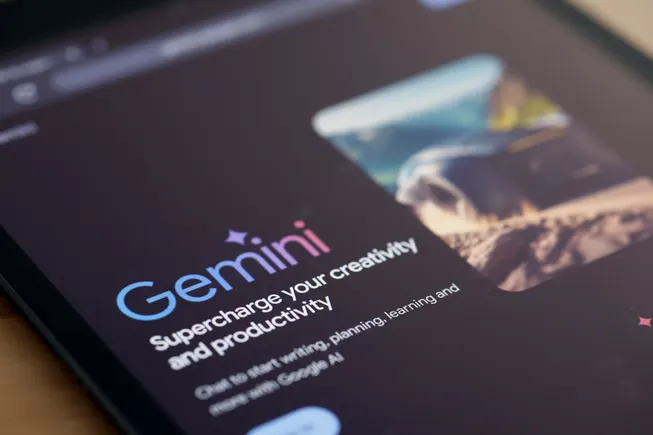
Google is aggressively reshaping its advertising and commerce ecosystem to align with the burgeoning era of conversational and AI-driven search, a strategic pivot necessitated by evolving consumer habits and intensifying competition. At its annual Marketing Live summit, the tech giant detailed a sweeping array of new tools and product enhancements designed to streamline the journey from AI-assisted discovery to purchase, empowering advertisers with more sophisticated agentic capabilities powered by its Gemini family of AI models. These advancements underscore Google’s commitment to maintaining its core advertising business while adapting to a landscape increasingly defined by intelligent agents and more complex user interactions.
The company’s proactive approach comes at a critical juncture, as generative AI fundamentally alters how users seek information and interact with brands online. Traditional search queries, often characterized by a series of keyword-based inputs, are giving way to more nuanced, natural language conversations with AI assistants. This shift presents both opportunities and challenges for advertisers, demanding new strategies and tools to capture attention and drive conversions within these evolving interfaces. Google’s suite of offerings aims to bridge this gap, reducing friction and creating more seamless brand experiences within AI-powered interactions.
A Unified Command Center for AI-Driven Marketing: Introducing Ask Advisor
Central to Google’s strategy is the upcoming launch of Ask Advisor, slated for rollout later this year. This innovative tool is positioned as a unified gateway for accessing and managing AI-powered insights and actions across Google’s core marketing platforms, including Google Ads, Google Analytics, Google Marketing Platform, and Google Merchant Center. The implication is a significant reduction in the operational complexity for marketers, who can now leverage a single interface to orchestrate campaigns and analyze performance.
Dan Taylor, vice president for global ads at Google, highlighted the practical benefits of Ask Advisor during a virtual press briefing preceding the Marketing Live event. He illustrated its potential with a scenario where a haircare brand seeking to identify new customer segments could utilize Ask Advisor to pull product details directly from Merchant Center and simultaneously launch a targeted Google Ads campaign. This streamlined process bypasses the need for manual data extraction and separate campaign setup, significantly accelerating time-to-market.
Furthermore, Ask Advisor promises to simplify performance reporting. Marketers will be able to generate comprehensive reports by automatically compiling data from both Google Ads and Google Analytics, eliminating the laborious task of manually sifting through individual platform dashboards. “On the back end, our agents talk to one another and carry each other’s content, creating a continuous thread of intelligence,” Taylor explained, emphasizing the interconnectedness and intelligent data flow that Ask Advisor will facilitate. This inter-agent communication is key to unlocking deeper insights and more agile campaign adjustments.
Empowering Creative Generation with Gemini Omni
In parallel with the advancements in campaign management, Google is also bolstering its creative capabilities. Asset Studio, a hub for generating marketing assets that entered beta in August 2023, is being significantly enhanced with the integration of Gemini Omni. This upgrade aims to empower brands to produce a wider array of high-quality, on-brand creative content with unprecedented ease.
The evolving digital advertising landscape has seen platforms like Amazon also investing in comprehensive, one-stop shops for advertisers, intensifying competition and pushing incumbents to innovate rapidly. Google’s response through Asset Studio is a direct effort to equip marketers with the tools to keep pace.
“Brands can now use natural language to describe their goals and upload their marketing brief directly in Asset Studio,” stated Taylor. “This means marketers can instantly create a range of high-quality, on-brand assets across text, images and video all at once with a few words or a full marketing brief.” This capability is particularly valuable in an era where rapid iteration and personalized creative are crucial for engagement. The ability to generate diverse assets from a single brief, powered by advanced AI, promises to democratize high-quality creative production, making it accessible to a broader range of businesses.
Adapting Search Interfaces for an AI-Centric Future
The Marketing Live summit followed closely on the heels of Google’s I/O developer conference, where the company showcased a revamped consumer search experience that places a significantly higher priority on AI. These updates include the introduction of customizable “information agents” and a further departure from the traditional “10 blue links” format, signaling a profound shift in how users will find information.
This strategic realignment is occurring against a backdrop of increased competition from AI startups such as OpenAI and Anthropic. Industry analysts have projected that Google could be surpassed by Meta Platforms in ad revenue for the first time this year, underscoring the urgency for Google to solidify its position in the evolving digital advertising market.
Reimagining Ad Formats for Conversational Search
Approximately a year after initially integrating advertisements into its AI Mode, Google has introduced two novel advertising formats designed to be more effective within in-depth, chatbot-style conversations: Conversational Discovery and Highlighted Answers. AI Mode, which boasts over 1 billion monthly users, will now be globally powered by the more advanced Gemini 3.5 Flash model, a significant upgrade announced at I/O.
Conversational Discovery is engineered to understand the context of complex, specific user queries. For instance, a user asking, “How to make a house smell like a high-end spa in a low-maintenance way?” could trigger tailored ad creative from relevant businesses. This format aims to deliver contextual relevance by understanding the nuances of natural language.
Highlighted Answers, on the other hand, generates a curated list of recommendations in response to searches, such as a query for the best language-learning app for an upcoming trip. Advertisers can secure a placement within these curated lists, provided their offerings are relevant. Google has emphasized that all sponsored selections will be clearly and transparently labeled as such, maintaining user trust.
“These formats are rethinking not only how the ads look, but also the value they provide, because ultimately the best ads are just answers,” Taylor remarked. This philosophy underscores a move towards advertising that is less intrusive and more informative, directly addressing user needs within conversational flows.
In the core search experience, Google is also rolling out AI-powered Shopping ads for high-consideration purchases. These ads will feature explanations detailing why a particular advertiser’s product is the optimal choice for the user. This feature is slated for availability in the U.S. later this year, aiming to enhance the decision-making process for significant purchases.
Another new AI format designed to provide deeper engagement with complex searches is Business Agent for Leads, currently in beta in the U.S. For a student researching universities, for example, clicking on an ad could instantly connect them with an AI agent trained exclusively on the advertiser’s website. This eliminates the need for users to navigate away to fill out static lead forms, thereby reducing friction and improving lead capture efficiency.
“These ads show when relevant not just to the person’s query, but also the AI Overview response,” Taylor noted, indicating that ad placements will be contextually aligned with both direct search intent and the AI-generated summaries that are becoming a hallmark of Google’s evolving search experience.
Bridging AI-Driven Discovery with Seamless Transactions
A significant theme emerging from both Google I/O and Marketing Live is the drive to connect AI-powered discovery directly with transactional capabilities. The unveiling of an agentic Universal Cart shopping tool at Google I/O, designed to function across platforms like Search, YouTube, and Gmail, signifies Google’s ambition to create a unified shopping experience.
A core objective at Marketing Live was to equip merchants with the ability to create compelling incentives that not only encourage transactions but also significantly shorten the path to checkout.
Google is expanding Direct Offers, a program that piloted in January 2024 as a method for retailers to present deals directly within AI Mode ads. The enhanced Direct Offers functionality will allow advertisers to upload a variety of discounts, giveaways, and coupons. Leveraging Gemini, these offers can be intelligently matched or combined into relevant bundles tailored to a user’s specific search context. This feature has already seen adoption by brands such as Chewy, Gap, and L’Oréal, and its expansion to travel platforms like Expedia and Booking.com indicates its broad applicability across various industries.
“Direct Offers are fundamentally different from Shopping ads because they use the deep context of an AI Mode conversation to serve a tailored deal when someone’s ready to buy,” Taylor elaborated. This distinction highlights the shift from keyword-based targeting to a more contextually aware and intent-driven approach to offer delivery.
To facilitate the seamless redemption of these offers, Google is implementing a native checkout experience within AI Mode. This means users can complete purchases without ever leaving the AI Mode interface, a crucial step in reducing cart abandonment. Native checkout is available to merchants utilizing Google’s Universal Commerce Protocol (UCP). UCP, unveiled at the start of the year in collaboration with partners like Walmart, Target, and Shopify, serves as an open standard for agentic commerce.
Ashish Gupta, vice president and general manager of merchant shopping at Google, emphasized the foundational role of UCP. “UCP solves a very core challenge of scaling agent e-commerce across the entire web by defining a common language which allows agents to connect to businesses securely and seamlessly,” he stated. This interoperability is vital for building a robust and interconnected e-commerce ecosystem powered by AI agents.
Expanding the Reach and Capabilities of Universal Commerce Protocol
The Universal Commerce Protocol is undergoing further expansion to enhance its utility and reach. New features include multi-item checkout, enabling merchants to facilitate larger order values. A buy-now, pay-later option, supported by Google Pay, is also being integrated, offering consumers greater payment flexibility. Additionally, an upcoming checkout capability within YouTube ads will allow viewers to more easily purchase items they encounter in video content, whether on mobile devices or connected televisions.
Crucially, for consumers who prefer to complete their purchases on merchant websites, Google is facilitating direct transfer of items from Google’s platform to the retailer’s site. This preserves user choice and ensures a consistent brand experience.
“Regardless of how and where the customer completes their purchase, the retailer always remains the merchant of record with UCP,” Gupta affirmed. This assurance is paramount for maintaining strong merchant relationships and ensuring that businesses retain control over their customer interactions and data.
The strategic initiatives unveiled at Google Marketing Live and I/O signal a profound transformation underway at the tech giant. By weaving generative AI into the fabric of its search and advertising products, Google is not only adapting to the future of online interaction but is actively shaping it, aiming to provide a more intelligent, efficient, and seamless experience for both consumers and advertisers alike. The success of these endeavors will depend on their ability to deliver tangible value and adapt to the rapidly evolving demands of the AI-powered digital economy.