rifanmuazin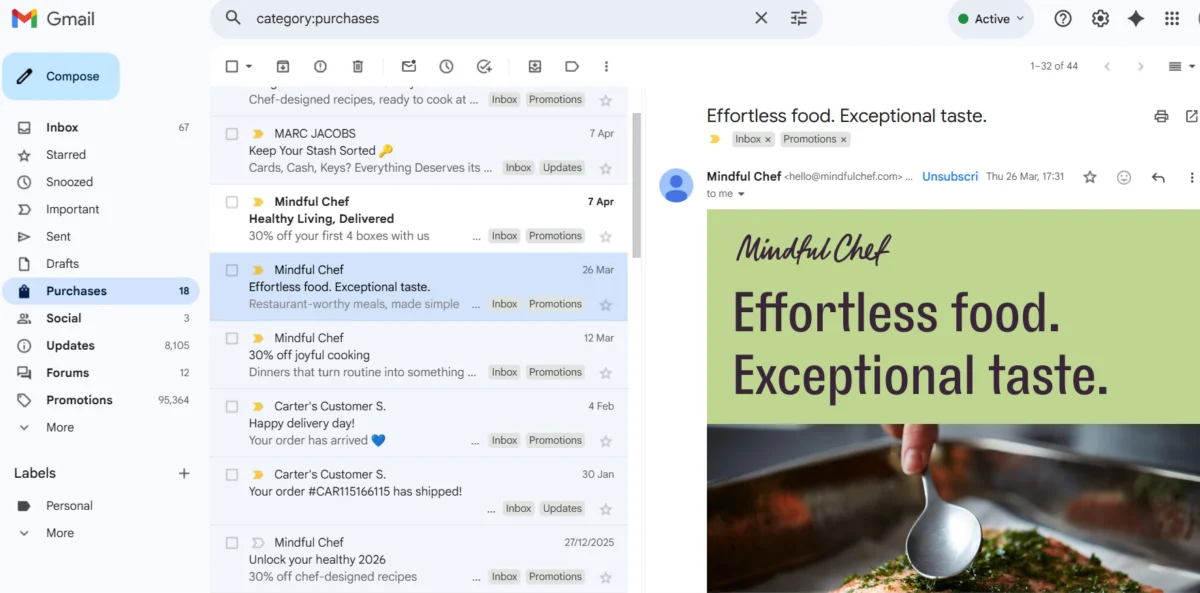
Email marketers are currently navigating a turbulent period, grappling with significant declines in Gmail open rates, a metric long considered a cornerstone of campaign performance. Reports from numerous senders, including Validity customers, reveal substantial quarter-over-quarter drops, some exceeding 30 percent. This dramatic shift is corroborated by Validity’s own engagement data, which indicates a sharp reduction of approximately one-third in Gmail image loading activity, including tracking pixels, since late November 2025. While initial speculation points to Gmail’s reduced frequency of image prefetching via its proxy servers, industry experts and data analysts agree that this phenomenon is merely a symptom of a much broader, fundamental transformation in how Google manages its email ecosystem. This comprehensive analysis delves into the multifaceted changes introduced by Gmail, examining their collective impact on open rates and providing strategic guidance for senders to adapt and thrive in this evolving landscape.
The Shifting Landscape of Email Engagement: Why Gmail’s Open Rates Are Dropping

The core of the recent decline lies in a series of proactive adjustments by Gmail, aimed at enhancing user experience, combating unsolicited mail, and leveraging advanced AI capabilities. These changes, rolled out progressively since mid-2025, collectively redefine email engagement metrics. The reduction in image prefetching, particularly of tracking pixels, is a critical technical factor. Since 2013, Gmail has routed images through its proxy servers, a mechanism that could artificially inflate open rates by pre-loading content, including tracking pixels, even if a user never actively viewed the email. With a probable reduction in this prefetching activity, fewer such “false opens” are now being recorded, leading to a more accurate, albeit lower, representation of actual human engagement.
This situation echoes similar shifts observed in other major mailbox providers. Last year, Validity extensively investigated comparable engagement declines at Apple and Yahoo. Apple’s changes, driven by features like inbox categories, digest views, groupings, and AI summaries, subtly altered how users interacted with emails. Concurrently, Yahoo’s stricter enforcement of bulk sender requirements similarly impacted deliverability and reported engagement. Gmail’s current trajectory, therefore, represents a continuation of this industry-wide trend towards greater inbox intelligence and user control, pushing senders to prioritize genuine, active subscriber engagement over raw volume.
One significant layer to this complexity is the enduring influence of Apple Mail Privacy Protection (MPP), introduced in 2021. MPP, like Gmail’s previous proxy system, also triggers “false opens” by pre-loading emails, regardless of user interaction. Given that many Gmail users access their accounts through Apple Mail applications, the interplay between MPP’s artificial inflation and Gmail’s recent de-inflationary measures creates a dynamic environment where traditional open rates become increasingly unreliable as a sole measure of success. The silver lining, as observed by Validity, is that while open rates are falling, clicks and revenue metrics have largely remained stable. This suggests that the reported decline is primarily due to the removal of inflated data rather than a genuine drop in readership, signaling a positive recalibration towards more meaningful engagement. Nevertheless, open rates continue to serve as a vital directional health signal, providing early warnings of potential underlying issues if sudden, unexplained drops occur.

A Timeline of Transformative Changes at Gmail
The current scenario is not the result of a single event but a cumulative effect of several strategic rollouts by Google:
- Mid-2025: Launch of the Subscriptions Manager, giving users unprecedented control over their email subscriptions from a centralized dashboard.
- Late 2025: Introduction of the dedicated Purchases tab, designed to consolidate transactional emails, and the implementation of Relevance-Sorted Promotions tab prioritizing engaged content.
- November 2025: Stricter enforcement of bulk sender requirements took effect, shifting from soft warnings to active rejection of non-compliant mail. This also coincides with the observed drop in image loading activity.
- January 2026: Rollout of AI-generated email summaries and the deeper integration of Gemini for conversational inbox search and management.
These developments collectively represent a strategic pivot by Gmail, leveraging AI and user-centric design to curate a more relevant and less cluttered inbox experience.
Deep Dive into Key Developments and Their Impact
-
Stricter Enforcement of Bulk Sender Guidelines
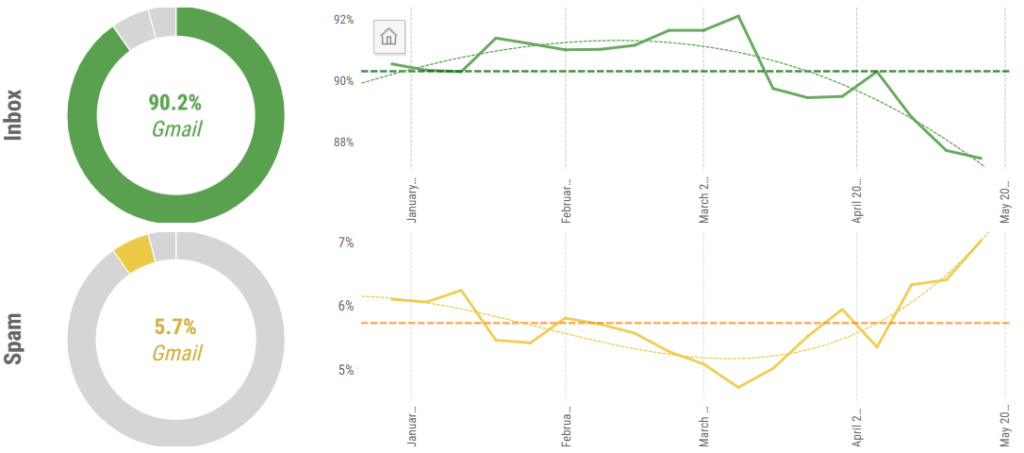
While Gmail has historically maintained higher inbox placement rates compared to many other major mailbox providers, recent data from the Validity Intelligence Network indicates an approximate three percent drop over the past few months. This decline is directly linked to Gmail’s pivot in late 2025 from lenient enforcement to active rejection of non-compliant bulk email traffic. This means emails that fail to meet Google’s stringent sender guidelines—covering authentication (DMARC, SPF, DKIM), low spam complaint rates, and easy unsubscribe options—are now met with hard SMTP-level rejection codes, preventing delivery entirely. The direct consequence for marketers is straightforward: rejected emails cannot be opened, contributing directly to the observed decline in open rates. More importantly, this signals a zero-tolerance approach to poor sender practices.- Implications and Response: Email senders must meticulously review and ensure full compliance with all elements of Gmail’s bulk sender guidelines, not just the widely discussed DMARC, list-unsubscribe, and complaint thresholds. Proactive monitoring using Google Postmaster Tools V2 is crucial for tracking compliance status indicators, while careful analysis of bounce logs for specific Gmail error codes can pinpoint areas of non-compliance. This isn’t merely about avoiding rejections; it’s about maintaining a pristine sender reputation, which is now more critical than ever for deliverability.
-
The Rise of Relevance: Gmail’s Promotions Tab Reimagined
A significant change introduced in late 2025 is Gmail’s shift to sorting the Promotions tab by engagement rather than recency. This means emails from senders with higher engagement rates are surfaced more prominently, while those with lower engagement are relegated further down the tab, significantly reducing their visibility and likelihood of being opened. This creates a challenging feedback loop: messages that are not opened fail to generate positive engagement signals, further diminishing the sender’s perceived relevance and placement. This single change likely accounts for a substantial portion of the overall drop in open rates, especially for promotional content.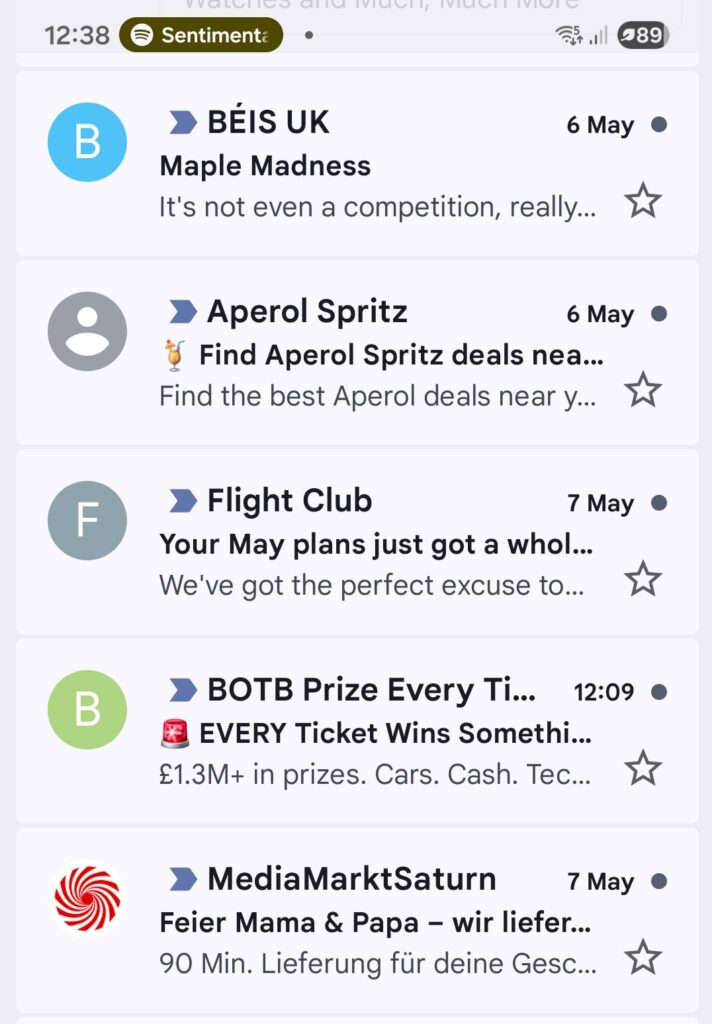
- Implications and Response: The era of generic, mass-broadcast campaigns is rapidly drawing to a close. Personalization and content relevance are no longer optional but direct drivers of deliverability. Marketers must segment Gmail recipients based on their engagement recency and apply more aggressive suppression thresholds for inactive subscribers. The focus should shift from sending to everyone to sending highly relevant content to those most likely to engage, thereby improving relevance scores and maintaining favorable placement.
-
Content Previews and AI Summaries: Delivering Information Without the Open
Gmail has enhanced its “Auto-Annotations” feature, proactively extracting deal details, images, and discount codes from promotional emails to display as rich previews in the Promotions tab, even if senders haven’t explicitly implemented the Annotations markup schemas. This allows subscribers to glean headline offers and promotional codes without needing to open the email. Coupled with the rollout of AI-generated email summaries starting January 2026, which display 1-2 sentence summaries upon opening, users can extract key information rapidly. While it’s debated whether AI summaries inflate open rates by auto-opening emails for processing, they undeniably reduce the incentive for a user to fully read the email, exerting downward pressure on traditional open rate metrics.- Implications and Response: Marketers should move beyond relying on automatic extraction by actively implementing Annotations markup. This grants full control over the content surfaced in previews, enabling strategic communication. Experimenting with offers that necessitate a click-through—rather than simply providing a discount code in the preview—becomes vital. For AI summaries, front-loading the most critical content and a clear call to action within the opening lines of the email body will ensure that even a quick glance or AI summary can drive subsequent engagement.
-
Empowering User Control: Subscriptions Manager and Address Changes
The Subscriptions Manager, fully rolled out to personal Gmail accounts by mid-2025, presents all marketing senders in a single, frequency-ranked dashboard. This empowers users to unsubscribe from any sender’s mail stream with a single click, directly from the dashboard, without opening an email. While this may lead to list shrinkage, it ultimately results in a smaller but more engaged subscriber base, which is beneficial for overall deliverability and sender reputation. Separately, Gmail’s new address change feature allows users to seamlessly switch their email address. When a user changes their address, marketing emails sent to the old address cease to be delivered to an active inbox, resulting in fewer opens from those addresses. Critically, there’s no guarantee of replacement opens from the new address, as the user might have changed it specifically to escape marketing mail.- Implications and Response: Senders must critically assess their sending frequency, especially for daily or near-daily campaigns, to avoid high visibility in the Subscriptions Manager that could lead to mass unsubscribes. Brands using multiple “From” addresses for different content streams should ensure each has a unique List-Unsubscribe header, allowing subscribers to opt-down from specific streams rather than a blanket removal. For address changes, vigilant monitoring of hard bounces and sustained non-engagement from previously active Gmail addresses is crucial. Engagement-based suppression thresholds will naturally flag these newly inactive addresses. Beyond tactical adjustments, brands should invest in relationship-building strategies that transcend the email address, such as loyalty programs, first-party identity resolution, and progressive profiling to retain value even if an email address changes.
-
The AI Frontier: Gemini Integration and Intelligent Inbox Management
January 2026 marked the integration of Gemini, Google’s advanced AI, for conversational, natural-language search across the Gmail inbox. Subscribers can now query their email history with prompts like “What discount codes do I have for sportswear?” and receive compiled answers from multiple emails without opening any of them. This represents a profound shift in how users can extract value from their inbox, further reducing the necessity of opening individual messages.
- Implications and Response: Marketers whose emails contain time-sensitive or actionable content must structure it to be highly legible for AI extraction. This involves using specific deadlines, clear calls to action, structured data markup (e.g., Schema.org), and clean HTML. The goal is to ensure that even if a user doesn’t open the email, Gemini can accurately retrieve and present the key information. Furthermore, senders should monitor changes in the open rate ratio between highly engaged and lapsed segments, as this feature is expected to disproportionately impact low-engagement senders, creating a “circle of disengagement” where less relevant emails are interacted with even less.
-
Technical Nuances: Message Clipping and Tracking Pixel Placement
While not a new development, message clipping remains a significant factor impacting reported open rates. Gmail typically clips messages exceeding an HTML file size of 1,024 bytes, displaying only a partial view and requiring the reader to explicitly request the full content. A common practice among many senders is to place their open tracking pixel at the very end of the email’s HTML file. If the message is clipped, this pixel may never load, leading to an unrecorded open. Beyond open rates, clipping also has critical implications for compliance and user experience, as essential elements like unsubscribe links, often located in email footers, may become invisible, leading to increased spam complaints.- Implications and Response: Senders must integrate HTML file size checks into their pre-send QA processes to ensure all email messages remain under Gmail’s 1KB clipping threshold. Strategically, the open tracking pixel should be placed as early as possible within the HTML file to maximize its chances of loading, even if some content is clipped. This simple technical adjustment can prevent artificial suppression of open rate data.
-
Specialized Inbox Views: The Purchases Tab
Late 2025 saw the introduction of a dedicated Purchases view in Gmail, designed to consolidate order confirmations, shipping updates, and delivery notifications. While intended for transactional emails, promotional messages sometimes inadvertently land in this tab, particularly if they contain detailed content about delivery policies or post-purchase information. When marketing emails are routed to the Purchases tab, it can depress open rates from subscribers who are not accustomed to finding promotional content there. It can also erode trust if recipients haven’t recently purchased anything from the brand, creating confusion.- Implications and Response: Marketers must audit their email streams to identify any promotional emails inadvertently classified as purchase-related. The key response lies in strict separation of transactional and promotional content. This means using distinct “From” addresses, sub-domains, subject line conventions, and content structures for each type of email. Avoiding promotional content within transactional emails is paramount, not only for maintaining correct routing and deliverability but also for respecting subscriber expectations and upholding legal compliance (e.g., CAN-SPAM, GDPR).
-
The Ultimate Clean-up: Inactive Account Deletion
Finally, Google retains the right to delete accounts that have been inactive for two years or more. Activity, in Google’s definition, encompasses a wide range of interactions, including reading or sending emails, using Google Drive, watching YouTube, sharing photos, downloading apps, using Google Search, or signing into a third-party service with a Google account. It goes without saying that addresses associated with deleted accounts will cease to open emails entirely.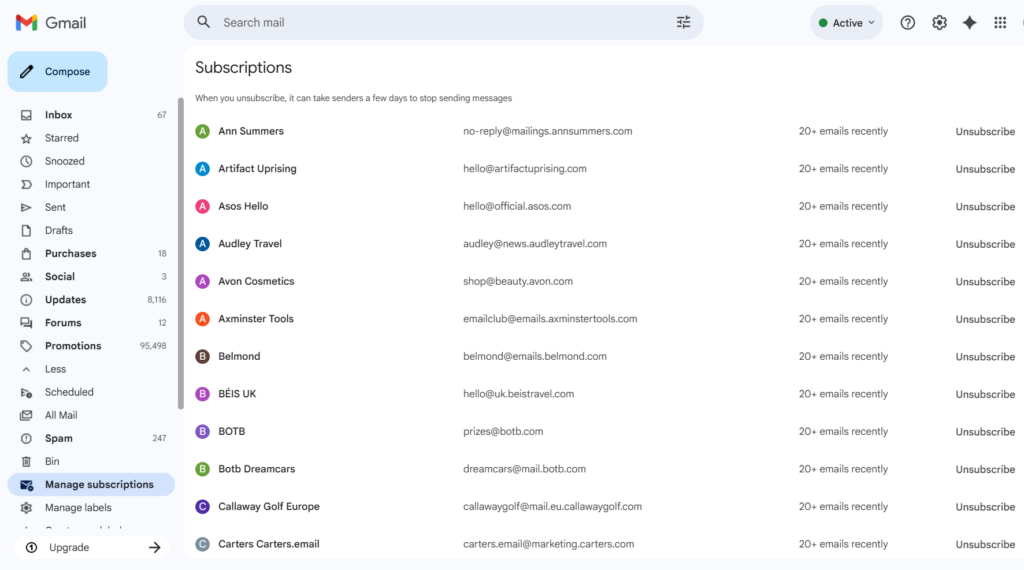
- Implications and Response: While this policy primarily serves to free up resources and enhance security, it underscores the critical importance of robust list hygiene. Email marketers should implement aggressive suppression strategies for inactive addresses long before they approach Google’s 24-month inactivity threshold. Proactive list cleaning based on engagement metrics is not just a best practice but a necessity to prevent sending to dead addresses, which can negatively impact sender reputation and waste resources.
Navigating the New Normal: Strategic Recommendations for Email Marketers
The collective impact of these Gmail updates signals a definitive shift in the email marketing paradigm. To successfully navigate this new environment, marketers must adopt a more sophisticated, user-centric approach:
- Prioritize Engagement Quality Over Volume: The era of “spray and pray” is over. Focus on building highly engaged subscriber lists by offering compelling value, segmenting audiences effectively, and personalizing content. Aggressively suppress inactive segments to improve overall sender reputation and deliverability.
- Master Compliance and Deliverability: Adhere strictly to Gmail’s bulk sender guidelines. Proactively monitor deliverability metrics using tools like Google Postmaster Tools and specialized deliverability platforms. Address any authentication, complaint, or bounce issues immediately.
- Redefine “Open” as a Health Signal: While open rates remain directionally useful, they are no longer the sole determinant of campaign success. Focus on downstream metrics such as click-through rates, conversions, and revenue. Use open rates as an early warning indicator for potential deliverability or engagement issues, rather than a vanity metric to optimize for.
- Optimize for AI and Preview Environments: Design emails with AI summaries and auto-annotations in mind. Front-load critical information, calls to action, and unique value propositions. Utilize structured data markup (Annotations) to control how your content appears in previews.
- Empower Subscriber Control: Embrace features like the Subscriptions Manager. Provide clear, easy-to-use unsubscribe options. Consider offering preference centers that allow subscribers to manage their content streams and frequency, fostering trust and reducing churn.
- Invest in Beyond-Email Relationship Building: Recognize that email is one touchpoint in a broader customer journey. Develop strategies for building relationships through loyalty programs, first-party data collection, and multi-channel engagement to maintain value even if email addresses change or email interactions decline.
- Conduct Continuous Testing and Auditing: Regularly test email designs for clipping issues and ensure tracking pixels are placed optimally. Audit promotional emails to prevent misclassification into transactional tabs.
The Bottom Line: Adapting to an Evolving Ecosystem

The narrative that Gmail is “broken” is a misinterpretation of its evolution. What marketers are witnessing is a sophisticated platform adapting to user demands for greater control, relevance, and a less cluttered inbox, heavily influenced by advancements in artificial intelligence. The decline in reported open rates is largely a correction, stripping away artificially inflated numbers to reveal a truer picture of engagement. Senders who recognize these changes as an imperative to sharpen their strategy, rather than a cause for panic, will undoubtedly emerge stronger. The future of email marketing on Gmail demands a focus on authentic engagement quality, unwavering compliance, and a strategic pivot away from vanity metrics. As Gmail continues to integrate advanced AI capabilities, staying abreast of these developments and adapting email programs accordingly will be paramount for sustained success. For marketers seeking to delve deeper into these shifts, attending industry webinars that provide hands-on guidance for design tweaks, testing tools, and real-world results from inbox tests, particularly concerning AI summaries, will be invaluable.