rifanmuazin
OTT advertising, or over-the-top advertising, presents a compelling opportunity for businesses seeking to enhance their digital marketing strategies. Appearing within the streaming content consumers watch on platforms like YouTube and various streaming applications, these ads offer a unique avenue to reach a vast audience. Beyond sheer reach, OTT advertising provides sophisticated features, including interactive elements, designed to capture leads, gather valuable data, and ultimately convert viewers into loyal customers. This guide explores five exemplary OTT advertising campaigns, demonstrating how traditional marketing principles can be effectively fused with modern ad platform capabilities, and delves into the intricacies of OTT as an advertising medium to empower businesses to launch high-performing campaigns.
Five Exemplary OTT Advertising Campaigns
OTT advertising offers a dynamic suite of tools for audience engagement and conversion that traditional television advertising simply cannot match. These innovative approaches are accessible to businesses of all sizes, from local enterprises to national brands, enabling them to replicate the success of larger corporations.

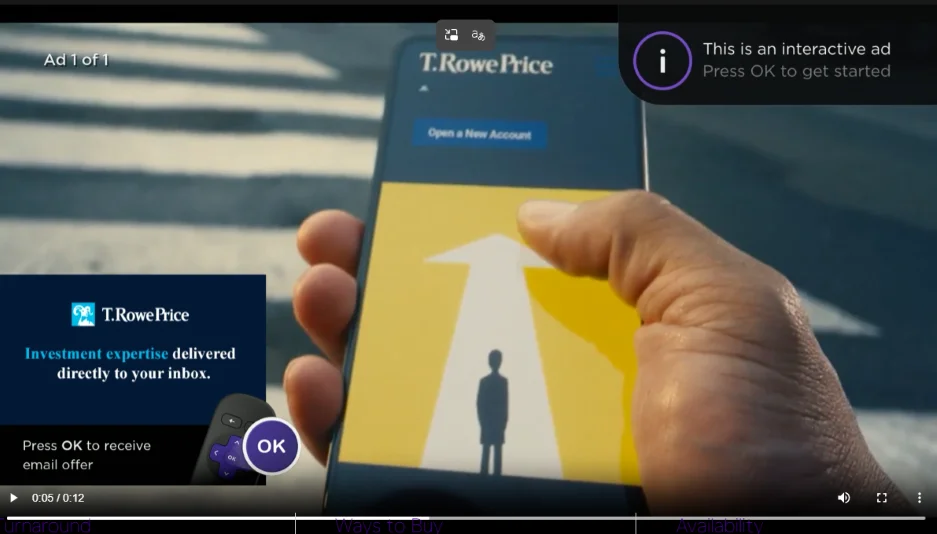
T. Rowe Price: Streamlining Lead Generation with “OK to Email”
Capturing viewer attention during their favorite programs has long been a cornerstone of advertising. T. Rowe Price has elevated this strategy by leveraging a sophisticated feature of OTT advertising to transform passive viewers into actionable leads. Through their “OK to Email” campaign on Roku streaming devices, the financial services firm allowed viewers to directly request more information by simply selecting an “OK” button on their remote. This eliminates the friction associated with traditional lead generation, where a viewer might need to switch devices, jot down a URL, or remember to search later.
The genius of this approach lies in its seamless integration into the viewing experience. By removing the need for viewers to interrupt their entertainment or perform manual actions, T. Rowe Price significantly reduced the barrier to engagement. This direct-to-inbox delivery system not only simplifies the lead capture process but also ensures that the information is delivered when the viewer’s interest is at its peak. Industry data consistently shows that reducing steps in a conversion funnel directly correlates with higher lead generation and conversion rates. A study by McKinsey found that a 10% improvement in conversion rates can increase profits by over 30%. This OTT strategy exemplifies that principle by making the next step in the customer journey as effortless as a single button press.
Ring Camera: Revolutionizing E-commerce with “Add to Cart” Functionality
The advent of OTT advertising has enabled marketers to dream of a truly shoppable television experience, a concept that would have been revolutionary in the era of traditional TV advertising. Ring Cameras has realized this vision with an innovative campaign that allows viewers to add a home security system directly to their Amazon shopping cart from their viewing device. This “Add to Cart” functionality transforms passive viewing into an immediate purchasing opportunity.
This strategy taps into the powerful psychological driver of immediate gratification. By placing a product directly into a viewer’s cart, Ring is essentially putting it just one click away from purchase. This is particularly effective when paired with time-sensitive promotions or campaigns that emphasize urgency. Imagine a viewer watching a thrilling scene in a crime drama and then seeing an ad for a Ring camera with the option to add it to their cart – the emotional resonance and perceived need are heightened. This frictionless path to purchase is a significant departure from traditional advertising, where the path from advertisement to sale could be lengthy and involve multiple steps. The ability to capitalize on impulse decisions or heightened interest in real-time marks a significant evolution in retail marketing, offering a direct link between content consumption and commerce.
Volvo: Enhancing Relevance Through Audience Segmentation with “Ad Selector”
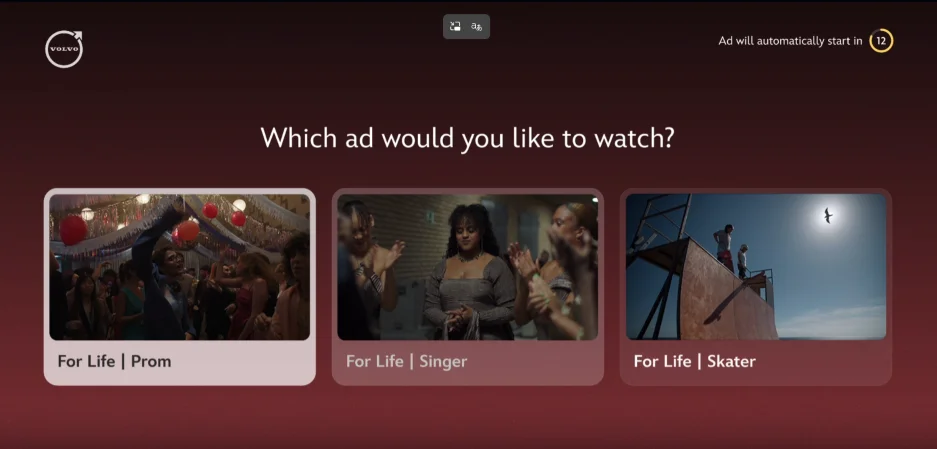
Audience segmentation is a critical component of effective marketing, allowing businesses to deliver highly personalized messages to specific demographic or psychographic groups. Volvo has masterfully employed this technique within the OTT space through its “Ad Selector” campaign on the Disney platform. Recognizing that their target audience comprises diverse segments with varying needs and interests, Volvo developed three distinct video advertisements, each tailored to a particular market segment. Viewers were then given the agency to choose which ad they preferred to watch, creating a highly personalized and engaging experience.
This approach yields significant benefits for both the consumer and the advertiser. For the viewer, it means encountering advertising that is more relevant and interesting, leading to a more positive brand perception. For Volvo, the “Ad Selector” feature serves as a powerful data-gathering tool. By tracking which ads are most frequently chosen by viewers, Volvo can gain invaluable first-party data about its audience. This data can then inform future marketing efforts across all channels, including social media and display advertising, allowing the company to refine its targeting and messaging for maximum impact. For instance, if a significant portion of viewers selects an ad focusing on safety features, Volvo can confidently allocate more resources to campaigns highlighting this aspect, knowing it resonates strongly with their audience. This data-driven approach ensures marketing spend is optimized and campaign effectiveness is maximized.

Maybelline: Building Brand Awareness with “Binge Ad” Sponsorship
“Binge Ads” represent a unique form of OTT advertising that allows brands to sponsor an ad-free viewing experience for a specific episode or selection of episodes. Typically served after a viewer has engaged with multiple episodes of a show consecutively, these ads capitalize on a viewer’s deep immersion in content. Maybelline, the renowned beauty brand, effectively utilized this format on the Peacock app to promote its Super Stay Coffee Addition lipstick line.
By offering an uninterrupted viewing experience, Maybelline positions its brand as a provider of value and enjoyment. This strategy directly contributes to building positive brand awareness and fostering goodwill. In an era where consumers are increasingly resistant to intrusive advertising, offering a benefit in exchange for brand exposure is a highly effective tactic. This approach aligns with successful organic social media and SEO strategies that prioritize providing value to the audience. By associating their brand with a seamless and enjoyable viewing experience, Maybelline creates a positive emotional connection with potential customers. This method is particularly effective for building brand recognition and preference, as it associates the brand with a moment of relaxation and entertainment, rather than interruption.
NewYork-Presbyterian Hospital: Harnessing Emotional Connection Through Storytelling in “In-Stream Ads”
Compelling storytelling is the bedrock of effective advertising, a principle that holds even greater weight in the realm of video content consumed on OTT platforms. The Och Spine Center at NewYork-Presbyterian Hospital demonstrated this powerfully through its YouTube In-Stream ad campaign. The ad chronicled the inspiring journey of a patient who recovered from a debilitating spinal tumor, showcasing the hospital’s expertise and compassionate care.
This 30-second ad masterfully balances brevity with impact. The short duration is crucial for capturing and retaining viewer attention, especially on platforms where skipping ads is a common behavior. Yet, it provides sufficient time to develop an emotional connection with the audience. By sharing a patient’s personal story, the hospital humanizes its brand and establishes a profound link with its target audience. These customer-centric narratives are exceptionally effective for in-feed video advertisements, as they offer a genuine and relatable glimpse into the impact of the service. The emotional resonance of such stories can be far more persuasive than direct product promotion, fostering trust and credibility. This approach underscores the importance of authenticity and emotional engagement in modern advertising, particularly within the healthcare sector where trust and patient well-being are paramount.
Understanding OTT: The Evolution of Content Delivery
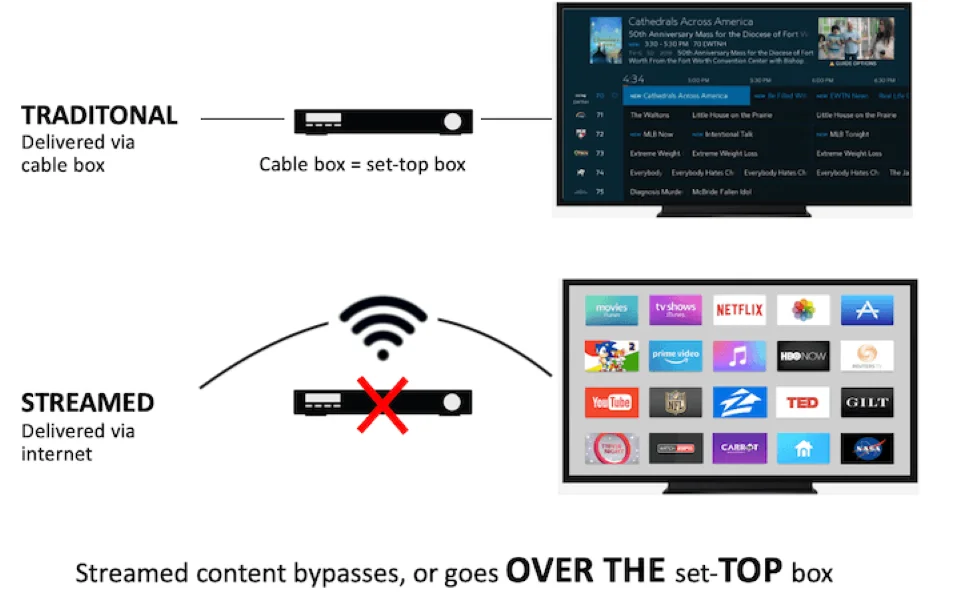
OTT, or “over-the-top,” refers to the delivery of video content directly to viewers via the internet, bypassing traditional cable or satellite television providers. The term “over-the-top” originates from the way this content “goes over the top” of traditional distribution methods. Historically, cable television was delivered through a “set-top box” which sat atop older, bulky television sets. Even as technology evolved and flat-screen TVs became standard, the term “set-top box” persisted. Streamed content, however, does not require this intermediary device; it is delivered directly through an internet connection, thus circumventing the traditional cable infrastructure.
This shift represents a fundamental change in how consumers access entertainment. Instead of being tied to a provider’s channel lineup and schedules, users can access a vast library of content on demand, whenever and wherever they choose. This flexibility and control have been key drivers of the rapid growth of the streaming market.

The Ecosystem of OTT: Devices and Services
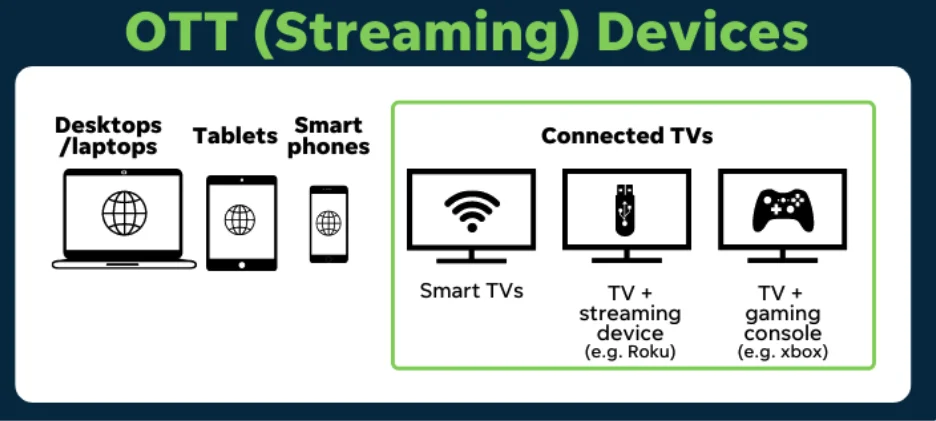
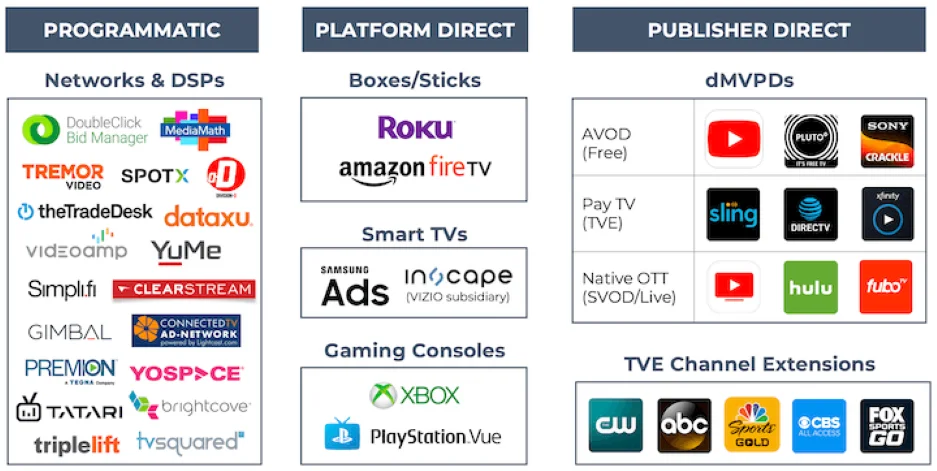
Any internet-connected device capable of displaying video can be considered an OTT device. This broad category includes:
- Smart TVs
- Streaming media players (e.g., Roku, Apple TV, Amazon Fire Stick)
- Gaming consoles (e.g., PlayStation, Xbox)
- Smartphones
- Tablets
- Computers
It is important to distinguish between OTT and Connected TV (CTV). While often used interchangeably, CTV specifically refers to smart TVs that connect to the internet. OTT, however, encompasses all devices that stream content over the internet, making CTV a subset of the broader OTT landscape.
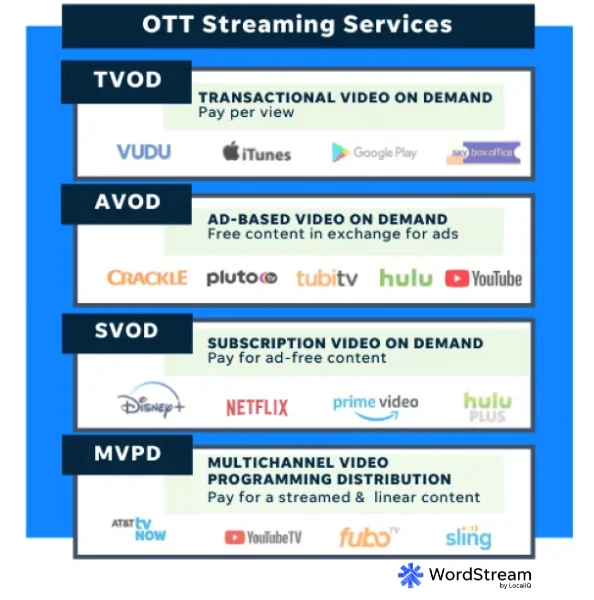
OTT services are the applications and platforms that deliver this streamed content. These services operate under various models:

- Transactional Video on Demand (TVOD): Users pay on a per-title basis, renting or purchasing individual movies or shows (e.g., Apple TV rentals, Google Play Movies).
- Advertising-Based Video on Demand (AVOD): Content is offered for free, supported by advertising (e.g., YouTube, Pluto TV, Tubi).
- Subscription Video on Demand (SVOD): Users pay a recurring subscription fee for access to a library of content (e.g., Netflix, Hulu, Disney+).
- Multichannel Video Programming Distributors (MVPDs): These services offer bundles of live TV channels delivered over the internet, mimicking traditional cable packages (e.g., YouTube TV, Hulu + Live TV).
In essence, one consumes OTT content (like a favorite show) on an OTT device (like a smartphone) through an OTT streaming service (like Netflix).
The Power of OTT Advertising
OTT advertising is the practice of placing advertisements within this streamed content. Advertisers can achieve this through several methods:
- In-stream ads: These are video ads that play before, during, or after the content, similar to traditional TV commercials. They are often unskippable for a set duration.
- Overlay ads: These are banner or graphic ads that appear on top of the video content, usually at the bottom of the screen.
- Companion ads: These are display ads that appear alongside the video player on the same screen, offering a complementary visual or call to action.
The Compelling Benefits of OTT Advertising
The growing popularity of streaming services and the subsequent decline in traditional cable viewership have propelled OTT advertising to the forefront of digital marketing strategies. This shift is not merely a trend but a fundamental change in media consumption.

1. A Rapidly Expanding Audience:
The number of households cutting the cord from traditional cable TV continues to rise. In the United States, cord-cutters now represent nearly half of all internet households, with an additional segment that has never subscribed to cable. This burgeoning audience is migrating to streaming platforms, creating a massive and engaged viewership for OTT advertising. Market projections indicate substantial growth in the OTT streaming market, underscoring its increasing economic significance.
2. Precision Targeting Capabilities:
Traditional TV advertising is largely limited to broad geographic targeting via Designated Market Areas (DMAs). This often results in inefficient ad spend, reaching viewers outside the desired service area. OTT advertising, however, offers granular targeting options previously unavailable in linear TV. Advertisers can target based on:
- Demographics: Age, gender, income, education level.
- Geographics: Specific zip codes, cities, or even custom radius targeting.
- Behavioral Data: Interests, viewing habits, past purchases, and online activities.
- Device Type: Targeting users on specific smart TVs or streaming devices.
- Household Income: Reaching audiences with a specific economic profile.
This precision ensures that advertising messages are delivered to the most relevant audience segments, maximizing return on investment and minimizing wasted impressions.
3. Resilience in a Cookieless Future:
With the impending deprecation of third-party cookies, the digital advertising landscape is undergoing a significant transformation. OTT advertising offers a robust solution for cookieless targeting by relying on alternative data sources and measurement methodologies:
- First-party data: Information collected directly from users through website interactions, app usage, and customer databases.
- Deterministic matching: Using unique identifiers (like logged-in user IDs) to match audiences across platforms with high accuracy.
- Contextual targeting: Placing ads based on the content being viewed rather than on individual user profiles.
This reliance on privacy-centric data ensures that OTT advertising remains effective and compliant in a future where third-party cookies are no longer available.
4. Unparalleled Ad Completion Rates:
OTT video ads boast exceptionally high completion rates, often reaching as high as 95%. This is due to several factors inherent to the OTT viewing experience:
- Unskippable format: Unlike some online video ads, OTT ads are typically unskippable for their duration.
- Limited Ad Load: Compared to the barrage of ads on traditional TV, OTT platforms often feature a more controlled ad load.
- Engaged Audience: Viewers are actively choosing to watch content on these platforms, making them more receptive to ads presented within that context.
- Cross-Device Viewing: Even when viewing on mobile devices, the immersive nature of streaming content makes it less likely for viewers to abandon the ad.
This high completion rate ensures that brands have a significantly better chance of delivering their message effectively and leaving a lasting impression.
Navigating OTT Advertising Pricing Models
Understanding the various pricing models and metrics associated with OTT advertising is crucial for effective campaign management:
- CPM (Cost Per Mille/Thousand Impressions): Advertisers pay for every thousand times their ad is displayed. This is a common metric for brand awareness campaigns.
- CPCV (Cost Per Completed View): Advertisers pay only when a viewer completes the entire ad. This model is ideal for ensuring message delivery and engagement.
- CPC (Cost Per Click): Advertisers pay each time a viewer clicks on their ad. This is more performance-oriented, driving traffic to a website or landing page.
- CPA (Cost Per Acquisition): Advertisers pay when a desired action is taken by the viewer, such as a purchase or a lead submission. This is the most performance-driven model, directly tied to business outcomes.
Strategic Insights from Successful OTT Campaigns
By analyzing successful OTT advertising campaigns, several best practices emerge that can significantly enhance the effectiveness of your own initiatives:
1. Tailor to Your Personas:
Deeply understanding your target audience—their motivations, pain points, and preferences—is paramount. Crafting ad scripts, visuals, and messaging that resonate with specific buyer personas ensures that your ads feel relevant and impactful. As demonstrated by Volvo’s “Ad Selector,” directly engaging with audience preferences can yield rich insights.
2. Cultivate Relatability:
In contrast to the often distant and impersonal nature of traditional television commercials, online video advertising, particularly on OTT platforms, allows for a more personal and relatable connection. Brands should strive to create content that viewers can see themselves in, fostering a sense of genuine connection rather than mere brand promotion.
3. Leverage Emotional Marketing:
Emotion is a powerful driver of consumer behavior, and video is the ideal medium for conveying it. Employing evocative imagery, resonant music, and heartfelt language can create memorable and meaningful connections with viewers. Whether it’s humor, inspiration, or empathy, tapping into emotions can make your brand stand out.
4. Prioritize Voice-Overs and Visual Storytelling:
Given that many viewers may not have the sound on, especially when consuming content on mobile devices, it’s essential that your ad’s core message is communicated visually and audibly. However, even with unskippable ads, viewers can still disengage mentally. Therefore, a clear and compelling voice-over is crucial for conveying your message effectively, ensuring brand exposure even if the viewer’s attention is divided.
Embracing the Future of Advertising with OTT
OTT advertising represents a powerful synergy of traditional television’s broad reach and the sophisticated targeting and conversion capabilities of modern digital marketing. The campaigns highlighted, from T. Rowe Price’s streamlined lead generation to NewYork-Presbyterian Hospital’s emotionally resonant storytelling, demonstrate the diverse and impactful ways businesses can leverage this dynamic channel. By focusing on interactive features, compelling narratives, and a deep understanding of their target audiences, businesses can unlock significant ROI from their OTT advertising efforts, positioning themselves for sustained success in the evolving media landscape.