rifanmuazin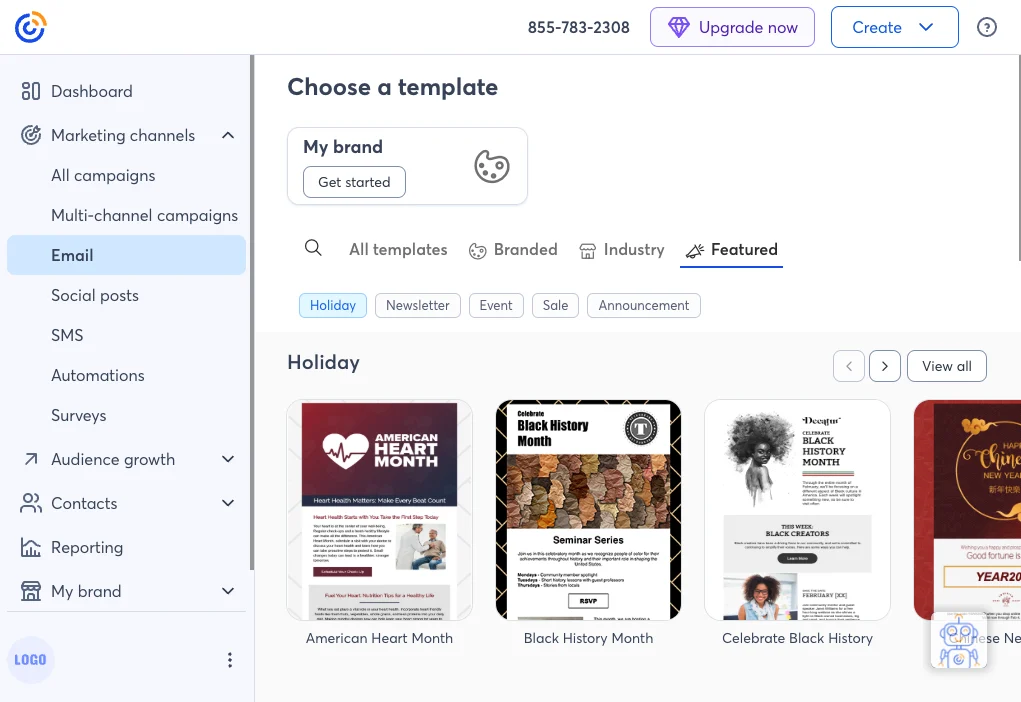
In the dynamic digital marketing ecosystem of 2026, email continues to assert itself as an indispensable and highly effective channel for businesses of all sizes. Far from being supplanted by newer social or messaging platforms, email remains a cornerstone of customer communication, offering a direct, owned line to an audience that other channels often cannot replicate. Whether the objective is to disseminate product announcements, cultivate customer relationships through welcome sequences and newsletters, or drive conversions with targeted promotions, email marketing provides unparalleled control and measurable impact.
Recent data from Mailjet’s comprehensive email engagement report underscores this enduring preference, revealing that a significant 75.4% of consumers across major markets including the U.S., UK, France, Germany, and Spain favor email for receiving promotional messages. Furthermore, 74% choose email for critical transactional communications, such as order confirmations and password resets, highlighting its perceived reliability and professionalism over alternative channels. This robust consumer preference solidifies email’s position not merely as a tool, but as a strategic asset in any modern marketing arsenal.
However, the sheer proliferation of email marketing platforms can transform the selection process into a daunting challenge. The market is saturated with options, ranging from tools designed for agile startups to sophisticated suites built for sprawling enterprise teams. Some platforms excel in complex automation, while others prioritize simplicity and ease of use. This extensive guide, informed by years of rigorous testing and analysis of leading marketing technologies, aims to demystify the landscape, providing businesses with a clear pathway to identifying the platform that aligns perfectly with their operational needs and strategic ambitions.
The Enduring Power of Email in 2026
The longevity and effectiveness of email marketing can be attributed to several key factors. Unlike rented digital spaces on social media platforms, an email list is an owned asset, immune to algorithm changes or platform policy shifts that can suddenly diminish reach. This direct ownership fosters a more stable and predictable communication channel. Economically, email consistently delivers a high return on investment (ROI), with many studies indicating an average return of $36 for every $1 spent, making it one of the most cost-effective marketing strategies available.
The evolution of email marketing has moved beyond simple bulk sends to highly sophisticated, personalized interactions. Modern platforms leverage data analytics and behavioral triggers to segment audiences, tailor content, and automate complex customer journeys. This shift allows businesses to deliver messages that are not only relevant but also timely, enhancing engagement and driving conversions. In an era where customer experience is paramount, the ability to personalize communications at scale through email is a significant competitive advantage.
Defining “Best”: Critical Criteria for Platform Evaluation
To objectively assess the multitude of email marketing platforms, a stringent set of criteria was applied, moving beyond superficial features to core functionalities that drive real business value. The platforms highlighted in this guide earned their positions based on rigorous testing across various use cases, independent of any financial considerations. The “best” platform is not a universal truth but rather one that optimally meets specific organizational requirements. Our evaluation focused on five critical areas:

-
Ease of Use, Regardless of Technical Expertise: A platform’s power is diminished if it’s inaccessible. The ideal tool should offer an intuitive user interface, enabling users to effortlessly build lists, design campaigns, and configure automations from a clean, logical dashboard. Tools requiring extensive technical knowledge or external agency support were excluded, prioritizing those that empower internal teams.
-
Robust and Functional Built-in Automations: Automation is no longer a luxury but a necessity. Whether it’s a personalized welcome series for new subscribers or a targeted follow-up for abandoned carts, automations must be straightforward to set up, highly reliable in execution, and capable of supporting complex customer journeys without requiring custom code.
-
Seamless Integrations with Existing Tech Stacks: Modern businesses rely on a diverse ecosystem of tools. An email platform must integrate seamlessly with CRM systems, e-commerce platforms (like Shopify or WooCommerce), booking software, analytics tools, and other critical business applications. Strong native integrations or robust Zapier support ensure data flow and maintain workflow efficiency.
-
Sensible and Scalable Pricing for Small to Medium Businesses (SMBs): Budget constraints are a reality for many businesses. The recommended platforms offer transparent, affordable entry-level plans, or flexible pay-as-you-go models. The pricing structure should be predictable and allow for growth without sudden, prohibitive cost escalations, accommodating businesses from 100 to 10,000+ contacts.
-
Capacity for Growth and Future Scalability: As a business expands, its marketing needs evolve. The chosen platform must be capable of scaling alongside the business, supporting larger lists, more complex campaigns, and advanced automations without forcing a costly and disruptive migration to an entirely new system. This foresight ensures long-term viability and return on investment.
Beyond these core criteria, other factors such as email deliverability rates, customer support quality, and adherence to global data privacy regulations (e.g., GDPR, CCPA) were also considered, recognizing their critical impact on campaign success and brand reputation.
Understanding Pricing Models and Scalability
For small businesses and marketing teams operating with limited budgets, a thorough understanding of email marketing platform pricing is as crucial as evaluating their feature sets. While many providers offer compelling free plans for newcomers, these often come with limitations on contact numbers, monthly email sends, or advanced features, which can impede growth as subscriber lists expand.
Common pricing structures observed across the industry include:
- Contact-Based Tiers: The most prevalent model, where pricing scales directly with the number of subscribers in your list. Higher contact counts unlock higher tiers, often with additional features.
- Email Volume-Based Tiers: Some platforms charge based on the total number of emails sent per month, regardless of contact count. This can be cost-effective for smaller lists with high send frequencies or for transactional email heavy users.
- Feature-Tiered Plans: Many platforms combine contact or volume limits with feature access. Basic plans offer core functionalities, while higher-tier plans unlock advanced automations, A/B testing, dedicated IP addresses, and premium support.
- Freemium Models: Offering a free plan with essential features up to a certain limit (e.g., 500 contacts, 2,000 emails/month). This allows businesses to get started without upfront costs but requires an upgrade for expanded capabilities.
- Pay-as-You-Go/Credit Systems: Less common for marketing platforms, but sometimes used for transactional email services, where users purchase credits that deplete with each email sent.
When evaluating pricing, it is essential to project future growth. A seemingly attractive low-cost plan today might become prohibitively expensive tomorrow as your subscriber base grows. Platforms offering transparent pricing and clear upgrade paths are preferable, minimizing the risk of costly and time-consuming platform migrations down the line. The long-term scalability of the chosen platform directly impacts its value proposition.
Spotlight on Leading Email Marketing Platforms
Here’s an in-depth look at some of the best email marketing platforms available in 2026, categorized by their primary strengths:
Mailjet: Best for Budget-Conscious Teams
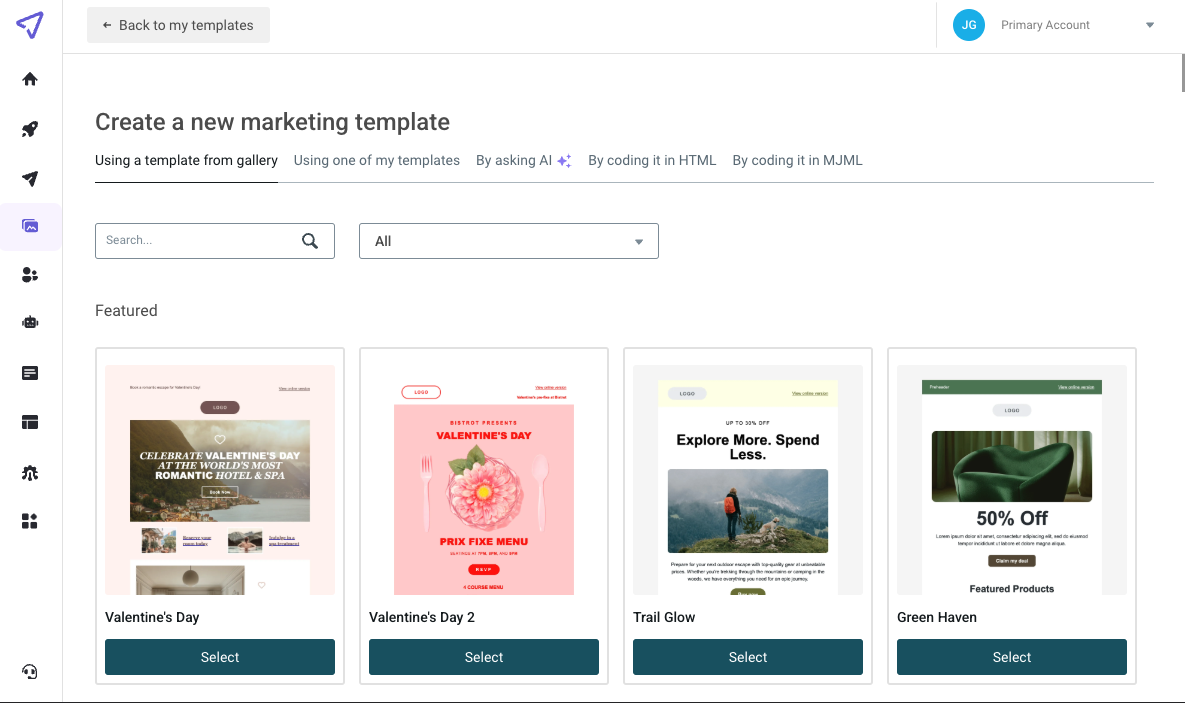
Mailjet distinguishes itself by offering a feature-rich platform that remains exceptionally budget-friendly. Its core philosophy revolves around providing robust email capabilities without penalizing growing contact lists, making it a favorite among startups and scaling teams.
-
Key Features:
- Volume-Based Pricing: A unique model where costs are tied to email send volume rather than subscriber count, providing predictable expenses as lists expand.
- Unified Marketing & Transactional Email: Seamlessly manages both promotional campaigns and critical transactional messages from a single interface.
- Intuitive Drag-and-Drop Editor: Simplifies email design, allowing users to create professional-looking emails without coding.
- Comprehensive Template Gallery: Offers a wide selection of pre-designed templates for various campaign types.
- Advanced Segmentation: Enables precise audience targeting based on subscriber behavior and data.
- Automation Workflows: Supports the creation of automated email sequences for customer journeys.
- API for Developers: Provides robust API access for custom integrations and advanced functionalities.
- A/B Testing: Facilitates optimization of email campaigns by testing different elements.
- Real-time Analytics: Offers detailed insights into campaign performance, open rates, click-throughs, and more.
-
Noteworthy Advantages: Its pricing model is a significant draw for businesses with fluctuating list sizes but consistent sending needs. The platform’s ease of use belies its powerful features, making it accessible to a broad range of users.
-
Considerations/Potential Drawbacks: While robust, its most advanced automation features might require some learning for complex workflows compared to hyper-specialized automation tools. The template design, while functional, might be less aesthetically diverse than some competitors.
-
Pricing Structure: Offers a free plan for up to 6,000 emails/month (200/day). Paid plans are based on email volume, starting at approximately $15 for 15,000 emails/month, scaling upwards. Enterprise solutions are available for high-volume senders.
Mailchimp: Best for Getting Started
Mailchimp has long been synonymous with beginner-friendly email marketing, acting as a gateway for countless businesses embarking on their digital communication journey. Its user-friendly interface and generous free plan make it an excellent starting point.

-
Key Features:
- Intuitive Drag-and-Drop Builder: Makes email creation accessible even for novices.
- Solid Free Plan: Supports up to 500 contacts and 1,000 emails per month, ideal for micro-businesses.
- Basic Automation: Offers essential automated sequences like welcome series and abandoned cart reminders.
- Landing Page & Form Builders: Helps users grow their lists and capture leads directly.
- Audience Segmentation: Allows for basic targeting of campaigns.
- Integration with Popular Apps: Connects with many common business tools.
-
Noteworthy Advantages: Its widespread recognition and extensive documentation mean ample resources for new users. The platform’s focus on simplicity minimizes the learning curve.
-
Considerations/Potential Drawbacks: As strategies mature, users may encounter limitations in advanced automation, deep personalization, and sophisticated reporting. Its contact-based pricing can become expensive quickly for larger lists. The UI can sometimes feel cluttered due to feature expansion.
-
Pricing Structure: Free plan up to 500 contacts. Essentials plan starts at around $13/month for 500 contacts, scaling with contact count. Standard and Premium tiers offer more features and higher contact limits.
Kit (formerly ConvertKit): Best for Digital Creators
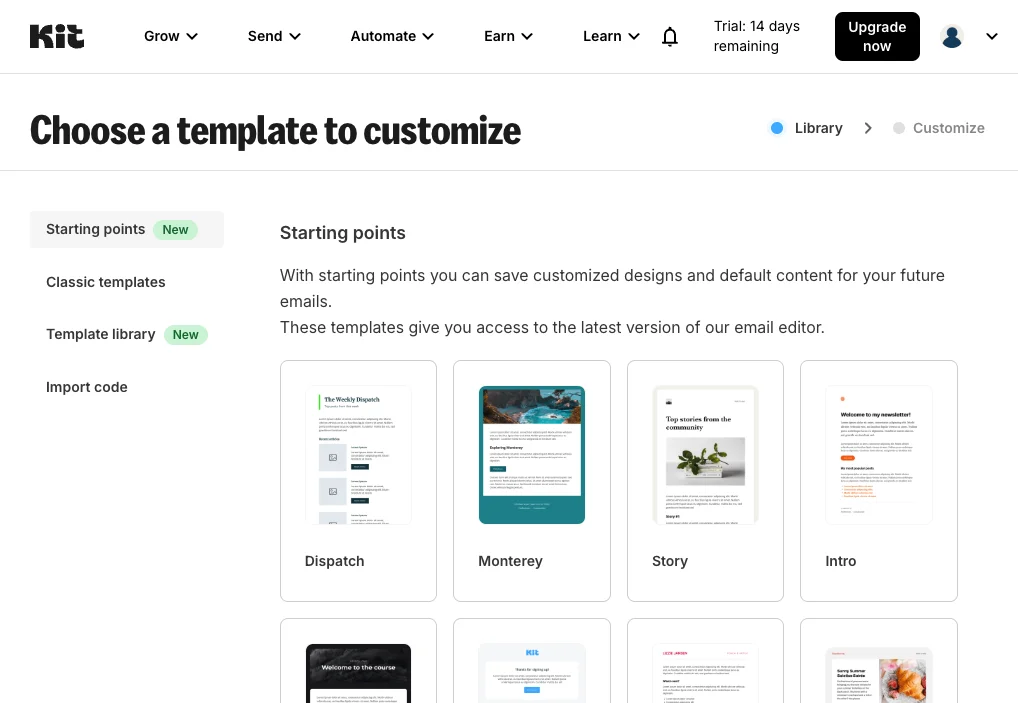
Kit, previously known as ConvertKit, is specifically engineered to cater to the unique needs of bloggers, YouTubers, online course creators, and solo entrepreneurs who rely on building and nurturing an audience to sell digital products.
-
Key Features:
- Audience-First Approach: Focuses on subscriber management, tagging, and segmentation crucial for creators.
- Powerful Automation Funnels: Designed for building multi-sequence automations to guide subscribers through conversion paths.
- Customizable Landing Pages & Forms: Helps creators build their lists effectively.
- Commerce Integrations: Connects well with platforms used by creators for selling digital goods.
- Simple Email Editor: Prioritizes deliverability and readability over complex design, ideal for content-heavy emails.
- Free Plan for Up to 10,000 Subscribers: A highly generous free tier for list growth.
-
Noteworthy Advantages: Its deep understanding of the creator economy shines through its features, allowing for sophisticated audience engagement and monetization strategies. The free plan is exceptionally generous for growth.
-
Considerations/Potential Drawbacks: The visual email editor is intentionally minimalist, which might be a drawback for those seeking highly graphical or design-heavy emails. More advanced features require a paid upgrade.
-
Pricing Structure: Free plan up to 10,000 subscribers with basic features. Creator plan starts at $29/month for 1,000 subscribers, offering advanced automations and integrations, scaling with subscriber count.
Constant Contact: Best for Social-Savvy Brands
Constant Contact is a veteran in the email marketing space, distinguished by its user-friendly drag-and-drop editor and strong integrations with social media platforms, making it ideal for brands that prioritize an omnichannel presence.
-
Key Features:
- Intuitive Drag-and-Drop Editor: Simplifies email design for all skill levels.
- Robust Social Media Integration: Facilitates cross-promotion and audience engagement across platforms.
- Event Management Tools: Useful for businesses that host workshops, webinars, or other events.
- Reliable Email Deliverability: Known for consistent performance in ensuring emails reach inboxes.
- Website & E-commerce Tools: Offers features for building simple websites and integrating with online stores.
- Real-time Reporting: Provides insights into campaign performance and audience engagement.
-
Noteworthy Advantages: Its long-standing reputation for reliability and customer support is a significant plus. The strong social media linkage provides a cohesive marketing strategy.
-
Considerations/Potential Drawbacks: While feature-rich, its advanced plans can become relatively pricey for smaller teams. Some users report that its automation capabilities, while present, may not be as deeply customizable as more specialized automation platforms.
-
Pricing Structure: Offers a 14-day free trial. Core plan starts around $12/month for 500 contacts, scaling with contact count and features. Lead and Standard plans offer more advanced marketing tools.
AWeber: Best for Long-Standing Reliability
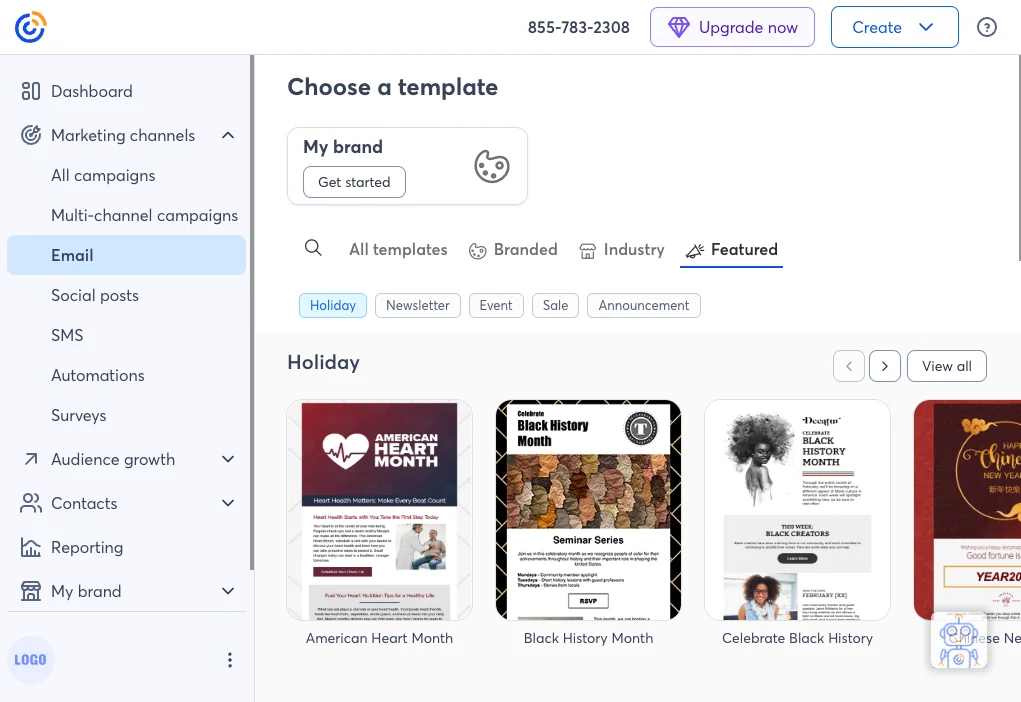
AWeber has maintained a strong presence in the email marketing industry for over two decades, earning a reputation for reliability and straightforward functionality. It’s a trusted choice for solo entrepreneurs and small business owners who value dependable service and essential tools.
-
Key Features:
- User-Friendly Platform: Designed for ease of use, making it accessible to beginners.
- Extensive Template Library: Offers a wide array of pre-built templates for various campaigns.
- Automation Workflows: Includes basic automation features for welcome series and follow-ups.
- Integrations with Popular Platforms: Connects with e-commerce, CRM, and other business tools (e.g., Etsy, YouTube).
- Solid Analytics & Testing Tools: Provides insights into campaign performance and A/B testing capabilities.
- Free Plan Available: Supports up to 500 subscribers and 3,000 emails/month.
-
Noteworthy Advantages: Its long track record translates to a stable platform and experienced customer support. It focuses on mastering the fundamentals, ensuring consistent performance for core email marketing needs.
-
Considerations/Potential Drawbacks: While reliable, AWeber might not offer the cutting-edge advanced features or the visual sophistication of newer platforms. Some users find its interface a bit dated compared to more modern alternatives.
-
Pricing Structure: Free plan up to 500 subscribers. Lite plan starts at $14.99/month for 500 contacts, scaling with subscriber count. Plus plan offers advanced features.
HubSpot: Best for All-in-One Marketing
HubSpot transcends traditional email marketing by offering a comprehensive CRM and marketing suite, making it an excellent choice for businesses seeking a unified platform to manage customer relationships, sales, and marketing efforts.
-
Key Features:
- Integrated CRM: Centralizes customer data, allowing for highly personalized and targeted email campaigns.
- Marketing Automation Hub: Supports sophisticated email sequences, lead nurturing, and behavioral triggers.
- Drag-and-Drop Email Builder: Facilitates easy creation of professional emails.
- Landing Page & Form Creation: Tools to capture leads and build comprehensive funnels.
- Comprehensive Analytics & Reporting: Offers deep insights into email performance, lead scoring, and ROI.
- Extensive Integrations: Connects with a vast ecosystem of third-party applications.
- Generous Free Tier: Includes basic CRM, email marketing, and sales tools.
-
Noteworthy Advantages: Its all-in-one approach eliminates data silos and streamlines workflows across marketing, sales, and customer service. The integrated CRM provides invaluable context for email personalization.
-
Considerations/Potential Drawbacks: While the free tier is generous, unlocking advanced automation and enterprise-level features incurs a significant price jump. The breadth of its platform can lead to a steeper learning curve for users unfamiliar with comprehensive CRMs.
-
Pricing Structure: Free tools for basic CRM and email marketing. Paid plans (Marketing Hub) start at around $20/month for 1,000 marketing contacts (Starter), scaling significantly for Professional and Enterprise tiers based on contacts and features.
Omnisend: Best for Online Stores
Omnisend is purpose-built for e-commerce brands, providing omnichannel marketing tools that extend beyond email to SMS and push notifications, making it a robust solution for driving online sales.
-
Key Features:
- E-commerce Specific Automations: Includes pre-built workflows for abandoned carts, product recommendations, and post-purchase follow-ups.
- Omnichannel Marketing: Integrates email, SMS, and web push notifications into unified campaigns.
- Seamless E-commerce Integrations: Deep connections with platforms like Shopify, WooCommerce, and BigCommerce.
- Advanced Segmentation: Allows for highly specific targeting based on shopping behavior and purchase history.
- Pop-ups, Forms & Landing Pages: Tools designed to capture and convert e-commerce leads.
- Sales Attribution & ROI Tracking: Provides clear insights into the revenue generated by campaigns.
- Free Plan Available: Offers basic email, SMS, and web push features up to 250 contacts.
-
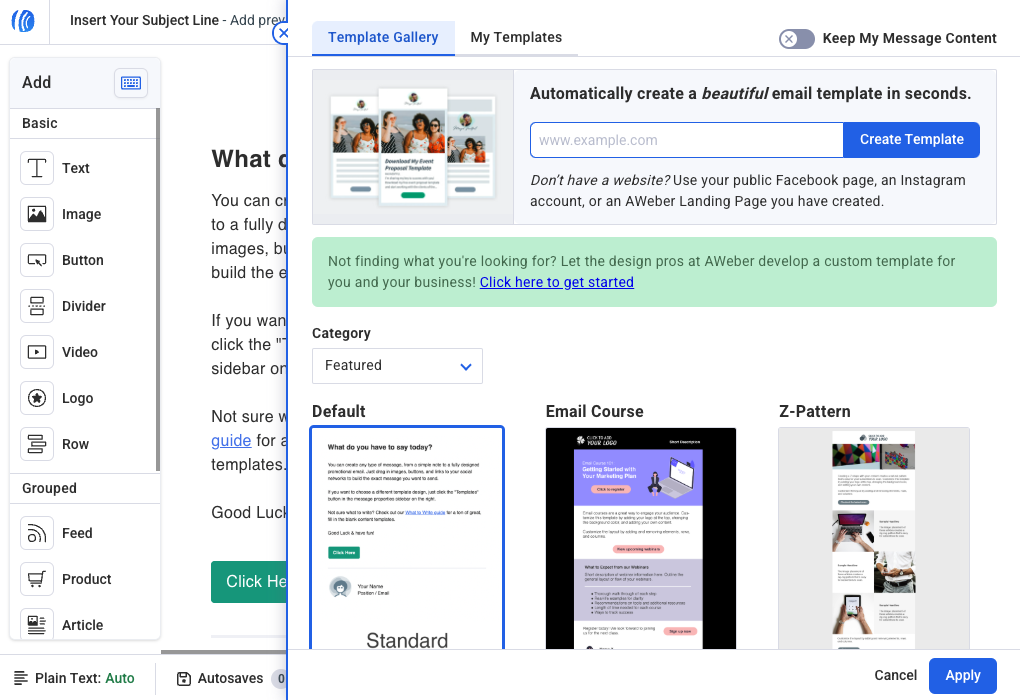
Noteworthy Advantages: Its deep integration with e-commerce platforms and focus on revenue attribution makes it an invaluable tool for online retailers. The omnichannel approach allows for broader customer reach.
-
Considerations/Potential Drawbacks: While rich in features, some users report that its email deliverability might not always match industry leaders, and its template designs, while functional, could be more visually diverse.
-
Pricing Structure: Free plan up to 250 contacts and 500 emails. Standard plan starts at $16/month for 500 contacts, scaling with contacts and SMS/MMS limits. Pro plan offers unlimited emails and advanced features.
Brevo (formerly Sendinblue): Best for Multi-Channel Campaigns
Brevo (previously Sendinblue) excels at unifying various communication channels—email, SMS, and live chat—into a single, easy-to-navigate platform. It’s an excellent choice for businesses seeking a comprehensive yet streamlined approach to customer engagement.
-
Key Features:
- Unified Multi-Channel Platform: Manages email, SMS marketing, and live chat from one dashboard.
- Marketing Automation: Offers visual workflow builders for creating complex customer journeys.
- Transactional Email & SMS: Handles system-triggered messages efficiently.
- CRM Functionality: Basic CRM tools to manage contact relationships.
- Landing Page Builder: Facilitates lead generation and campaign-specific pages.
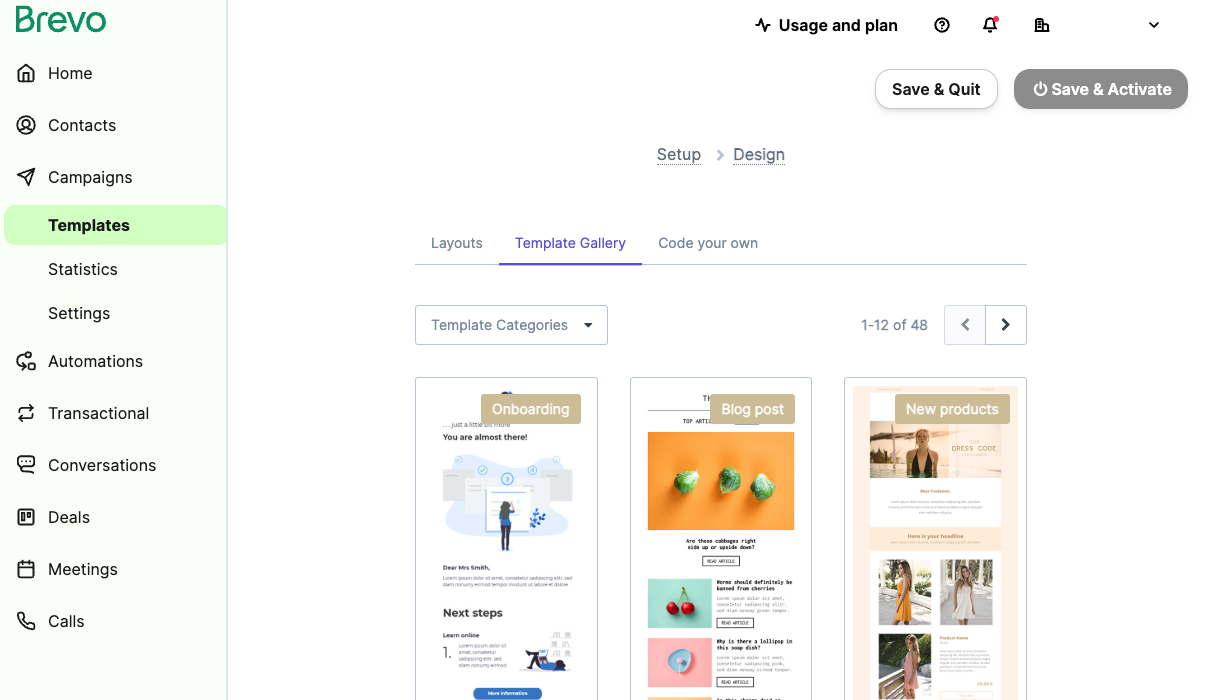
- Email Design Tools: Includes a drag-and-drop editor and template library.
- Volume-Based Pricing: Pricing primarily based on email send volume rather than contact count.
-
Noteworthy Advantages: Its ability to consolidate multiple communication channels simplifies marketing operations and ensures a consistent brand message across touchpoints. The user interface is clean and intuitive.
-
Considerations/Potential Drawbacks: While providing broad functionality, deep analytics and highly advanced features are typically reserved for higher-tier plans. Some users might find its CRM capabilities less robust than dedicated CRM systems.
-
Pricing Structure: Free plan for up to 300 emails/day. Starter plan begins at $25/month for 20,000 emails, scaling with volume. Business and Enterprise plans offer advanced features, automation, and higher send limits.
ActiveCampaign: Best for Serious Automation
ActiveCampaign is a powerhouse for businesses that demand sophisticated marketing automation and a deeply integrated CRM. It provides granular control over the entire customer journey, ideal for teams looking to execute highly personalized and dynamic strategies.
-
Key Features:
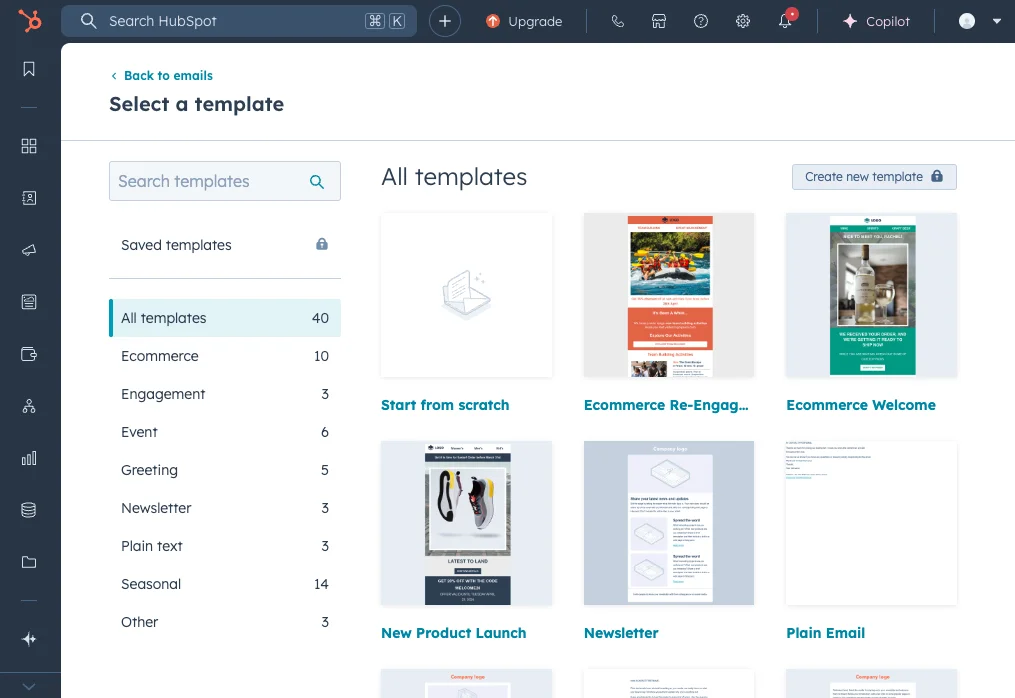
- Advanced Marketing Automation: Visual workflow builder for intricate, multi-step customer journeys based on behavior, tags, and custom fields.
- Built-in CRM: Combines email marketing with sales automation, lead scoring, and deal pipeline management.
- Deep Segmentation & Personalization: Allows for hyper-targeted messaging with dynamic content and conditional logic.
- Site & Event Tracking: Tracks website visits and user actions to trigger highly relevant automations.
- Split Testing: Comprehensive A/B testing for automations, emails, and subject lines.
- SMS Marketing: Integrates SMS into automation workflows for multi-channel engagement.
- Machine Learning for Deliverability: Utilizes AI to optimize email deliverability and engagement.
-
Noteworthy Advantages: Its unparalleled automation capabilities allow for incredibly precise and effective customer nurturing. The integration of CRM and sales tools provides a holistic view of the customer.
-
Considerations/Potential Drawbacks: The platform’s extensive features mean a steeper learning curve and can be overwhelming for beginners. Its pricing, especially for higher tiers and larger contact lists, is among the more premium options.
-
Pricing Structure: Starts at around $29/month for 1,000 contacts (Lite plan), scaling significantly with contacts and features for Plus, Professional, and Enterprise plans.
Tailoring Your Choice: Platforms for Specific Business Needs
The optimal email marketing platform is ultimately determined by your specific business model, objectives, and available resources.
-
Small Businesses: For lean teams or solo entrepreneurs, simplicity, affordability, and time-saving tools are paramount. Platforms like Mailjet, Mailchimp, or AWeber offer intuitive dashboards, robust support, and scalable pricing that grows without breaking the bank. They provide the essential automation to streamline operations without requiring a marketing PhD.
-
E-commerce Brands: Online stores require features that directly drive revenue. Omnisend, ActiveCampaign, and Constant Contact excel here, offering advanced features like abandoned cart recovery, dynamic product recommendations, and deep integrations with leading e-commerce platforms (Shopify, WooCommerce). Behavioral triggers and personalized automations are critical for maximizing conversions.
-
Nonprofits: Non-profit organizations need to maximize impact while minimizing costs. Mailjet (due to volume-based pricing), Mailchimp (for its free plan), or platforms offering special nonprofit discounts are excellent choices. Customizable templates, donor segmentation, and integrations with fundraising platforms are crucial for engaging supporters and managing campaigns effectively.
-
B2B Companies: Business-to-business firms focus on lead nurturing and pipeline acceleration. Platforms that integrate seamlessly with CRM systems, offer lead scoring, and support account-based marketing are vital. HubSpot and ActiveCampaign stand out with their robust CRM integration, sophisticated automation, and tools designed for complex sales cycles and long-term customer relationships.
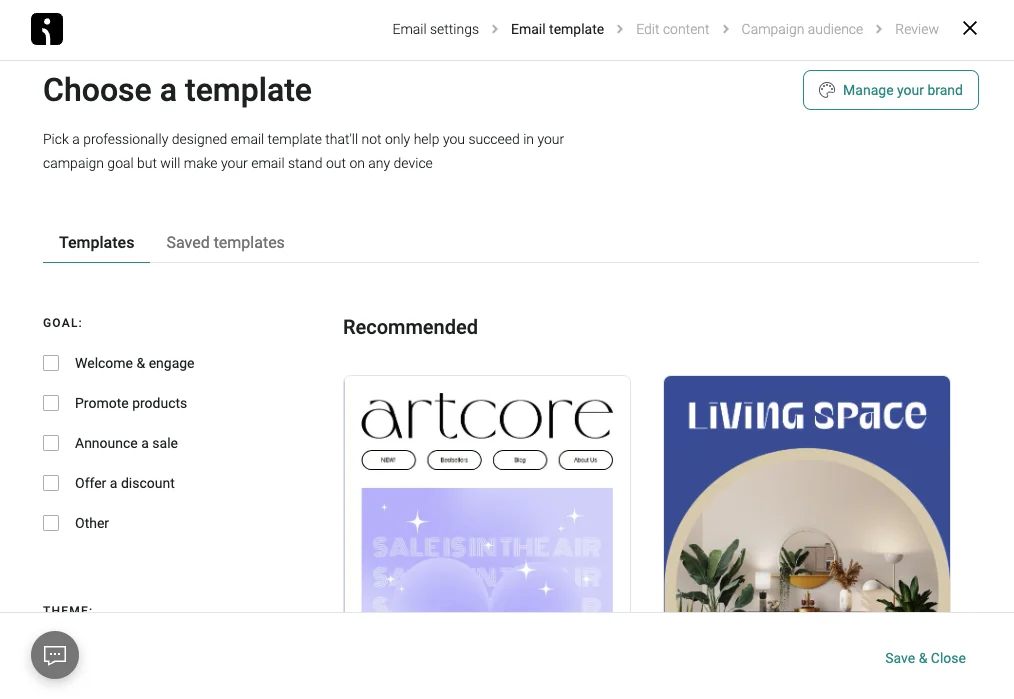
Future Trends and Considerations: As the digital landscape evolves, integrating new technologies like Artificial Intelligence (AI) for content generation, predictive analytics, and hyper-personalization will become increasingly important. Furthermore, omnichannel strategies that seamlessly blend email with SMS, push notifications, and even social media are becoming standard, demanding platforms that can facilitate such integrated campaigns. Data privacy regulations will continue to shape how data is collected and used, making compliance features a non-negotiable aspect of platform selection.
Strategic Selection: A Comprehensive Checklist
Choosing the right email marketing service is a strategic decision that impacts engagement, revenue, and brand perception. It requires balancing current needs with future aspirations. The best platform is one that strikes a perfect balance between functionality, ease of use, and affordability, while offering the flexibility to scale and adapt.
To guide your decision, consider this comprehensive checklist:
- Core Features: Does it offer essential email design, segmentation, and automation?
- Pricing & Affordability: Does it fit your budget now and as you scale? Understand all tiers and potential hidden costs.
- Use Case Alignment: Is it built for your specific business type (e.g., e-commerce, B2B, creator)?
- Integrations: Does it connect with your CRM, e-commerce platform, and other vital tools?
- Scalability: Can it handle your list growth and increasing campaign complexity?
- Advanced Capabilities: Does it offer features like A/B testing, dynamic content, and lead scoring if needed?
- Deliverability Reputation: Does the provider have a strong track record of landing emails in inboxes, not spam folders?
- Customer Support: Is reliable and responsive support available when you need it?
- Data Privacy & Compliance: Does it adhere to global regulations like GDPR and CCPA?
- User Experience (UX): Is the interface intuitive, or does it require significant training?
- Reporting & Analytics: Does it provide clear, actionable insights into campaign performance?
- Trial Period/Free Plan: Can you test its core features before committing financially?
By diligently evaluating these factors, businesses can select an email marketing service that not only streamlines communication but also acts as a powerful engine for driving engagement, nurturing relationships, and achieving broader business objectives. The right platform will empower your brand to navigate the ever-evolving digital landscape with confidence and build a robust email marketing strategy that truly sets you apart.
Frequently Asked Questions About Choosing an Email Service
For those new to email marketing or looking to optimize their current setup, these FAQs address common queries about email service providers, features, pricing, and integrations.
What is an email marketing service, and how does it work?
An email marketing service (EMS) or email service provider (ESP) is a software platform designed to help businesses send marketing and transactional emails to their subscriber lists efficiently. These tools typically provide features such as drag-and-drop email editors, customizable signup forms, audience segmentation capabilities, automation workflows (e.g., welcome sequences, abandoned cart reminders), and performance analytics, all managed from a centralized dashboard. They abstract away the technical complexities of email sending, allowing users to focus on content and strategy.
How many emails can I send per month?
The number of emails you can send per month depends entirely on your chosen plan and provider. Some platforms offer unlimited email sends on higher-tier plans, while others impose strict monthly or even daily limits. It’s crucial to review the email send limits of each plan, especially if you anticipate sending frequent bulk emails or have a large and active subscriber list. Some providers, like Mailjet and Brevo, base their pricing primarily on email volume, offering more flexibility for high-frequency senders.
What are transactional emails, and do I need them?
Transactional emails are automated, system-triggered messages sent in response to a user’s action or a specific event. Examples include order confirmations, shipping notifications, password reset links, account creation welcomes, and cart abandonment reminders. If you operate an e-commerce store, a SaaS product, or any service requiring user accounts, transactional emails are absolutely essential for maintaining trust, providing critical information, and facilitating customer journeys. Many modern email marketing platforms integrate transactional email capabilities into their automation workflows or offer dedicated APIs for this purpose.
Are there affordable email marketing services for small businesses?
Yes, many affordable and even free email marketing tools cater specifically to small businesses and budget-conscious users. Platforms like Mailjet, Brevo, Mailchimp, Kit, and AWeber offer generous forever-free plans or low-cost basic plans that include essential features such as email sequences, automation, and access to pre-designed email templates. These options allow small businesses to start building their lists and running campaigns without significant upfront investment, scaling up as their needs and budgets grow.
What kind of advanced features should I look for?
Once you’ve mastered the basics, consider platforms that offer advanced features such as:
- Advanced Segmentation: The ability to create highly specific audience segments based on demographics, behavior, purchase history, and custom data.
- Dynamic Content: Personalizing email content blocks based on individual subscriber data.
- A/B/X Testing: Testing multiple variations of subject lines, content, and send times to optimize performance.
- CRM Integration: Seamlessly connecting with customer relationship management systems for a unified customer view.
- Lead Scoring: Assigning values to leads based on their engagement and behavior to prioritize sales efforts.
- Omnichannel Marketing: Integrating email with SMS, push notifications, and social media for a cohesive strategy.
- AI-Powered Optimization: Utilizing artificial intelligence for predictive sending, content suggestions, and deliverability enhancements.
These features are particularly beneficial for e-commerce businesses, content creators, and digital product sellers aiming for sophisticated and highly personalized engagement.