rifanmuazin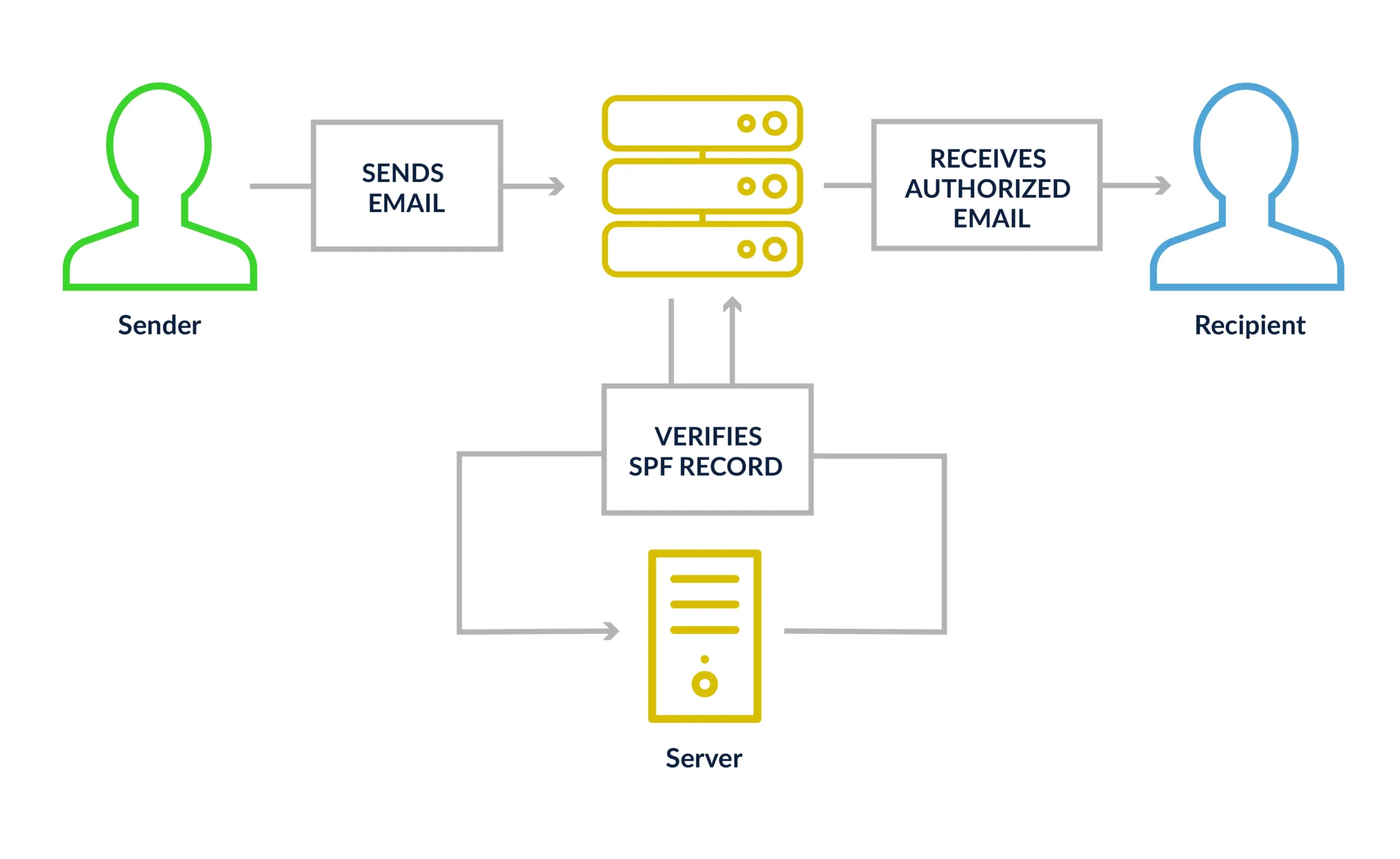
The landscape of digital communication is undergoing a profound transformation, with email authentication emerging as a non-negotiable cornerstone for ensuring message integrity, sender legitimacy, and optimal deliverability. What was once considered a best practice for discerning email marketers has rapidly evolved into a mandatory requirement, driven by major mailbox providers (MBPs) like Google, Yahoo, and Microsoft, intent on fortifying inboxes against the relentless onslaught of phishing, spoofing, and spam. This shift underscores a critical reality for businesses and individual senders alike: robust email authentication is no longer optional but an essential prerequisite for maintaining sender reputation and reaching intended recipients.
The Imperative of Email Authentication: A Deep Dive into Digital Trust
Email authentication refers to a suite of digital security measures designed to verify the legitimacy of an email’s sender and ensure that the message has not been tampered with during transit. At its core, authentication guarantees that an email originates from the claimed domain and that its content remains unchanged from the point of dispatch to the recipient’s inbox. Without these checks, the email ecosystem would be a chaotic, untrustworthy environment, ripe for exploitation by malicious actors.
The need for robust email authentication became acutely clear with the exponential growth of internet usage and the subsequent rise of mass unsolicited commercial email, commonly known as spam, in the late 1990s and early 2000s. Early email systems were built on a foundation of trust, lacking inherent mechanisms to verify sender identity. This vulnerability was quickly exploited, leading to a deluge of unwanted emails, and more nefariously, sophisticated phishing attacks designed to trick recipients into divulging sensitive information. According to the Anti-Phishing Working Group (APWG), the number of phishing attacks hit an all-time high in 2023, with over 1.6 million attacks observed in a single quarter, highlighting the persistent and escalating threat. Such statistics underscore the critical role authentication plays in mitigating these risks.
In response to these escalating threats, several pioneering groups, including the Internet Engineering Task Force’s (IETF) Anti-Spam Research Group, alongside major industry players like Yahoo and Cisco, began developing foundational standards for email authentication. Their collaborative efforts laid the groundwork for the modern authentication protocols that safeguard billions of email messages daily. These base policies have since evolved into five core authentication technologies that collectively work to secure email on its journey to the inbox: Sender Policy Framework (SPF), DomainKeys Identified Mail (DKIM), Domain-based Message Authentication, Reporting & Conformance (DMARC), Authenticated Received Chain (ARC), and Brand Indicators for Message Identification (BIMI).
Key Pillars of Email Security: Understanding the Core Technologies
Navigating the technical jargon associated with email authentication can be daunting for many. However, understanding the fundamental principles of each standard is crucial for effective implementation and compliance.
Sender Policy Framework (SPF): The Authorized Guest List
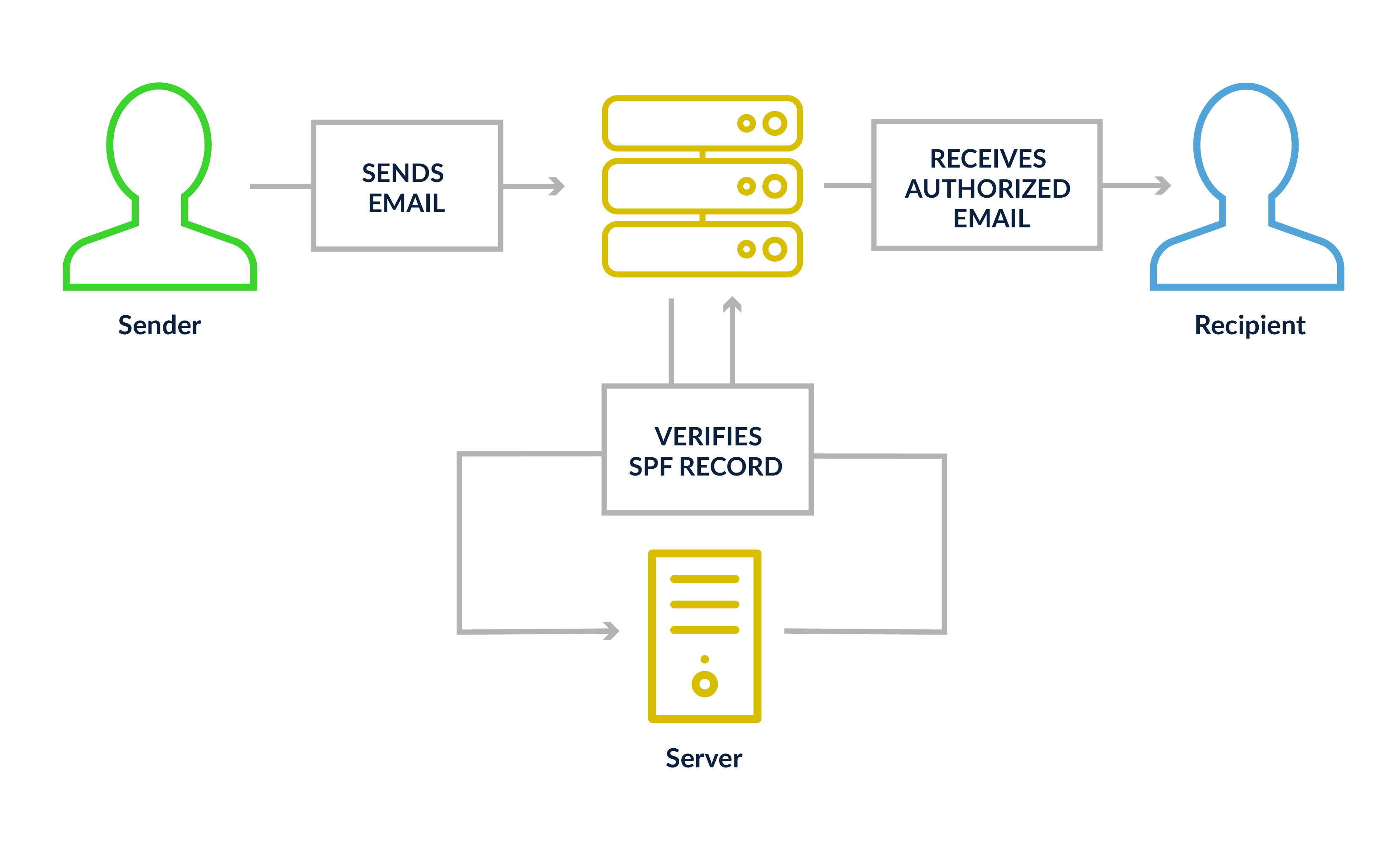
Imagine SPF as a bouncer at an exclusive event, armed with a meticulously curated guest list. When your domain sends an email, it publishes a special DNS (Domain Name System) record that explicitly lists all the IP addresses authorized to send mail on its behalf. When a receiving mail server receives an email purportedly from your domain, it consults your SPF record. If the email’s originating IP address is not on the list, the receiving server immediately flags it as suspicious, knowing something is amiss.
An SPF record can encompass individual IP addresses, defined ranges, or references to approved third-party senders, such as your Email Service Provider (ESP). Senders can also specify enforcement levels within their SPF record, dictating how strictly receiving servers should act on a failure. The most common and recommended enforcement levels are ~all (soft fail, suggesting the email might be legitimate but with a warning) or -all (hard fail, definitively stating the email is unauthorized and should be rejected). A critical technical consideration for SPF is the “10-lookup limit.” Each time the include function is used to add a third-party sender’s SPF record, it counts as a DNS lookup. Exceeding this limit results in a “permerror,” rendering SPF validation ineffective and potentially leading to legitimate emails being rejected. Careful management of SPF records is essential to avoid this pitfall.
DomainKeys Identified Mail (DKIM): The Tamper-Evident Seal
DKIM functions much like a tamper-evident seal on a package. When your mail server dispatches a message, it digitally “stamps” it with a cryptographic signature generated using a private key. The corresponding public key is then published in your domain’s DNS records. Upon receiving the email, the recipient’s server retrieves your public key and attempts to verify the digital signature. If any part of the email’s content (including headers or body) has been altered in transit, the signature will not match, and DKIM validation will fail. This mechanism ensures the message’s integrity from sender to recipient.
A key setup note for DKIM is the recommended key length. To meet current security standards, a minimum key length of 2048 bits is now required. Older 1024-bit keys are considered less secure and are being phased out by many MBPs. While most reputable ESPs manage DKIM key generation and rotation for their clients, it is always prudent for senders to confirm that their platform utilizes sufficiently strong keys.
Domain-based Message Authentication, Reporting & Conformance (DMARC): The Policy Enforcer
If SPF acts as the guest list and DKIM as the tamper seal, DMARC serves as the overarching policy that dictates the actions taken when either SPF or DKIM flags an issue. DMARC builds upon these foundational protocols by introducing a crucial element: alignment. This means that the domain specified in the From address (the one users see) must match the domain used in either the SPF or DKIM record. Without this critical alignment, DMARC will fail, even if the underlying SPF or DKIM checks passed. This prevents sophisticated spoofing where a malicious sender might pass SPF or DKIM but still display a deceptive From address.

DMARC policies are configured at three distinct levels, informing receiving servers how to handle messages that fail authentication:
p=none(Monitor Only): This initial policy takes no action on failing messages but provides valuable reporting. It is the minimum requirement for bulk senders as per new MBP mandates.p=quarantine(Send to Spam): Messages failing DMARC are directed to the recipient’s spam or junk folder.p=reject(Block Entirely): The most stringent policy, instructing receiving servers to outright block and reject messages that fail DMARC.
While starting with p=none is often recommended for initial deployment to gather data without impacting deliverability, the ultimate goal for responsible senders is to progress towards p=quarantine or p=reject to maximize protection against impersonation. A significant advantage of DMARC is its reporting capability. MBPs send daily aggregate reports (XML format) to the email address specified in the DMARC record. These reports provide invaluable insights into email traffic, showing which messages passed or failed authentication, the originating IP addresses, and whether alignment was achieved. This data acts as an early-warning system for detecting potential spoofing or phishing attempts targeting your domain, allowing for proactive countermeasures.
Navigating the Modern Email Landscape: MBP Mandates and Compliance
The shift from optional best practice to mandatory requirement for email authentication has been unequivocally driven by the world’s largest mailbox providers. The recent mandates from Google (Gmail), Yahoo, and Microsoft have fundamentally reshaped the email ecosystem, setting a new bar for sender responsibility. These policies are not merely suggestions; they are enforceable rules designed to combat the proliferation of spam and phishing, which continue to plague users and erode trust in email as a communication channel.
A Shifting Paradigm: The Non-Negotiable Requirements
In late 2023, Google and Yahoo jointly announced stringent new email sender requirements for bulk senders, defined as those sending more than 5,000 emails per day to Gmail or Yahoo accounts. Microsoft quickly followed suit, aligning its policies with similar objectives. These mandates, which began progressive enforcement in early 2024, cement the reality that proper authentication is no longer optional for anyone seeking to maintain deliverability to these dominant platforms.
The key requirements now expected of virtually all senders, bulk or not, include:
- Implementing SPF, DKIM, and DMARC for their sending domains.
- Ensuring DMARC policies are at least set to
p=nonefor bulk senders, with a strong recommendation to move towardsp=quarantineorp=reject. - Maintaining low spam complaint rates (typically below 0.1%).
- Providing an easy one-click unsubscribe option for marketing emails.
- Ensuring that sent emails remain below a certain error threshold.
Timeline of Enforcement and Implications for Senders
The enforcement of these mandates has been staggered but firm. Google began progressively rejecting non-compliant traffic from April 2024, starting with a small percentage of emails and gradually increasing the rejection rate. By late 2025, non-compliant senders are expected to face widespread temporary and even permanent rejections. Yahoo and Microsoft have adopted similarly firm stances, indicating a united front among MBPs to clean up the inbox.
For businesses and organizations, the stakes have never been higher. Failure to comply with these authentication requirements means a direct impact on email deliverability, leading to legitimate messages being shunted to spam folders or outright rejected. This can translate into lost sales, diminished customer engagement, damaged brand reputation, and a significant reduction in the effectiveness of email marketing campaigns. Industry experts universally agree that there is no circumventing these new rules; adherence is paramount for any entity relying on email for communication, marketing, or transactional purposes. “The era of optional email authentication is definitively over,” stated a spokesperson for a major email security firm. “These mandates represent a pivotal moment, forcing every sender to prioritize security and trust, or risk being shut out of the inbox entirely.”
Beyond the Core: ARC and BIMI for Enhanced Trust and Brand Presence
While SPF, DKIM, and DMARC form the bedrock of email authentication, two additional standards, ARC and BIMI, offer further layers of trust and brand visibility.
Authenticated Received Chain (ARC): The Audit Trail for Forwarded Mail
ARC addresses a specific challenge that arises when emails are forwarded or processed by intermediate systems. Traditionally, when an email passes through a mailing list processor, a security gateway, or a forwarding service, its content or headers might be slightly altered. These modifications, even if benign, can inadvertently break the original DKIM signature, causing DMARC to fail. This could lead to legitimate forwarded emails being incorrectly flagged as suspicious.
ARC acts as a “paper trail” or an audit log for email authentication. Each intermediate server that processes and forwards the message signs and logs the authentication results it observed before passing the message along. By the time the email reaches its final destination, the receiving server can examine this chain of authentication results. If the ARC chain shows that the message started its journey properly authenticated, even if subsequent alterations broke the DKIM signature, the receiving server can still trust its legitimacy. Unlike SPF, DKIM, and DMARC, ARC is not something individual senders configure directly. It is implemented by the mail servers in the middle of the delivery path, serving as a crucial mechanism to preserve authentication integrity in complex email routing scenarios.
Brand Indicators for Message Identification (BIMI): Visual Trust and Brand Recognition
BIMI offers a powerful way for brands to display their official logo directly in the recipient’s inbox, often even before the email is opened. This provides an immediate, visual trust signal that helps subscribers quickly recognize legitimate emails from familiar brands, enhancing engagement and reducing the likelihood of phishing attacks.
To implement BIMI, a sender must first have robust SPF, DKIM, and DMARC in place, with their DMARC policy set to an enforcement level of either p=quarantine or p=reject. A p=none policy is insufficient for BIMI. Once these prerequisites are met, the brand publishes a BIMI DNS record that points to a publicly accessible, properly formatted SVG (Scalable Vector Graphics) version of their logo.
Certificates: VMC vs. CMC
For an even higher level of assurance and broader display, BIMI often involves digital certificates:
- Verified Mark Certificate (VMC): This is the original and most comprehensive certification option. VMCs require the brand’s logo to be a registered trademark. Issued by authorized Certificate Authorities (such as DigiCert), VMCs unlock full BIMI support, including logo display across various MBPs, and importantly, the coveted blue checkmark next to the sender’s name in Gmail, signifying verified authenticity. Apple Mail also supports VMC-enabled BIMI.
- Common Mark Certificate (CMC): A newer, more accessible option introduced in 2024. CMCs do not require a registered trademark. Instead, they demand proof that the brand’s logo has been publicly displayed for at least 12 months. Google began accepting CMCs in 2024, significantly expanding BIMI’s reach to a wider array of brands. CMC holders benefit from logo display in Gmail, but the blue checkmark remains exclusively reserved for brands with VMCs.
MBP support for BIMI varies, with Gmail, Yahoo, and Apple Mail being prominent adopters, offering varying levels of display based on certificate type. The adoption of BIMI is a strategic move for brands, enhancing their visibility and building deeper trust with their audience in a crowded digital space.
The Broader Impact: Securing the Digital Communication Channel
Email authentication is far more than a technical compliance exercise; its implications span economic, reputational, and operational facets of any organization engaged in digital communication. The collective action of MBPs represents a significant industry-wide effort to restore and maintain trust in email, which remains one of the most critical and widely used communication channels globally.
Economic and Reputational Stakes
The financial cost of email fraud is staggering. According to the FBI’s Internet Crime Report, Business Email Compromise (BEC) and email account compromise (EAC) schemes resulted in over $2.9 billion in reported losses in 2023 alone. Robust authentication directly counters these threats by making it significantly harder for attackers to impersonate legitimate businesses. For individual companies, failure to authenticate can lead to severe financial penalties through lost sales, customer support burdens, and remediation efforts after a security incident. More critically, it can inflict irreparable damage to brand reputation. When customers receive fraudulent emails seemingly from a trusted brand, their confidence is eroded, leading to disengagement and potentially switching to competitors. Conversely, a well-authenticated email program builds trust, enhances brand recognition, and can significantly improve the return on investment (ROI) of email marketing campaigns. Emails that successfully pass authentication checks are far more likely to land in the primary inbox, increasing open rates, click-through rates, and ultimately, conversions.
The Role of Email Service Providers (ESPs)
For many organizations, particularly small to medium-sized businesses, the technical complexities of implementing SPF, DKIM, and DMARC can be daunting. This is where Email Service Providers (ESPs) play a crucial role. Leading ESPs offer extensive support and tools to help their clients configure and manage these authentication protocols. They often provide intuitive interfaces, guided setup processes, and dedicated support teams to ensure compliance. Many ESPs have proactively updated their platforms to meet the new MBP mandates, simplifying the transition for their users. However, even with ESP assistance, businesses retain the ultimate responsibility for ensuring their domains are properly authenticated.
Expert Perspectives and Industry Response
Industry analysts widely hail the recent MBP mandates as a necessary and long-overdue step towards a healthier email ecosystem. “This is a watershed moment,” noted Dela Quist, a renowned email expert, during a recent podcast. “The shift from optional to mandatory authentication fundamentally changes the game for senders, forcing a higher standard of security and transparency across the board.” While the initial transition may present challenges for some organizations, the long-term benefits of a more secure and trustworthy email environment are expected to outweigh the hurdles. The industry response has largely been one of adaptation, with many businesses scrambling to audit and update their authentication configurations.
Future Outlook
The evolution of email security is a continuous process. As cybercriminals develop new tactics, authentication standards will continue to adapt. Future developments might include enhanced cryptographic methods, broader adoption of visual trust signals like BIMI, and potentially more sophisticated behavioral analysis by MBPs to detect anomalies. The foundation, however, will remain the core authentication protocols that verify sender identity and message integrity.
Authentication as a Continuous Journey
Email authentication, while seemingly a purely technical exercise, is inextricably linked to the relationship a brand fosters with its subscribers. In an era where digital trust is paramount, ensuring that every message sent is verifiably authentic is no longer a competitive advantage but a fundamental expectation. The stakes have indeed never been higher. With Google, Yahoo, and Microsoft unequivocally enforcing authentication requirements for bulk senders, getting this wrong will not only decimate deliverability but also severely erode trust with the very audience businesses strive to reach.
Properly configuring SPF, DKIM, and DMARC is the essential starting point. Beyond this initial setup, the journey involves continuously moving DMARC policies toward enforcement (p=quarantine or p=reject), diligently monitoring aggregate DMARC reports for insights into email traffic and potential threats, and eventually implementing BIMI to enhance brand recognition and trust. While this coordinated effort requires time and technical coordination, the payoff in terms of improved deliverability, enhanced brand reputation, and robust protection against cyber threats is invaluable. Tools like Litmus, which offer infrastructure checks, can be indispensable allies in ensuring that every aspect of an organization’s email authentication is meticulously in order, paving the way for a more secure, trusted, and effective email program.