The global technology landscape is currently undergoing a seismic shift as the "AI-first" era transitions from theoretical research into widespread industrial application. For aspiring engineers and data scientists, the traditional resume—once dominated by academic credentials and static certifications—is being superseded by the "proof of work" model. In a competitive hiring environment where major tech firms and nimble startups alike are seeking immediate utility, projects have become the essential bridge between foundational learning and professional mastery. While a theoretical understanding of backpropagation or transformer architectures is necessary, recruiters increasingly prioritize candidates who can demonstrate the ability to architect, deploy, and refine functional AI systems that solve real-world problems.
This comprehensive guide examines 10 high-impact, solved projects that span the spectrum of modern artificial intelligence, ranging from advanced search architectures to multimodal generative media. By leveraging established open-source frameworks, these projects provide a blueprint for building a portfolio that showcases technical versatility, problem-solving acumen, and a deep understanding of the current Generative AI (GenAI) stack.
The Evolution of the AI Portfolio: Context and Industry Demand
Since the public release of large language models (LLMs) in late 2022, the demand for AI talent has pivoted from general data science to specialized Generative AI engineering. According to recent industry reports, job postings requiring "Generative AI" skills increased by over 300% in 2023 and 2024. However, the barrier to entry has also risen; simple "chatbot" clones are no longer sufficient to impress hiring managers.
Modern portfolios must demonstrate an understanding of "Agentic workflows," Retrieval-Augmented Generation (RAG), and multimodal processing. The following projects are curated to reflect these industry trends, offering candidates the opportunity to work with state-of-the-art tools like PyTorch, LangChain, and specialized diffusion models.
1. AI-Powered Search Engines and RAG Architectures
Traditional search engines rely on keyword matching, often failing to capture the nuance of user intent. The next generation of search utilizes Retrieval-Augmented Generation (RAG) to provide direct, cited answers. Building an AI-powered search engine involves creating a pipeline that combines web crawling, vector embeddings, and LLM-based reranking.
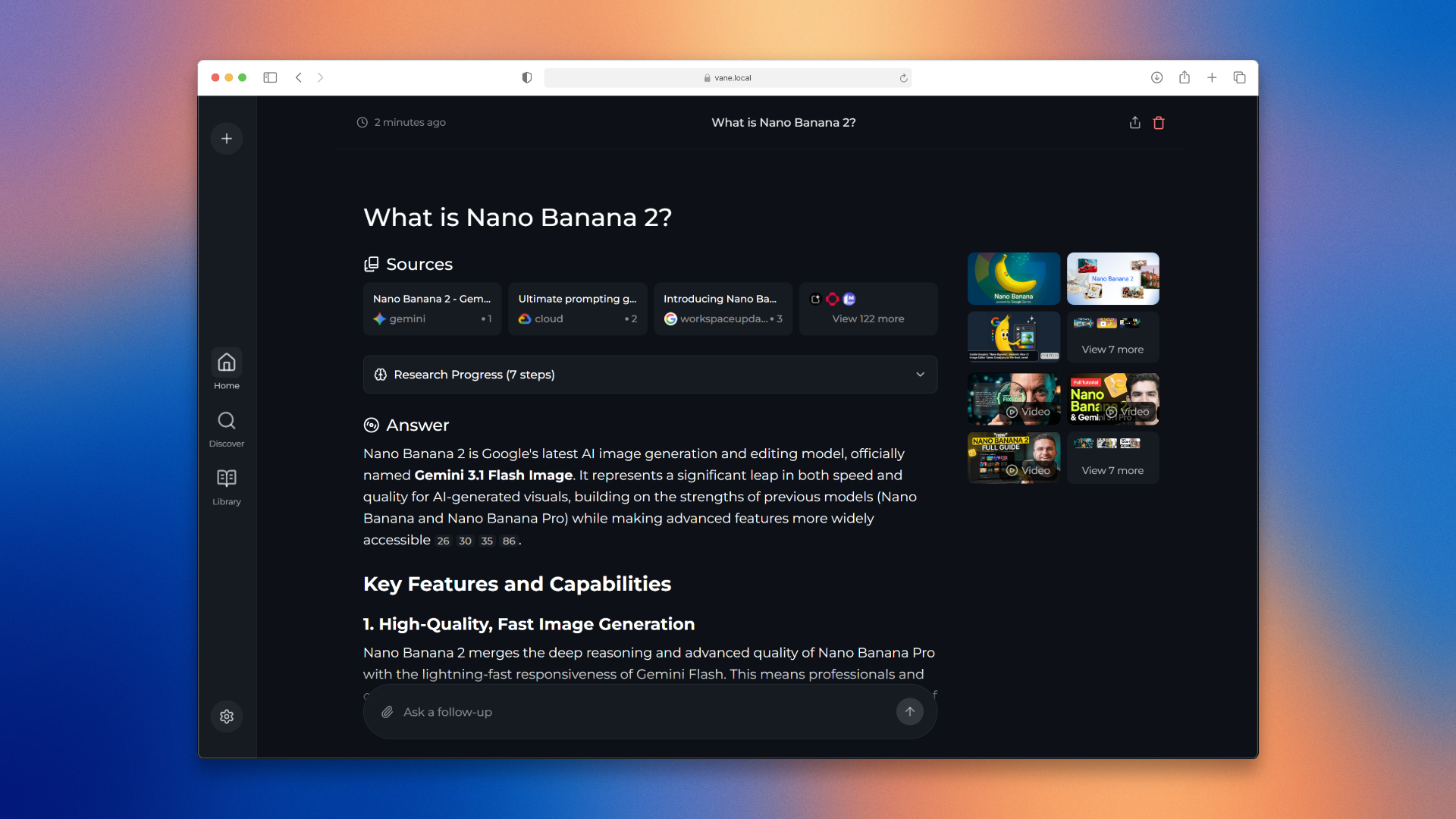
Project Framework: Perplexica serves as a primary reference for this architecture. It demonstrates how to move beyond a list of links to a system that synthesizes information from multiple sources.
Technical Components: Python, Next.js, SearXNG for metasearch, Ollama for local LLM execution, and vector databases for similarity searches.
Key Learning Outcomes: Developers will master search pipelines, reranking algorithms, and the critical "grounding" process that ensures AI responses are backed by verifiable sources. This project demonstrates a candidate’s ability to handle hallucination risks in LLMs—a top priority for enterprise AI.
2. Multimodal AI Podcast Generation
Content repurposing is a major vertical in the creator economy. A multimodal podcast generator automates the conversion of static text, such as PDFs or articles, into dynamic, multi-host audio conversations.
Project Framework: Podcastfy provides the workflow for this project. The system must ingest diverse source materials, use an LLM to script a natural-sounding dialogue between two or more personas, and then synthesize that dialogue into audio.
Technical Components: Gemini/OpenAI APIs, ElevenLabs or OpenAI TTS (Text-to-Speech), and Gradio for the user interface.
Key Learning Outcomes: Mastering multimodal ingestion and complex prompting. Candidates learn to manage "long-form content generation," which requires maintaining context and personality over extended outputs.

3. AI Music Generation Studio
The intersection of AI and creative arts is a high-growth area. Building a music generation studio involves using diffusion models to transform natural language prompts or lyrics into high-fidelity audio tracks.
Project Framework: ACE-Step is a leading reference for this project. Unlike simple MIDI generators, modern AI music tools control genre, tempo, and instrumentation while supporting "remixing" capabilities.
Technical Components: Python, PyTorch, ACE-Step libraries, and Hugging Face Transformers.
Key Learning Outcomes: Exposure to audio diffusion models, conditioning techniques, and GPU-accelerated inference. This project highlights a candidate’s ability to work with non-textual data, a crucial skill in the diversifying AI market.
4. Integrated Audio and Video Generation
The "holy grail" of generative media is the seamless synchronization of video and audio from a single prompt. This project involves building an application capable of text-to-video and image-to-video transformations.

Project Framework: LTX-2 provides the underlying workflow for synchronized generation. The challenge lies in maintaining temporal consistency—ensuring that the video doesn’t "flicker" and that the audio matches the visual action.
Technical Components: PyTorch, LTX-2, ComfyUI, and Diffusers.
Key Learning Outcomes: Understanding video diffusion transformers (DiTs), keyframe conditioning, and the complexities of generative media pipelines. This project is particularly relevant for roles in digital marketing and entertainment technology.
5. AI Lip-Sync and Automated Dubbing
Localization is a multi-billion dollar industry. An AI dubbing tool that synchronizes a speaker’s lip movements with a new, translated audio track is a powerful demonstration of computer vision and audio processing skills.
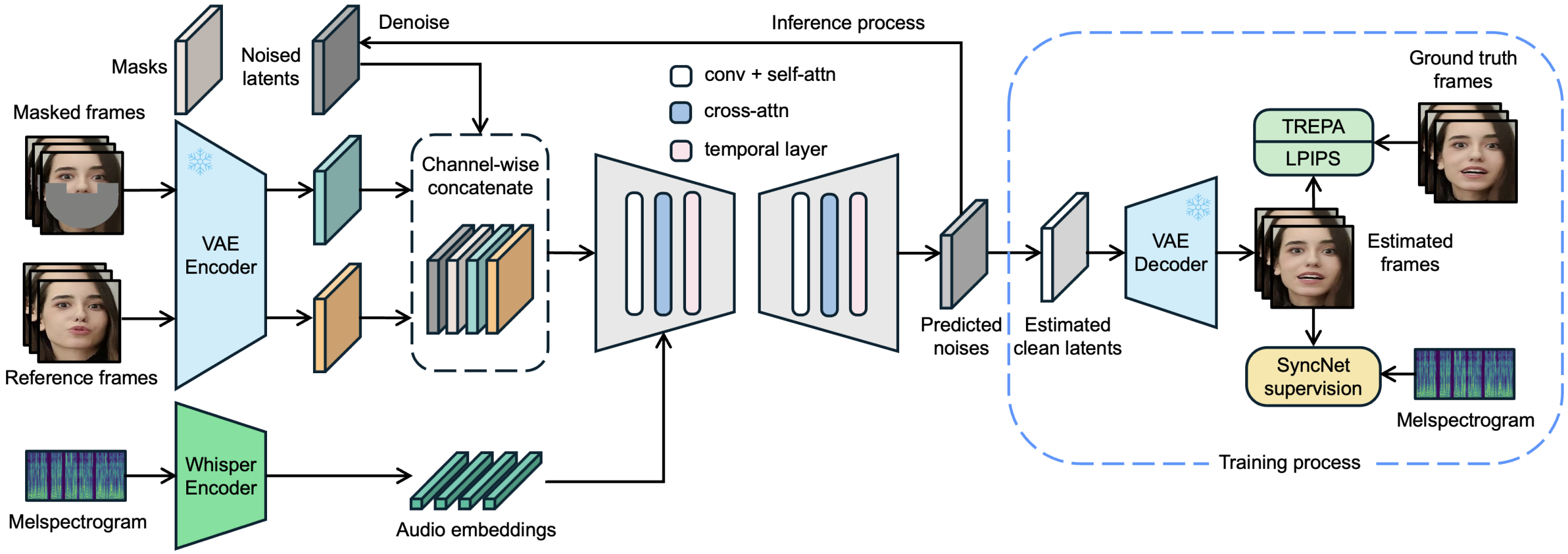
Project Framework: LatentSync is the reference for this lip-sync pipeline. It requires the system to analyze facial landmarks and modify video frames in real-time to match the phonetic structure of the new audio.
Technical Components: Whisper (for transcription), Stable Diffusion, LatentSync, and FFmpeg for video rendering.
Key Learning Outcomes: Temporal consistency in video editing, audio conditioning, and the practical application of GANs (Generative Adversarial Networks) or diffusion models in video post-production.
6. Long-Form Multi-Speaker Voice Synthesis
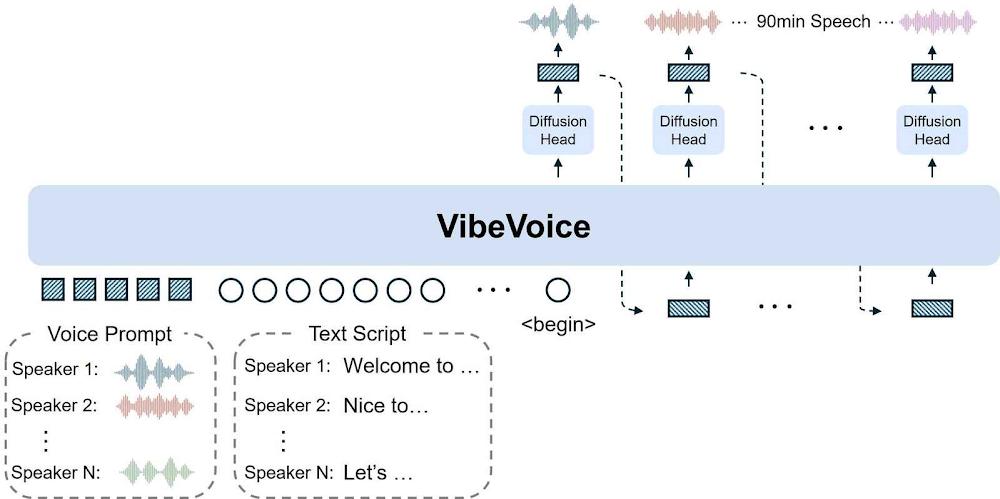
While basic text-to-speech is common, generating a natural, long-form conversation between multiple unique voices remains a technical challenge. This project focuses on dialogue synthesis and voice cloning.
Project Framework: VibeVoice offers a blueprint for generating multi-speaker audio. The system must handle prosody (the rhythm and intonation of speech) to avoid the "robotic" sound of early TTS systems.
Technical Components: VibeVoice, Transformers, and CUDA for efficient processing.
Key Learning Outcomes: Neural TTS, speaker conditioning, and voice cloning ethics and technology. This project demonstrates proficiency in the "Audio AI" niche, which is critical for virtual assistants and automated customer service.
7. Instruction-Guided AI Image Editing
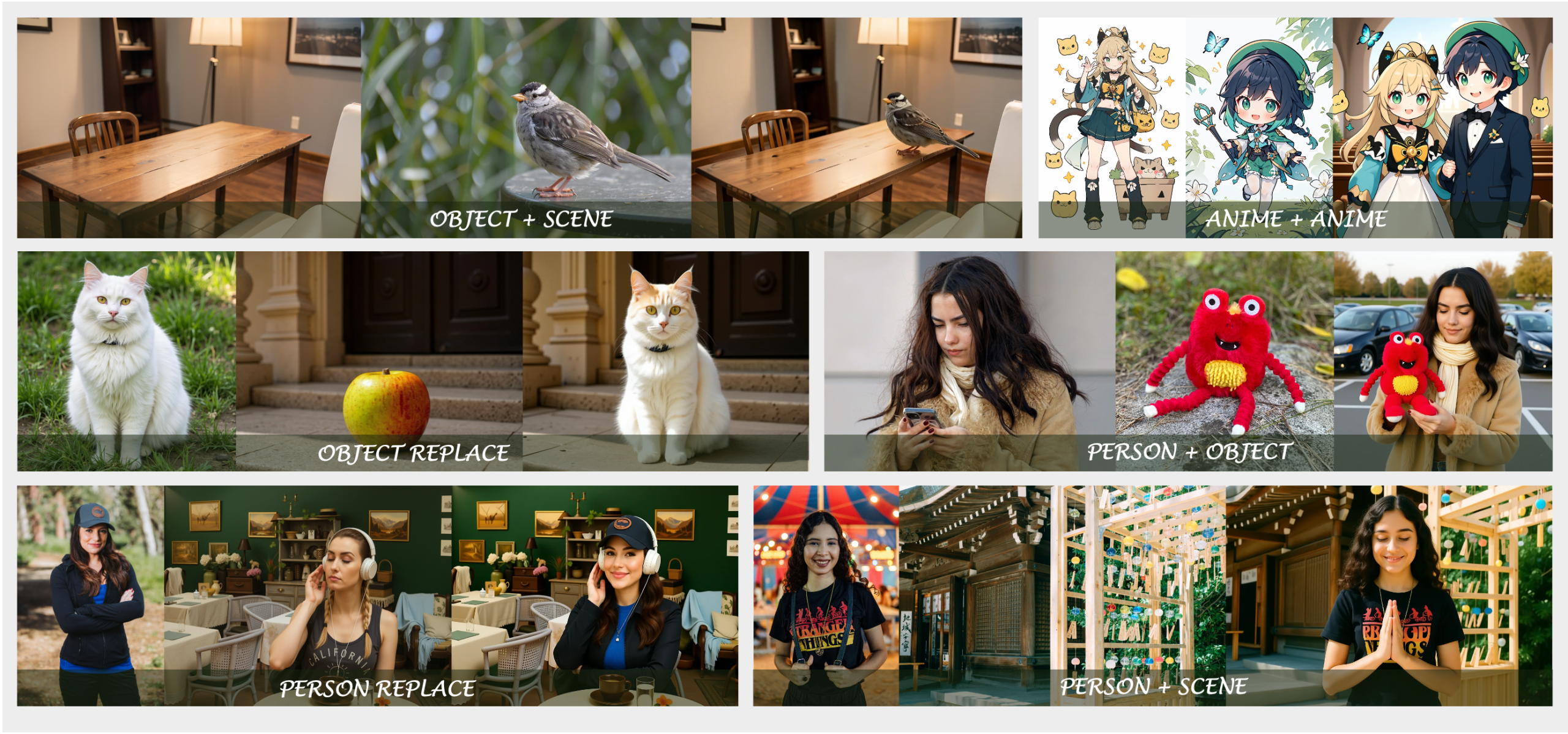
Standard image generation is well-documented, but "instruction-guided editing"—where a user tells the AI to "change the color of the shirt" or "add a sunset to the background"—requires a more sophisticated understanding of image conditioning.
Project Framework: OmniGen2 serves as the model for this studio. It moves away from "masking" and toward natural language control over visual elements.
Technical Components: OmniGen2, Gradio, and Hugging Face integration.
Key Learning Outcomes: Multimodal prompting and image-to-image conditioning. This project shows that a developer can build tools that are intuitive for non-technical end-users.
8. AI-Driven Presentation Automation
In the corporate world, the ability to turn a raw dataset or a brief outline into a professional PowerPoint deck is a high-value utility. This project focuses on structured generation and document automation.
Project Framework: Presenton provides the workflow for research, outlining, visual generation, and final export to PPTX format.
Technical Components: TypeScript, React, Python, and various LLM APIs.
Key Learning Outcomes: Structured output generation (ensuring the AI follows a specific schema), API integration, and the automation of legacy document formats. It bridges the gap between AI and traditional enterprise productivity.
9. Deep Research Agents
The shift from "chatbots" to "agents" is the defining trend of 2025. A deep research assistant does not just answer a question; it breaks the question into sub-tasks, searches multiple databases, verifies conflicting claims, and compiles a structured report.
Project Framework: DeepResearch illustrates the multi-step reasoning required for high-level synthesis.
Technical Components: FastAPI, SearXNG, vector search, and knowledge graphs.
Key Learning Outcomes: Research planning, agentic workflows, and source verification. This project is essential for candidates targeting roles in "Agentic AI" development.
10. Natural Language Data Analytics
The final project in a comprehensive portfolio should address data-driven decision-making. Building a tool that allows users to ask questions of a database in plain English (Text-to-SQL) and receive both data and visualizations is a cornerstone of modern business intelligence.
Project Framework: Utilizing frameworks like Vanna.ai or LangChain’s SQL agents.
Technical Components: Python, SQL, Pandas, and Plotly for visualization.
Key Learning Outcomes: Prompt engineering for code generation, data security (preventing SQL injection in AI), and the translation of complex data into actionable insights.
Analysis: The Impact of a "Solved" Portfolio
Industry experts emphasize that the value of these projects lies not in replicating the source code, but in the "delta"—the improvements a developer makes. "Recruiters aren’t looking for someone who can clone a repository," says one senior AI architect at a leading Silicon Valley firm. "They are looking for the person who added an evaluation layer, optimized the inference speed, or built a more robust error-handling system around the core model."
By engaging with these ten projects, developers demonstrate a "Full-Stack AI" capability. This includes:
- Infrastructure: Understanding how to deploy models using Docker and CUDA.
- Evaluation: Implementing frameworks to measure the accuracy and safety of AI outputs.
- Product Sense: Designing user interfaces (Gradio, Streamlit, or React) that make complex AI accessible.
Conclusion
The transition from AI enthusiast to AI professional is marked by the ability to move beyond the prompt window and into the architecture of the system. These ten projects—covering search, media synthesis, and agentic research—represent the current state of the art in generative technology. For the candidate, the objective is to take these reference implementations and extend them. Whether by adding a specialized knowledge graph to the research assistant or optimizing the lip-sync tool for mobile devices, it is the refinement and customization of these "solved" problems that ultimately secures a place in the professional AI workforce. As the field continues to evolve, the portfolio remains the most potent tool for demonstrating that one is not just a user of AI, but a builder of it.