rifanmuazin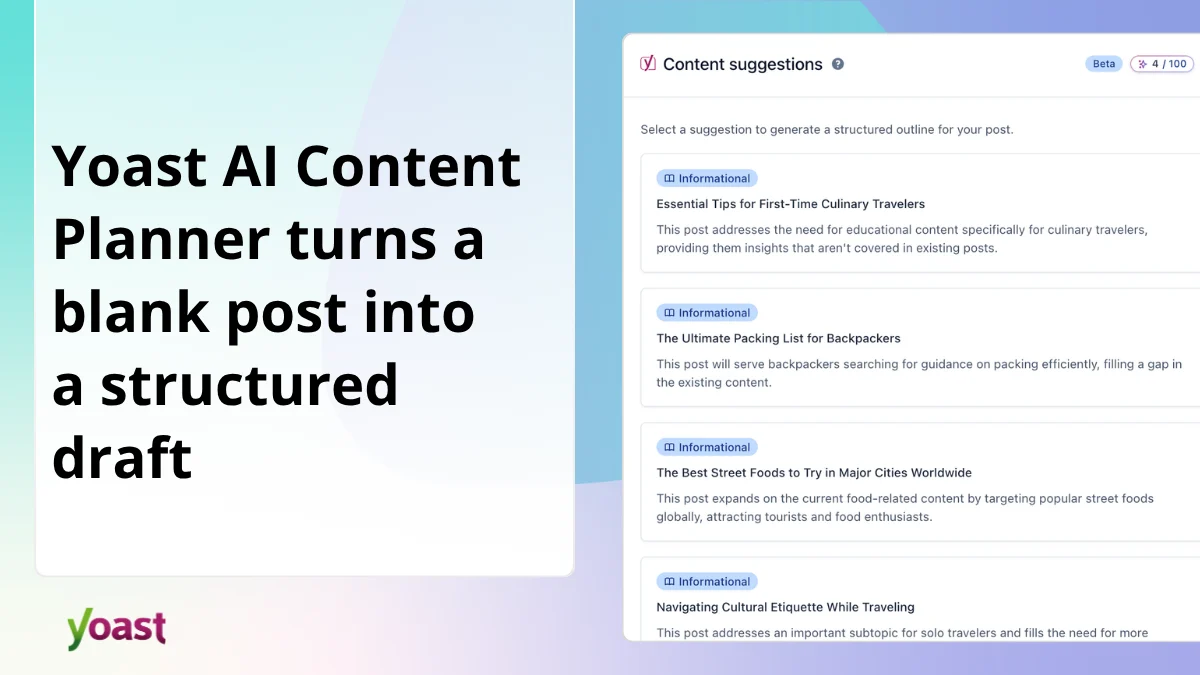
The digital content landscape, often characterized by the relentless demand for fresh, engaging, and SEO-optimized material, has presented a persistent challenge for creators: the dreaded blank page. Addressing this universal hurdle, Yoast, a prominent name in WordPress SEO, has officially launched its AI Content Planner, a significant new feature now available to all Yoast SEO Premium users. This innovative tool promises to transform the content creation workflow by providing relevant post ideas and structured drafts directly within the WordPress editor, leveraging a site’s existing content to identify crucial gaps and opportunities.
A New Era for Content Ideation in WordPress
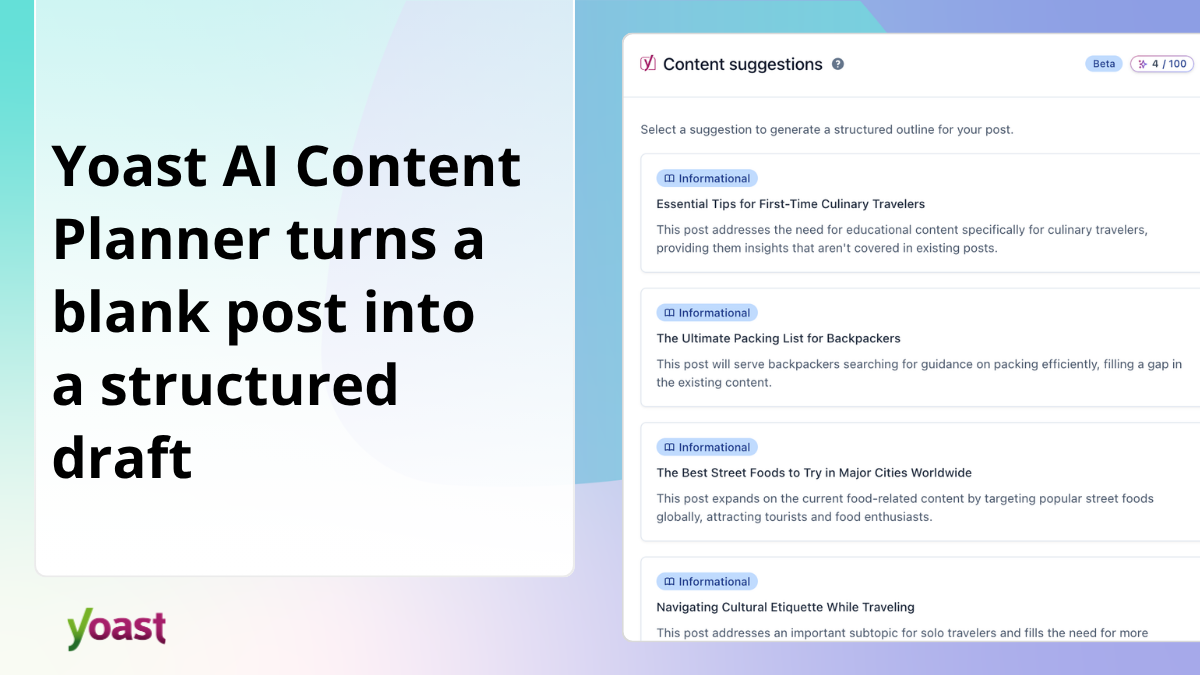
The Yoast AI Content Planner emerges as a direct response to the prevalent “writer’s block” phenomenon, a common affliction for anyone tasked with maintaining a robust online presence. According to various industry reports, content marketers spend an average of 3-4 hours per piece of content, with a significant portion of that time dedicated to ideation and outlining. The new Yoast feature aims to drastically reduce this initial overhead. Upon opening a new post in the WordPress editor, Premium users are greeted with five pertinent post ideas, meticulously generated by analyzing the website’s existing content. Once an idea is selected, the AI automatically constructs a structured draft, complete with a title, an outline, a focus keyphrase, a meta description, and specific content notes for each section. This process effectively streamlines the journey from an empty canvas to a ready-to-write blueprint in mere minutes.
The integration of such a powerful AI-driven tool within the familiar WordPress environment signifies Yoast’s ongoing commitment to enhancing the user experience and improving SEO efficacy. Historically, content strategists would rely on manual keyword research, competitive analysis, and brainstorming sessions to develop new topics. While these methods remain valuable, the AI Content Planner introduces an unprecedented level of automation and data-driven insight, offering content suggestions that are inherently aligned with a site’s established thematic authority and identified content gaps. This ensures that new content not only fills voids but also reinforces the website’s overall topical expertise, a critical factor in modern search engine algorithms.
Understanding the Mechanics: How Yoast AI Content Planner Works
At its core, the Yoast AI Content Planner functions by performing a sophisticated analysis of a user’s entire published content library. It employs advanced natural language processing (NLP) and machine learning algorithms to understand the themes, topics, and entities covered across the website. By identifying patterns, relationships, and omissions, the AI can pinpoint areas where new content would be most beneficial for improving topical coverage and overall SEO performance.
When a user initiates a new post, the planner scans the site’s content to:
- Identify Topical Gaps: It looks for subjects related to existing content that haven’t been fully explored or linked.
- Suggest Related Concepts: Based on semantic analysis, it proposes ideas that complement current articles, potentially forming content clusters.
- Optimize for User Intent: By understanding what questions existing content answers, it can suggest new articles addressing related user queries.
Once these five ideas are presented, the user’s choice triggers the next phase: draft generation. The AI then constructs a comprehensive starter draft, which includes:
- Proposed An SEO-friendly and engaging title that accurately reflects the suggested topic.
- Detailed Outline: A logical structure breaking down the article into main sections and sub-sections.
- Focus Keyphrase: A primary keyword or phrase around which the content should be optimized, derived from the content idea itself.
- Meta Description: A concise summary designed to appear in search engine results, enticing users to click.
- Content Notes for Each Section: Guidance and prompts for what to include in each part of the outline, ensuring comprehensive coverage and maintaining focus.
This level of detail provides a robust framework, significantly reducing the mental effort required to start writing. For many content creators, the initial structuring and ideation phase is the most time-consuming and often the biggest impediment to consistent publishing.
Background and Evolution of Yoast SEO
Yoast’s journey began in 2010 with the launch of the Yoast SEO plugin, which quickly became the de facto standard for search engine optimization on WordPress websites. Founded by Joost de Valk, the company’s mission has always been to “SEO for everyone” – making complex SEO principles accessible and actionable for a wide range of users, from novice bloggers to experienced digital marketers. Over the years, Yoast SEO has continuously evolved, introducing features like readability analysis, schema markup integration, internal linking suggestions, and cornerstone content identification.
The company’s commitment to innovation is reflected in its consistent updates and the expansion of its product offerings, notably with Yoast SEO Premium. The Premium version unlocks advanced functionalities, including multiple focus keyphrases, social previews, a redirect manager, and enhanced support, catering to users who require more sophisticated SEO tools. The introduction of the AI Content Planner represents a natural progression for Yoast, aligning with the broader industry trend of integrating artificial intelligence to solve complex digital marketing challenges. This move solidifies Yoast’s position not just as an SEO plugin provider, but as a holistic content optimization platform.
The Broader Context: AI’s Ascendance in Content Marketing
The launch of Yoast’s AI Content Planner is not an isolated event but rather a significant development within the rapidly expanding landscape of AI-powered content tools. Over the past few years, AI has transitioned from a futuristic concept to an indispensable assistant in various aspects of digital marketing. From AI-driven analytics and predictive modeling to automated content generation and personalization, machine learning algorithms are reshaping how businesses interact with their audiences.
In content marketing specifically, AI tools have emerged to address several pain points:
- Scalability: Generating large volumes of content, especially for repetitive or data-driven topics.
- Efficiency: Automating research, outlining, and even drafting initial versions of articles.
- Optimization: Ensuring content is tailored for search engines and specific target audiences.
- Personalization: Delivering highly relevant content experiences based on user behavior.
The global market for AI in content creation is projected to grow substantially, with analysts estimating a compound annual growth rate (CAGR) exceeding 20% in the coming years. This growth is fueled by the increasing demand for high-quality content, the need for cost-efficiency, and the desire to stay competitive in a crowded digital space. Yoast’s entry into this segment with a WordPress-native solution is particularly impactful, given WordPress’s dominance as the world’s most popular content management system, powering over 40% of all websites.
Seamless Integration and Key Considerations for Users
One of the defining characteristics of the Yoast AI Content Planner is its seamless integration into the existing WordPress editor. There is no separate installation, no additional login, and no complex setup process required. For Yoast SEO Premium users, the feature simply appears when a new, empty post is created, minimizing any friction in adoption. This “zero-setup” approach underscores Yoast’s user-centric design philosophy.
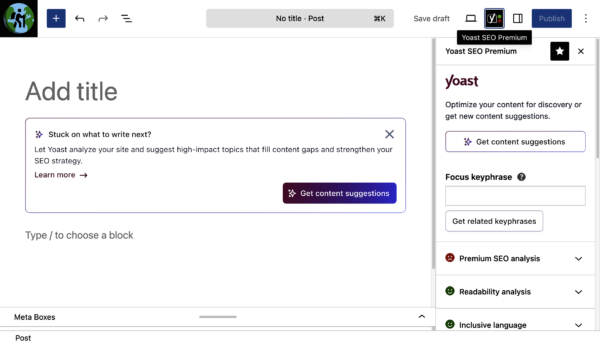
However, for the AI to function optimally, a website needs a sufficient volume of published content. The AI relies on this existing data to build a meaningful understanding of the site’s topical authority and to identify relevant gaps. Websites with very little content might receive a “low-confidence warning” instead of suggestions, indicating that more foundational content is needed before the planner can provide truly insightful ideas. This requirement highlights an important aspect of AI-driven tools: their effectiveness is often directly proportional to the quality and quantity of data they can analyze.
Strategic Implications and Future Outlook
The introduction of the AI Content Planner carries several significant implications for Yoast, its users, and the broader content marketing industry:
- Enhanced User Value for Yoast SEO Premium: This feature adds substantial value to the Premium offering, providing a compelling reason for free users to upgrade and for existing Premium users to deepen their engagement with the Yoast ecosystem. It positions Yoast not just as an optimization tool, but as a content generation partner.
- Competitive Advantage: While many standalone AI writing tools exist, Yoast’s planner differentiates itself through its deep integration with a site’s existing content and its WordPress-native implementation. This context-awareness allows it to provide more relevant and targeted suggestions than generic AI writers.
- Improved Content Strategy and SEO Performance: By helping users consistently identify and fill content gaps, the tool can lead to more comprehensive topical coverage, stronger internal linking structures, and ultimately, improved search engine rankings and organic traffic. A consistent content strategy, driven by data-backed suggestions, is a powerful SEO lever.
- Democratization of Advanced Content Planning: The tool makes sophisticated content strategy accessible to a wider audience, including small businesses and individual bloggers who may not have dedicated content strategists or large marketing budgets.
- Focus on Human-AI Collaboration: Yoast emphasizes that the AI Content Planner is designed to be an assistant, not a replacement for human creativity. It provides the framework, but the actual writing, nuance, voice, and final polish remain the domain of the human creator. This aligns with the emerging paradigm of human-in-the-loop AI, where technology augments human capabilities rather than fully automating them.
Looking ahead, this launch could pave the way for further AI integrations within Yoast’s suite of tools. One could envision future iterations that offer even more personalized suggestions, integrate competitive content analysis, or even assist with content updates and repurposing based on performance data. The ethical considerations around AI-generated content, such as ensuring originality, avoiding bias, and maintaining brand voice, will also continue to be important areas of focus for developers and users alike.
Voices from the Industry (Inferred)
While specific third-party statements are not provided in the original text, one can infer the positive reception such a tool would garner. Industry analysts would likely commend Yoast for its innovative approach to addressing a core content creation challenge. A hypothetical statement from a leading digital marketing consultant might highlight: “Yoast’s AI Content Planner represents a crucial step forward for content creators using WordPress. By embedding intelligent ideation directly into the workflow, it removes a significant barrier to consistent publishing, allowing marketers to focus on quality and creativity rather than staring at a blank screen. This kind of contextual AI is exactly what the industry needs.”
Similarly, a typical Yoast SEO Premium user, perhaps a small business owner or a freelance content writer, might express relief: “As someone who constantly struggles with coming up with fresh ideas, this tool is a game-changer. It not only gives me solid topics but also structures them for me, cutting down my planning time dramatically. It feels like having a content strategist built right into WordPress.”
Conclusion: Empowering Content Creators
The Yoast AI Content Planner stands as a testament to the ongoing evolution of digital marketing tools, specifically within the WordPress ecosystem. By leveraging artificial intelligence to address the fundamental challenge of content ideation and structuring, Yoast empowers its Premium users to overcome writer’s block, maintain consistent publishing schedules, and ultimately, enhance their SEO performance. This innovation not only streamlines the content creation process but also fosters a more strategic approach to content development, ensuring that every new piece of content contributes meaningfully to a website’s overall authority and visibility. As the digital landscape continues to evolve, tools like the Yoast AI Content Planner will undoubtedly play a pivotal role in shaping the future of content marketing, emphasizing efficiency, data-driven insights, and the powerful synergy between human creativity and artificial intelligence.