The latest update to the Yoast SEO Bulk Editor introduces a suite of advanced features designed to significantly streamline and enhance metadata management for website administrators and SEO professionals. Building upon its existing capabilities to update titles, meta descriptions, and focus keyphrases across an entire site, filter by content type, and leverage Yoast AI for metadata drafting, this release focuses on improving discoverability of content needing attention, refining AI suggestions, and integrating the workflow directly into the standard WordPress post list. These enhancements underscore Yoast’s commitment to providing intuitive, powerful tools that adapt to the evolving demands of search engine optimization and large-scale content management.
Pinpointing Weak Metadata Fields for Targeted Optimization
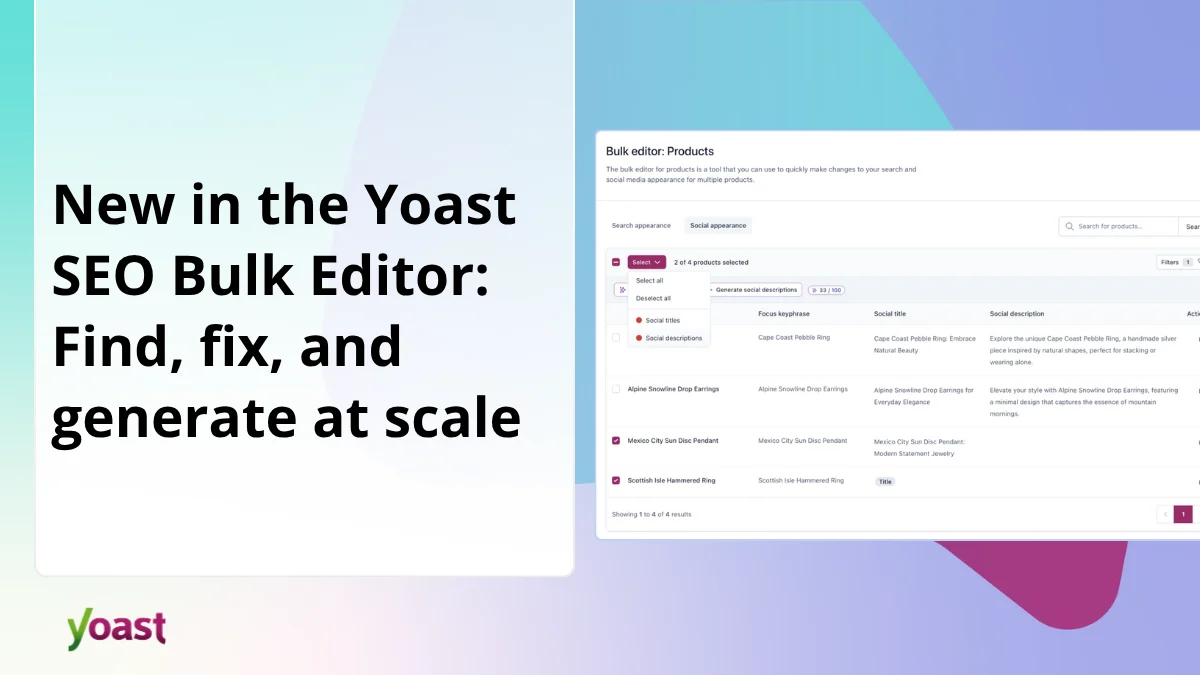
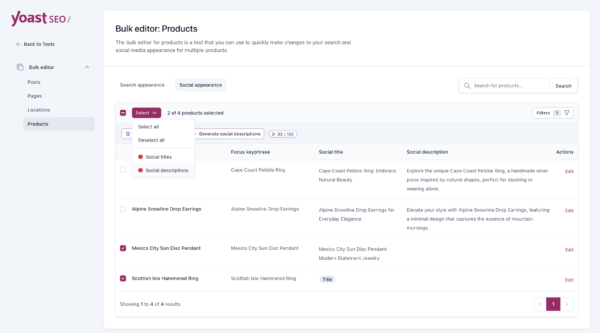
A cornerstone of this update is the introduction of sophisticated filtering capabilities within the Bulk Editor, enabling users to rapidly identify posts with suboptimal metadata. The Filters dropdown now features "needs improvement" options for critical SEO elements: SEO title, meta description, social title, and social description. Activating any of these filters immediately narrows the displayed list to only those posts where the specified field is either entirely absent or receives a low score based on Yoast’s established internal scoring system – the very same metrics utilized within the individual post editor. This direct alignment ensures consistency and reliability in identifying areas for improvement.
The sheer volume of content on many websites, particularly e-commerce platforms, news portals, and large blogs, often presents a formidable challenge in maintaining consistent and high-quality metadata. A typical corporate website might house hundreds, if not thousands, of pages and blog posts, each requiring a unique, compelling SEO title and meta description to perform optimally in search results. Without intelligent filtering, manually auditing each piece of content for metadata quality can consume hundreds of hours annually. This new feature drastically reduces the time investment by intelligently highlighting exactly where attention is most needed. For instance, an e-commerce site with thousands of product listings can now, with a few clicks, pinpoint every product lacking a social media description, a critical component for driving engagement and traffic from platforms like Facebook and X (formerly Twitter).
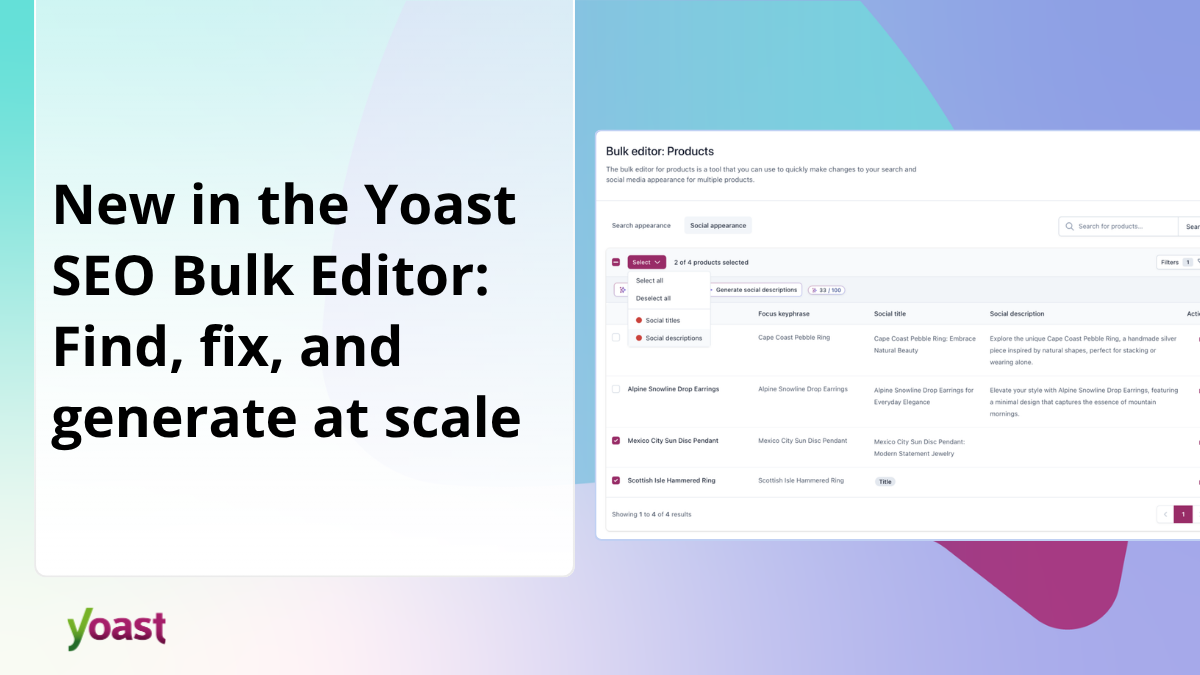
Beyond mere identification, the update also introduces quality-based selection options within the Select menu. Once filtered, users are no longer required to painstakingly select each individual post. A single click can now select every post on the current page that requires improvement in the filtered category, ensuring that what is filtered is precisely what is selected for bulk action. This eliminates a significant manual step, further accelerating the workflow. For those who prefer a more granular approach, the Bulk Editor now supports Shift+click functionality, allowing users to select a range of rows at once, mimicking the intuitive behavior expected from standard table interfaces. This blend of automated and manual selection flexibility caters to diverse user preferences and scales of operation.
Enhancing AI-Powered Suggestions with Built-in Quality Guardrails
The integration of artificial intelligence into SEO workflows has been a game-changer for content creation and optimization, yet it is not without its nuances. Yoast AI, designed to draft SEO titles, meta descriptions, and social copy in bulk, performs optimally when provided with rich, substantive content to draw from. A persistent challenge, however, has been the generation of suggestions for posts with very limited written content. In such scenarios, the AI might produce metadata that, while syntactically correct, lacks depth, relevance, or persuasive power due to insufficient input. Previously, users had no immediate indicator within the Bulk Editor to discern which AI-generated suggestions might require additional human review.
This update addresses this critical need by introducing a built-in guardrail mechanism. Following a bulk generation run, the Bulk Editor now intelligently flags posts for which the AI had limited content to work with. This crucial feedback loop empowers users to identify exactly which generated metadata suggestions warrant a second look. Instead of blindly accepting all AI output, content managers can now efficiently prioritize their review process, focusing human expertise where it is most valuable. If a post is flagged, the user can easily add more content to the article, then regenerate the metadata, ensuring a higher quality, more contextually relevant output.
This feature is particularly vital as the digital landscape increasingly embraces AI. While AI tools offer immense potential for efficiency and scalability, responsible implementation dictates the need for intelligent oversight. This guardrail ensures that the benefits of AI-driven content generation are maximized while mitigating the risks associated with low-quality or irrelevant output. For SEOs and content strategists, this translates into greater confidence in their bulk operations, knowing that the system is designed to highlight potential weak points before publication. It fosters a collaborative environment where AI handles the heavy lifting, but human judgment and content enrichment remain integral to achieving optimal SEO performance. The implication is clearer, more impactful metadata across the board, leading to improved click-through rates and better representation in search engine results pages (SERPs) and social media feeds.
Streamlined Workflow: Initiating Bulk Edits Directly from Post Lists
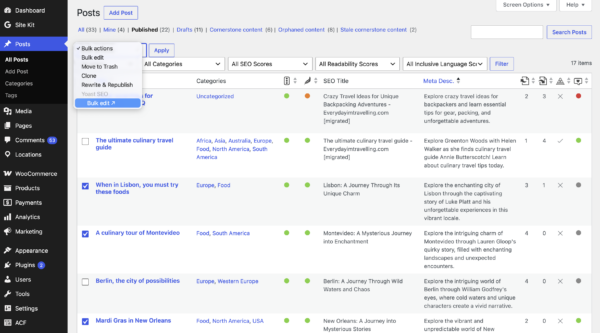
Efficiency in digital content management is often measured by the reduction of clicks and context switching. Recognizing this, Yoast SEO has implemented a significant workflow improvement: users can now initiate bulk editing directly from their regular WordPress overview screens for posts, pages, or products. Previously, engaging the Bulk Editor required navigating to a separate interface, potentially disrupting the natural flow of content management.
With this update, the process is seamlessly integrated. Users can simply select the desired posts, pages, or products from their respective overview lists – the familiar WordPress interface where content is typically managed. Once selected, choosing "Bulk edit" from the standard bulk actions dropdown will now carry that entire selection directly into the Yoast SEO Bulk Editor, pre-populated and ready for immediate action.
This seemingly minor change delivers substantial gains in productivity. For content managers routinely working through lists of articles or products, the ability to select items and immediately transition to bulk SEO optimization without an intervening navigation step saves precious time and reduces cognitive load. Imagine a scenario where a marketing team needs to update the meta descriptions for a seasonal product line or a series of blog posts related to a new campaign. Instead of exporting lists, manually identifying items, and then navigating to a separate tool, they can now perform these actions in a continuous, intuitive flow. This fosters a more agile content management environment, allowing teams to react more quickly to SEO opportunities and maintain consistency across large content inventories. The direct integration reinforces the idea of SEO as an inherent part of content creation and management, rather than a separate, disjointed task.
Enhanced Connectivity: Maintaining Workflow in Challenging Environments
Reliability and uninterrupted workflow are paramount for professional website management. The Yoast AI service, like many cloud-based tools, relies on stable communication with the user’s website. However, certain hosting configurations or security measures – such as sites behind a firewall, offline development environments, or those with the REST API disabled – can occasionally hinder this communication, leading to service interruptions. Previously, encountering such connectivity issues could present a dead end for users attempting to leverage Yoast AI, requiring manual troubleshooting or configuration changes that might be beyond the immediate expertise of some site owners.
This update introduces a proactive solution to address these connectivity challenges. If Yoast AI is unable to reach a user’s site due to such restrictions, the system will now present an immediate, actionable option to connect the site to MyYoast directly from the error message. MyYoast serves as a secure, centralized hub for managing Yoast products and services. By establishing this connection, Yoast AI can continue to function reliably, even in trickier hosting setups that might otherwise block direct communication. This innovative approach ensures that users can maintain their workflow and benefit from AI-powered SEO assistance without significant interruptions or complex technical interventions.
The gradual rollout of this feature reflects a strategic approach to software deployment, allowing Yoast to monitor performance and gather feedback before making it universally available. Users are not required to take any preparatory steps; the invitation to connect to MyYoast will appear contextually, precisely when it is most useful – upon encountering a connectivity issue. This user-centric design minimizes friction and maximizes accessibility for a broader range of WordPress users, including those operating within more restrictive corporate networks or specialized hosting environments. For businesses relying heavily on automated SEO processes, this enhanced connectivity translates into greater operational resilience and continuity, safeguarding their content optimization efforts against common technical hurdles.
The Broader Impact and Implications for Digital Marketing
These enhancements to the Yoast SEO Bulk Editor are more than just incremental feature additions; they represent a strategic evolution in how website owners and digital marketers can approach large-scale SEO. WordPress, powering over 43% of all websites on the internet, and Yoast SEO, installed on over 5 million sites, together form a foundational pillar of the digital ecosystem. The challenges of maintaining optimal SEO across vast content libraries have grown exponentially with the increasing complexity of search algorithms and the diversification of content types.
Efficiency and Scalability: The primary implication of these updates is a significant boost in operational efficiency. For organizations managing hundreds or thousands of pages, manual metadata optimization is a monumental, often prohibitive, task. These new bulk editing capabilities allow teams to perform tasks in minutes that previously took hours or even days. This scalability is critical for e-commerce sites with constantly changing product inventories, news organizations publishing high volumes of daily content, and large corporations with extensive knowledge bases. The ability to quickly identify weak points, leverage AI for initial drafts, and then efficiently review and publish, transforms a bottleneck into a streamlined process.
Improved Search Performance and Visibility: High-quality, optimized metadata is directly correlated with better search engine rankings and higher click-through rates (CTR). Studies consistently show that compelling SEO titles and meta descriptions can increase CTR by several percentage points, even for pages with identical rankings. By making it easier to identify and rectify weak metadata, Yoast SEO empowers users to present their content more effectively to search engines and potential visitors. Similarly, well-crafted social media titles and descriptions are crucial for maximizing engagement when content is shared, leading to increased referral traffic and brand visibility. This update directly contributes to improved organic search performance and social media reach across an entire website.
Consistency and Brand Messaging: Large websites often struggle with maintaining a consistent brand voice and SEO strategy across diverse content creators and publication schedules. The Bulk Editor’s new features, particularly the ability to filter and select by quality, help enforce consistency. It ensures that every piece of content, regardless of its origin, adheres to established SEO best practices and brand guidelines for metadata. The AI guardrail further supports this by flagging instances where AI might have struggled, allowing human editors to step in and ensure brand consistency and quality.
Empowering Content Teams: These tools empower content creators and marketers who may not be deeply specialized in technical SEO. By providing intuitive filters and AI assistance, Yoast lowers the barrier to entry for effective on-page SEO. This means marketing teams can take greater ownership of their content’s search performance, fostering a more integrated approach to content strategy and execution. As Beth Parker, Product Marketing Manager at Yoast, emphasized in related communications, "Our goal is to empower users to manage their SEO with unprecedented efficiency and confidence, ensuring their valuable content reaches the widest possible audience." This sentiment resonates deeply with the spirit of the update.
Adaptation to AI and Future-Proofing: The thoughtful integration of AI, coupled with critical human oversight, positions Yoast SEO at the forefront of AI-driven content optimization. It acknowledges the power of AI while recognizing the irreplaceable value of human judgment, particularly in nuanced areas like brand voice, audience understanding, and complex keyword intent. The enhanced MyYoast connectivity also addresses the growing complexity of web infrastructure, ensuring that advanced SEO tools remain accessible and functional even in challenging technical environments, thus future-proofing users’ SEO workflows.
In conclusion, Yoast SEO’s latest Bulk Editor update represents a significant leap forward in empowering WordPress users with more efficient, intelligent, and robust tools for metadata management. By focusing on critical pain points such as identifying weak fields, refining AI output, streamlining workflows, and ensuring connectivity, Yoast continues to solidify its position as an indispensable asset for anyone serious about optimizing their online presence. These features will undoubtedly contribute to better-performing websites, more productive teams, and a more accessible approach to advanced SEO for millions of digital marketers worldwide.