The developers behind Yoast SEO, one of the most widely used search engine optimization plugins for WordPress, have announced the immediate availability of Yoast SEO Premium version 27.6.1. This urgent update addresses a significant security vulnerability discovered in the Redirect Manager feature of Yoast SEO Premium, Yoast WooCommerce SEO, and Yoast SEO AI+. While the nature of the flaw could lead to severe consequences, including remote code execution, Yoast has reassured its vast user base that the vast majority of users are not impacted by this specific vulnerability. The company has urged all users of the affected products to update their plugins without delay to ensure the highest level of site security.
Understanding the Vulnerability: A Deep Dive into the .htaccess Threat
The core of the security issue lies within the Redirect Manager feature, specifically its interaction with a website’s .htaccess file. The vulnerability allowed an authenticated user – meaning someone with legitimate login credentials, such as an administrator, editor, or even a contributor depending on site configuration – to inject unexpected and potentially malicious configurations into the .htaccess file. This injection was possible by including special characters within a redirect URL or target, which the system then failed to properly sanitize or escape before writing to the server configuration file.
The .htaccess file is a powerful, distributed configuration file used by Apache web servers. It controls various aspects of a website’s behavior, including URL rewriting, access restrictions, custom error pages, and MIME type handling. Due to its direct influence over server operations, unauthorized modification of this file can have catastrophic consequences. Depending on the nature of the injected code, the impact could range from causing a website crash, rendering the site inaccessible, to enabling Cross-Site Scripting (XSS) attacks, or, in the most severe scenarios, facilitating Remote Code Execution (RCE). RCE is arguably the most dangerous type of vulnerability, as it allows an attacker to execute arbitrary code on the web server, potentially granting them full control over the website, its database, and even the underlying server infrastructure. This could lead to data theft, defacement, malware distribution, or the complete compromise of the entire hosting environment.
Yoast’s internal security team, or potentially an external researcher, identified this flaw and promptly initiated a fix. Following a thorough review of a sample of sites utilizing the potentially affected configuration, the company reported that it found no evidence of exploitation in the wild. As of the announcement, there are no known cases of abuse related to this specific vulnerability, a testament to the swift action taken by Yoast and perhaps the limited scope of its applicability.
Who Is Affected? Pinpointing the Risk Factors
Despite the severity of the potential impact, Yoast emphasizes that only a small fraction of its premium users are actually at risk. A website is only potentially vulnerable if all three of the following specific conditions are met:

- Utilization of Yoast SEO Premium, Yoast WooCommerce SEO, or Yoast SEO AI+: The vulnerability is exclusively present in these premium versions of the plugin, which include the Redirect Manager feature. Free users of Yoast SEO are not affected.
- Active Use of the Redirect Manager Feature: The flaw is specific to the Redirect Manager, which allows users to create and manage URL redirects directly within the WordPress dashboard. If this feature is not actively used, or if redirects are managed through other means (e.g., server-level configurations, other plugins), the risk is mitigated.
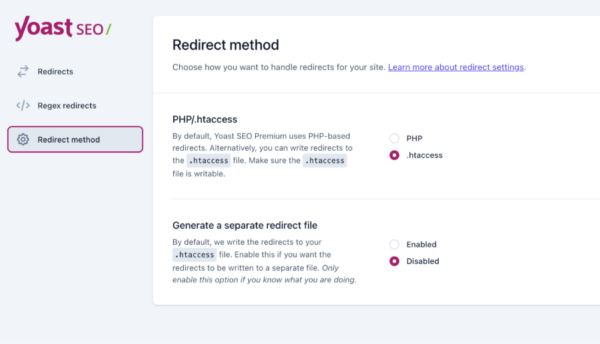
- Redirect Manager Configured in .htaccess Mode: Crucially, the vulnerability only manifests when the Redirect Manager is configured to write redirects directly to the site’s
.htaccessfile. Yoast SEO Premium offers different methods for handling redirects, including server-level redirects (via.htaccess) and PHP-based redirects. If the plugin is configured to use PHP-based redirects, the site is not at risk from this particular flaw. This is a key differentiator that significantly narrows the scope of affected users.
Users can easily verify their redirect configuration by navigating to [www.yoursite.com]/wp-admin/admin.php?page=wpseo_redirects#/redirect-method within their WordPress admin panel. If the interface does not display ".htaccess mode enabled," then the site is not exposed to this specific vulnerability. This clear guidance empowers users to quickly assess their risk profile.
The Solution: A Multi-Layered Approach to Security
Yoast’s patch, delivered in version 27.6.1, incorporates a robust, multi-layered defense strategy to eliminate the vulnerability and prevent similar issues from arising in the future. The primary objective was to prevent any malicious input from reaching the .htaccess file unvalidated or unescaped. The implemented fixes include:
- Enhanced Input Validation and Sanitization: The plugin now rigorously validates and sanitizes all input provided for redirect URLs and target paths. This ensures that only legitimate and safe characters are processed, effectively filtering out any special characters that could be exploited for injection. This layer acts as the first line of defense, preventing malicious data from even entering the system.
- Robust Character Escaping: When writing redirects to the
.htaccessfile, the plugin now employs comprehensive escaping mechanisms for all characters. This ensures that even if special characters somehow bypass initial validation (e.g., in edge cases or future unforeseen scenarios), they are treated as literal characters by the web server, rather than being interpreted as executable commands or configuration directives. This prevents the.htaccessfile from misinterpreting user input as server instructions. - Refined Logic for .htaccess File Handling: The underlying code responsible for interacting with and writing to the
.htaccessfile has been reviewed and strengthened. This includes improving the internal logic to prevent any arbitrary code injection, ensuring that the plugin strictly adheres to expected formats and prevents any deviation that could be exploited. This layer provides a fundamental reinforcement of the file writing process, making it more resilient against injection attempts.
These three layers work in concert to provide a comprehensive fix, addressing both the immediate vector of attack and bolstering the overall security posture of the Redirect Manager.
Timeline of Events and Yoast’s Proactive Communication
While the precise date of discovery of the vulnerability has not been publicly disclosed, the rapid release of Yoast SEO Premium 27.6.1 indicates a swift response from the company. The standard operational procedure for critical vulnerabilities typically involves:
- Discovery: Identification of the flaw, either through internal security audits, penetration testing, or responsible disclosure by external security researchers.
- Verification and Assessment: Yoast’s security team would then verify the vulnerability, assess its severity, and determine the scope of impact.
- Patch Development: Engineering teams would work to develop and test the necessary security patches.
- Internal Review and Quality Assurance: The patch undergoes rigorous testing to ensure it fixes the vulnerability without introducing new bugs or regressions.
- Release and Communication: The updated version is released, accompanied by a public security advisory and instructions for users.
Yoast’s prompt communication, spearheaded by its Product Marketing Manager, Beth Parker, underscores its commitment to transparency and user security. By immediately issuing a public announcement and providing clear instructions, Yoast enables its users to take timely action, minimizing potential exposure. The company has also committed to publishing a full security advisory in the near future, which will likely contain more technical details for security professionals and researchers. In the interim, their support team has been made available to address any questions or concerns users might have.
Call to Action: Prioritizing Your Site’s Security
Given the potential severity of the vulnerability, Yoast has issued a clear and urgent call to action for all users of Yoast SEO Premium, Yoast WooCommerce SEO, and Yoast SEO AI+. Users are strongly advised to update to version 27.6.1 immediately. The update process is designed to be straightforward and quick, typically taking under two minutes to complete directly from the WordPress plugins screen.
Even for users whose sites do not meet all three specific conditions for being at risk, updating to the latest version is considered a critical best practice. Keeping all WordPress plugins, themes, and the core WordPress installation itself updated is fundamental to maintaining a secure online presence. Updates frequently include not only security fixes but also performance enhancements, bug resolutions, and new features. By ensuring all components are current, site administrators proactively defend against a broad spectrum of known vulnerabilities.
For those uncertain about their risk status, Yoast reiterates the simple check: visit [www.yoursite.com]/wp-admin/admin.php?page=wpseo_redirects#/redirect-method in your WordPress admin. If the .htaccess mode is not enabled for your Redirect Manager, your site is not at risk from this particular vulnerability. However, the general recommendation to update still stands as a blanket security measure.
Broader Implications: WordPress Security Ecosystem and User Responsibility
This incident highlights the continuous and evolving challenges inherent in securing the WordPress ecosystem. With WordPress powering over 43% of all websites on the internet, its security is paramount. However, its modular nature, relying heavily on a vast array of plugins and themes from various developers, introduces numerous potential entry points for attackers. Plugin vulnerabilities are a common occurrence, ranging from minor cross-site scripting (XSS) issues to critical remote code execution (RCE) flaws.
Yoast SEO, with millions of active installations, is a cornerstone plugin for countless websites. Its widespread use means that any vulnerability, even one affecting a subset of its premium users, has the potential for significant impact across the web. The company’s swift and transparent response in this instance serves as a positive example for the wider developer community, demonstrating responsible disclosure and rapid remediation. This approach helps to maintain user trust, which is crucial for a product deeply embedded in the operational fabric of so many businesses and individuals.
For website owners, this incident serves as a stark reminder of the shared responsibility in cybersecurity. While plugin developers like Yoast are responsible for creating secure code and promptly patching vulnerabilities, users bear the ultimate responsibility for implementing those patches. Neglecting updates, especially for security fixes, leaves websites vulnerable to exploitation. Best practices for WordPress security extend beyond just updating plugins; they also include:
- Strong, Unique Passwords: For all user accounts, especially administrative ones.
- Two-Factor Authentication (2FA): Adding an extra layer of security to logins.
- Regular Backups: Ensuring that a clean version of the site can be restored in case of a compromise.
- Security Plugins: Utilizing reputable security plugins for firewalls, malware scanning, and intrusion detection.
- Web Application Firewalls (WAFs): Providing an additional layer of protection at the server or CDN level.
- Limiting User Privileges: Granting only the necessary permissions to each user role.
The vulnerability in Yoast SEO Premium’s Redirect Manager, while serious in its potential, has been effectively contained through prompt action and clear communication. It reinforces the dynamic nature of web security and the ongoing need for vigilance from both developers and end-users to protect the digital landscape. Users are encouraged to heed Yoast’s advice and update their plugins to the latest version to maintain a secure and functional online presence.