rifanmuazin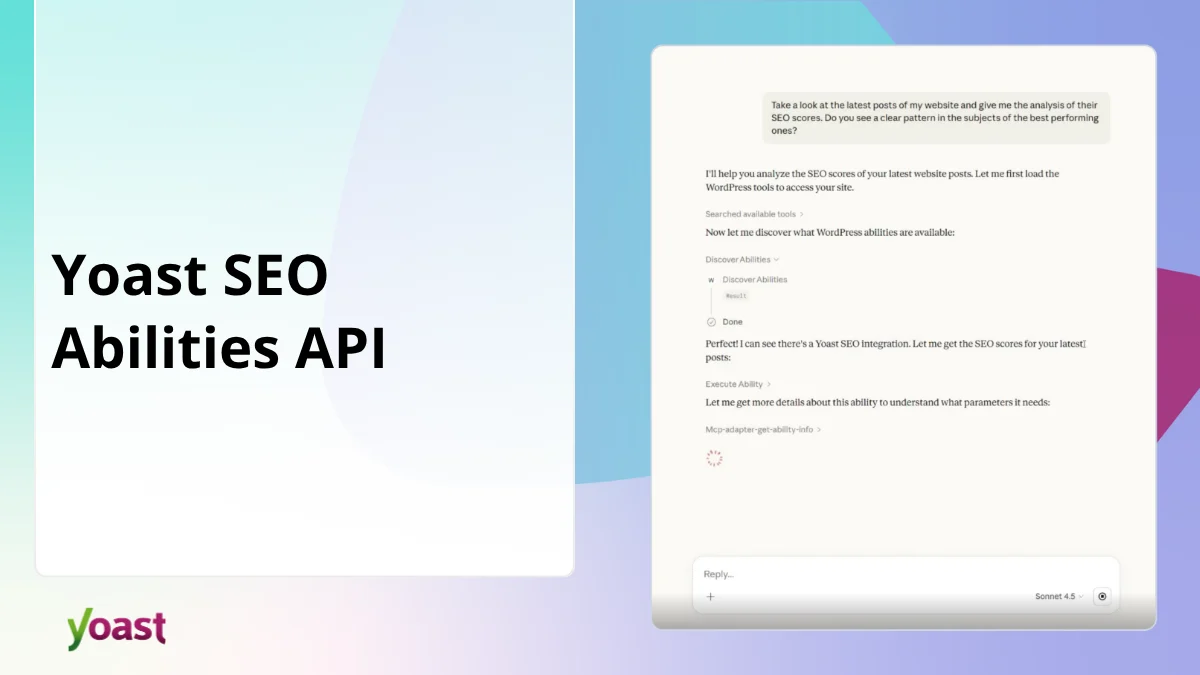
From today, artificial intelligence (AI) tools, sophisticated dashboards, and automated content workflows can establish direct communication with Yoast SEO, a leading plugin for search engine optimization on the WordPress platform. This significant advancement is made possible by the new Abilities API, specifically engineered to function seamlessly with the forthcoming release of WordPress 6.9. The launch of the Yoast SEO Abilities API marks a pivotal moment in the evolution of content management and SEO, reflecting a proactive approach to integrating cutting-edge AI capabilities within the robust WordPress ecosystem. As WordPress continues its trajectory of innovation and expands its core functionalities, Yoast SEO aims to remain at the forefront, ensuring its tools are aligned with the platform’s evolving architecture and user needs.
Understanding the Yoast SEO Abilities API: A Gateway to Automated SEO
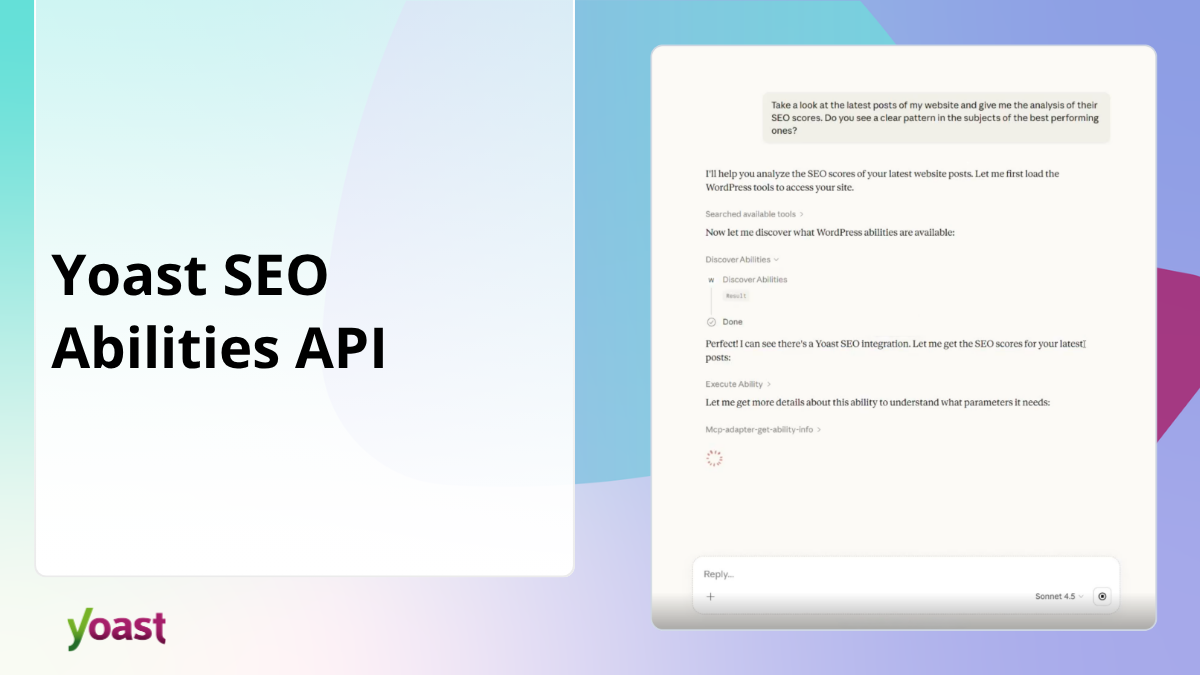
In plain language, the Yoast SEO Abilities API simplifies the interaction between content management systems and AI-driven applications. For users leveraging AI assistants, developing custom automated workflows, or relying on bespoke performance dashboards, this new API means an immediate and frictionless ability to access and interpret Yoast SEO content scores. Crucially, this integration requires no complex custom connections, laborious manual data extraction, or extensive documentation digging. It operates on a "just works" principle, allowing compatible tools to instantly pull critical SEO data from recent posts and pages without requiring developers to build specific connectors for each AI application.
Once connected through the WordPress Microservices and Capabilities Platform (MCP) Adapter, a framework designed to facilitate sophisticated interactions between WordPress and external services, any compatible AI tool can retrieve a comprehensive suite of SEO metrics. These include, but are not limited to:
- Overall Content Scores: A consolidated evaluation of the content’s SEO performance and readability.
- Readability Analysis Insights: Metrics such as Flesch reading ease scores, sentence length, paragraph structure, and the use of transition words, indicating how accessible the content is to its target audience.
- Keyphrase Optimization Status: Assessment of how well the target keyphrase is integrated into the content, including its density, placement, and variations.
- Internal Linking Suggestions and Status: Information on recommended internal links to improve site structure and user navigation, as well as the status of existing internal links.
- Schema Data Consistency and Validation: Verification of structured data implementation (e.g., article schema, FAQ schema) to ensure search engines can properly understand the content.
- Indexability Status: Critical directives such as
noindex,nofollow, orcanonicaltags, indicating whether a page should be indexed by search engines and how duplicate content is handled. - Meta Description and Title Presence/Quality: Evaluation of the meta title and description for optimal length, keyphrase inclusion, and click-through appeal.
- Image SEO Assessment: Checks for alt attributes and descriptive filenames.
These accessible data points empower AI systems to understand, evaluate, and even suggest improvements for content optimization in real-time, ushering in an era of more intelligent and automated SEO management.
The Broader Context: WordPress’s Evolution and the AI Revolution
The introduction of the Yoast SEO Abilities API is not an isolated event but a strategic response to the rapidly evolving digital landscape, particularly the advancements in artificial intelligence and the continuous development of the WordPress platform itself. WordPress, which powers over 43% of all websites on the internet, has consistently demonstrated a commitment to extensibility and embracing new technological paradigms. The mention of WordPress 6.9 and the MCP Adapter underscores a broader initiative within the WordPress community to enhance the platform’s capabilities for deeper integration with external services and AI-driven applications. While WordPress 6.9 is slated for a future release (the original article linked to a 2026 date for MCP Adapter, suggesting a forward-looking perspective), Yoast’s proactive development ensures readiness for these foundational changes.
The rise of AI in content creation and digital marketing has been meteoric. Tools capable of generating text, analyzing data, and automating tasks are becoming indispensable for businesses striving for efficiency and competitive advantage. SEO, traditionally a labor-intensive discipline requiring extensive manual analysis and iterative adjustments, stands to gain immensely from AI integration. The market for AI in marketing is projected to grow significantly, with various reports indicating multi-billion dollar valuations and high adoption rates among digital marketers seeking to optimize campaigns, personalize user experiences, and improve ROI. This surge in AI adoption creates a pressing demand for robust APIs that allow different software components to communicate seamlessly, thereby unlocking the full potential of these intelligent systems.
Yoast SEO, having established itself as the de facto standard for SEO on WordPress since its inception in 2008, has always evolved with the industry. From basic meta tag management to advanced schema implementation and content analysis, Yoast has guided millions of users in optimizing their websites for search engines. This latest API is a natural progression, signifying Yoast’s commitment to future-proofing SEO practices in an AI-dominated world. It moves beyond merely providing suggestions to enabling autonomous systems to act upon them, marking a significant leap in the intelligence and autonomy of SEO workflows.
Transformative Capabilities and Practical Applications
The practical implications of the Yoast SEO Abilities API are far-reaching, promising to redefine how content is created, optimized, and managed. Here are some expanded examples of what is now possible:
- Automated Content Review and Optimization: AI writing assistants, like those integrated into content management systems, can now automatically fetch a post’s Yoast SEO scores immediately after drafting. If a score falls below a predefined threshold for readability or keyphrase optimization, the AI can flag it for revision or even suggest specific improvements (e.g., rephrase a sentence, add more transition words, increase keyphrase density in a natural way) before a human editor even sees it. This drastically reduces the time spent on initial SEO checks.
- Real-time SEO Performance Dashboards: Custom analytics dashboards can pull real-time Yoast SEO data for an entire website or specific content categories. Imagine a dashboard displaying the average readability score across all blog posts published last month, or highlighting articles with low keyphrase optimization scores that might need immediate attention. This provides content managers and SEO specialists with an instant, data-driven overview of their content’s health.
- Workflow Automation and Publishing Triggers: Businesses can configure automated workflows where a new post is only allowed to be published once its Yoast SEO content score and readability score meet specific, pre-set criteria. This ensures a consistent baseline of SEO quality across all published content, preventing poorly optimized articles from going live. Furthermore, if a post’s indexability status changes, an alert can be triggered to relevant team members.
- Scalable Content Audits: For large websites with thousands of pages, conducting manual SEO audits is a monumental task. With the Abilities API, an AI agent can systematically crawl and retrieve Yoast SEO data for every page, identifying widespread issues like missing schema, poor readability across a category, or inconsistent keyphrase usage. This enables rapid identification of optimization opportunities at scale.
- Personalized SEO Recommendations: Over time, AI tools integrated with the API can learn from a website’s historical performance data. For instance, if a specific content type consistently ranks well when its Flesch reading ease score is above 60, the AI can proactively recommend maintaining that target for future articles of the same type, offering highly tailored and data-backed advice.
- Competitive Content Analysis: While primarily designed for internal content, the principles could extend to competitive analysis if similar data points become publicly accessible (or through scraping, though less direct). An AI could compare an organization’s content performance metrics against industry benchmarks or even anonymized data from competitors (if available), identifying strategic gaps.
In essence, the Yoast SEO Abilities API transforms Yoast SEO from a powerful analysis and suggestion tool into an integral component of a fully automated, AI-driven content marketing ecosystem. It empowers businesses to integrate SEO considerations directly into their content creation pipelines, reducing manual effort and increasing efficiency and consistency.
Industry Landscape and Supporting Data
The digital marketing landscape is increasingly characterized by automation and data-driven strategies. According to various industry reports, the global market for artificial intelligence in marketing is projected to reach over $100 billion by 2030, growing at a compound annual growth rate (CAGR) exceeding 25%. This growth is fueled by the imperative for businesses to manage vast amounts of data, personalize customer experiences, and scale their content efforts efficiently.
Search Engine Optimization remains a cornerstone of digital marketing, with organic search driving a significant portion of website traffic and conversions. Studies consistently show that the top results on Google receive the overwhelming majority of clicks, underscoring the critical importance of effective SEO. However, the complexity of SEO has grown exponentially, encompassing technical SEO, on-page optimization, off-page factors, and a deep understanding of user intent and evolving search algorithms. Manually managing these aspects for a large volume of content is time-consuming, prone to human error, and often results in missed opportunities.
The integration of AI with SEO tools like Yoast represents a paradigm shift. It moves beyond simple keyword research and meta tag optimization to sophisticated content analysis, predictive insights, and autonomous optimization. For example, a typical content creator might spend hours manually checking SEO parameters for a single article. With AI and the Abilities API, these checks can be performed in seconds, freeing up human talent to focus on strategic content planning, creativity, and deeper audience engagement. The average time saved per article, when scaled across hundreds or thousands of pieces of content annually, translates into substantial operational efficiencies and cost savings for organizations.
Reactions from the Community and Experts
While direct quotes from all parties were not provided in the original announcement, the launch of such an API typically elicits strong positive reactions from various stakeholders within the WordPress and SEO communities.
A spokesperson from Yoast, perhaps mirroring the sentiments of Beth Parker, Product Marketing Manager at Yoast, would likely emphasize the company’s long-standing commitment to empowering users. "Our mission has always been to make SEO accessible and effective for everyone," a hypothetical Yoast representative might state. "The Abilities API is a natural evolution of that mission, enabling content creators and marketers to leverage the immense power of AI in conjunction with Yoast’s proven SEO expertise. We believe this will not only streamline workflows but also unlock new levels of content quality and search visibility for our users, preparing them for the future of digital content."
From the broader WordPress community, the announcement would be viewed as a testament to the platform’s adaptability and its ecosystem’s innovation. Core contributors and developers often highlight the importance of open standards and robust APIs for fostering a vibrant and extensible platform. "WordPress’s strength lies in its community and its capacity for integration," an inferred statement from a WordPress Foundation representative might suggest. "Initiatives like the Yoast SEO Abilities API, especially when designed to work with foundational improvements like the MCP Adapter, are crucial for keeping WordPress at the cutting edge and ensuring its users benefit from the latest technological advancements, including those in artificial intelligence."
SEO professionals and digital marketing agencies would likely express enthusiasm for the enhanced efficiency and analytical capabilities. "This API is a game-changer for agencies managing multiple client websites," an anonymous agency owner might comment. "Automating the initial SEO review and quality control will free up our specialists to focus on higher-level strategy, client communication, and creative problem-solving. It’s about working smarter, not just harder." Some might also voice a cautious optimism, emphasizing the continued need for human oversight and strategic thinking, ensuring that AI tools are used as assistants rather than replacements for human expertise.
AI tool developers, on the other hand, would welcome the standardized access to Yoast SEO data. This simplifies their development process, allowing them to integrate robust SEO insights into their platforms without needing to reverse-engineer data structures or build complex parsing mechanisms. This could spur a new wave of innovative AI-powered SEO tools and services tailored specifically for the WordPress ecosystem.
Strategic Implications and the Future of SEO
The Yoast SEO Abilities API carries significant strategic implications for content creators, businesses, and the entire SEO industry.
Firstly, it significantly enhances efficiency and scalability. Organizations producing a high volume of content can now automate a substantial portion of their on-page SEO review process. This means faster publishing cycles, more consistent SEO quality across all content, and the ability to manage larger content portfolios without proportionally increasing manual labor. For businesses, this translates into reduced operational costs and improved ROI from their content marketing efforts.
Secondly, it promotes more data-driven decision-making. By providing AI tools with direct access to granular SEO data, content strategies can become more dynamic and responsive. AI can identify trends, highlight underperforming content based on SEO metrics, and even suggest content topics that align with optimal SEO scores, thereby guiding content creation from ideation to publication.
Thirdly, the API is poised to foster a new ecosystem of AI-powered SEO tools. Developers can now build more sophisticated applications that leverage Yoast’s expertise directly. This could include AI agents that automatically rewrite meta descriptions, optimize internal linking structures based on user behavior patterns, or even generate personalized content outlines with pre-optimized SEO parameters. This innovation will benefit the broader WordPress community by expanding the capabilities available to users.
Finally, this development signals a shifting role for SEO specialists. Instead of spending significant time on repetitive, rule-based tasks, SEO professionals will increasingly become strategists, trainers, and auditors of AI systems. Their expertise will be vital in setting the parameters for AI optimization, interpreting the insights provided by AI, and ensuring that AI-driven SEO strategies align with overall business objectives and ethical guidelines. The human element will shift from execution to intelligent oversight and strategic direction.
However, the proliferation of AI in SEO also brings forth considerations around ethical AI use, data privacy, and the potential for algorithmic bias. Ensuring that AI tools are trained on diverse and unbiased datasets, and that their recommendations align with best practices and user experience, will be crucial. Yoast’s commitment to quality and user experience will likely guide the responsible integration of AI through its API.
In conclusion, the Yoast SEO Abilities API is a landmark development that bridges the gap between traditional SEO practices and the burgeoning field of artificial intelligence. By enabling direct communication between Yoast SEO and AI tools, it ushers in an era of unprecedented automation, efficiency, and data-driven insights for content optimization within the WordPress ecosystem. As WordPress continues to evolve and embrace new capabilities, Yoast SEO remains committed to innovating alongside it, ensuring its users are equipped with the most advanced tools to succeed in the ever-changing digital landscape. Those wishing to delve deeper into the technical specifications, data schema, and implementation details of these new endpoints are encouraged to consult the comprehensive developer documentation for the Yoast SEO Abilities API.