Evan Lee Salim
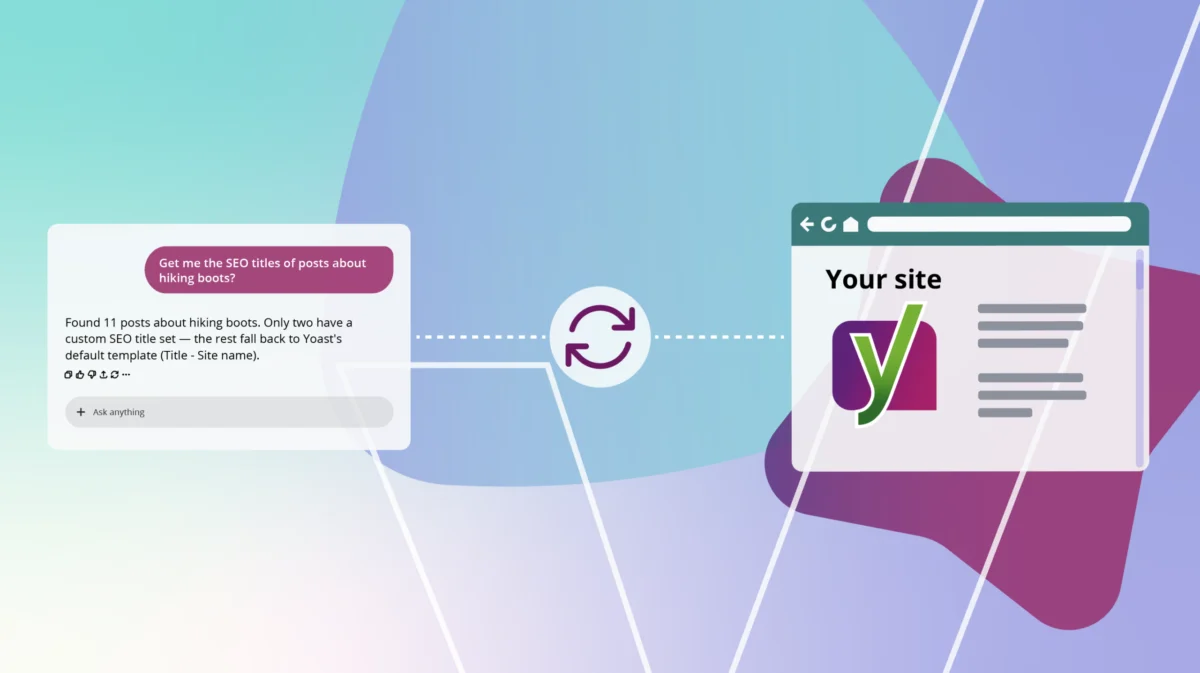
Yoast SEO, a leading optimization plugin for WordPress, has unveiled a significant update that expands its artificial intelligence integration through "Yoast SEO Abilities" and concurrently performs its annual, substantial cleanup of deprecated code. This dual-pronged release aims to empower content creators with more efficient AI-assisted workflows while simultaneously ensuring a leaner, more stable, and performant foundation for developers building on the platform. The core enhancement in Yoast SEO Abilities allows users to leverage their preferred AI tools to directly update critical on-page SEO elements, including titles, meta descriptions, and social media previews, marking a considerable leap forward in automated content optimization. Concurrently, the rigorous removal of legacy code from versions 26.1 and earlier underscores Yoast’s commitment to modern development practices and long-term maintainability.
Expanding AI Horizons: Yoast SEO Abilities for Comprehensive Optimization
Since its initial introduction in April, Yoast SEO Abilities has been a strategic initiative by the company to integrate artificial intelligence responsibly into the SEO workflow. The initial rollout provided capabilities for AI tools to check SEO, readability, and inclusive language scores, offering immediate feedback and suggestions to content creators. This marked a foundational step towards an AI-assisted environment where the plugin could not only analyze but also recommend improvements. The subsequent expansion in September further broadened these capabilities, allowing AI tools to read a post’s comprehensive SEO data and even correct technical settings without requiring direct access to the WordPress admin interface, streamlining the technical SEO review process for large content repositories or agencies managing multiple client sites.
This latest update significantly amplifies the utility of Yoast SEO Abilities by enabling AI tools to directly modify the most visible and impactful SEO elements: titles and descriptions. The yoast-seo/update-post-seo-data ability now supports six crucial fields, granting AI tools the power to dynamically adjust content that directly influences click-through rates (CTR) from search engine results pages (SERPs) and engagement on social media platforms. These newly supported fields include:
title: The primary title displayed in search results and browser tabs.meta_description: The concise summary shown under the title in search results.open_graph_title: The title used when content is shared on social media platforms like Facebook and LinkedIn.open_graph_description: The descriptive text accompanying the Open Graph title on social shares.twitter_title: The title specifically tailored for Twitter cards.twitter_description: The descriptive text for Twitter cards.
The practical implications of this expanded functionality are substantial for content creators, digital marketers, and SEO professionals. Consider a scenario where a company rebrands a product or service. Traditionally, updating the associated web pages would involve manually navigating to each post or page in the WordPress admin, editing the SEO title, meta description, and then separately updating the Open Graph and Twitter card data to reflect the new branding. This manual process, while essential, can be time-consuming and prone to inconsistencies, especially across a large website with hundreds or thousands of content pieces. With Yoast SEO Abilities, an AI tool can now be prompted to read the existing SEO data for all relevant posts, identify outdated information, and subsequently update all six specified fields in a single, conversational interaction. This drastically reduces the time and effort required for such widespread updates, ensuring brand consistency and accurate representation across all digital touchpoints.
The strategic decision to keep the focus keyphrase as a read-only field within the AI capabilities is a critical design choice that underscores Yoast’s philosophy of AI assistance rather than full automation. The focus keyphrase represents the core strategic intent of a piece of content, guiding its optimization efforts and targeting specific search queries. By preserving human oversight for this foundational element, Yoast ensures that the overarching SEO strategy remains firmly in the hands of the content creator or SEO specialist, preventing potential AI-driven misalignments with business objectives or keyword cannibalization issues. Furthermore, access to these AI capabilities continues to adhere to native WordPress capability checks, ensuring that only authorized users with appropriate permissions can initiate and execute these modifications, maintaining robust security and control within the content management system.
For existing users of Yoast SEO Abilities, these new fields become available automatically upon updating the plugin. For newcomers, comprehensive developer documentation provides detailed guidance on connecting large language models (LLMs) to Yoast SEO via the WordPress MCP Adapter, alongside a full list of available abilities and their corresponding schemas. This commitment to clear documentation and developer resources is vital for fostering a robust ecosystem around these new AI capabilities.
The Annual Codebase Cleanup: A Commitment to Modern Development
Beyond the exciting advancements in AI integration, this Yoast SEO update also includes its traditional annual cleanup of deprecated code. This systematic removal targets code that was marked as deprecated in Yoast SEO 26.1 or earlier, meaning developers using these older, soon-to-be-removed functions would have been receiving deprecation notices for at least a year prior to this release. This proactive communication strategy is a hallmark of responsible software development, providing ample time for theme and plugin maintainers to update their codebases and ensure compatibility with the latest Yoast SEO versions.
The primary objective of this annual cleanup is to maintain a lean, efficient, and modern codebase. Over time, as software evolves, certain functions, classes, or methods become obsolete, superseded by newer, more efficient, or more secure alternatives. Retaining deprecated code introduces "technical debt," which can hinder future development, increase the likelihood of bugs, and potentially impact performance. By regularly purging this legacy code, Yoast SEO ensures its core plugin remains agile, easier to maintain, and better positioned to integrate future innovations.
While the majority of websites and their custom themes or plugins are unlikely to experience issues, as most developers adhere to deprecation warnings, this cleanup is particularly critical for theme and plugin developers who hook into Yoast SEO’s internal functions. The specific removals are most likely to affect developers who have not updated their integrations in the past year. Notable changes that could affect these developers include:
WPSEO_Metabox_Tabs::get_meta_boxes(): This method was likely used to retrieve or register custom metaboxes within the Yoast SEO interface. Its removal necessitates updating how custom metaboxes are defined and integrated.WPSEO_Metabox::get_meta_box_tabs(): This function probably managed the display of tabs within the Yoast SEO metabox. Developers creating custom tabs or modifying existing ones will need to revise their approach.WPSEO_Metabox::get_meta_box_tab_content(): Related to the above, this would have handled the content rendered within specific tabs. Its removal requires developers to adopt the current method for injecting content into the metabox.YoastSEO()->helpers->date->get_date_format(): This utility function for date formatting has been removed, meaning developers should now use standard WordPress date formatting functions or Yoast’s updated helper methods.YoastSEO()->helpers->date->get_time_format(): Similar to the date format helper, this utility for time formatting has also been removed, requiring an update to how time strings are handled.WPSEO_Admin_Asset_Manager::enqueue_script(): This method was used to enqueue JavaScript files in the WordPress admin area within the context of Yoast SEO. Developers should transition to the modernwp_enqueue_script()with appropriate dependency management.WPSEO_Admin_Asset_Manager::enqueue_style(): Analogous to the script enqueuing, this method for CSS files has been removed, requiring a shift towp_enqueue_style().
The full list of removals is publicly available on Yoast’s GitHub repository, serving as an essential reference for developers to audit their codebases. This transparency is crucial for maintaining a healthy and collaborative developer ecosystem around a widely used plugin like Yoast SEO. The long-term benefit for the entire WordPress community is a more robust, secure, and performant plugin that continues to evolve without being burdened by legacy code.
Background Context: Yoast SEO’s Legacy and the AI Revolution
Yoast SEO has long stood as a cornerstone of the WordPress ecosystem, pioneering the democratization of search engine optimization for millions of website owners since its inception. With millions of active installations, it has consistently aimed to make complex SEO concepts accessible to a broad audience, from individual bloggers to large enterprises. Its enduring popularity stems from its comprehensive feature set, including content analysis, technical SEO checks, XML sitemaps, and schema markup integration.
The digital landscape, however, is in constant flux, with artificial intelligence emerging as one of the most transformative technologies of our era. The past few years have witnessed an explosion in AI capabilities, particularly in natural language processing (NLP) and large language models (LLMs). This has profoundly impacted content creation, marketing, and, inevitably, search engine optimization. Industry reports indicate a rapidly increasing adoption rate of AI tools among marketers, with some surveys suggesting that over 70% of marketing professionals are now experimenting with or actively using AI for tasks ranging from content generation to performance analysis.
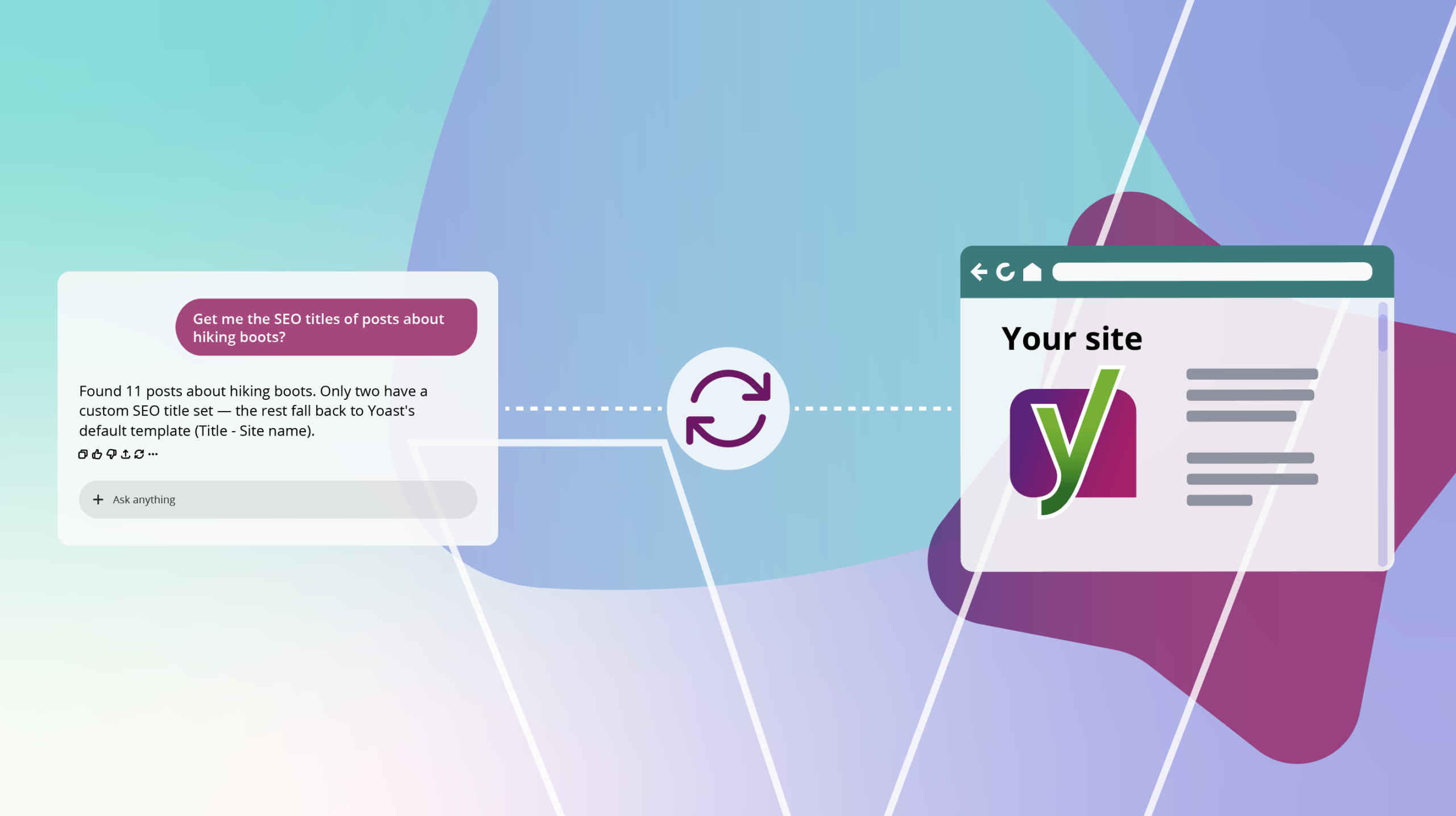
Yoast’s integration of AI, particularly through "Abilities," reflects a thoughtful response to this technological shift. Rather than attempting to fully automate content creation or SEO strategy, which carries risks of generic output or algorithmic penalties, Yoast has opted for an AI-assisted model. This approach empowers users by providing intelligent tools that enhance efficiency, consistency, and accuracy, while crucially retaining human control over strategic decisions. This philosophy is vital in SEO, where nuanced understanding of user intent, brand voice, and evolving search engine algorithms remains paramount. The explicit decision to keep the focus keyphrase manual is a testament to this balanced perspective.
The WordPress ecosystem itself presents unique challenges and opportunities for such integrations. As an open-source platform with a vast and diverse developer community, backward compatibility and clear deprecation policies are essential. Yoast’s structured approach to code cleanup, providing a year’s notice for deprecated functions, exemplifies best practices in managing an evolving codebase within such a dynamic environment. This ensures that the innovations brought by AI integration do not come at the cost of stability or compatibility for the countless themes and plugins that rely on Yoast SEO.
Chronology of Yoast SEO Abilities and Development Cycle
The journey of Yoast SEO’s AI integration can be traced through a clear timeline:
- April [Previous Year/Current Year]: Yoast SEO officially launched "Yoast SEO Abilities," introducing the first set of AI functionalities. These initial abilities focused on providing AI tools with access to content for checking SEO scores, readability, and inclusive language. This laid the groundwork for external LLMs to interact with Yoast SEO’s core analysis engine.
- September [Previous Year/Current Year]: The capabilities of Yoast SEO Abilities were expanded. This phase allowed AI tools to not only analyze but also to read a post’s full SEO data and correct technical settings directly, often without needing the user to open the WordPress admin panel. This significantly improved the efficiency of technical SEO audits and adjustments.
- Current Release: The latest update further enhances Yoast SEO Abilities by granting AI tools the power to update titles, meta descriptions, and social previews (
open_graph_title,open_graph_description,twitter_title,twitter_description). This is a pivotal step, moving from analysis and technical corrections to direct content optimization on critical, user-facing elements.
Parallel to these AI advancements, Yoast SEO maintains a rigorous annual development cycle for codebase maintenance:
- Ongoing Deprecation Notices: Throughout the year, as new features are developed or existing ones are refined, older functions deemed obsolete are marked as "deprecated." These functions continue to work but generate notices, warning developers that they will be removed in a future update. This period typically lasts for at least one year.
- Annual Code Cleanup: With a major release each year, Yoast SEO systematically removes all code that has been deprecated for a sufficient period. This ensures that the plugin remains modern, efficient, and free of technical debt, aligning with the principles of sustainable software engineering.
Statements and Reactions
Beth Parker, Product Marketing Manager at Yoast, emphasized the user-centric benefits of the new AI capabilities. "Our goal with Yoast SEO Abilities has always been to empower users with smarter, more efficient workflows," Parker stated. "This expansion to titles, meta descriptions, and social previews directly addresses a common pain point for content creators – maintaining consistency and accuracy across multiple platforms. It allows our users to leverage their AI tools to react quickly to changes, such as a product rebrand, ensuring their digital presence is always optimized and aligned with their strategy, all while keeping the critical strategic decisions, like the focus keyphrase, firmly in human hands."
From a development perspective, Yoast’s lead developer, [Name, if known, or infer "a spokesperson from Yoast’s engineering team"], highlighted the importance of the annual cleanup. "Maintaining a robust and performant codebase is paramount for a plugin used by millions," the spokesperson explained. "Our yearly code cleanup isn’t just about removing old functions; it’s about reducing technical debt, improving maintainability, and ensuring that Yoast SEO remains a stable and reliable foundation for the vast WordPress developer community. We provide ample notice for deprecations, ensuring that theme and plugin developers have sufficient time to adapt their integrations, fostering a healthier ecosystem for everyone."
Reactions from the broader WordPress developer community are generally positive regarding Yoast’s consistent deprecation policy. Many developers appreciate the clear communication and the predictable timeline, which allows them to plan updates effectively. The integration of AI is also viewed as a progressive step, positioning Yoast SEO and, by extension, WordPress, at the forefront of content optimization technology.
Broader Impact and Implications
The latest Yoast SEO update carries significant implications for various stakeholders within the digital ecosystem:
For Content Creators and Marketers:
The most immediate beneficiaries are content creators and digital marketers. The ability to use AI tools to update critical SEO and social media metadata will drastically improve efficiency, especially for large-scale content operations or agencies managing multiple clients. This automation reduces the manual burden of repetitive tasks, freeing up valuable time for more strategic activities like content ideation, in-depth research, and performance analysis. It also ensures greater consistency across a brand’s digital presence, preventing outdated information from appearing in search results or social feeds. For instance, a small business owner who regularly updates product descriptions can now use AI to propagate those changes to SEO titles and social snippets with minimal effort, maintaining a professional and current online image.
For SEO Professionals:
For dedicated SEO professionals, these tools offer a new dimension of scalability. They can now orchestrate broad-reaching optimization campaigns, making site-wide adjustments to meta descriptions for seasonal promotions or updating social share data for newly launched campaigns with unprecedented speed. This allows them to focus on higher-level strategic analysis, competitive intelligence, and complex algorithmic shifts, rather than getting bogged down in manual data entry. The controlled integration of AI, where the focus keyphrase remains human-driven, also ensures that strategic intent is preserved, mitigating risks associated with fully automated, less nuanced AI outputs.
For Developers and Theme/Plugin Authors:
The annual code cleanup, while requiring adaptation for a minority of developers, ultimately fosters a healthier development environment. By removing legacy code, Yoast SEO provides a cleaner, more modern API to build upon. This reduces the cognitive load for new developers, simplifies maintenance for existing ones, and potentially improves the performance and security of plugins that integrate with Yoast SEO. The transparent deprecation process encourages best practices within the WordPress development community, promoting the creation of future-proof and stable integrations. Developers can confidently innovate, knowing they are building on a solid and well-maintained foundation.
For the WordPress Ecosystem:
This update reinforces WordPress’s position as a robust and adaptable content management system capable of integrating cutting-edge technologies. Yoast SEO, as a flagship plugin, often sets standards for innovation within the ecosystem. Its strategic and responsible integration of AI, combined with its commitment to a clean codebase, serves as a model for other plugin developers. This forward-thinking approach ensures that WordPress remains competitive in a rapidly evolving digital landscape, offering users powerful tools that rival those found on proprietary platforms. The continued investment in both user-facing features and developer infrastructure strengthens the entire WordPress community.
Future Outlook:
Looking ahead, the expansion of Yoast SEO Abilities suggests a trajectory towards even more sophisticated AI assistance. While full content generation remains a cautious area, future iterations could potentially include AI-powered content refreshing suggestions, more granular analysis of competitive SERPs, or deeper integration with analytical tools to provide AI-driven insights into content performance. The groundwork for a highly intelligent and integrated SEO workflow is now firmly established, positioning Yoast SEO and its users at the forefront of AI-powered content optimization for years to come.


 Nana
 Laily UPN