

The digital communications landscape is undergoing a profound transformation, driven by an urgent need for enhanced security and trust. If you’ve spent any time contemplating the intricate mechanisms of email deliverability, the term "email authentication" has undoubtedly surfaced in discussions. However, beyond the technical jargon, a deeper understanding of its implications for your email program and overall brand integrity is paramount. Email expert Dela Quist recently distilled this complex topic into easily digestible insights on the "Email After Hours podcast," underscoring its foundational role in modern digital correspondence.
A Growing Threat: The Imperative for Authentication
The necessity for robust email authentication stems from the pervasive and evolving threats of spam, phishing, and brand impersonation that have plagued the internet since its commercialization. In the early days of email, the absence of stringent verification mechanisms made it a veritable "Wild West" for malicious actors. Senders could easily forge "From" addresses, making it difficult for recipients to distinguish legitimate messages from fraudulent ones. This vulnerability led to a proliferation of unsolicited emails, scams, and malware distribution, eroding user trust and posing significant financial and reputational risks to individuals and organizations alike. According to a 2023 report by the Anti-Phishing Working Group (APWG), the number of phishing attacks continues to rise year over year, with over 1.2 million unique phishing sites detected in a single quarter, highlighting the persistent and escalating nature of this threat. Businesses, on average, lose millions annually to email-based fraud.
Email authentication serves as the digital security measure that ensures each message is verifiably from its claimed sender, has not been altered in transit, and adheres to the sender’s stated policy for handling unauthenticated messages. This multi-layered approach to validation is crucial for maintaining the integrity of email as a communication channel and protecting both senders and recipients from malicious activities. The underlying foundation for these standards was collaboratively developed by several influential groups, including the IETF’s Anti-Spam Research Group, technology giants like Yahoo, and network security leaders such as Cisco. Their collective efforts have culminated in the five core authentication technologies that diligently work to safeguard your email on its journey to the inbox today: Sender Policy Framework (SPF), DomainKeys Identified Mail (DKIM), Domain-based Message Authentication, Reporting & Conformance (DMARC), Authenticated Received Chain (ARC), and Brand Indicators for Message Identification (BIMI).
A Unified Front: Mailbox Providers Mandate Change
The shift from optional best practice to mandatory requirement has been decisively driven by major mailbox providers (MBPs). Gmail, Yahoo, and Microsoft, collectively serving billions of users worldwide and dominating a significant portion of the email market share, have unequivocally cemented the reality that proper authentication is no longer a choice but a necessity for all senders. Their recent mandates represent a watershed moment in email security, compelling organizations to adopt comprehensive authentication protocols or face severe consequences.
Chronology of Mandates:
- October 2023: Gmail and Yahoo announce new sender requirements, effective early 2024, targeting bulk senders (those sending over 5,000 emails per day). Key requirements include mandatory SPF/DKIM authentication, DMARC policy at p=none minimum, and easy one-click unsubscribe options.
- February 2024: The initial phase of enforcement begins, with MBPs starting to actively monitor compliance. Senders without basic authentication may see an increase in emails being routed to spam folders.
- April 2024: Gmail initiates progressive rejection of non-compliant traffic. Senders failing to meet the authentication criteria begin experiencing temporary delivery failures and increasingly throttled sending rates.
- Late 2025: A stricter enforcement phase is projected, where non-compliant senders will face more frequent and potentially permanent rejections of their emails. Yahoo and Microsoft have adopted similarly firm stances, signaling an industry-wide commitment to higher security standards.
These requirements extend beyond just bulk senders; even smaller organizations are advised to implement these measures to ensure optimal deliverability and protect their brand. The implications are stark: if your organization, like most reputable senders, aims for subscribers to actually receive and engage with your emails, adherence to these stringent requirements is non-negotiable. The days of bypassing these protocols without penalty are over, as the leading MBPs are systematically enforcing compliance to foster a safer and more trustworthy email ecosystem for their users.
The Pillars of Trust: Understanding Core Authentication Technologies

Navigating the technical landscape of email authentication can seem daunting, filled with acronyms and complex configurations. However, understanding the purpose and function of each core technology demystifies the process and highlights their collective importance.
Sender Policy Framework (SPF): The Authorized Sender List
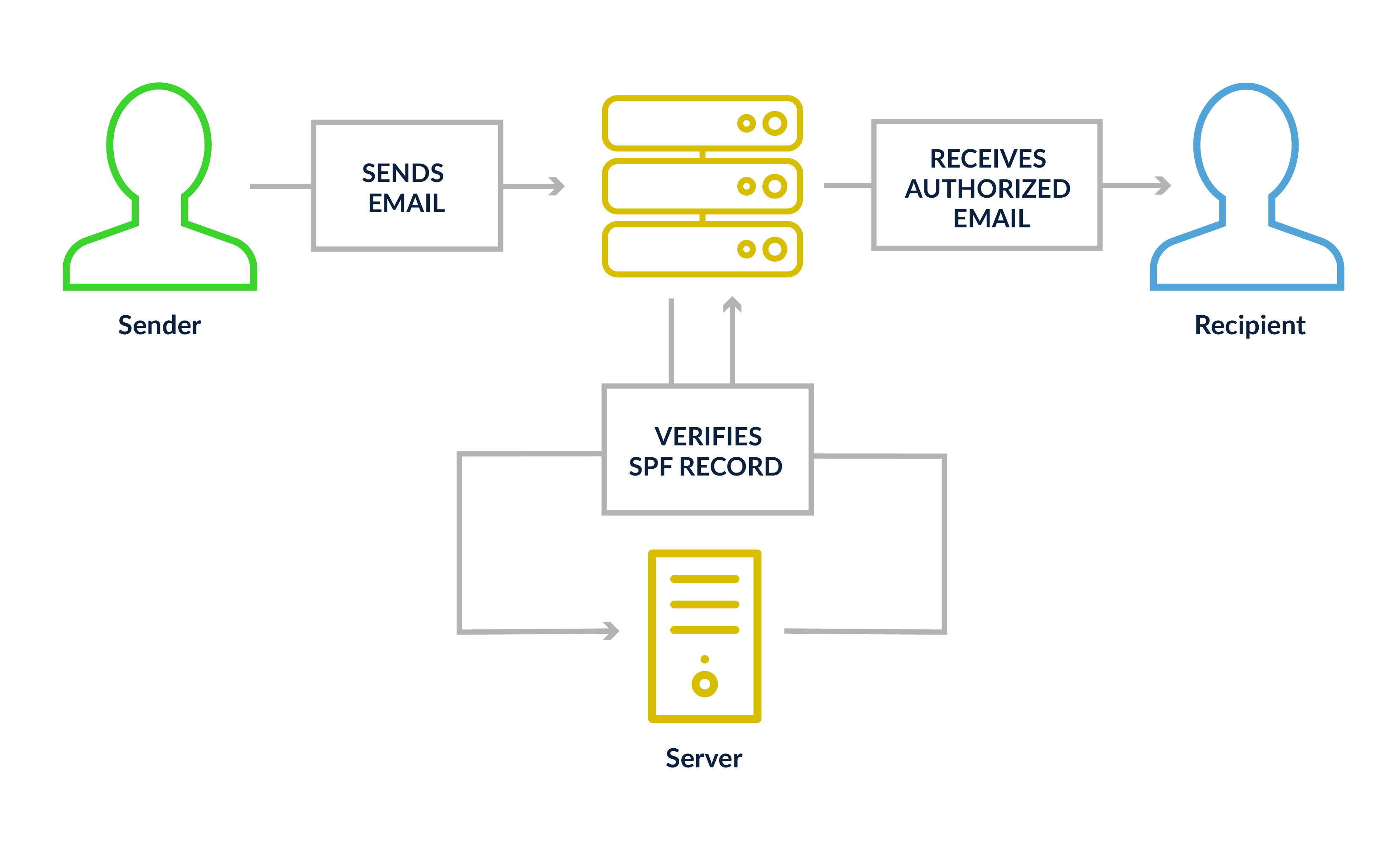
Imagine SPF as the exclusive guest list for your email domain. Your domain publishes a DNS record—a publicly accessible text record—that explicitly lists all the IP addresses and authorized third-party services (like your Email Service Provider, or ESP) permitted to send email on your behalf. When a receiving mail server receives an email purportedly from your domain, it performs a quick check against this SPF record. If the email originates from an IP address not on the approved list, the receiving server flags it as suspicious.
An SPF record can encompass individual IP addresses, defined IP ranges, or references to other domains (using the include mechanism) that are authorized to send for you. Crucially, senders can set enforcement levels: ~all (soft fail) suggests that emails from unauthorized IPs might be legitimate but should be treated with caution, while -all (fail) explicitly states that emails from unlisted IPs are unauthorized and should be rejected. Most reputable senders opt for -all for maximum protection. A common pitfall with SPF is exceeding the 10 DNS lookup limit. Each include statement counts as a lookup, and surpassing this limit results in a "permerror," which can cause SPF to fail entirely, ironically making legitimate emails appear unauthenticated. Careful management and consolidation of includes are essential to avoid this.
DomainKeys Identified Mail (DKIM): The Digital Signature
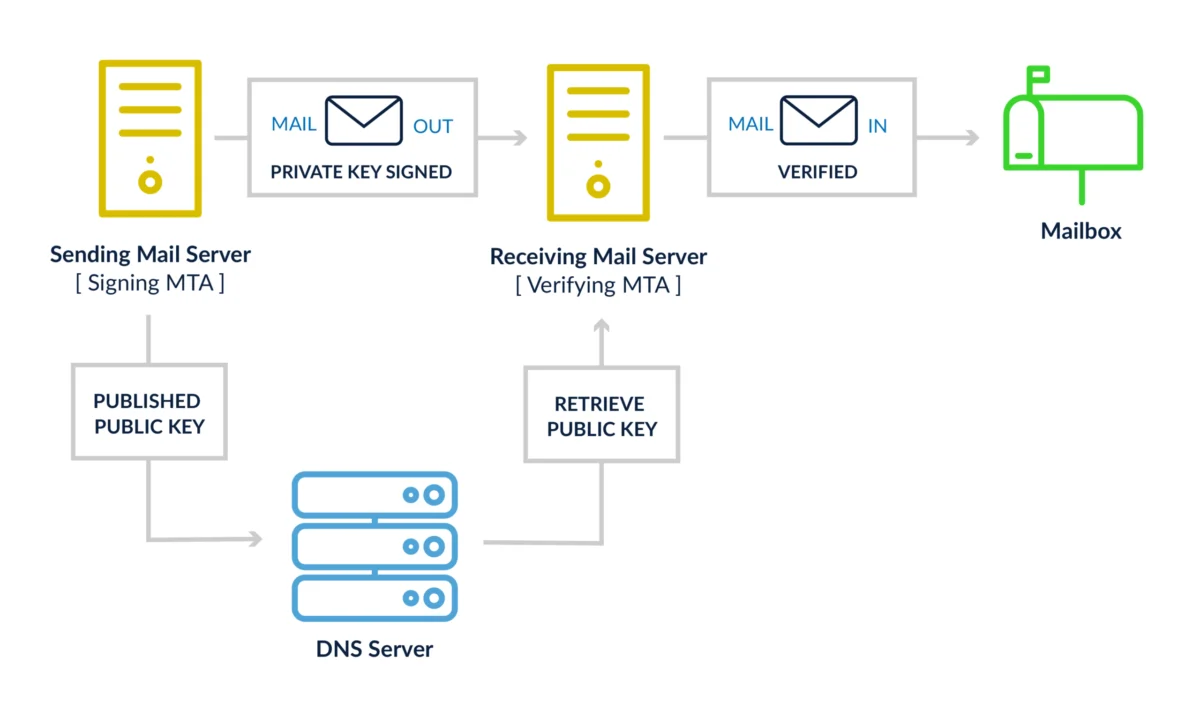
DKIM acts as a tamper-evident seal on your email, much like a wax seal on an important document. When your mail server dispatches a message, it generates a unique cryptographic signature using a private key known only to your domain. This signature is embedded in the email’s header. Concurrently, a corresponding public key is published in your domain’s DNS records. Upon receiving the email, the recipient’s server retrieves your public key and uses it to verify the digital signature. If any part of the email’s content or header—the subject line, body, or attachments—has been altered in transit, the signature will not match, indicating tampering and causing DKIM to fail.
This mechanism ensures the integrity of the message and verifies the sender’s identity. When configuring DKIM keys, especially if done manually, it is imperative to use a minimum key length of 2048 bits. Older 1024-bit keys are now considered less secure and no longer meet contemporary security standards, potentially leading to authentication failures. While many ESPs manage DKIM key generation and rotation automatically, it’s always prudent to confirm these settings with your sending platform to ensure robust security.
Domain-based Message Authentication, Reporting & Conformance (DMARC): The Enforcement Policy
If SPF is the guest list and DKIM is the tamper seal, DMARC is the bouncer and the vigilant security manager that dictates the policy for what happens when either SPF or DKIM raises a flag. DMARC adds a crucial layer of security through "alignment." This means that the domain visible in the "From" address (the Header From address) must align with the domain verified by either SPF or DKIM. Without this alignment—even if SPF or DKIM passes individually—DMARC will fail, preventing potential spoofing attempts where an attacker might use your domain in the "From" address but send from an unauthenticated server.
DMARC policies are defined by three levels, instructing receiving servers on how to handle failing messages:
p=none: A monitor-only policy. No action is taken on failing messages, but reports are still generated. This is the minimum required for bulk senders and an ideal starting point for implementation.p=quarantine: Failing messages are directed to the recipient’s spam or junk folder.p=reject: Failing messages are blocked entirely and never reach the recipient’s inbox or spam folder. Moving towardsp=quarantineorp=rejectis the ultimate goal for maximum brand protection and fraud prevention.
A significant advantage of DMARC is its reporting capability. Mailbox providers send daily aggregate reports detailing which messages passed or failed authentication, the IP addresses involved, and whether alignment was achieved. These reports are invaluable as an early-warning system for detecting spoofing or phishing attempts targeting your domain, providing actionable intelligence to refine your email security posture.
Authenticated Received Chain (ARC): Preserving Authenticity in Transit
ARC addresses a specific challenge that arises when emails are forwarded or processed by intermediate systems. Traditionally, if an email passes through a mailing list processor, a security gateway, or an archiving system, these intermediaries might modify the email’s headers or content. Such modifications, even benign ones, can inadvertently break the original DKIM signature, leading to a DMARC failure despite the initial message being entirely legitimate.
ARC functions as a "paper trail" or a chain of custody for email authentication. Each intermediate server that processes an email and makes changes logs and signs the authentication results it observed before passing the message along. This creates a cryptographically verifiable chain of authentication results. When the email finally reaches its destination, the receiving server can examine this ARC chain. It can see that the message started its journey properly authenticated, even if subsequent legitimate modifications would have otherwise caused DKIM or DMARC to fail. Unlike SPF, DKIM, and DMARC, ARC is not something individual senders configure; it is implemented by the mail servers in the middle of the email’s journey. However, understanding ARC is vital for diagnosing why a legitimately forwarded email might behave differently or appear unauthenticated compared to a directly sent message.
Brand Indicators for Message Identification (BIMI): The Visual Trust Signal
BIMI offers brands a powerful way to enhance trust and brand recognition by displaying their official logo directly in the recipient’s inbox, even before the email is opened. This visual cue serves as an immediate trust signal, helping subscribers instantly recognize legitimate emails from your brand and distinguish them from fraudulent lookalikes. Studies have shown that a recognizable brand logo can significantly increase email open rates and recipient engagement, while simultaneously reducing the likelihood of users marking legitimate emails as spam.
Implementing BIMI requires a robust foundation of SPF, DKIM, and DMARC. Crucially, your DMARC policy must be set to p=quarantine or p=reject; a p=none policy is insufficient for BIMI enablement. Once these prerequisites are met, brands publish a BIMI DNS record that points to a specially formatted SVG version of their official logo.
Certificates: VMC vs. CMC
To further verify brand ownership and enhance trust, BIMI leverages digital certificates:
- Verified Mark Certificate (VMC): This was the original certification option and requires the brand’s logo to be a registered trademark. VMCs are issued by authorized Certificate Authorities (CAs) such as DigiCert. They unlock full BIMI support, including the display of the logo and, notably, a "blue checkmark" in supporting MBPs like Gmail, signifying verified sender status. Apple Mail also supports VMC-backed BIMI.
- Common Mark Certificate (CMC): A more recent and accessible option, CMCs do not necessitate a registered trademark. Instead, they require proof that your logo has been publicly displayed and in use for at least 12 months. Google began accepting CMCs in 2024, significantly broadening BIMI’s accessibility for brands that have not yet trademarked their logos. While CMC holders benefit from logo display in Gmail, the coveted blue checkmark remains exclusively reserved for VMC holders, underscoring the higher level of verification associated with trademarked brands.
MBP Support at a Glance:
- Gmail: Supports BIMI with both VMC (including blue checkmark) and CMC (logo only).
- Yahoo Mail: Supports BIMI with VMC.
- Apple Mail: Supports BIMI with VMC.
- Microsoft Outlook: Currently, Microsoft Outlook does not natively support BIMI logo display.
The Business Imperative: Why Authentication Matters Beyond Deliverability
Email authentication transcends mere technical compliance; its impact is deeply interwoven with your brand’s reputation, customer trust, and overall business success. In an environment where email remains a primary channel for marketing, sales, customer service, and critical business communications, the stakes for getting authentication right have never been higher.
For Marketers:
For marketing teams, authentication is the gateway to the inbox. Without it, even the most meticulously crafted campaigns risk being relegated to spam folders or rejected entirely. This directly impacts key performance indicators such as open rates, click-through rates, and ultimately, conversion rates and return on investment (ROI). Furthermore, consistent authentication signals to MBPs that your brand is a legitimate and trustworthy sender, contributing positively to your sender reputation, which is a critical factor in deliverability algorithms. A strong sender reputation ensures that your marketing messages reach their intended audience, fostering engagement and driving business growth.
For Businesses:
Beyond marketing, robust email authentication is a cornerstone of enterprise-level security. It significantly mitigates the risk of business email compromise (BEC) attacks, a sophisticated form of phishing that targets businesses conducting wire transfers or sending sensitive data. By making it harder for cybercriminals to impersonate your domain, authentication protocols protect your organization from financial losses, data breaches, and severe reputational damage. It demonstrates a commitment to security, which is increasingly important for customer loyalty and regulatory compliance. The cost of implementing and maintaining these systems pales in comparison to the potential financial and reputational fallout from a successful phishing or spoofing attack.
For Recipients:
For the end-user, the benefits are tangible: a cleaner, safer inbox. Reduced spam means less time sifting through unwanted messages and a lower risk of encountering phishing scams. When an email displays a verified brand logo through BIM








