rifanmuazin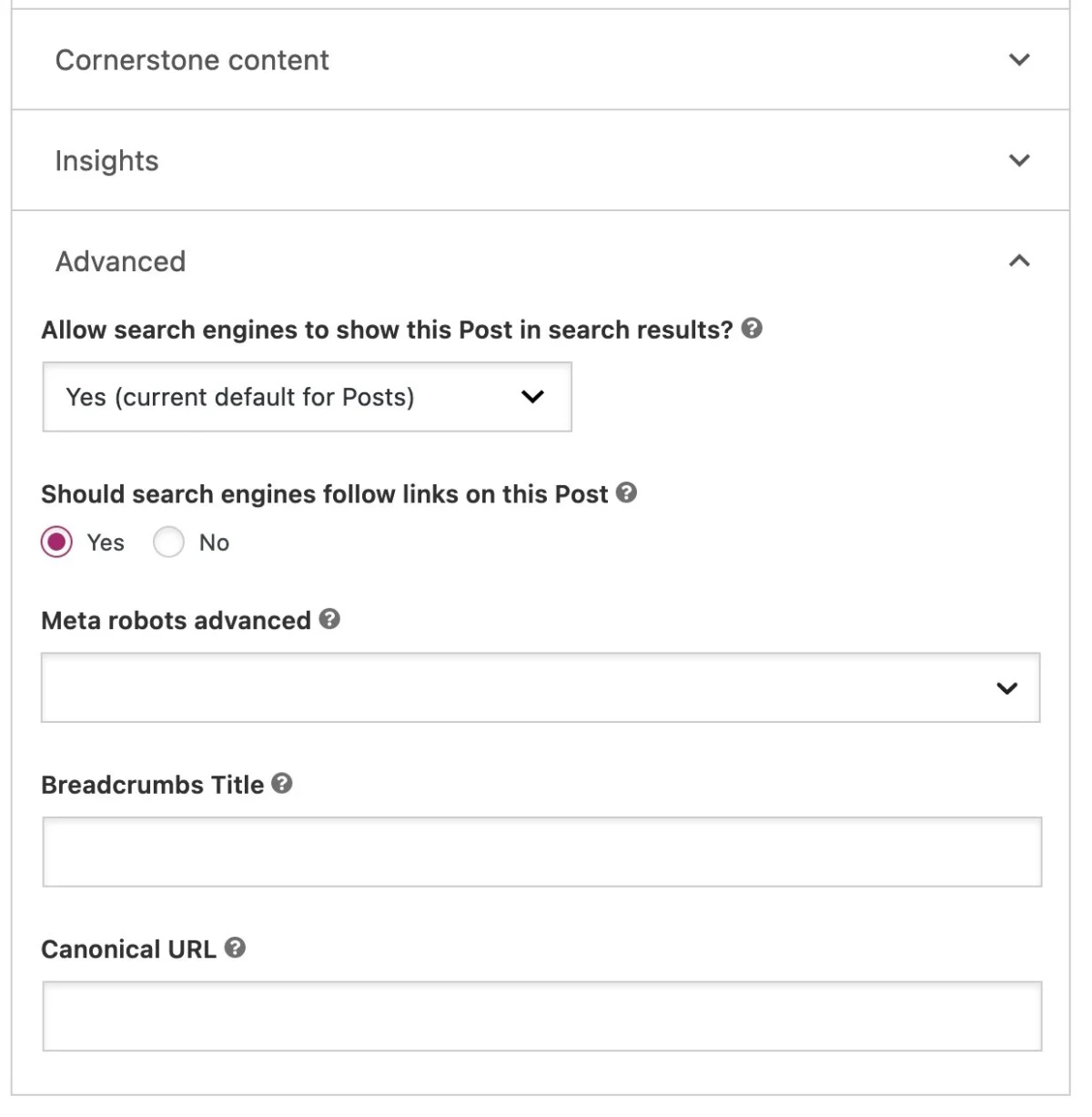
An XML sitemap serves as a critical roadmap for a website, meticulously guiding search engines like Google to all its important pages. Far from being a mere technical formality, XML sitemaps are a cornerstone of effective SEO, enabling search engines to quickly identify and crawl essential content, even when a site’s internal linking structure may not be perfect. This document will delve into the intricacies of XML sitemaps, explaining their function, structure, profound benefits for search engine optimization, and their increasingly relevant role in the era of AI-powered search agents.
Understanding the Core: What are XML Sitemaps?
At its fundamental level, an XML sitemap is a file that precisely lists a website’s essential pages, ensuring that Google and other search engines can efficiently find, crawl, and index them. Beyond simple discovery, it provides search engines with a structured understanding of a website’s architecture and allows webmasters to signal the prioritization of crucial content. This structured format is distinct from other sitemap types, such as HTML sitemaps. While HTML sitemaps are designed for human visitors, offering a clear, hierarchical navigation aid, an XML sitemap is explicitly tailored for machine readability by search engine crawlers.
The Extensible Markup Language (XML) format allows for the inclusion of additional metadata about each URL. This metadata provides search engines with valuable context, which can include:
- The last modification date of a page (
<lastmod>). - Suggestions about how frequently the content is expected to change (
<changefreq>). - A suggestion of the page’s relative importance compared to others on the site (
<priority>).
This information empowers search engines to crawl a site more intelligently and efficiently. This is particularly crucial for websites that are large, newly launched, or possess complex navigation structures where content might otherwise be difficult for crawlers to discover organically through link following alone. The sitemaps protocol, developed collaboratively by Google, Yahoo, and Microsoft, solidified a standardized format for this digital communication.
The Anatomy of an XML Sitemap: A Technical Deep Dive
An XML sitemap adheres to a standardized, machine-readable format. It is a plain text file written in XML, designed for effortless parsing by search engine bots. This structured format ensures that search engines can rapidly ascertain which URLs exist on a website and when they were last updated, facilitating a more current and comprehensive index.
A basic XML sitemap containing a single URL would appear as follows:
<?xml version="1.0" encoding="UTF-8"?>
<urlset xmlns="http://www.sitemaps.org/schemas/sitemap/0.9">
  <url>
    <loc>https://www.example.com/important-page/</loc>
    <lastmod>2024-03-15</lastmod>
    <changefreq>weekly</changefreq>
    <priority>0.8</priority>
  </url>
</urlset>
Each URL within a sitemap is encapsulated by specific XML tags that convey information about that particular page. Some of these tags are mandatory, while others are optional but can be highly beneficial for search engine understanding.

Key XML Sitemap Tags Explained:
| Tag | Requirement | Description
The XML Sitemap Index: Scaling for Large Websites
For larger websites, managing thousands or even hundreds of thousands of URLs in a single XML sitemap file becomes impractical and inefficient. This is where the XML sitemap index comes into play. A sitemap index is a file that lists multiple XML sitemap files, effectively acting as a directory that points search engines to several separate sitemaps.
Search engines enforce limits on individual sitemaps: typically, a single sitemap can contain a maximum of 50,000 URLs or be up to 50 MB in size (uncompressed). If a website exceeds these limits, or if a webmaster wishes to organize content logically, multiple sitemaps are created and then grouped under a sitemap index. For instance, a complex e-commerce site might have distinct sitemaps for product pages, category pages, blog posts, and static informational pages.
| Feature | XML Sitemap | XML Sitemap Index |
|---|---|---|
| Purpose | Lists individual URLs on a website | Lists multiple sitemap files |
| Content | Contains page URLs and optional metadata | Contains links to other sitemap files |
| Use Case | Suitable for small or medium-sized sites | Essential for large sites with many sitemaps |
| Structure | Uses <urlset> and <url> tags |
Uses <sitemapindex> and <sitemap> tags |
| Max URLs/Size | 50,000 URLs or 50 MB | References multiple sitemaps, each with its own limit |
Submitting a sitemap index to search engines allows them to discover and process all associated sitemaps from a single entry point. In essence, while an XML sitemap helps search engines discover pages, a sitemap index helps search engines discover multiple sitemaps in an organized and scalable manner.
An example of a sitemap index file referencing two distinct sitemaps might look like this:
<?xml version="1.0" encoding="UTF-8"?>
<sitemapindex xmlns="http://www.sitemaps.org/schemas/sitemap/0.9">
  <sitemap>
    <loc>https://www.example.com/sitemap-pages.xml</loc>
    <lastmod>2025-01-01T10:00:00+00:00</lastmod>
  </sitemap>
  <sitemap>
    <loc>https://www.example.com/sitemap-blog.xml</loc>
    <lastmod>2025-01-02T14:30:00+00:00</lastmod>
  </sitemap>
</sitemapindex>
Each referenced sitemap (sitemap-pages.xml, sitemap-blog.xml) would then contain up to 50,000 individual URLs relevant to its content type. This structure greatly enhances the efficiency of discovery and crawling for extensive websites.
The Indispensable Role of XML Sitemaps in Modern SEO
While search engines possess sophisticated algorithms capable of discovering content through internal links and backlinks, relying solely on these methods can be inefficient, especially for complex or rapidly evolving sites. An XML sitemap acts as a direct, authoritative declaration of a website’s content, offering numerous benefits that solidify its position as a crucial technical SEO component. Google’s documentation itself states that sitemaps are particularly beneficial for "really large websites," "websites with large archives," "new websites with just a few external links to them," and "websites which use rich media content."
1. Improved Crawl Efficiency and Budget Optimization:
Sitemaps significantly enhance the efficiency with which search engines like Googlebot and Bingbot crawl large or intricate websites. By providing a consolidated list of important URLs, webmasters streamline the discovery process, helping crawlers prioritize valuable pages and allocate their "crawl budget" more effectively. This is vital for large sites that may have millions of pages, where an inefficient crawl could mean important content goes undiscovered for extended periods.
2. Faster Indexing of New and Updated Content:
For websites that frequently publish or update content—such as news portals, blogs, or e-commerce stores with dynamic product listings—including new and modified pages in a sitemap ensures their quicker discovery. This accelerates the indexing process, making fresh content available in search results sooner, which is a significant competitive advantage.
3. Discovery of Orphan Pages:
Orphan pages are those that are not linked from any other part of a website. Since search engine crawlers primarily navigate by following links, orphan pages can easily be missed. An XML sitemap acts as a safety net, explicitly listing these pages and ensuring they are still discovered and considered for indexing, preventing valuable content from being lost in the digital ether.
4. Rich Metadata Signals for Enhanced Understanding:
Beyond just listing URLs, XML sitemaps can convey crucial metadata. The <lastmod> tag, in particular, signals to search engines when a page was last meaningfully updated. This information helps search engines understand content freshness and decide when a page might need to be re-crawled, leading to a more up-to-date search index. While <changefreq> and <priority> tags are part of the sitemap protocol, Google has officially stated that it largely ignores them, relying instead on its own sophisticated algorithms and the <lastmod> tag to determine crawling frequency and page importance.
5. Support for Specialized Content Types:
XML sitemaps can be extended to include specific types of content that require special handling, such as images, videos, or news articles. Dedicated image sitemaps (<image:image>), video sitemaps (<video:video>), and Google News sitemaps provide additional context and metadata that help search engines surface this media content effectively in specialized search results (e.g., Google Images, video search, Google News).
6. Clearer Understanding of Site Structure:
A well-organized sitemap provides search engines with a logical overview of a website’s structure, the relationships between different sections, and the hierarchy of content. This structural clarity aids in understanding the site’s thematic organization, which can indirectly contribute to better ranking by improving relevance signals.
7. Indexing Insights Through Search Console:
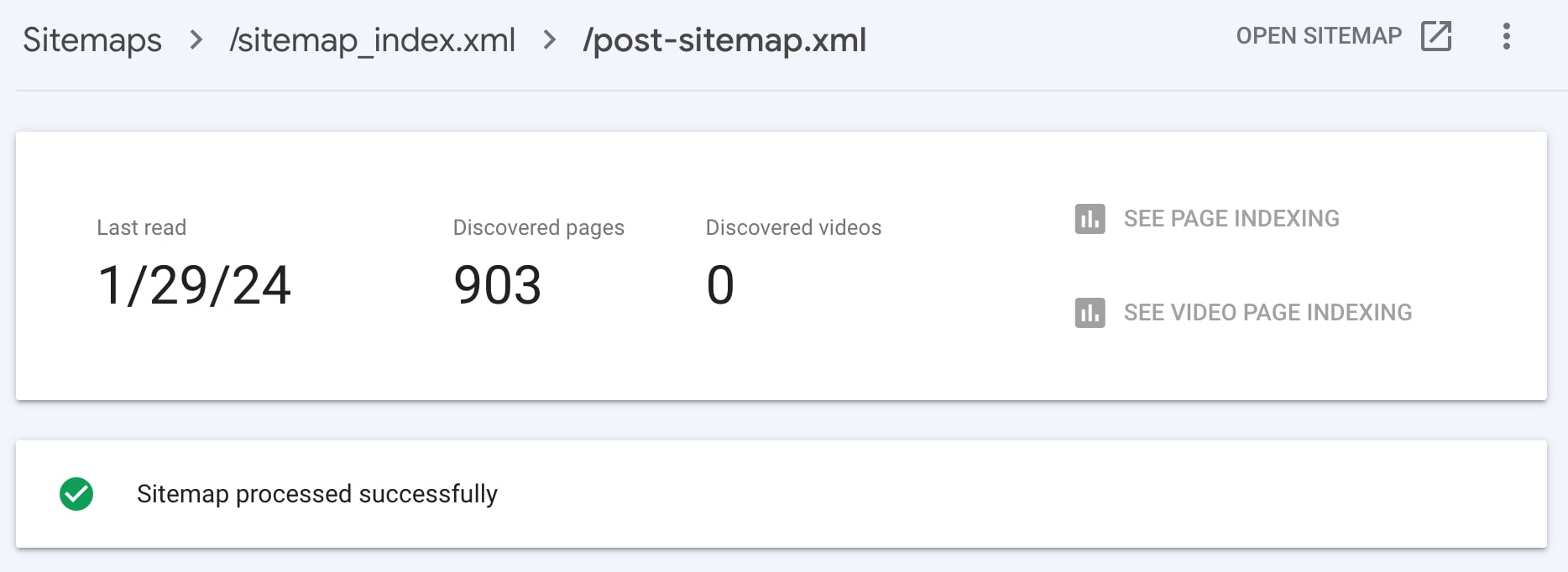
Submitting a sitemap to tools like Google Search Console (GSC) or Bing Webmaster Tools is not just about discovery; it’s also about monitoring. GSC provides invaluable data on how many URLs from a sitemap have been submitted, discovered, and ultimately indexed. This allows webmasters to identify crawl issues, indexing errors, or discrepancies, offering a direct feedback loop for technical SEO health.
8. Facilitating Multilingual and Multiregional SEO:
For websites targeting diverse linguistic or geographical audiences, XML sitemaps are instrumental in implementing hreflang annotations. These annotations within the sitemap indicate alternate language versions of pages, helping search engines serve the correct language or regional version of content to users based on their location and language preferences.
XML Sitemaps and the AI Search Landscape: An Indirect but Critical Role
The advent of AI-powered search experiences, such as Google’s AI Overviews, Bing Copilot, and other conversational AI interfaces, has shifted the landscape of information retrieval. However, the fundamental role of XML sitemaps remains indirectly, yet critically, important. These AI systems still rely on the underlying traditional search index to discover, retrieve, and synthesize content. This means that for a page to be considered by an AI agent for inclusion in a generated answer or summary, it first needs to be crawled and indexed by the search engine.
This is precisely where XML sitemaps continue to be invaluable. By providing a comprehensive list of important URLs, a sitemap ensures that search engines can efficiently discover and index a website’s content, making it available for subsequent AI processing. Furthermore, maintaining accurate <lastmod> values within the sitemap helps search engines prioritize recently updated pages. This is especially beneficial for AI systems that aim to surface the freshest and most relevant information, as outdated data can lead to less accurate or less helpful AI-generated responses.
In essence, an XML sitemap alone will not guarantee content appears in AI answers. However, it is a foundational prerequisite. It maximizes the chances of pages being discoverable, indexed, and up-to-date, thereby increasing their eligibility for consideration and utilization within the evolving ecosystem of AI-powered search results.
Implementing and Managing XML Sitemaps: Practical Approaches
While it is technically possible to manually create and update sitemap files, this approach is highly impractical for all but the smallest, static websites. The dynamic nature of most modern websites—with frequent content additions, updates, and removals—necessitates an automated solution.
Automated Sitemap Generation with Yoast SEO:
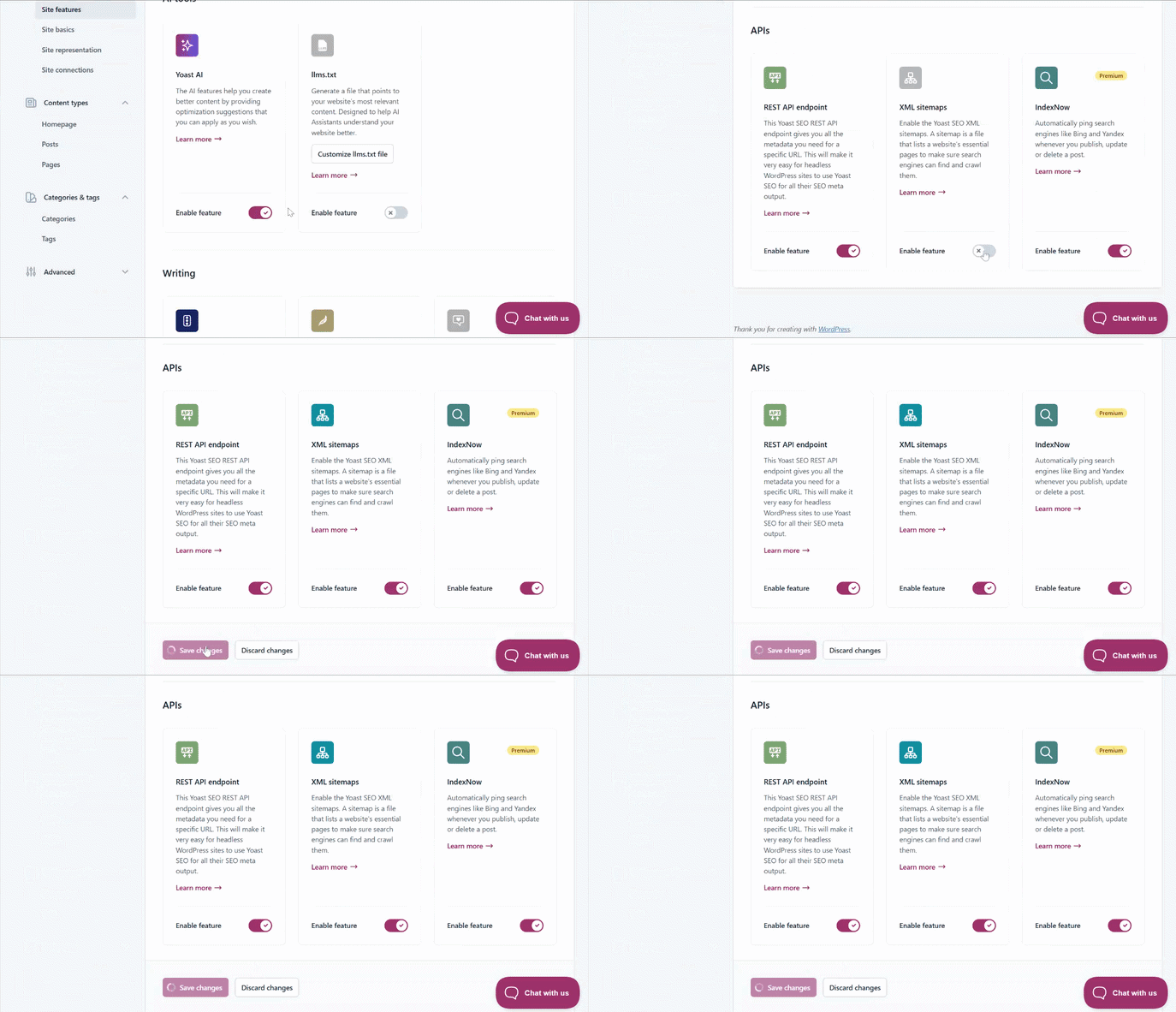
Leading SEO plugins, such as Yoast SEO, address this need by automatically generating and managing XML sitemaps. This feature is a core offering across its free and premium versions (Yoast SEO Premium, Yoast WooCommerce SEO, and Yoast SEO AI+). Instead of manual intervention, Yoast SEO handles everything in real-time. As content is published, updated, or removed, the plugin dynamically updates the sitemap index and its constituent individual sitemaps. This ensures search engines consistently receive an accurate and current overview of the pages intended for crawling and indexing.
Yoast SEO also intelligently organizes sitemaps. Rather than lumping every URL into a single, unwieldy file, it creates a sitemap index that groups separate sitemaps for different content types, such as posts, pages, and other public content types. This segmentation improves manageability and adheres to best practices.
A significant advantage of automated sitemap generation by plugins like Yoast SEO is their ability to filter content. Pages explicitly marked with a "noindex" directive are automatically excluded from the XML sitemap. This keeps the sitemap clean, focused exclusively on content intended for search engine indexing, and prevents crawlers from wasting resources on irrelevant or duplicate pages.
Controlling Sitemap Content:
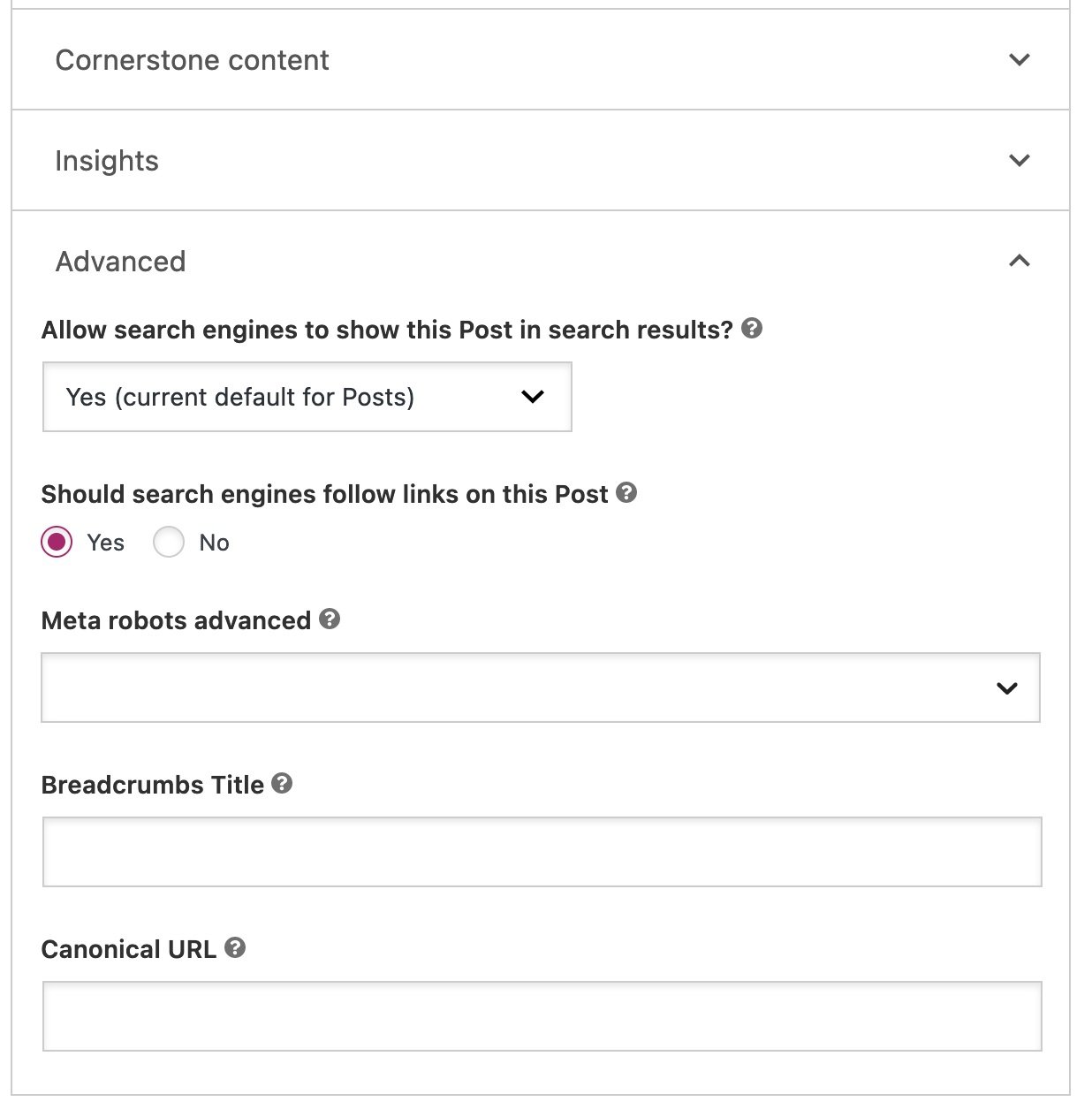
Webmasters retain granular control over what appears in their sitemap. For example, within Yoast SEO, individual posts or pages can be excluded from search results by toggling the "Allow search engines to show this content in search results?" setting in the Advanced tab. Setting this to "No" applies a noindex tag and automatically removes the content from the XML sitemap, ensuring it’s not indexed. Conversely, "Yes" includes it. This flexibility allows for precise management of content visibility. Developers can further customize sitemap behavior using filters to manage URL counts per sitemap or programmatically exclude specific content types based on custom logic.
Submitting Sitemaps to Search Engines:
Once a sitemap (or sitemap index) is generated, the next crucial step is to submit it to search engine webmaster tools.
- Google Search Console (GSC): This is the primary interface for Google. After verifying website ownership, webmasters can navigate to the "Sitemaps" section in GSC and add the sitemap URL (e.g.,
https://www.example.com/sitemap_index.xml). GSC then provides reports on the number of URLs submitted versus the number indexed, highlighting any crawl or indexing errors. A significant discrepancy between submitted and indexed counts warrants immediate investigation into potential technical issues or content quality problems. - Bing Webmaster Tools: Similarly, Bing offers a platform for submitting sitemaps, providing comparable monitoring and error reporting functionalities.
Strategic Content Inclusion and Exclusion:
The decision of which pages to include in an XML sitemap is paramount. The guiding principle should always be relevance: only include URLs that represent valuable, high-quality content intended for search engine indexing and display in search results.
Pages to Generally Include:
- All primary content pages (e.g., blog posts, product pages, service pages, static informational pages).
- Important category and tag archives (if they offer unique value and are not thin content).
- Key landing pages.
- Media-rich pages (if using image/video sitemaps).
Pages to Generally Exclude (or Noindex and Exclude):
- Thin Content: Pages with minimal unique value or duplicated content.
- Duplicate Content: Pages that are identical or near-identical to others, especially if canonical tags are not properly implemented.
- Thank You Pages: Pages displayed after a form submission or purchase, which offer no organic search value.
- Login/Registration Pages: Typically internal functions.
- Admin/Utility Pages: Backend pages, settings, etc.
- Internal Search Result Pages: These often create an infinite crawl space and are not useful for organic search.
- Pages Under Development: Content not yet ready for public consumption.
- Pagination Archives (if handled by canonicalization): While sitemaps can include paginated series, often canonical tags on the first page suffice, and including all paginated pages can bloat the sitemap with potentially less valuable URLs.
For instance, a new blog might initially have tag archives with only one or two posts, qualifying them as "thin content." In such cases, it might be strategic to exclude these archives from the sitemap until they accumulate more valuable content. However, if a webmaster believes a "thin" tag page has future potential as a strong landing page, enriching it with additional unique content (text, images, internal links) and then including it in the sitemap is the recommended approach. The key is to be intentional and always pair sitemap exclusion with a noindex tag if the goal is to prevent indexing, as merely omitting a URL from the sitemap does not guarantee it won’t be indexed if linked elsewhere.
Common Pitfalls and Best Practices
To maximize the benefits of XML sitemaps, webmasters should be aware of common issues:
- Incorrect URLs: Ensure all URLs in the sitemap are canonical, live, and resolve without errors. Including broken links or redirects can confuse crawlers.
- Exceeding Limits: For large sites, ensure sitemaps are split into multiple files, and a sitemap index is used, adhering to the 50,000 URL / 50 MB limit per file.
- Stale Sitemaps: If not automated, sitemaps can become outdated. Automated solutions ensure freshness.
- Forgetting Submission: A sitemap is only useful if search engines know where to find it. Always submit to GSC and Bing Webmaster Tools.
- Including Noindexed Content: Avoid including pages with a
noindexdirective in the sitemap, as this sends conflicting signals to search engines.
Conclusion: The Enduring Importance of XML Sitemaps
In the dynamic world of search engine optimization, foundational elements often prove to be the most enduring. XML sitemaps, while seemingly a simple technical file, represent a critical communication channel between a website and search engines. They enhance crawl efficiency, accelerate content indexing, provide a safety net for orphan pages, and offer valuable metadata signals.
As search evolves and integrates advanced AI capabilities, the necessity of a well-maintained XML sitemap only grows. It ensures that the raw material—high-quality, discoverable, and up-to-date web content—is readily available for both traditional ranking algorithms and sophisticated AI models. By diligently managing and submitting XML sitemaps, webmasters empower their websites to be fully seen, understood, and utilized across the entire spectrum of search, securing their digital presence in an increasingly competitive online environment. Checking your XML sitemap regularly and ensuring its accuracy is not just a best practice; it is an imperative for robust SEO.