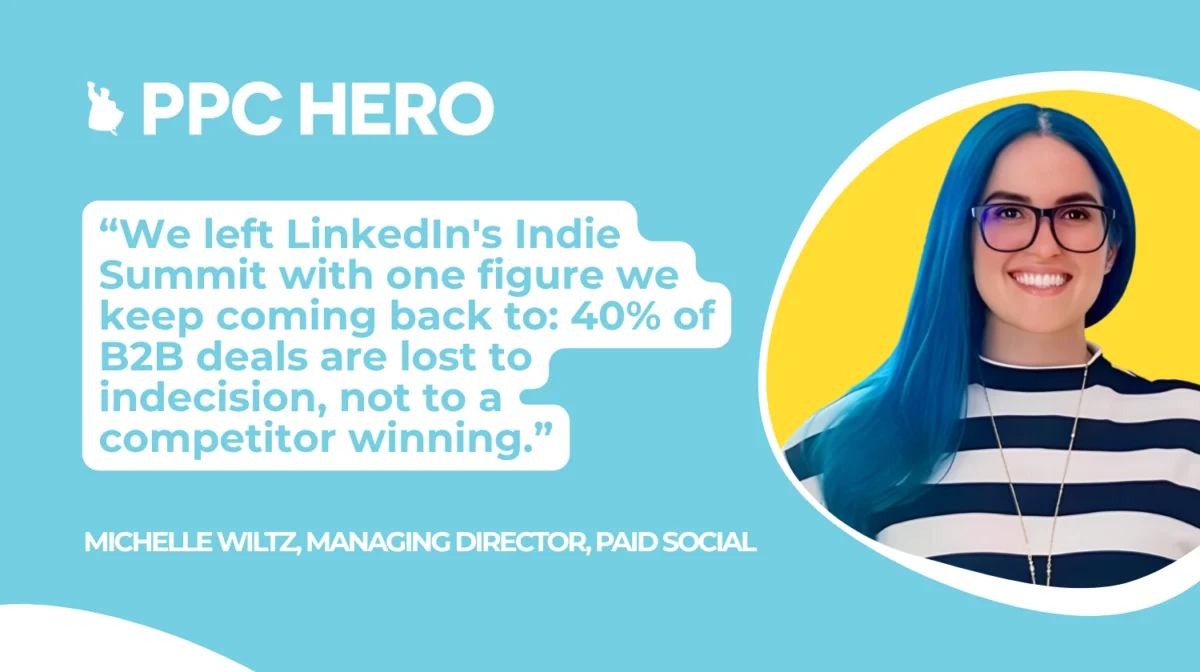
The modern B2B sales landscape is experiencing a significant shift, with a substantial portion of deals stalling not due to competitor wins, but due to internal indecision within the buying organization. Recent insights, notably from LinkedIn’s Indie Summit, indicate that a staggering 40% of B2B deals are lost to this pervasive indecision. This figure underscores a critical misalignment between traditional B2B marketing strategies and the complex, multi-stakeholder reality of contemporary B2B purchasing processes.
The immediate, and often inaccurate, reflex is to attribute this stalling to product deficiencies or uncompetitive pricing. However, industry analysis suggests that the root cause lies deeper, in the very structure of how B2B marketing engages with potential clients. In today’s environment, the average B2B buying group is a committee of approximately ten individuals, each bringing their unique priorities, concerns, and decision-making criteria to the table. This typically includes roles such as Chief Marketing Officers, Chief Financial Officers, security leads, IT specialists, and various team leaders, all of whom must reach a consensus before a purchase can be finalized. When no single member actively opposes a solution but no one is fully convinced, the deal enters a state of inertia, neither progressing nor being definitively rejected.
This phenomenon challenges the efficacy of marketing approaches historically designed to identify a single decision-maker, differentiate a product from its competitors, and drive a singular conversion event. Such tactics are effective when a solitary individual holds the ultimate authority. However, they fall short when the collective buy-in of a diverse group is required, especially when these individuals may never directly interact with the sales team during their research phase. Consequently, the strategic objective shifts from outmaneuvering competitors to facilitating a smooth and confident group "yes." This fundamental change necessitates a re-evaluation of marketing content, channel selection, and the metrics used to measure success.
The Evolving B2B Buyer: A Landscape Reshaped by AI
The research journey for B2B buyers has been profoundly altered by the increasing integration of artificial intelligence. LinkedIn’s data reveals that a remarkable 94% of B2B buyers now utilize Large Language Models (LLMs) at some point in their purchasing process. This means that by the time a marketing campaign reaches a prospective client, the majority of the ten-person buying committee has likely already conducted extensive preliminary research. They have likely leveraged AI tools to compare vendors, understand market trends, and gather information on the product category. This pre-existing knowledge equips them with specific questions and a heightened level of skepticism, making them less susceptible to conventional sales pitches.
This shift fundamentally redefines the role of consideration-stage content. Materials that once focused on favorably positioning a product against alternatives are now less impactful, as buyers have often performed these comparisons independently. The new imperative is to create content that directly addresses the latent concerns and potential risks that a cautious, informed buying group is already contemplating. The messaging must evolve from "here’s why we’re better than the competition" to a more nuanced "here’s why the specific risk you’re worried about is not the insurmountable obstacle you might perceive." Crafting such content is inherently more complex but is directly aligned with the reality of how collective B2B decisions are actually made.
The Power of Video in Building Consensus
In an environment where trust must be established across a group of ten individuals who may not engage directly with sales representatives, a medium is needed that can disseminate information effectively, be revisited multiple times, and build recognition and familiarity over an extended period, rather than demanding an immediate decision. LinkedIn’s research points to video as a particularly potent tool for this purpose. According to their findings, members who view video advertisements are 1.6 times more likely to complete a lead generation form from the same brand. Furthermore, video content exhibits a remarkable 95% retention rate and is experiencing a growth rate 60% higher than other content formats on the platform. Anecdotal evidence from agencies suggests that those embracing video marketing are reporting year-on-year growth of up to 20%, while others remain relatively stagnant. These metrics, while requiring individual account validation, indicate a clear directional trend in content effectiveness.

The underlying reason for video’s efficacy lies in its inherent shareability and communal consumption. A written document is typically read once by an individual. In contrast, a video can be easily shared within internal communication channels like Slack, played during team meetings, and viewed by multiple stakeholders, including the CFO, team leads, and procurement contacts. This shared exposure ensures that all members of the buying committee receive the same contextual information from a single, consistent source. This is precisely what a group striving for alignment requires, a feat that traditional written formats often struggle to achieve.
Crafting the Compelling Hook: The First Few Seconds Count
The effectiveness of any video content is contingent on its ability to capture and retain viewer attention. On platforms like LinkedIn, where a significant majority of users (86%) access content via mobile devices, this means the initial seconds of a video are paramount. LinkedIn’s data indicates a notable 36% increase in click-through rates when a video’s hook begins with a specific statistic or number. Similarly, contrarian statements, questions that articulate genuine pain points, and content that conveys a sense of urgency tend to perform exceptionally well. The unifying theme across these effective strategies is specificity. Generic B2B creative, which could apply to any product or service, is easily scrolled past. Conversely, content that directly resonates with the viewer’s current thoughts and concerns is far more likely to halt the scroll and encourage engagement.
Furthermore, a re-evaluation of production value is warranted. In many instances on LinkedIn, less polished content, such as lo-fi clips, behind-the-scenes glimpses, and insights into workplace culture, has outperformed highly produced videos. This may seem counterintuitive, but it aligns with the underlying assessment criteria of a cautious buying group. These buyers are not solely evaluating the product itself; they are also assessing the trustworthiness and authenticity of the vendor. In this context, genuine signals of trust, conveyed through unvarnished content, can be more impactful than a high production budget, particularly for buyers who have already conducted their due diligence and are seeking validation.
For those seeking to explore advanced video formats, LinkedIn’s BrandLink has demonstrated a 130% higher video completion rate compared to standard in-feed video. Additionally, LinkedIn’s Connected TV (CTV) offering reaches 94% of its members, delivering a 2.6 times stronger awareness lift than traditional linear television. These innovative approaches offer compelling avenues for B2B marketers to enhance their video strategies.
The Crucial Question for Future B2B Campaigns
The challenge of B2B indecision is a pervasive and potentially costly issue, likely impacting pipeline generation more significantly than many B2B organizations currently recognize. Marketing campaigns meticulously crafted to win a direct comparison against competitors are ill-equipped to address this complex problem. The path forward involves a strategic pivot towards video content, distributed in a manner that ensures repeated exposure to the entire buying group within relevant contexts. This content must be designed to directly confront perceived risks rather than merely showcasing product features. By adopting these strategies, B2B marketers can begin to effectively bridge the gap and reduce deal attrition.
Therefore, the critical question that marketers should pose before developing their next campaign brief is straightforward: Are we building this campaign to convince a single individual, or are we aiming to cultivate sufficient comfort and confidence within a group of ten to facilitate their collective decision to move forward? This reframing of objectives is essential for navigating the intricate realities of the modern B2B purchasing journey.