

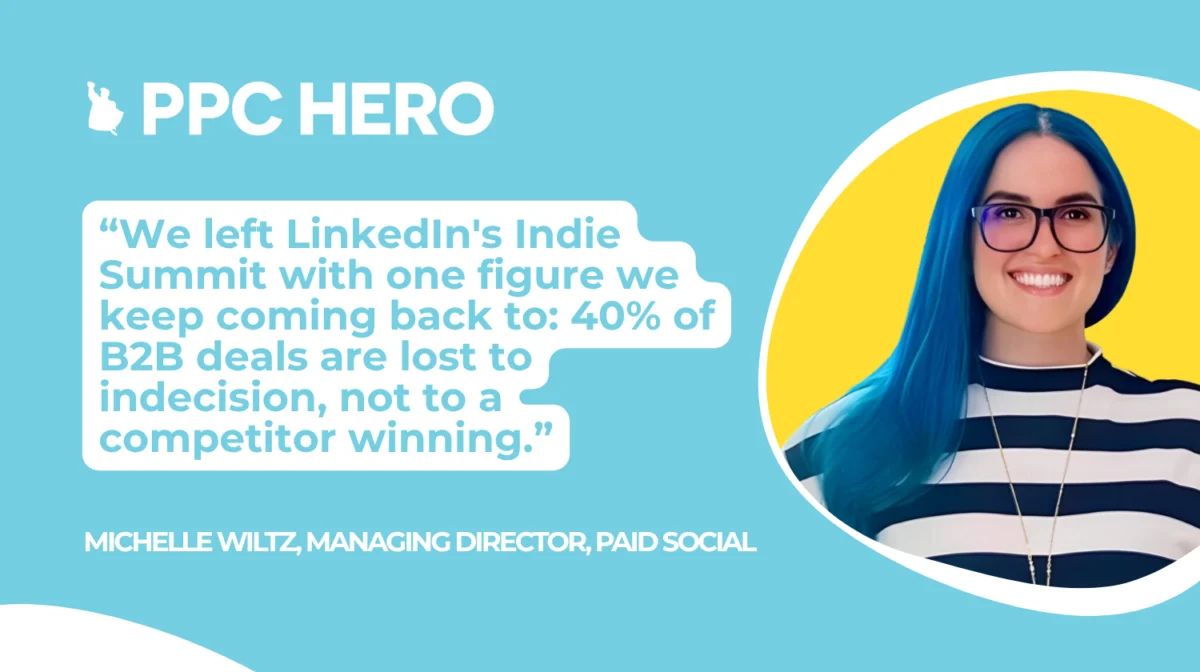
The complex landscape of business-to-business (B2B) sales is experiencing a significant shift, with a substantial portion of deals now stalling not due to competitor pressure, but due to internal indecision within the buying organization. This emerging trend was a central theme at LinkedIn’s recent Indie Summit, where data revealed that a staggering 40% of B2B deals are lost to a lack of consensus among stakeholders, rather than a rival’s superior offering. This insight challenges traditional B2B marketing and sales strategies, which are often designed to persuade a single decision-maker and highlight competitive advantages.
The reality of modern B2B procurement is far more intricate. A typical buying group can comprise as many as ten individuals, each representing different departments and bringing their own unique priorities, concerns, and questions to the table. This includes key figures such as Chief Marketing Officers (CMOs), Chief Financial Officers (CFOs), security leads, IT managers, and various team leaders, all of whom must be satisfied before a contract can be signed. When no single individual actively opposes a proposed solution, but neither is fully convinced, the deal enters a state of inertia, failing to progress and ultimately becoming a lost opportunity. This phenomenon is less about losing to a competitor and more about failing to navigate the internal complexities of a group decision.
This internal paralysis stems from a fundamental misalignment between current B2B marketing practices and the contemporary buying journey. The prevalent approach focuses on individual persuasion and competitive differentiation, aiming to secure a singular approval. While effective in scenarios where one person holds ultimate authority, this strategy falters when consensus among a diverse group is paramount. The objective must therefore shift from outmaneuvering competitors to facilitating a collective "yes," a recalibration that impacts content creation, channel selection, and performance measurement.
The Evolving B2B Buyer: Informed and Skeptical
The modern B2B buyer arrives at the negotiation table far more informed than in previous eras. LinkedIn’s research highlights a dramatic increase in the utilization of Artificial Intelligence (AI) and Large Language Models (LLMs) within the buyer’s research process. A remarkable 94% of B2B buyers now incorporate LLMs at some stage of their procurement journey. This means that by the time marketing campaigns and sales representatives engage, a significant portion of the ten-person buying committee has already conducted independent research. They have likely leveraged AI to compare vendors, analyze market categories, and have arrived with pre-formed questions and a healthy degree of skepticism.
Consequently, the role of consideration content has been redefined. Materials that merely position a company favorably against its rivals hold diminishing influence, as buyers have often already performed these comparisons autonomously. What truly resonates with a cautious and well-researched group is content that directly addresses their latent anxieties and concerns. The messaging must pivot from a comparative stance – "Here’s why we are superior to the alternatives" – to a problem-solving one – "Here’s why the issue you’re concerned about is not the insurmountable obstacle you might perceive." This represents a more challenging content creation brief, yet it is precisely the approach that aligns with how complex B2B decisions are genuinely made.
The Strategic Advantage of Video in B2B Engagement
In scenarios requiring the cultivation of trust and confidence across a distributed group of ten individuals who may never directly interact with the sales team, a medium that can be easily shared, rewatched, and build recognition over time is crucial. This contrasts with formats that demand a singular, impactful exposure. LinkedIn’s data strongly suggests that video content is uniquely positioned to fulfill this need. Their research indicates that members exposed to video advertisements are 1.6 times more likely to complete a lead generation form for the same brand. Furthermore, video content demonstrates an impressive 95% retention rate and is experiencing a growth rate of 60% faster than other content formats on the platform. Anecdotal evidence from agencies indicates a correlation between a strategic focus on video and year-on-year growth of approximately 20%, while those not prioritizing video report flat performance. These metrics warrant careful examination and testing against individual account performance, but the overarching trend is undeniably significant.

The underlying efficacy of video in this context lies in its inherent mobility and re-watchability. A written asset is typically consumed once. A video, conversely, can be seamlessly integrated into team communication channels like Slack, played during internal meetings, and viewed by various stakeholders – the CFO, the team lead, and the procurement contact – all absorbing the same contextual information from a singular source. This shared exposure is precisely what a group striving for alignment requires, a dynamic that traditional written formats struggle to replicate.
The Criticality of the Hook in B2B Video Content
However, the effectiveness of any video content is contingent upon its ability to be watched. On platforms like LinkedIn, this hinges almost entirely on the impact of the initial seconds. With 86% of members accessing the platform via mobile devices, video content must contend for attention on small screens within a highly saturated feed. LinkedIn’s findings reveal a 36% increase in click-through rates when video hooks commence with a specific statistic or numerical data point. Additionally, contrarian statements, questions that directly address a palpable pain point, and content that generates a genuine sense of urgency consistently outperform other approaches. The unifying element across these successful strategies is specificity. Generic B2B creative, easily attributable to any product or service, tends to be scrolled past. Conversely, content that articulates the viewer’s existing thoughts and concerns immediately captures their attention and halts the scroll.
The production value of B2B video content also warrants a re-evaluation. In many instances on LinkedIn, lo-fi clips, behind-the-scenes glimpses, and content showcasing workplace culture have proven more effective than highly polished productions. This might seem counterintuitive until one considers the true assessment criteria of a cautious buying group. They are not solely evaluating the product itself; they are also assessing the trustworthiness of the vendor. Authenticity, particularly in the context of buyers who have already conducted extensive research and are actively seeking validation, signals trust more rapidly than a substantial production budget.
For organizations seeking to experiment with novel formats, LinkedIn’s BrandLink has demonstrated a 130% higher video completion rate compared to standard in-feed video. Furthermore, LinkedIn’s Connected TV (CTV) offering reaches 94% of members and delivers a 2.6 times stronger awareness lift than traditional linear television advertising. These advanced solutions offer opportunities to reach B2B audiences in diverse and impactful ways.
Rethinking B2B Campaign Strategy for Group Consensus
The pervasive issue of indecision in B2B sales is a significant, and often underestimated, impediment to pipeline development. Campaigns that are engineered solely to win a competitive comparison fail to address this core challenge. The path forward involves a strategic shift towards video content, disseminated in a manner that ensures repeated exposure to the entire buying group within their operational context. This content must be crafted to directly address genuine risks and concerns, moving beyond mere product feature showcases. By adopting this approach, B2B organizations can begin to bridge the gap created by internal friction and stalled deals.
Therefore, as marketing and sales teams prepare their next campaign briefs, a fundamental question should guide their strategy: "Are we building this campaign to convince one person, or are we designing it to make ten people comfortable enough to move forward?" This crucial distinction can redefine campaign objectives, content strategies, and ultimately, the success rate of B2B sales efforts in an increasingly complex and consensus-driven market. The insights gleaned from platforms like LinkedIn underscore the need for a more nuanced, human-centric approach to B2B marketing that prioritizes building collective confidence over singular persuasion. The future of B2B sales success lies in understanding and catering to the collective intelligence and distributed decision-making processes of modern buying committees.









