
 rifanmuazin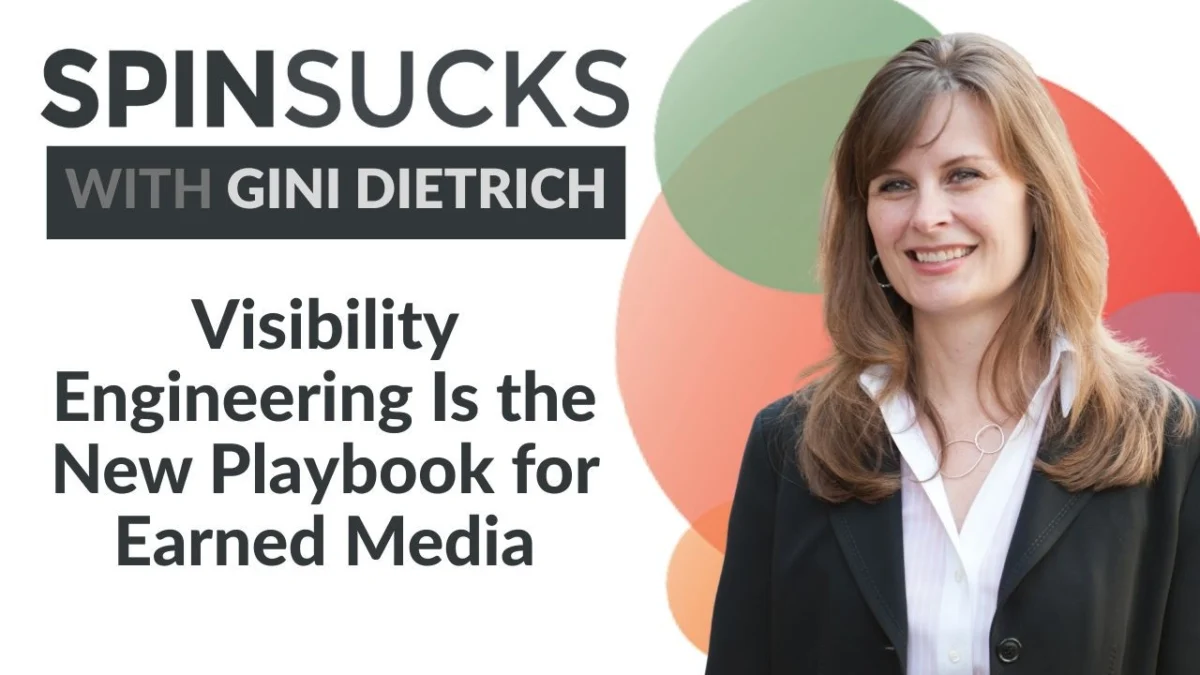
The global public relations and digital marketing landscapes are undergoing a fundamental transformation as generative artificial intelligence (AI) alters how information is discovered, validated, and consumed. For decades, the industry relied on "earned media"—mentions in newspapers, trade journals, and broadcast outlets—as the primary vehicle for both discovery and credibility. However, the emergence of Large Language Models (LLMs) such as ChatGPT, Claude, and Gemini has decoupled these two functions, necessitating a new strategic framework known as visibility engineering. This practice seeks to synchronize owned and earned media to ensure that an organization’s expertise is recognized not only by human audiences but also by the algorithmic systems that now serve as the world’s primary information gatekeepers.
The Paradigm Shift: From Discovery to Pattern Recognition
In the traditional media model, a single high-profile media placement served a dual purpose: it allowed a prospect to find a brand and provided the immediate social proof required to establish legitimacy. If a CEO was quoted in a major financial publication, that "hit" was a self-contained victory. Today, that linear path from discovery to trust has been disrupted. Market data suggests that a growing segment of consumers and B2B decision-makers consult AI chatbots for recommendations, comparisons, and industry overviews before ever visiting a corporate website or conducting a traditional Google search.
According to industry analysts, this shift means that isolated media mentions—often referred to as "trophy case" wins—are losing their efficacy. In an AI-shaped market, credibility is no longer derived from a single moment of visibility but from a consistent pattern of signals across the digital ecosystem. AI systems do not just look for a single mention; they aggregate data from various sources to determine which entities are authoritative on specific topics. Consequently, a disconnected collection of media hits fails to create the "credibility loop" necessary to influence AI-driven search results and summaries.
The Evolution of Visibility: A Brief Chronology
The transition toward visibility engineering can be viewed through the lens of three distinct eras in the evolution of public relations and information management.
The Era of Press Clippings (Pre-2010)
In this period, visibility was measured by the volume of physical or digital clippings. Success was defined by "reach" and "impressions." The focus was almost entirely on earned media, with very little integration between a company’s internal content and its external press coverage.
The Era of SEO and Social Media (2010–2022)
The rise of Google’s search algorithms and platforms like LinkedIn and Twitter introduced the need for "backlinks" and "social signals." PR professionals began to understand that a media mention was more valuable if it linked back to a website, improving Search Engine Optimization (SEO). However, owned and earned media often remained siloed, managed by different teams with different KPIs.
The Era of Visibility Engineering (2023–Present)
The public release of advanced generative AI tools marked the beginning of the current era. Information is now synthesized rather than just indexed. This requires a systemic approach where owned, earned, shared, and paid media (the PESO Model®) operate as a single, integrated credibility engine. The goal is to build "reusable proof" that AI systems can easily identify and attribute to a specific source of authority.
The Mechanics of Visibility Engineering: Anchor Hubs and Credibility Loops
The core of visibility engineering lies in the creation of an "anchor hub." This is a deep, defensible, and highly authoritative piece of owned content located on a brand’s website. Unlike a standard blog post or a generic services page, an anchor hub is designed to be a definitive reference entry for a specific topic or buyer question.
The anchor hub serves as the "home base" for all external communications. When a company secures a bylined article, a podcast interview, or a quote in a trade publication, these earned media wins are intentionally designed to reinforce the central themes and data found within the anchor hub. This creates a "credibility loop." Instead of a series of random, disconnected mentions, the market sees a consistent pattern of expertise.
For AI systems, this consistency is vital. LLMs use training data and real-time web crawling to identify relationships between entities (companies or people) and concepts (expertise or solutions). When an expert is consistently quoted on a specific subject and that subject is deeply explored on the expert’s own platform, the AI identifies a high "confidence score," making it more likely to surface that brand as a trusted answer in user queries.
Supporting Data: The Decline of Traditional Search and the Rise of AI Synthesis
Recent reports from technology research firms like Gartner suggest a significant shift in search behavior. Predictions indicate that by 2026, traditional search engine volume could drop by as much as 25% as users migrate toward AI-integrated search and conversational interfaces.
Furthermore, data from the 2024 Edelman Trust Barometer highlights a growing skepticism toward traditional information sources, with "peers" and "technical experts" often being viewed as more credible than "journalists" or "CEOs" in isolation. Visibility engineering addresses this by focusing on technical proof and consistent expert positioning rather than mere brand awareness.
| Metric | Traditional PR Approach | Visibility Engineering Approach |
|---|---|---|
| Primary Goal | Media Mentions (Volume) | Authority Signaling (Pattern) |
| Search Focus | Keywords and Backlinks | Entity Recognition and RAG (Retrieval) |
| Content Structure | Isolated Blog Posts | Deep Anchor Hubs |
| Measurement | Impressions/Ad Value Equivalency | AI Attribution and Sentiment Patterns |
| Outcome | Temporary Visibility | Compounding Credibility |
Industry Reactions and Expert Analysis
Communication strategists argue that the problem facing modern brands is not a lack of earned media, but rather "disconnected" earned media. Gini Dietrich, the creator of the PESO Model®, has long advocated for the integration of media types, but the advent of AI has accelerated the necessity of this approach. Industry experts suggest that the "trophy case" mentality—where a company celebrates a single mention in a major outlet and then moves on—is no longer a viable growth strategy.
"In an AI-shaped market, visibility is not a moment; it is momentum," noted one senior communications consultant. "If your earned media doesn’t point back to a durable source of truth that you own, you are essentially asking a single news article to do all the heavy lifting for your brand’s reputation. That is no longer a realistic expectation."
Analysts also point out that this shift levels the playing field for mid-sized enterprises. While they may not have the massive PR budgets of Fortune 500 companies, they can achieve high levels of authority by "engineering" their visibility around specific, niche topics where they can provide more depth and utility than their larger competitors.
Strategic Implications for Organizations
The transition to visibility engineering requires a significant shift in how organizations allocate resources and measure success.
- From Volume to Signal: Organizations must stop prioritizing the number of content pieces produced and start prioritizing the strength of the signals they are sending. One comprehensive, well-cited anchor hub is more valuable than fifty generic blog posts.
- Expert Association: AI systems value "named experts." Companies must identify key individuals within their organization and consistently associate their names with specific topics across both owned and earned channels.
- The Measurement Shift: Success should be measured by whether a brand appears in AI-generated answers for critical industry questions. This requires new tools and methodologies for "AI tracking" to supplement traditional media monitoring.
- Building Proof Before It Is Needed: Because AI models are trained on historical data, the credibility a brand builds today will influence the answers the AI provides months or even years from now. Credibility must be built as a long-term asset.
Future Outlook: The April 30 Industry Briefing
The urgency of this shift is reflected in the upcoming industry events dedicated to the topic. On April 30, a major webinar hosted by the media platform Qwoted will feature discussions on how experts can ensure their profiles and presence support long-term authority in an AI-driven market. This event is expected to draw hundreds of PR professionals and corporate leaders looking to refine their "visibility engine."
As the digital ecosystem becomes increasingly crowded and AI-mediated, the brands that survive will be those that recognize that visibility is no longer an end in itself. Instead, visibility must be engineered as a deliberate system of proof—one that connects every media mention to a deeper foundation of expertise, ensuring that whether a human or a machine is asking the question, the brand remains the obvious and trusted answer. The era of the "media hit" is ending; the era of the "credibility loop" has begun.










