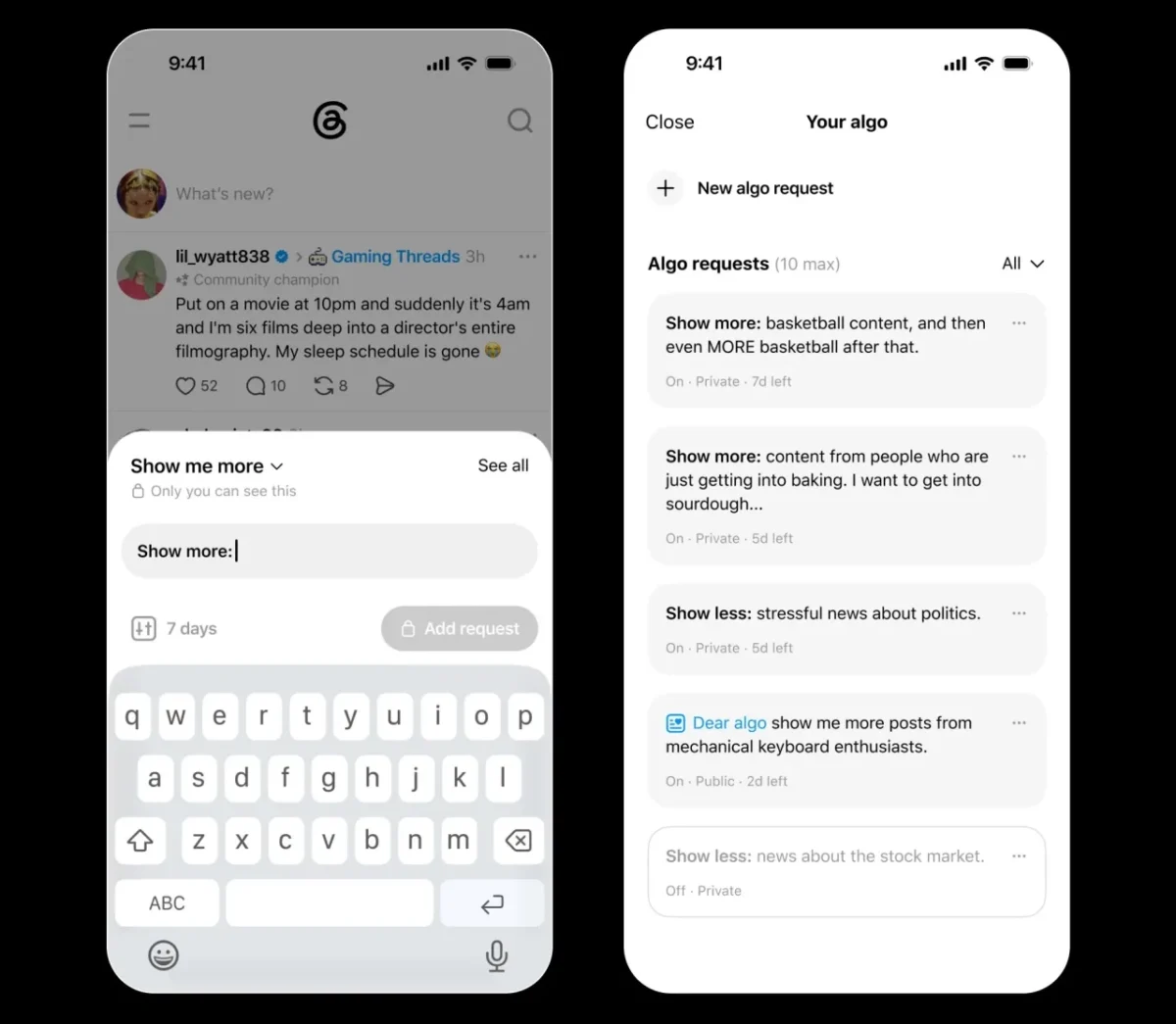
The digital landscape is abuzz with a new wave of features rolling out across major social media platforms, from Meta’s Threads and Instagram to TikTok. These platforms are introducing tools that ostensibly give users unprecedented control over their content feeds, offering features like "topic sliders," "interest toggles," and "content preference menus." The narrative being pushed is that users are finally in the driver’s seat, dictating precisely what they see and when they see it. However, a closer examination reveals that this framing, while politically expedient, largely misrepresents the true nature of algorithmic personalization and its implications, particularly for long-term users and advertisers.
The core of the issue lies in the fundamental distinction between explicit user declarations and implicit behavioral signals. While the new menus suggest a direct dialogue between user and algorithm, the reality is that users have always exerted significant control. Every moment spent watching a video to completion, every rewatch of a compelling clip, and every extended pause on a particular post are potent, nuanced signals to the algorithm. These granular behavioral cues, accumulated over countless interactions, paint a far more detailed and accurate picture of a user’s true interests than any broad, declared preference could ever capture. For instance, an algorithm can discern a user’s deep-seated obsession with a niche franchise like "Avatar: The Last Airbender" not because the user ticked a box for "animation," but because they consistently engage with fan edits, discussions, and related content, even at unconventional hours.
This fundamental difference between explicit, generalized preferences and implicit, granular behavior is the crux of the matter. A topic slider indicating an interest in "musicals," while a useful starting point, fails to convey the specific delight a user might experience from a mashup of characters from "Avatar: The Last Airbender" singing songs from "Hamilton." It is the viewing behavior, the sustained engagement, that provides this level of detail. These behavioral signals are the rich tapestry from which sophisticated algorithms weave personalized content experiences.
The Political Imperative Behind Algorithmic Transparency
So, if experienced users’ feeds are already finely tuned by their past actions, why are platforms investing resources in these new explicit preference tools? The candid answer lies more in political strategy and public relations than in product innovation for the majority of their user base. In an era marked by increasing public scrutiny of data privacy, the opaque nature of algorithmic decision-making, and ongoing debates surrounding content moderation, offering users a visible "dial" to turn is a pragmatic response to mounting pressure.
These features serve as a tangible demonstration of accountability, providing a visual cue for regulators and the public that platforms are making an effort to cede some control. This can help to alleviate concerns about "black box" algorithms dictating user experiences and potentially contributing to issues like filter bubbles or the spread of misinformation. By presenting these tools, platforms can point to a concrete action that appears to address these complex societal challenges, even if their practical impact on established user feeds is minimal.
A Cold Start for the Uninitiated
Despite the limited utility for seasoned users, there is a genuine and significant use case for these explicit preference tools for individuals new to a platform. For a user joining a platform with no prior interaction history, an absence of accumulated behavioral data leaves the algorithm with little to work with. In such scenarios, being able to declare "I am interested in cooking and I do not want to see football content" is invaluable. These explicit preferences act as a crucial "cold start" mechanism, allowing the algorithm to establish an initial baseline of content relevance much faster than it would take to observe and interpret nascent behavioral patterns. This accelerates the process of delivering a satisfactory initial experience, potentially improving user retention from the outset.
Consider the onboarding process for a new user on a platform like TikTok. Without any viewing history, the algorithm has to make educated guesses. Offering a curated list of interests to select from allows the user to immediately signal their broad preferences, leading to a more relevant initial feed and a higher likelihood of continued engagement. This is a practical application of the "preference menu" that genuinely enhances the user’s early experience.
The Enduring Power of Behavioral Signals
However, for the vast majority of users who have been active on these platforms for months or even years, the impact of these new dials is likely to be negligible. Their feeds have already been meticulously sculpted by a rich history of thousands, if not millions, of micro-interactions. These ongoing, often unconscious, behavioral signals are the true architects of their personalized content streams. The algorithm has had ample time to learn the subtle nuances of their preferences, understanding not just broad categories but specific content formats, pacing, and even the emotional resonance of different types of posts.
The data underpinning these algorithms is immense. For example, Meta, the parent company of Instagram and Threads, processes petabytes of data daily, much of which is related to user interaction with content. This includes not only likes and shares but also the duration of viewing, scrolling speed, and the frequency with which users return to specific posts. This depth of data allows for a highly sophisticated understanding of user preferences that explicit declarations can only approximate.

Implications for Advertisers: The Creative Imperative
The distinction between behavioral and declared signals carries significant implications for advertisers operating within these social media ecosystems. If the primary determinant of content delivery is still rooted in behavioral engagement rather than explicit declarations, then the most effective advertising strategies will be those that actively earn and leverage behavioral engagement, not those that merely align with declared interest categories.
This means that the fundamental task for social media advertisers has not fundamentally shifted with the introduction of these new features. The objective remains to craft creative content across a diverse range of formats and messages, allowing user behavior to reveal which versions resonate most effectively with different audience segments. A user who watches a product video multiple times sends a distinct and more valuable signal than one who skips it within the first two seconds. Both of these behavioral insights are far more actionable for optimization than simply knowing that a user has indicated an "interest in fashion."
The practical implication for media planning is therefore straightforward: diversification of creative assets is paramount. Advertisers must embrace a strategy of testing various formats, messaging, and calls to action against each other. The ultimate arbiter of success should be the platform’s actual delivery and engagement data, which reflects how users are truly interacting with the content. The most effective iteration of an advertisement is not necessarily the one that aligns with an advertiser’s initial assumptions or a user’s declared interest, but rather the one that users’ observed behavior consistently selects for over time.
This necessitates a continuous feedback loop where creative is iterated upon based on performance metrics. For example, an advertiser might launch a campaign with three different video ad variations. By analyzing watch times, completion rates, and subsequent actions (like website visits or purchases), the advertiser can identify which variation is driving the most meaningful engagement. This data-driven approach allows for a more efficient allocation of advertising spend and a higher return on investment.
A Deeper Dive into Advertiser Strategy
The traditional approach to social media advertising often involved broad targeting based on demographics and declared interests. However, the underlying mechanics of platform algorithms have always rewarded content that genuinely captures user attention. The introduction of explicit preference controls doesn’t negate this; it merely highlights the existing dynamic.
For instance, a brand selling athletic apparel might initially target users who have expressed an interest in "fitness" or "sports." While this provides a baseline, the real success lies in creating ad content that users not only see but actively engage with. This could involve dynamic video ads showcasing the product in action, user-generated content featuring athletes endorsing the brand, or interactive polls that engage viewers directly. The algorithm, observing users spending more time watching these engaging ads or clicking through to learn more, will then prioritize showing these ads to a wider audience with similar behavioral patterns, even if those users haven’t explicitly declared an interest in athletic apparel.
The concept of "earned behavioral engagement" is critical here. Advertisers need to move beyond simply "showing" their ads and focus on creating content that users want to see and interact with. This involves understanding the nuances of each platform’s audience and content consumption habits. What works on Instagram, with its visually driven feed, might differ significantly from what performs well on TikTok, with its emphasis on short-form, trend-driven video content.
Navigating the Evolving Landscape
The introduction of user-controlled algorithmic features represents a significant moment in the ongoing evolution of social media platforms. For individuals new to these digital spaces, these tools offer a vital pathway to a more personalized and satisfying initial experience. They democratize the initial setup process, ensuring that new users are not immediately overwhelmed by irrelevant content.
From a political and public relations standpoint, these features are a strategic move, signaling a commitment to transparency and user agency in a climate of heightened scrutiny. They provide a readily understandable mechanism that can be pointed to as evidence of platform responsiveness to societal concerns.
However, for the vast majority of established users and for advertisers deeply invested in understanding platform dynamics, the core principles remain unchanged. The true engine of content delivery and, consequently, advertising performance, is driven by the subtle, consistent, and rich signals of user behavior. The enduring playbook for success in this environment is clear: prioritize the creation of content that is inherently engaging and worth lingering on. Foster a diverse testing environment where multiple creative variations can be deployed and analyzed. Ultimately, trust the granular insights gleaned from actual viewing data over the broader strokes of declared preferences. This has been the winning strategy, and it continues to be the path forward. The illusion of direct control offered by new menus should not obscure the profound and persistent power of what users actually do.