admin
admin
Some businesses appear to achieve their marketing objectives with remarkable ease. The underlying reason is frequently straightforward: they effectively leverage landing pages. These dedicated web pages are not merely an optional component of a digital strategy but a fundamental driver of accelerated growth, often surpassing the efficacy of almost any other marketing tool. Businesses neglecting their implementation are invariably leaving significant conversion opportunities unrealized.
This comprehensive guide aims to demystify the concept of landing pages, offering a crystal-clear explanation supported by practical examples and expert insights, ensuring that the term "landing page" is understood in its full strategic context. To underscore their tangible impact, extensive research was conducted, involving interviews with over 50 businesses across various sectors to ascertain the real-world effectiveness of these tools. Their collective stories, invaluable insights, and practical tips are integrated throughout this analysis.
Understanding the Core: What Defines a Landing Page?
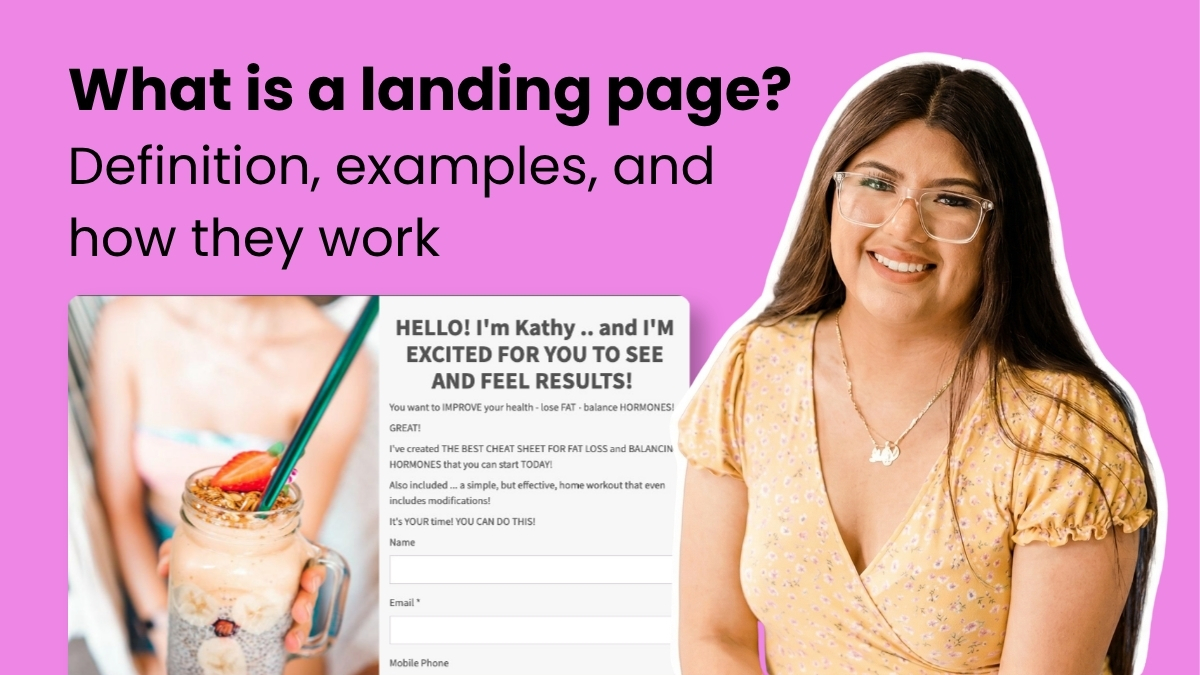
At its essence, a landing page is a standalone web page where a visitor "lands" after clicking a call-to-action (CTA) link. This link can originate from diverse sources, including search engine results pages, digital advertisements, email campaigns, blog posts, or social media content. Unlike a typical website page, a landing page is meticulously designed to encourage visitors to undertake one singular, specific action. This could range from subscribing to a newsletter, scheduling a consultation, purchasing a product, or signing up for a service. It is this singular focus, free from the distractions of a broader website, that underpins their exceptional effectiveness.
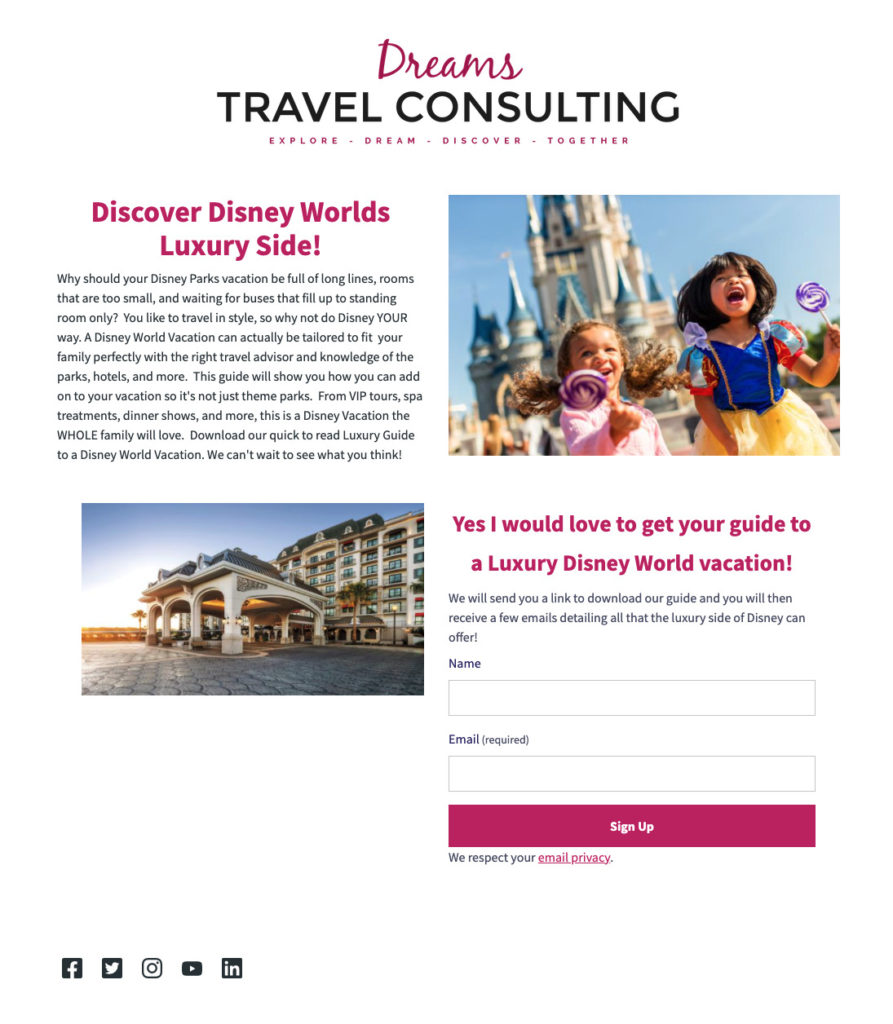
For instance, consider the approach of Dreams Travel Consulting. They utilize a landing page exclusively to offer a complimentary guide on Disney World Luxury vacations. The exchange is simple: visitors provide their email address. This exemplifies the core principle: one offer, one form, one overarching goal. The design and content of landing pages can vary dramatically, influenced by the specific objective, target audience, and brand identity. Some may be minimalist, featuring only a compelling headline and a submission form, while others might extend to several scrolls, incorporating detailed copy, rich imagery, and persuasive testimonials. Despite these variations, their shared characteristic remains a singular conversion objective.
Defining Conversion: The Goal-Oriented Metric
Within the context of a landing page, a "conversion" refers to the precise action a business intends for a visitor to complete. This can encompass a broad spectrum of activities:
- Submitting a form (e.g., for lead generation, content download)
- Making a purchase
- Signing up for a free trial
- Registering for a webinar or event
- Downloading an app
- Scheduling a demo or consultation
- Clicking to call or email
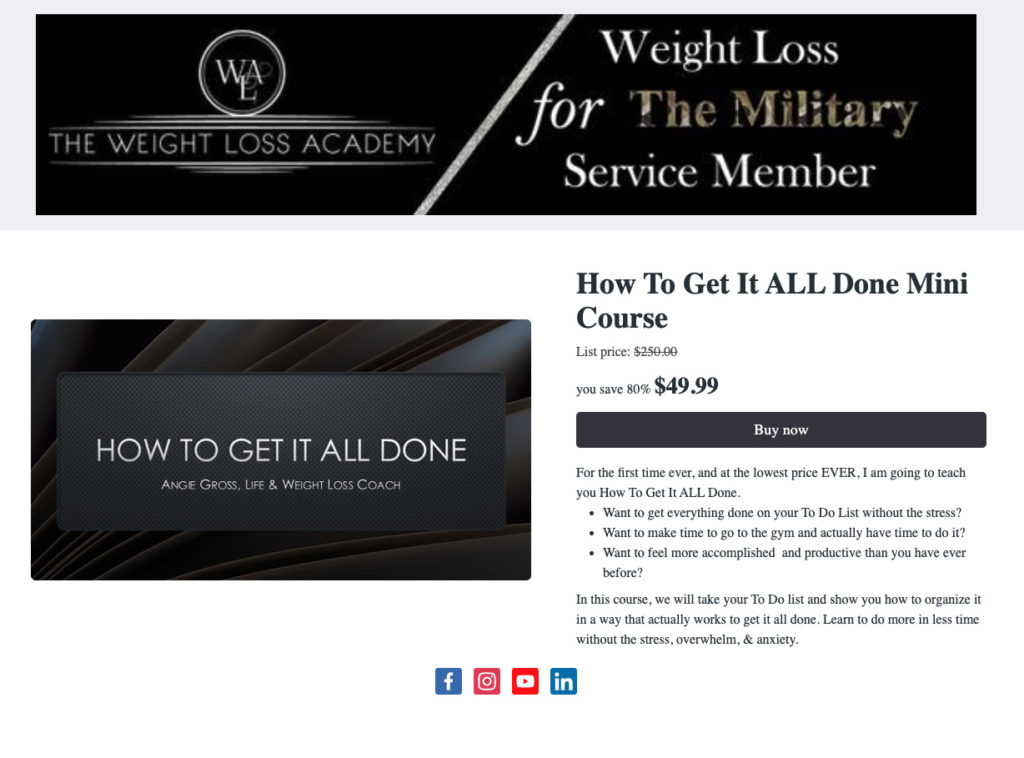
As an illustrative example, The Weight Loss Academy employs a landing page with the explicit CTA: "Buy now." Each instance where a visitor clicks this button and successfully completes a purchase is logged as a conversion, directly reflecting the page’s success in fulfilling its designated purpose.
Landing Page vs. Website: A Fundamental Distinction
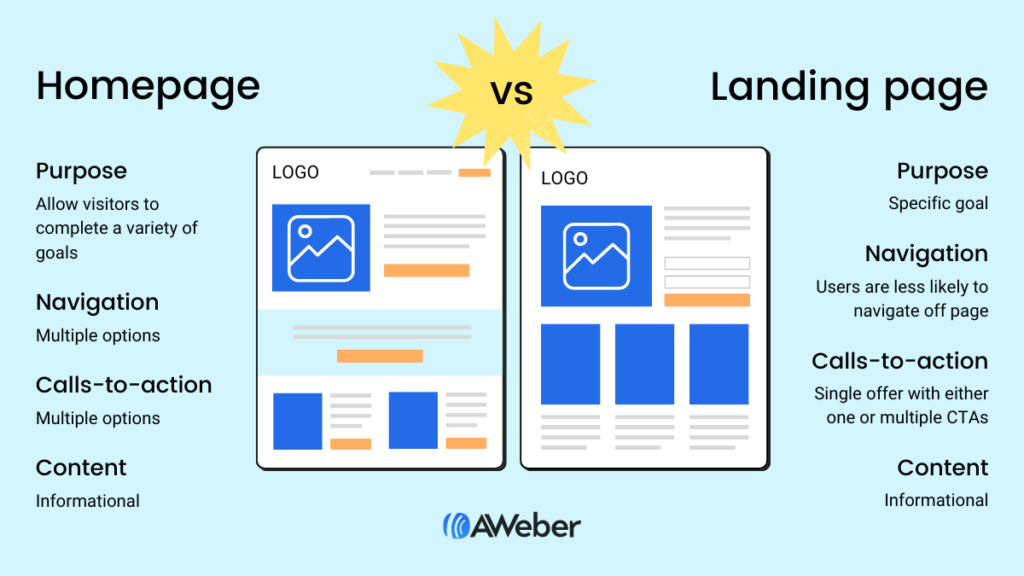
The primary differentiation between a landing page and a conventional website page lies in their respective purposes and structural design. General websites are engineered to provide comprehensive information, offering numerous links and pages to answer visitor queries, facilitate exploration, and guide users towards a diverse range of products or services. Their objective is broad: to inform and enable navigation across a multifaceted digital presence.
In stark contrast, landing pages are meticulously crafted to funnel visitors towards a single, predetermined action. They are characterized by their laser-like focus on this specific goal, typically featuring only one call-to-action link and deliberately omitting elements that might divert attention. A useful analogy is to envision a website as a continent: a vast, interconnected landmass with numerous pathways and destinations, allowing for effortless navigation between its various corners. A landing page, then, resembles an island situated off the coast of that continent. It stands autonomously, disconnected from the broader navigational structure of the main website, dedicated entirely to its isolated purpose.
Take The School of Natural Healing as a case in point. Their main website boasts a full navigation menu, linking to dozens of courses and extensive information, designed for broad exploration. However, their landing page for the Family Herbalist Course has one solitary objective: to sell that specific course. Critically, no other element on the page competes for the visitor’s attention, ensuring an undiluted focus on the conversion goal.
Strategic Choice: When to Opt for a Landing Page vs. a Website Page
The decision between creating a landing page or a standard website page hinges on the desired visitor behavior. Is the objective for the visitor to perform a single, focused task, or is it to encourage exploration and comprehensive learning about the brand?

Landing pages are the optimal choice when:
- Running specific marketing campaigns (e.g., paid ads, email promotions)
- Launching a new product or service
- Collecting leads for a particular offer (e.g., ebook, webinar)
- Testing a new market segment or value proposition
- Measuring the effectiveness of a specific marketing channel
Conversely, website pages are essential for:
- Establishing a broad online presence and brand identity
- Providing detailed company information (About Us, Contact, Careers)
- Showcasing a wide range of products or services
- Facilitating organic search discovery for general queries
- Building long-term customer relationships through diverse content
For individuals or businesses without an existing website, or those seeking maximum efficiency, hosting landing pages on a dedicated marketing platform offers significant advantages. Such platforms typically remove the design complexities associated with stripping out navigation menus and sidebars from a website template, offering faster load speeds and robust built-in analytics. This makes them an excellent solution for creators and solopreneurs looking to build an email list or sell products from day one, entirely independent of a traditional website.

The Strategic Imperative: Why Landing Pages are Critical for Modern Businesses
Landing pages are not merely effective; they are increasingly indispensable in the competitive digital landscape. They consistently demonstrate the capacity to generate substantially more leads, conversions, and sales compared to generic website pages. This enhanced performance is attributed to several key benefits:
- Improved Conversion Rates: By removing distractions and focusing solely on one CTA, landing pages guide visitors directly to the desired action, leading to higher conversion rates. Industry benchmarks often show landing pages converting at rates significantly higher than typical website homepages, sometimes by as much as 2-3 times.
- Enhanced Lead Generation: They are powerful tools for capturing qualified leads by offering valuable incentives (e.g., ebooks, webinars) in exchange for contact information. This allows businesses to build targeted email lists for future nurturing.
- Precise Data Collection and Analytics: Each landing page can be tracked independently, providing granular data on campaign performance. This allows marketers to understand what resonates with specific audiences, optimize campaigns, and calculate a clear return on investment (ROI).
- Targeted Messaging and Personalization: Landing pages enable highly specific messaging tailored to the source of the traffic. An ad clicked by a user searching for "luxury travel packages" can lead to a landing page specifically addressing luxury travel, enhancing relevance and engagement.
- Scalability and A/B Testing: Marketers can easily create multiple landing pages for different offers, audiences, or campaign variations. This facilitates A/B testing of headlines, copy, images, and CTAs, leading to continuous optimization and performance improvement.
Expert Perspectives: The Tangible Impact on Businesses

The efficacy of landing pages is widely attested by business leaders and marketing professionals. Simon Bacher, CEO of Ling, a language learning app, attributes over 10 million app downloads directly to their strategic use of landing pages. He states, "Landing pages have drastically improved our conversion rates, resulting in over 10 million downloads of our app." This demonstrates the immense scale of growth achievable through focused landing page deployment. Ling’s landing page exemplifies this by highlighting its unique immersive language learning approach, effectively differentiating its service from competitors.
Aleksa Filipovic of MeasureSchool emphasizes the unparalleled focus a landing page provides. "The good thing about landing pages is that they are designed with only one goal in mind. That allows you to personalize the page for your target audience as much as possible." This personalization, combined with dedicated effort, has yielded impressive results for MeasureSchool: "Landing pages (along with other efforts) have helped us build up our email list with active email subscribers, resulting in a newsletter with 15k readers and a 50% open rate." This underscores the long-term value of building engaged audiences through targeted lead generation.
Sarah Blocksidge, Marketing Director at Sixth City Marketing, highlights the power of industry-specific landing pages for niche targeting. Her agency develops specialized pages for various verticals such as dentists, law firms, and contractors. She explains, "With industry-focused landing pages, you can get super granular in your content and create unique, helpful content that not only ranks well, but converts well too." This strategic approach allows businesses to speak directly to the pain points and needs of specific client segments, significantly boosting relevance and conversion potential. Blocksidge concludes, "Landing pages have tremendously helped our business because they allow you to zero in on a specific, niche offering."

The Operational Flow: How Landing Pages Drive Conversions
The mechanism by which landing pages operate can be understood as a streamlined, 4-step process designed to guide visitors efficiently through the marketing funnel:
- Click: The journey commences when a prospective customer encounters and clicks a call-to-action link. This link can be embedded within a diverse range of digital touchpoints, including a paid advertisement on a search engine or social media platform, a link in an email marketing campaign, a banner on a partner website, or an anchor text within a blog post.
- Land: Upon clicking, the user is immediately directed to the landing page. This page is purpose-built around a single, compelling offer. Crucially, it is stripped of conventional website navigation menus, extraneous links, and any other elements that might divert the visitor’s attention, ensuring an undistracted focus on the core proposition.
- Action: The landing page clearly and concisely presents its core call-to-action. This could be "Buy Now," "Subscribe for Free," "Enroll in Course," or "Schedule a Consultation." The page’s design and copy are optimized to make responding to this CTA as intuitive and effortless as possible for the visitor.
- Conversion: The culmination of this process occurs when the visitor successfully completes the desired action. This act, whether it’s submitting a form, making a purchase, or signing up for a service, is logged as a conversion, signifying the successful achievement of the landing page’s objective.
This structured flow minimizes friction and decision fatigue, maximizing the likelihood of conversion.

Anatomy of a High-Converting Lead Generation Landing Page
The lead generation landing page is perhaps the most prevalent type, designed specifically to capture visitor information in exchange for valuable content like an ebook, template, or white paper. Successful lead generation pages typically share a common set of foundational elements:
- A. A Compelling Headline: This is the visitor’s first impression and must immediately convey the primary benefit or value proposition, enticing them to learn more and sign up.
- B. Focused Copywriting: The text should be concise, benefit-oriented, and directly address the target audience’s needs or problems. It describes the offer and its benefits in as few words as possible, avoiding jargon.
- C. One Clear Call to Action (CTA): This is the singular desired action. The CTA button should be visually prominent, use action-oriented language, and clearly state what the visitor will get by clicking.
- D. A Sign-Up Form: This is the mechanism for capturing subscriber information. Forms should be simple, asking only for essential details to minimize perceived effort and increase completion rates.
- E. Social Proof: Testimonials, review ratings, customer logos, or numerical endorsements (e.g., "Trusted by 10,000+ users") build trust and credibility, reassuring visitors of the offer’s value.
- F. Consistent Branding: The page should visually align with the overall brand identity (colors, fonts, logo) to create a seamless and professional experience, feeling like a natural extension of the business.
- G. Social Media Buttons (Optional/Strategic): While the primary goal is conversion, strategically placed social media buttons can encourage further engagement and brand discovery after the primary conversion, without distracting from it.
Tactics for Optimizing Landing Page Conversion Rates

Creating a landing page is the first step; optimizing it for maximum conversions is an ongoing process. Several key tips can significantly enhance performance:
- Write for Your Reader, Not Your Brand: Shift the focus from "we" or "I" to "you." The most effective landing page copy makes the audience feel understood, directly addressing their problems, aspirations, and how the offer provides a solution. This user-centric approach fosters immediate relevance and engagement.
- Leverage Proven Templates: For efficiency and professional aesthetics, utilize pre-designed templates. Platforms like AWeber offer a vast selection, enabling the creation of custom, high-quality landing pages in minutes, even without prior design experience. These templates often incorporate best practices for layout and conversion elements.
- Eliminate All Distractions: A core principle of high-converting landing pages is the absence of elements that could divert a visitor’s attention. Navigation menus, sidebars, and extraneous links provide avenues for visitors to leave the page without converting. The only clickable link on a landing page should, ideally, be the primary CTA. On longer pages, the CTA can be repeated strategically.
- Integrate Robust Social Proof: Trust is a significant conversion factor. Incorporating customer recommendations, case studies, client logos, or star ratings significantly boosts credibility. Hanna Feltges, Growth Marketer at Niceboard, observed a 20% increase in free trial sign-ups after adding reviews, customer logos, and star ratings to their landing pages. The quality of social proof is paramount; even a few genuine customer quotes can be more impactful than numerous generic ones.
- Embrace Continuous Testing and Optimization: The digital landscape is dynamic, and audience behavior evolves. Therefore, the process of designing and publishing a landing page should never be considered final. Helen Garfield, Owner of Creatives Desk, advises, "I believe that the most important thing with landing pages is not just to design and publish the page and leave it at that. You have to keep testing and optimizing – yes even if it’s just for a freebie!" This iterative approach involves A/B testing different headlines, images, copy variations, CTA button texts, and even form lengths to identify what resonates most effectively with the target audience and drives higher conversion rates. Data-driven optimization is key to sustained success.
Accessibility and Cost-Effectiveness: Dispelling Common Misconceptions
A common misconception is that effective landing pages require significant investment or advanced technical skills. This is far from the truth in today’s market.

- Do I need a website if I use landing pages? No. This is one of the most empowering aspects of modern landing page builders. Platforms like AWeber allow users to build and host professional landing pages that can be promoted via social media, email, or paid ads, entirely independent of a traditional website. This makes them an ideal solution for startups, solopreneurs, and small businesses.
- How long does it take to create a landing page? The timeline varies. A simple lead generation page for email subscriptions can be built in minutes using a drag-and-drop builder with templates. More complex pages, particularly those built from scratch without templates, might take anywhere from 2 to 10 days, depending on content length and media integration.
- How much does a landing page cost? The cost spectrum is wide. Many user-friendly landing page builders offer free tiers or affordable subscriptions, enabling businesses to create professional pages with little to no direct monetary cost. However, hiring a professional designer and copywriter for a bespoke landing page can range from $300 to $2,000 or more, depending on complexity and expertise. While these pages are often worth the investment due to their high conversion potential, growing companies can achieve significant results with budget-friendly, template-based solutions.
- Do I need design experience? Not necessarily. While complex custom designs might benefit from experience, beginner-friendly landing page builders with intuitive drag-and-drop interfaces and pre-designed templates empower individuals with absolutely no design background to create professional and effective landing pages in minutes.
- How many landing pages should I have? Businesses can deploy as many landing pages as necessary to promote their diverse offerings, target different campaigns, or segment their audiences. For newcomers, starting with one well-optimized page is advisable to focus efforts. Subsequently, multiple versions of the same page can be used for A/B testing, and entirely new pages can be created for distinct products, services, or lead magnets.
- How do I drive traffic to my landing pages? Driving traffic is crucial. This can be achieved through various digital marketing channels: paid advertisements (Google Ads, social media ads), organic social media posts, links within blog content, email marketing campaigns, and even QR codes in offline marketing materials. The key is to direct highly targeted traffic that aligns with the landing page’s specific offer.
Conclusion: A Cornerstone of Modern Digital Strategy
Landing pages have evolved from a niche marketing tactic to an indispensable cornerstone of any effective digital strategy. Their unique ability to eliminate distractions, focus visitor attention on a singular goal, and provide granular performance data makes them unparalleled tools for driving conversions, generating leads, and accelerating sales. For established enterprises, they optimize specific campaigns, while for burgeoning small businesses and individual creators, they offer an accessible, cost-effective pathway to establish an online presence and begin converting prospects without the overhead of a full website.
The continuous innovation in landing page builders, coupled with a growing understanding of conversion rate optimization, has democratized access to these powerful tools. With user-friendly interfaces, extensive template libraries, and seamless integration with email marketing platforms, creating and deploying high-converting landing pages is now within reach for virtually any business. By embracing the strategic power of landing pages and committing to ongoing optimization, businesses can unlock their full digital growth potential and navigate the competitive online landscape with greater precision and success.