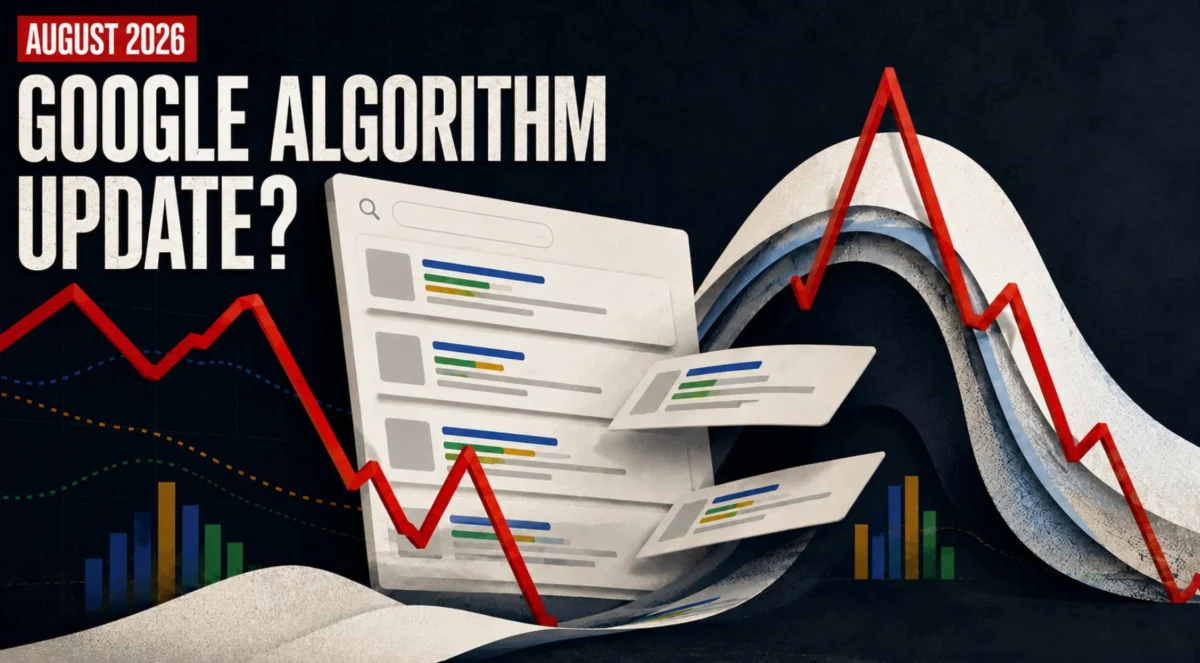
The global digital landscape, particularly within the search engine optimization (SEO) community, experienced significant turbulence in early August 2026, marked by widespread reports of erratic ranking shifts, substantial traffic volatility, and peculiar behavior across various Google services. Despite the palpable disquiet among webmasters, publishers, and digital agencies, Google has remained officially silent, offering no confirmation of an algorithm update during this period. This lack of official communication has left many struggling to diagnose the root causes of the disruptions, which appear to be a complex interplay of potential algorithmic adjustments, technical glitches, and analytics discrepancies.
This period of instability commenced around August 1 and persisted through at least August 6, triggering alarm bells across multiple third-party ranking tracking tools and sparking fervent discussions across prominent industry forums. While such volatility is not uncommon in the perpetually evolving world of search, the sheer scale and inconsistent nature of the reported issues have made this particular episode notably challenging to interpret.
The Early Warning Signs: Tracking Tools and Community Buzz
The initial indicators of unusual activity emerged at the turn of the month, as several independent SEO tracking tools began to register heightened levels of Search Engine Results Page (SERP) volatility. Tools such as SEMrush Sensor, MozCast, AccuRanker, and RankRanger, which monitor daily fluctuations in search rankings across millions of keywords, showed sharp spikes, signaling an active period of change within Google’s algorithms. These metrics typically reflect the degree to which keyword positions are shifting, with higher scores indicating more widespread and significant movement.
Barry Schwartz of Search Engine Roundtable was among the first to bring widespread attention to these anomalies, reporting on heightened volatility between August 1 and August 3. His observations were supported by a growing chorus of search marketers who were noticing unusual patterns in their own analytics data and client reports. This initial wave of reports, while concerning, often precedes official announcements for major core updates. However, in this instance, Google’s silence fueled speculation and necessitated a deeper investigation into the specific nature of the reported changes.
A Kaleidoscope of Disruption: Inconsistent Reports from Publishers
Following the initial alerts, a comprehensive review of discussions across platforms like Reddit, Search Engine Roundtable, and WebmasterWorld by Search Engine Watch revealed a fragmented picture of the unfolding situation. A total of 88 visible posts and comments indicated that the disruption extended well beyond August 3, but a consensus on its exact nature, timing, or even impact remained elusive.
The reports were strikingly inconsistent, pointing to a messy combination of issues affecting different facets of Google’s ecosystem:
- Traffic Fluctuations: Some publishers reported abrupt and significant traffic losses, with one account detailing a 14% decline despite an improvement in keyword positions. Conversely, another publisher saw roughly 50% less traffic without any meaningful changes to their site’s rankings. This discrepancy suggests that not all traffic shifts were directly attributable to traditional ranking demotions, potentially pointing to changes in click-through rates (CTR), the prominence of search features (like featured snippets or rich results), or even measurement errors.
- Ranking Instability: While some saw their positions improve, others experienced severe drops or general instability, with rankings fluctuating daily. This "yo-yo" effect made it difficult for site owners to assess the long-term impact of any potential update.
- Google Discover Anomalies: A significant number of reports highlighted unusual behavior within Google Discover, Google’s personalized content feed. Publishers noted erratic performance, with some seeing substantial drops in Discover traffic that began even before the August 1 volatility.
- Indexing Issues: One Indonesian publisher specifically reported slower indexing on August 5, suggesting potential issues with how Google was crawling and adding new content to its index.
- Analytics Discrepancies: Widespread complaints surfaced regarding Google Analytics 4 (GA4) real-time reporting on August 4, adding another layer of complexity. These complaints, while not directly related to search algorithms, created confusion for site owners trying to monitor their performance, leading to misinterpretations of actual traffic changes.
These disparate accounts underscored the complexity of diagnosing search engine issues. A drop in traffic, for instance, could stem from a core algorithm change, a technical problem on the publisher’s site, a shift in user search behavior, or even a bug in analytics reporting. Without a consistent pattern, attributing the issues to a single "major update" becomes challenging.
A Chronology of Uncertainty: Tracing the Timeline of Events
To better understand the unfolding situation, a detailed timeline helps contextualize the various reports:
- Mid-July 2026: A Brazilian publisher first noted a decline in Google Discover traffic, indicating that some underlying changes might have been in motion weeks before the broader August volatility.
- July 22-24, 2026: A clear example emerged on Reddit, detailing an organic traffic decline that commenced during this period, well over a week before the August 1 "spike." This further complicated the narrative of a singular August update.
- June 24-26, 2026: As a point of reference, Google’s last confirmed ranking change was the June 2026 spam update, which rolled out between these dates. This update aimed to further combat spam and uphold search quality, and its completion was officially acknowledged by Google. The August volatility, therefore, followed closely on the heels of a confirmed update, potentially suggesting residual effects or new, unannounced adjustments.
- August 1-3, 2026: This period marked the initial and most pronounced detection of heightened SERP volatility by third-party tracking tools, leading to Barry Schwartz’s widely circulated report and the subsequent surge in community discussions.
- August 4, 2026: Complaints regarding GA4 real-time reporting became widespread. While Google did not record an Analytics incident, it did confirm a separate Google Ad Manager disruption lasting from 09:26 to 19:00 UTC on this day. Although the advertising incident does not explain changes in organic rankings, it highlights how concurrent technical issues can muddy the waters for site owners trying to diagnose performance problems.
- August 5, 2026: An Indonesian publisher reported slower indexing, adding another dimension to the reported problems. Most dramatically, a publisher on WebmasterWorld reported a catastrophic 70% drop in Google traffic across multiple sites (including a shop, advertising campaigns, and a news site). This dramatic decline, however, was swiftly followed by an equally dramatic surge back to normal, with sales jumping and fresh news articles reappearing by the following morning. This "flash crash and recovery" scenario was particularly perplexing and could not be reproduced by other participants, with some reporting normal traffic but weaker sales, and another discovering their performance problem was due to their own server.
- August 6, 2026: Amidst the ongoing uncertainty, a UK operator reported that search results appeared to be returning to their pre-July state, offering a glimmer of hope for some.
This inconsistent pattern, characterized by differing start times, affected products, and even direction of impact (traffic up vs. down), is precisely what makes identifying a broad ranking update so challenging.
Official Stance and Broader Implications
As of August 6, 2026, Google’s Search Status Dashboard showed no recorded incidents related to ranking, indexing, crawling, or serving between August 1 and August 6. This official silence from Google underscores a consistent pattern where only significant, broad core updates or specific policy-related updates (like spam updates) are formally announced. Numerous minor algorithmic tweaks and adjustments are rolled out daily, often without explicit communication, as part of Google’s continuous effort to improve search quality. These unconfirmed "fluxes" are a regular feature of the SEO landscape.
The responsible conclusion, given the available evidence, is that Google’s search results experienced an unusually volatile period around August 1, coinciding with several overlapping disruptions for publishers through August 6. These disruptions likely do not share a single, monolithic cause but rather represent a confluence of factors. It is plausible that Google made several minor, unannounced adjustments to its algorithms during this time, which, when combined with localized technical issues, analytics bugs, and perhaps even shifts in user behavior, created a perfect storm of perceived instability.
Navigating the Uncertainty: Advice for Webmasters and Publishers
In times of unconfirmed volatility, a methodical and cautious approach is paramount for site owners. Jumping to conclusions or making drastic changes based on incomplete or inconsistent data can often exacerbate problems rather than solve them. Expert advice for navigating such periods includes:
- Isolate and Analyze Data Sources:
- Search Console First: Prioritize Google Search Console for performance monitoring. Separately analyze positions, impressions, and clicks. These metrics offer the most direct insights into how Google views and ranks your site, independent of potential analytics bugs or user behavior changes.
- Discover and Google News: Isolate traffic and performance data for Google Discover and Google News. These platforms operate with slightly different algorithms and can be affected independently from traditional organic search.
- Verify Analytics Data:
- Cross-Reference GA4: Given the reported GA4 real-time reporting issues, it is crucial to verify GA4 data against other reliable sources. This could include server logs, alternative analytics platforms (if implemented), or even comparing historical GA4 data patterns to current trends to identify anomalies.
- Distinguish Traffic Types: Be meticulous in segmenting traffic by source (organic search, direct, referral, social, Discover, etc.) to pinpoint where changes are occurring.
- Rule Out Technical Problems:
- Site Health Check: Before attributing issues to Google’s algorithms, conduct a thorough audit of your own website. Check for server issues, recent website changes (e.g., new plugins, theme updates, content deployments), broken links, crawl errors, mobile usability problems, and core web vitals performance. As evidenced by one WebmasterWorld participant, an "apparent performance problem" was ultimately traced back to their own server.
- Robots.txt and Sitemaps: Ensure your
robots.txtfile is not inadvertently blocking important sections of your site and that your sitemaps are up-to-date and correctly submitted to Search Console.
- Avoid Panic-Driven Changes:
- Monitor and Observe: In the absence of clear, consistent patterns, the best course of action is often to monitor the situation closely for several days or even weeks. Algorithm updates, especially core updates, can take time to fully roll out and stabilize.
- Focus on Fundamentals: Continue to focus on creating high-quality, valuable, and relevant content that adheres to Google’s guidelines for E-E-A-T (Experience, Expertise, Authoritativeness, Trustworthiness). Ensure your site offers an excellent user experience, is technically sound, and loads quickly. These foundational elements remain the most robust defense against algorithm volatility.
The August 2026 period of unconfirmed volatility serves as a potent reminder of the dynamic nature of search engine optimization. It underscores the constant need for webmasters and digital professionals to remain vigilant, analytical, and resilient in the face of continuous algorithmic evolution. While Google strives to provide the best possible search results, its ongoing adjustments will inevitably create ripples across the digital ecosystem, making continuous learning and adaptive strategies indispensable. The community remains watchful, sharing observations and insights, as the full implications of this turbulent period continue to unfold.