

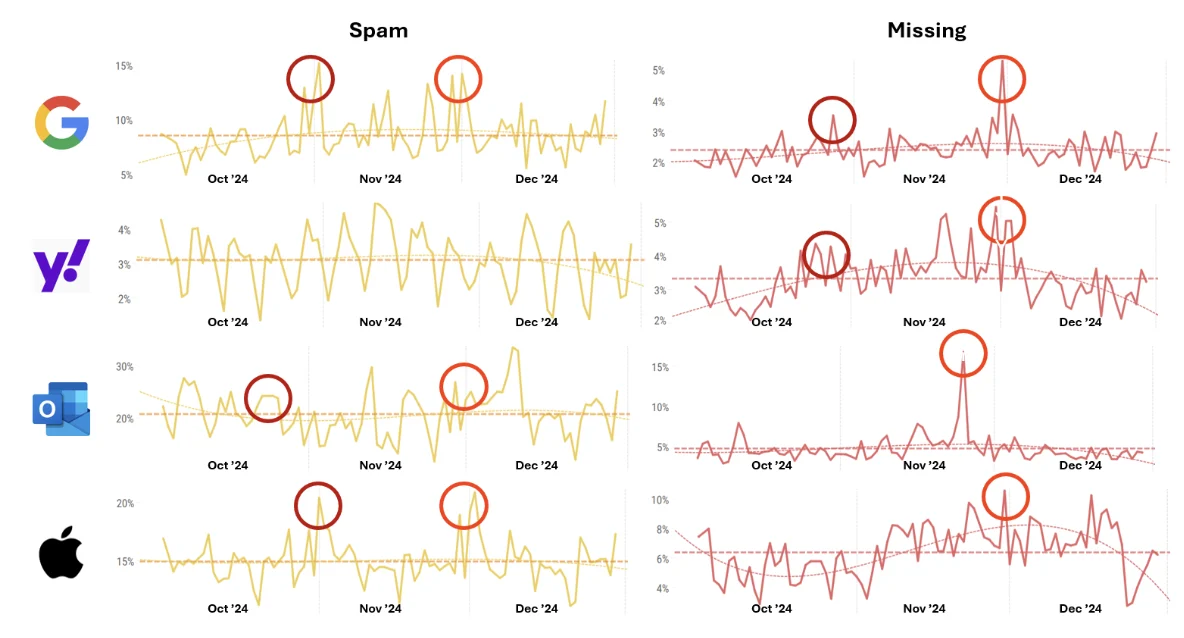
The intricate digital landscape of email marketing operates on a delicate balance, where a sender’s meticulous adherence to best practices can still be undermined by the broader ecosystem’s pressures. During periods of exceptionally high email volume, inbox placement ceases to be solely a reflection of an individual email program’s quality; instead, it becomes a collective challenge, shaped by the aggregate activity of all senders vying for attention within a finite digital space. This phenomenon is particularly evident during major commercial holidays like Black Friday through Cyber Monday, when mailbox providers (MBPs) swiftly reach capacity limits, leading to increased throttling, deferrals, and a higher likelihood of legitimate mail being relegated to spam folders or even rejected outright. In such scenarios, senders with robust reputations are prioritized, while those with weaker standing experience significant delivery delays or outright failures. However, commercial marketers often overlook another equally potent, albeit less predictable, pressure point: election cycles.
The United States election calendar, encompassing presidential, midterm, and various state and local contests, consistently generates an immense surge in email traffic. Political campaigns, candidates, party leaders, and Political Action Committees (PACs) rely heavily on email as a primary channel for fundraising, mobilizing support, and disseminating their messages. As election day draws near, it is not uncommon for a single political program to dispatch four or more messages daily, creating a veritable cacophony in the inbox. This overwhelming volume, characterized by frequent and often aggressive messaging, introduces a unique form of digital noise that can significantly impact the deliverability of all email, not just political mailers.
For commercial senders, the proximity of major election campaigns, such as the upcoming midterms in November, poses a critical strategic question: will the deluge of political emails impede their marketing efforts, and will subscribers already be suffering from “email fatigue” by the time crucial commercial periods like Black Friday commence? To shed light on this complex interplay, data scientists at Validity leveraged their extensive Intelligence Network to analyze the impact of the 2024 presidential election on email deliverability, offering valuable insights that commercial marketers can apply to navigate future election cycles.
Validity’s Insight: Unveiling the Data Behind Deliverability Drops
Validity’s comprehensive analysis focused on deliverability data for US-based senders during the lead-up to the 2024 presidential election. The study encompassed the four major mailbox providers: Microsoft, Apple, Gmail, and Yahoo (collectively known as MAGY). These providers are pivotal, as they collectively account for approximately 90 percent of a typical US B2C email program’s audience. Consequently, any unified shift in their processing behavior holds significant implications for the entire email marketing ecosystem.
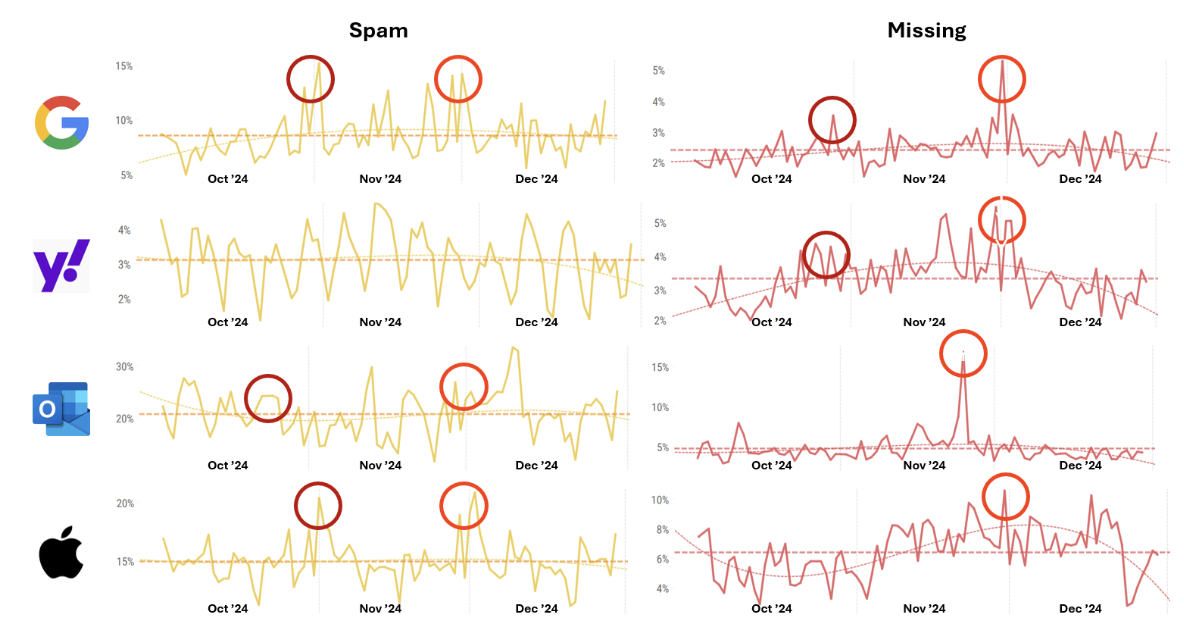
The findings were unequivocal and demonstrated a clear, widespread impact: average inbox placement rates across MAGY providers declined by more than 5 percent during the critical week preceding election day. Crucially, this downturn was not confined to political mailers alone; it affected all legitimate, permission-based email marketing activities across the board. This broad impact underscores the systemic pressure exerted on the email channel during peak political messaging periods.
To comprehend the mechanisms behind this reduction in deliverability, it is essential to understand the two primary levers that MBPs employ when confronted with overwhelming email volumes: mail directed to recipients’ junk folders (classified as “Spam”) and mail rejected entirely before reaching any folder (“Missing”). Both of these non-delivery metrics experienced sharp spikes during election week. The comparative data, juxtaposing election week against the Q4 2024 quarterly benchmark and against Black Friday and Cyber Monday four weeks later, paints a vivid picture of the scale of disruption.
Election Week vs. Commercial Peaks: A Stark Comparison
The detailed data reveals a compelling narrative about the intensity of the email environment during election periods:
| Weighted Avg. | Q4 ’24 Benchmark | Election Week | Black Friday | Cyber Monday |
|---|---|---|---|---|
| Spam | 9.2 percent | 13.6 percent | 13.1 percent | 13.1 percent |
| Missing | 3.1 percent | 4.1 percent | 5.5 percent | 4.3 percent |
| Combined | 12.3 percent | 17.6 percent | 18.5 percent | 17.4 percent |
The combined non-delivery rate during election week soared to 17.6 percent. This figure represents a 1.5-fold increase over the Q4 2024 quarterly benchmark of 12.3 percent. This level of pressure was nearly identical to that observed during the peak commercial frenzy of Black Friday (18.5 percent combined non-delivery) and Cyber Monday (17.4 percent combined non-delivery). Such a comparison is profoundly significant, as Black Friday and Cyber Monday are widely recognized as the most challenging periods for email deliverability for commercial senders. The fact that election week mirrored this intensity highlights the critical need for marketers to approach political cycles with similar strategic foresight.
Translating these percentages into real-world impact, with average US sending volumes estimated at approximately 10 billion emails per day, a 5.3 percentage point increase in non-delivery (from the 12.3% benchmark to 17.6% election week rate) equates to nearly half a billion additional emails failing to reach the inbox every single day. When considering the average value of an email, which Klaviyo estimates at $0.11, this collective failure represents an staggering approximate loss of $50 million in potential revenue per day for commercial businesses. This substantial financial impact underscores that the issue is not merely an inconvenience but a significant economic challenge, one that arises not from direct marketing errors but from the broader engagement pressure exerted on the entire email channel by the election. The lost revenue could stem from missed sales opportunities, reduced customer engagement, diminished brand visibility, and a host of other downstream effects, all attributable to emails that never made it to their intended destination.
The Root Cause: Subscriber Engagement and Political Email Tactics
The underlying mechanism driving these deliverability fluctuations is deeply rooted in how major mailbox providers, particularly Gmail, process and prioritize email based on subscriber engagement signals. Positive engagement cues, such as clicks, forwards, and replies, are strong indicators to MBPs that a sender’s program is valued by its subscribers. Conversely, negative signals, including spam complaints, marking emails as “deleted-unread,” or simply ignoring messages, instruct MBPs to increasingly filter or redirect a sender’s mail to the spam folder.
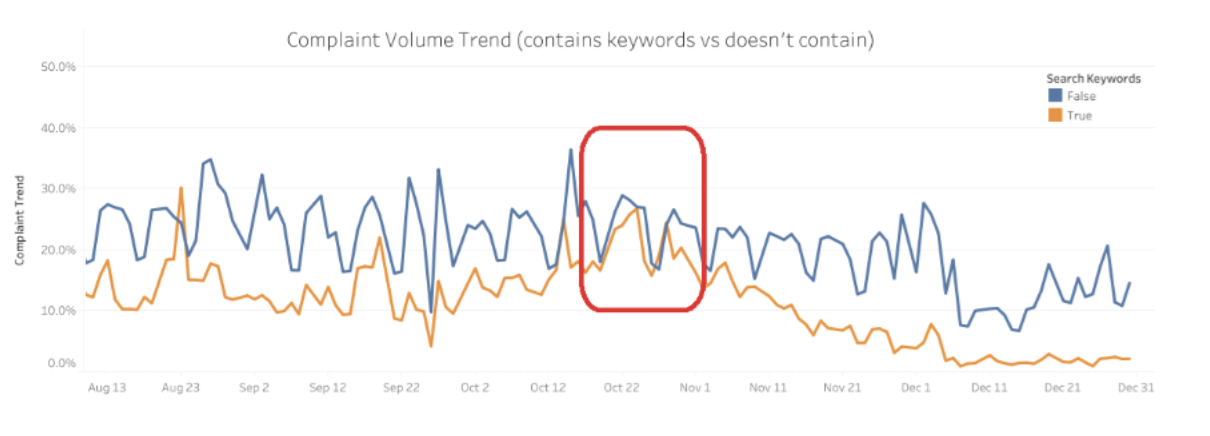
Validity’s analysis of complaint data, derived from its Intelligence Network, further illuminated this dynamic. By tagging emails containing common political terms (e.g., “election,” “vote,” “donate,” “president”), researchers were able to differentiate between political and non-political senders. The data showed that both groups experienced above-average complaint rates in the pre-election period. However, what stood out emphatically was that the peaks in complaint rates during the pre-election window were notably higher than those recorded during Black Friday and Cyber Monday just four weeks later.
This finding leads to a clear and critical inference: political campaigns do not merely generate complaints for their own messages; they contribute to a broader increase in negative sentiment across the entire email channel. This heightened negative sentiment then prompts MBPs to tighten their filtering algorithms, leading to a collateral impact on all senders.
Political mailers have long been infamous for their tendency to disregard established email best practices. This often manifests in extremely high sending frequencies, sometimes multiple times a day to the same recipients, employing aggressive and urgent language, and demonstrating minimal targeting or segmentation of their lists. These tactics, while perhaps effective for immediate campaign objectives, are antithetical to maintaining a healthy sender reputation and inevitably lead to elevated spam complaint rates. The aggressive nature of political messaging can also lead to a higher propensity for subscribers to mark emails as spam simply due to annoyance or perceived irrelevance, even if they initially opted in.
However, the data also presented an interesting nuance: donation-focused emails from political programs generated spam complaints at approximately one-third the rate of content and news-oriented emails from the very same senders. This suggests that the fundraising mechanics themselves were not the primary driver of negative sentiment. Instead, the core problem lay in how political content and news updates were being framed and presented, often prioritizing volume and urgency over subscriber value and engagement. Subscribers who actively choose to receive donation requests may be more politically engaged and thus more tolerant of direct appeals, while broader political updates, especially if frequent and repetitive, might quickly lead to fatigue and complaints.
Commercial Senders’ Strategic Retreat: Navigating the Noise in 2024
In response to the palpable pressure on the email channel, many commercial senders adopted a cautious approach during the 2024 election cycle. Validity’s data on average daily campaign volumes from its customers during the pre-election period revealed a striking trend: average daily campaigns dropped by 5-10 percent in the four weeks leading up to election day. A significant number of senders strategically scaled back their activity, only to ramp back up once the election dust had settled. This proactive reduction in sending volume indicates an awareness among savvy marketers of the heightened risk environment.
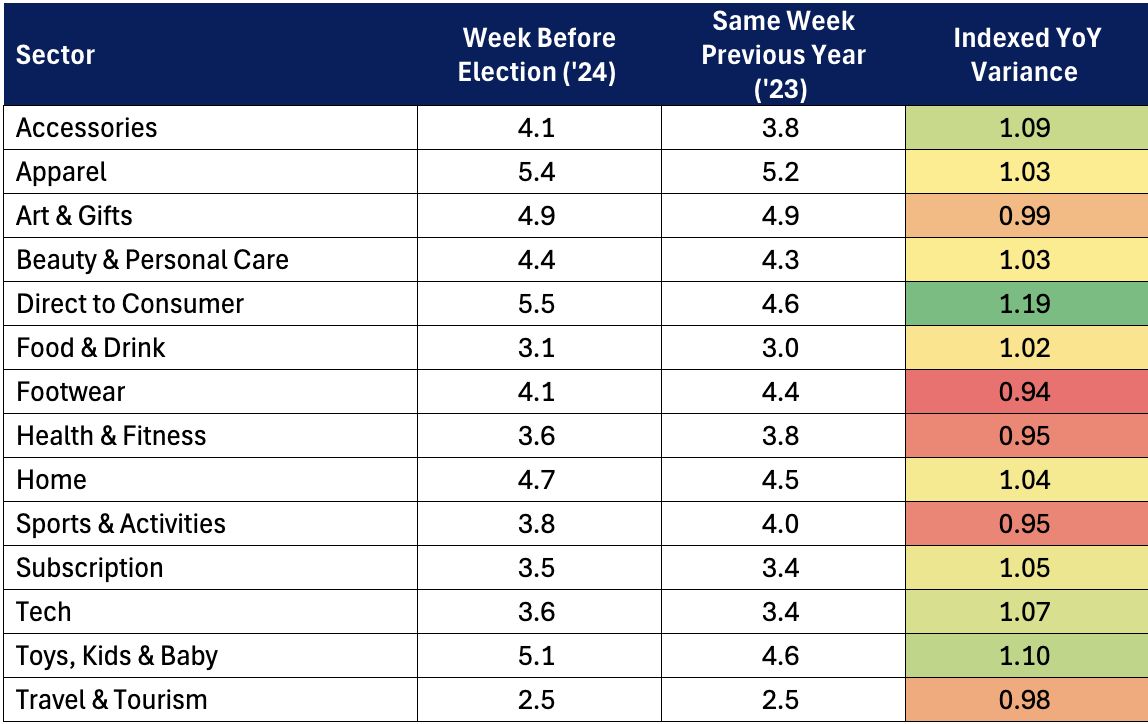
However, this strategic response was not uniform across all sectors. Comparing sending frequency in the week immediately before the 2024 election with the same week in 2023 (a non-election year) provided further granular insights into industry-specific adaptations:
(Note: This measures average messages received by a typical email subscriber, not total campaigns sent.)
The analysis showed that sectors such as Direct-to-Consumer (D2C), Toys/Kids/Baby, and Accessories actually increased their email activity during election week. This might suggest these sectors identified an opportunity to stand out amidst the political noise, perhaps with highly targeted or distinct campaigns, or they simply chose to maintain their planned schedules. In contrast, Footwear, Health & Fitness, and Sports & Activities sectors significantly pulled back their sending volumes. For those sectors that under-indexed in 2024, the upcoming 2026 midterms may present an unexplored opportunity to strategically adjust their approach, potentially capturing attention from subscribers who are receiving fewer emails from other commercial brands. The decision to scale back or push forward likely depended on a brand’s specific marketing calendar, target audience, and risk tolerance.
Looking Ahead to 2026: New Dynamics and Evolving Challenges
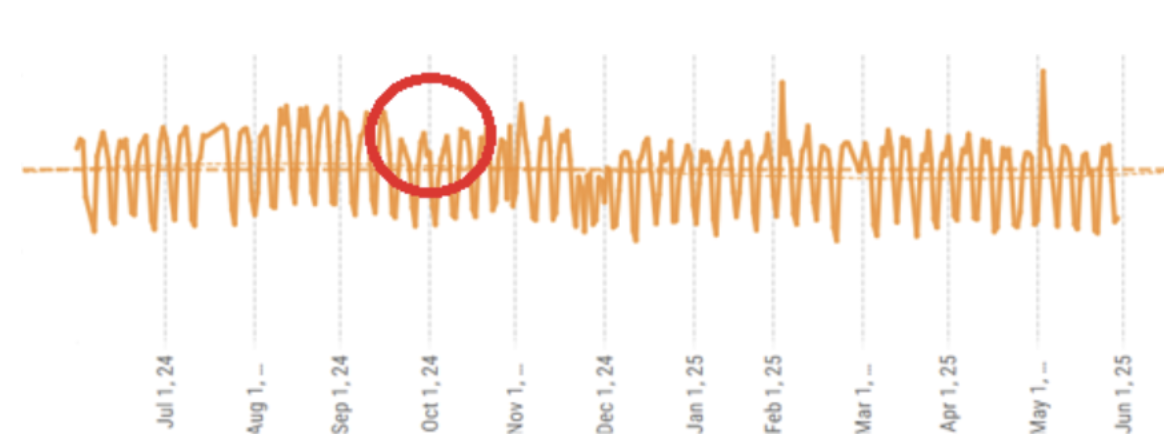
As the 2026 midterm elections approach, several key developments since 2024 are poised to influence the email deliverability landscape, potentially shaping a different outcome for commercial senders.
Firstly, the overall global inbox placement rates have demonstrated a noticeable decline. After reaching a high-water mark of 87.2 percent in the previous year, global IPRs have trended downward, settling at 84.5 percent for Q2 2026. This softer starting point means that the email channel is already operating under greater strain, making it potentially more susceptible to disruption from high-volume events like elections. The reasons for this general decline are multifaceted, ranging from increasingly sophisticated spam filters and stricter sender requirements to evolving subscriber expectations and growing email fatigue across all categories.
Secondly, and perhaps more favorably for commercial senders, major MBPs have significantly tightened their bulk sender requirements over the past 18-24 months. Recent mandates from industry giants like Gmail and Yahoo, effective early 2024, now require bulk senders to adhere to stringent authentication protocols (SPF, DKIM, DMARC), maintain low spam complaint rates (below 0.1%), and offer one-click unsubscribe options. Non-compliant senders are increasingly seeing their emails blocked outright or systematically filtered to spam. Political mailers, which historically generate high complaint rates due to their aggressive sending patterns and often bypass traditional opt-in compliance, may find a much larger share of their volume suppressed before it can significantly affect inbox sentiment for everyone else. This regulatory shift could act as a buffer, reducing the overall pressure on the email ecosystem during election spikes.
Thirdly, the major MBPs have rolled out a wave of AI-powered inbox features over the past 18 months. Innovations such as Gmail’s relevance-sorted Promotions tab, Gemini for Gmail, and Microsoft Copilot are fundamentally reshaping the inbox experience. These tools are designed to nudge subscribers toward more conversational, high-engagement interactions and prioritize content deemed most relevant. Consequently, senders with low engagement rates become less visible within the inbox. If political mailers fail to generate strong positive engagement signals—such as opens, clicks, or replies—these AI-driven filters are likely to relegate them to less prominent positions or filter them before they can reach inboxes at scale. Less visibility for low-engagement political emails would translate to reduced pressure on the email channel as a whole, potentially mitigating some of the spillover effects observed in 2024.
Strategic Engagement: When to Lean In, When to Hold Back
The question of whether commercial brands should scale back their email activity during election season is not one-size-fits-all. While many brands choose a conservative approach, for some, election season can present a genuine opportunity to align with universal themes of choice, freedom, civic duty, and community that resonate broadly with consumers.
Validity’s data from 2024 provided examples of how some brands successfully leaned into election themes. These approaches ranged from patriotic product tie-ins and public service announcements encouraging voting to clever wordplay and humor that lightly touched upon the election. The most successful strategies shared several common characteristics: they remained strictly non-partisan, kept the political messaging light and accessible, and forged a natural, authentic connection between the act of voting or civic engagement and their own products or brand values. Brands that employed humor ensured it was broad enough to appeal across the political spectrum, avoiding divisive jokes.
The paramount guardrail for any brand considering such a strategy is “brand fit.” Overtly political messaging, or messaging that could be perceived as taking a stance, carries a significant risk of alienating a substantial portion of the audience. Consumer preferences are diverse, and alienating even a segment of your customer base can have long-term negative repercussions. Most of the brands that successfully embraced election themes in 2024 tended to be smaller businesses. These entities are often more agile, possess a deeper understanding of their niche audiences, and may be less risk-averse regarding potential brand exposure or backlash compared to larger, more established corporations. Larger brands, with broader customer bases and higher stakes, largely maintained their focus on Black Friday preparations and refrained from engaging in election-themed marketing.
The Enduring Imperative: Maintaining Deliverability Amidst Volatility
The compelling data from the 2024 presidential election makes a strong case that election season constitutes a significant deliverability pressure point for everyone in the email ecosystem, extending far beyond just political mailers. Inbox placement rates decline, spam complaint rates spike, and this collective pressure often peaks well in advance of the crucial Black Friday commercial period. For commercial senders, the most effective defense remains consistent: cultivating and maintaining a strong sender reputation, meticulously curating a healthy and engaged email list, and developing a clear, adaptable timing strategy as November approaches. Proactive monitoring of key deliverability metrics is essential to identify and respond to any signs of degradation.
While there is reason to believe that the 2026 midterms may prove somewhat less disruptive due to tighter MBP requirements and AI-driven filtering, this potential mitigation is not a license for complacency. Marketers must continue to vigilantly monitor their metrics and remain prepared for shifts in the email landscape. Furthermore, for brands considering creative engagement with election themes, the lessons from 2024 are clear: keep the messaging light, strictly non-partisan, and authentically rooted in your products or brand values. As a general guiding principle, messages that evoke a sense of civic pride tend to travel well and resonate broadly, whereas overt political messaging carries inherent risks and often fails to connect with a diverse consumer base. Understanding and adapting to these cyclical pressures is not just a matter of deliverability; it is a critical component of resilient and effective email marketing strategy.
Looking for more in-depth deliverability trends? Check out the 2026 Email Deliverability Benchmark report to see how your performance compares to global and industry standards.








