

Two years ago, a three-person paid search team was managing an average of three to four Google Ads accounts each. Today, that same team is responsible for six to seven accounts apiece, driving increased revenue and delivering superior results for clients, all while maintaining work-life balance. This significant expansion in output, without a proportional increase in human headcount, points to a fundamental shift in how digital marketing operations are evolving. The key to this transformation lies not in hiring more people, but in effectively integrating and managing a new, non-human team member: artificial intelligence, and more specifically, the ever-evolving platform of Google Ads itself.
The narrative of enhanced productivity is becoming increasingly common across agencies specializing in complex, information-dense sectors like finance, insurance, and B2B lead generation. These are fields where intricate product explanations and nuanced customer journeys are paramount, distinguishing them from the more direct transactional nature of e-commerce. The ability to manage a doubled workload stems from a strategic embrace of AI-powered tools. One agency leader, speaking anonymously to protect client relationships, described building an AI assistant, named Claude, over the past year. This AI acts as a "second brain" for the agency, capable of processing client briefs in mere seconds and generating more effective strategies than previously possible through manual effort alone.
However, this article delves deeper, focusing not on the AI tools that are intentionally integrated, but on the ubiquitous, often unpredictable force that profoundly shapes the paid search landscape: Google. This relationship is less a partnership and more a cohabitation. Google, the dominant player in online advertising, dictates terms that marketers must adapt to, rather than choose. The platform’s continuous evolution, marked by quarterly rule changes and algorithmic updates, compels advertisers to shift their focus from direct operational control to strategic management.
The current operational challenges faced by paid search professionals can be attributed to three simultaneous seismic shifts within the digital ecosystem: the changing nature of user search behavior, the altered distribution of search answers, and the increasing autonomy of Google’s algorithms in decision-making.
The Evolving Search Paradigm: From Keywords to Contextual Situations
The way individuals interact with search engines has undergone a profound metamorphosis. Gone are the days when users meticulously typed in specific keywords like "best ETF portfolio." Today, the trend leans towards more conversational and context-rich queries. A user might articulate a detailed personal situation, such as, "I’m 42, I have 50k in savings, I want to invest 1k a month at moderate risk and retire early. How should I allocate?" This shift signifies a move from targeting discrete keywords to targeting complex, real-world situations. The crucial implication for advertisers is that their strategies must now account for this richer context, which is increasingly being shared across multiple platforms, including Google, ChatGPT, and emerging AI-powered search engines like Perplexity.
The Shifting Landscape of Search Answers: The Rise of AI Overviews
Concurrent with the change in search behavior is a significant alteration in where and how answers are presented. Google’s introduction of AI Overviews has fundamentally reshaped the search results page (SERP). These AI-generated summaries now appear not only for informational queries but also for transactional ones, such as "best ETF for retirement" or "compare business accounts." This means that users can often receive a comprehensive answer directly on the SERP, potentially bypassing the need to click through to an advertiser’s website.
This development elevates the stakes for the clicks that do occur. When a user does proceed to a website, their intent is likely more refined, and their expectations are higher. Consequently, landing pages and website content must be exceptionally compelling and directly address the user’s nuanced needs. The traditional distinction between paid and organic search disciplines is blurring, as both now contribute to a single, overarching conversation about whether a website truly "deserves" the user’s click and subsequent engagement. This necessitates a more integrated approach to content strategy and user experience design.
The Algorithm’s Ascendancy: Google’s Increasing Control
Perhaps the most significant shift is in who holds the decision-making power. Google’s algorithms are increasingly making critical choices regarding query matching, ad selection, placement, bidding, and asset combinations. Product names like Performance Max, Broad Match, and AI Max all signal a clear direction: relinquishing control to the algorithm. Each quarter, advertisers find another lever of direct control disappearing, with recommended settings becoming the default. This trend signifies a move away from granular manual management towards a more strategic oversight of automated systems. The result is a landscape characterized by diminished direct control and heightened uncertainty, yet with undiminished performance targets.
The Paradigm Shift: From Operator to Manager
For years, the paid search industry operated on a model where practitioners were the direct operators. They manually adjusted bids, meticulously crafted ad copy, and hand-picked keywords. When campaigns succeeded, the credit was often attributed to the human expertise involved. However, this operational role is diminishing. The new imperative is to manage the "worker" – in this case, the Google Ads algorithm.
Viewing Google Ads as a highly sophisticated, data-processing direct report is a useful analogy. This algorithm is fast, perpetually motivated, and capable of processing vast amounts of information instantaneously. Like any valuable team member, it requires clear direction, well-defined objectives, regular performance reviews, and a manager who can intervene to prevent costly errors. The skills required to effectively manage such an entity are not entirely new; they are extensions of effective human management principles. Good managers excel at providing clear briefs, verifying the quality of work, and pre-defining actions for both success and failure scenarios. The challenge now is to apply these principles to an algorithmic system.
Rule 1: Mastering the Art of the Brief
The quality of the brief provided to the algorithm directly dictates the outcome. A poor brief doesn’t just yield a suboptimal result; it leads to a confidently executed, yet fundamentally misguided, campaign. The algorithm, much like a human employee, is only as effective as the signals and instructions it receives.
A common deficiency observed in account audits is a broken foundation of conversion tracking. This includes metrics like conversions counting mere page visits, double-counting conversions, lead forms triggering on any scroll, and a conflation of soft and hard conversions without assigned values. Google Ads requires precise signals to function optimally.

Key Signals for Google Ads:
- Accurate Conversion Tracking: This is the bedrock of any successful campaign. Ensuring that only meaningful actions are tracked as conversions, and that these are accurately measured, is paramount. This involves distinguishing between different types of conversions and assigning appropriate values.
- Value-Based Optimization: For businesses where the value of a conversion varies significantly, implementing value-based optimization is crucial. This means assigning monetary values to different conversion types, allowing Google’s algorithms to prioritize actions that contribute most to business revenue.
- Offline Conversion Data: Integrating offline conversion data (e.g., closed deals, final sales figures) back into Google Ads provides the algorithm with a complete picture of the customer journey. This allows it to understand which initial online interactions truly lead to valuable business outcomes, moving beyond easily trackable but less valuable actions like form submissions.
Consider an insurance client with a 90-day sales cycle from initial click to closed deal. Historically, optimization focused on lead form submissions, as these are easily trackable. This approach yielded more leads but not necessarily more closed deals. Google, lacking insight into lead quality, relentlessly pursued inexpensive form fills. By feeding closed-deal data back through offline conversions with associated values, Google was able to discern what constituted a truly valuable lead and subsequently generated more of them. The underlying principle is clear: if Google doesn’t understand who the most valuable customer is, it will optimize for the cheapest one. Therefore, rectifying the measurement of what constitutes success must precede any adjustments to bids or budgets.
Rule 2: Implementing Structured Testing Protocols
Platforms like Performance Max remain largely opaque, often leading to a reactive approach where multiple changes are made simultaneously, rendering it impossible to isolate the impact of each. Every campaign launched should be treated as a hypothesis, requiring a structured testing methodology.
Before initiating any test, four critical questions must be answered:
- What is the hypothesis? Clearly articulate what you expect to happen and why.
- What specific variable will be tested? Isolate a single element to change.
- What is the success metric? Define the Key Performance Indicator (KPI) that will determine the outcome.
- What is the pre-defined action if the hypothesis is proven wrong? This is the most frequently overlooked, yet crucial, element.
Failing to pre-commit to an action plan can lead to a reluctance to terminate underperforming tests. For instance, a test of Broad Match on a high-performing campaign resulted in a 30% increase in Cost Per Acquisition (CPA). Instead of immediately pausing the test, common excuses like market fluctuations or the need for more time were invoked. Pre-defining the action to pause the test if a specific CPA threshold was breached would have removed the emotional bias and led to a more objective decision.
Testing should focus on inputs, not just outputs. Variables like match types, audience signals, value rules, feed data, and the activation of AI Max features are key areas for experimentation. AI Max, for example, should be viewed as a reach-expansion tool rather than solely an efficiency driver. Expecting the same CPA at higher volumes is often unrealistic and can lead to premature termination of potentially beneficial tests. Therefore, a rigorous approach involves one test per campaign, with a single variable changed at a time. Modifying two or more elements simultaneously negates the learning process.
Rule 3: Decision-Making Frameworks Over Intuition
The third rule, and arguably the most challenging to master, involves making decisions based on established frameworks rather than gut feelings. In a fast-paced environment, the tendency is to react to incoming data, which can be effective when targets are clear and the team is experienced. However, this often leads to spending more time explaining data than acting upon it.
Google’s algorithms now handle countless micro-decisions, placing greater emphasis on the few significant strategic decisions remaining: scale, hold, or cut. A straightforward framework for these decisions can be structured as follows:
- Scale: Identify campaigns that consistently exceed performance benchmarks (e.g., delivering profitable ROAS, meeting CPA targets) and have clear potential for further growth within defined parameters. This might involve increasing budgets or expanding reach strategically.
- Hold: Campaigns that are meeting their objectives but have limited room for significant growth or are operating at a stable but not exceptional level. These require consistent monitoring but do not necessitate immediate aggressive action.
- Cut: Campaigns that consistently fail to meet performance targets despite optimization efforts, or those that are draining budget without contributing meaningfully to business goals. These should be terminated promptly to reallocate resources.
A common pitfall is excessive tinkering with "Hold" campaigns while neglecting to cut underperforming ones. The solution is deceptively simple yet highly effective: establish clear decision criteria before reviewing the data. On Monday morning, before opening any dashboards, define the conditions that would trigger scaling, holding, or cutting a campaign. Then, upon reviewing the data, adhere to these pre-defined rules. Integrating these decisions into a workflow ensures that the decision framework exists independently of the data, removing the temptation for impulsive, emotion-driven adjustments. This is not about rigid discipline, but about preventing future, potentially compromised decisions made under pressure or fatigue.
The Evolving Role: From Operator to Architect
The operational aspects of paid search are progressively being automated, diminishing the need for manual intervention. Conversely, the role of the "architect" is expanding. This new role encompasses three key hats:
- Signal Architect: Determining the quality and relevance of the data fed into the algorithms, ensuring they learn from the most impactful information.
- Test Designer: Formulating insightful hypotheses and structuring rigorous tests to uncover actionable insights that go beyond standard reporting.
- Decision Maker: Exercising strategic judgment on critical business decisions that algorithms are not yet equipped to handle, such as understanding nuanced customer value and the overall business impact of campaigns.
The work that can be automated in the coming years is precisely what occupied the majority of a paid search professional’s day: keyword expansion, bid adjustments, initial ad copy drafting, and routine reporting. This automation frees up valuable time and cognitive resources for the truly impactful work – understanding what constitutes a high-value lead versus a low-value one, optimizing landing pages to maximize the value of increasingly precious clicks, and refining the core offer and messaging that resonate with the target audience.
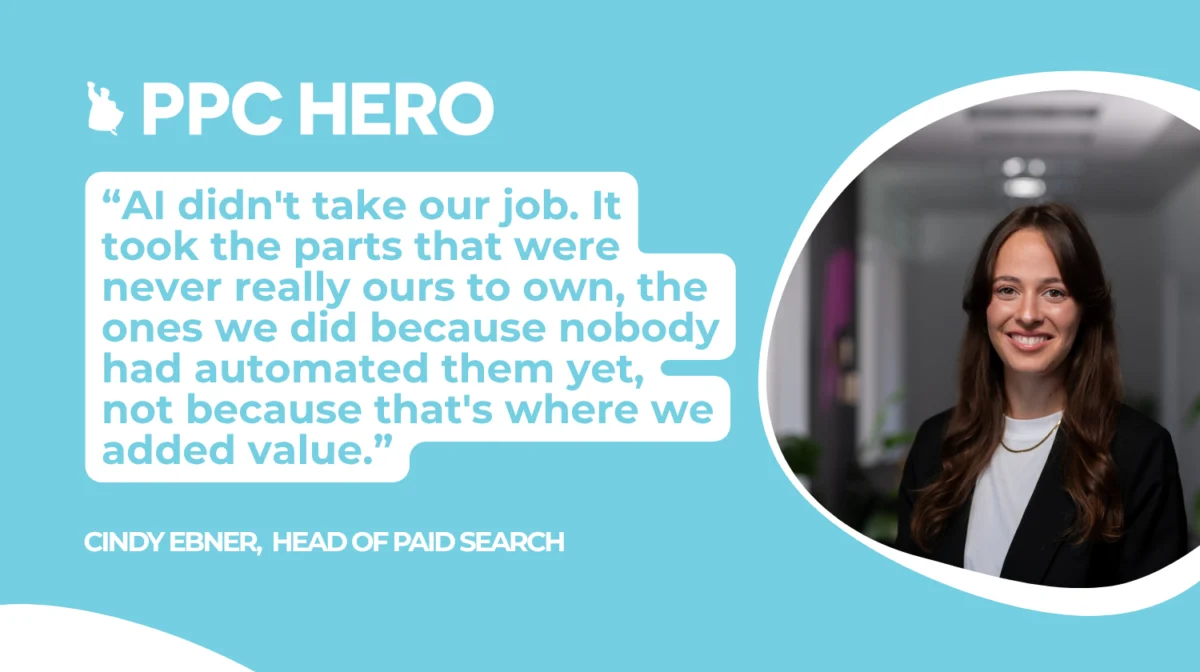
AI has not eliminated the need for paid search professionals; rather, it has reclaimed the tasks that were never truly core to strategic value addition. These were the automatable elements that persisted due to a lack of sophisticated automation tools.
As this evolution continues, the call to action for professionals in the field is clear: embrace the new reality. This involves dedicating time each week to fortify the algorithmic foundation by fixing a critical signal, shipping a well-structured test with a defined exit strategy, and documenting a clear decision-making rule. The sophisticated, non-human team members in the digital marketing realm require skilled management. That management role, the architect’s role, is now yours to define and execute. The future of paid search marketing is not about performing the work, but about expertly orchestrating the complex systems that now perform it.









