rifanmuazin
The traditional barriers to creative production are rapidly crumbling, ushering in an era where the creation of high-quality visual and video assets is becoming exponentially cheaper and faster thanks to generative artificial intelligence. This technological leap is transforming the marketing and advertising industries, moving from a paradigm of creative scarcity to one of “infinite creative.” While this solves the long-standing bottleneck of production, it introduces a more profound and complex challenge: in a world where virtually any creative asset can be generated on demand, how do we intelligently decide what to create and, more importantly, what will resonate with audiences? This fundamental shift necessitates new strategic frameworks for navigating this evolving landscape.
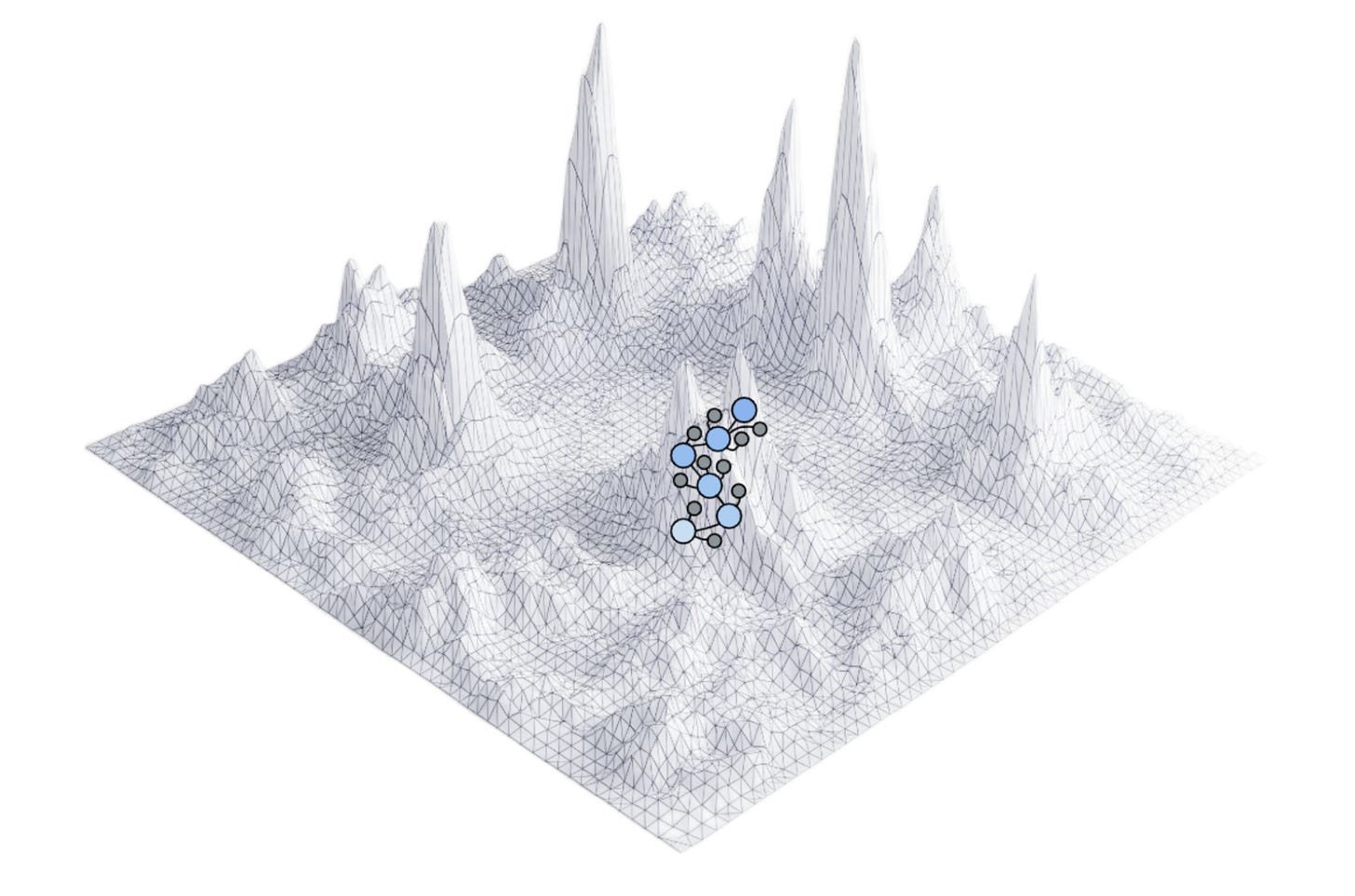
This article delves into the strategies required to thrive in this new reality, visualizing the creative process as a vast “creative fitness landscape.” In this conceptual model, the peaks represent highly effective, high-performing creative assets, while the valleys signify underperforming or ineffective ones. Given the inherent limitations in real-world data for immediate, comprehensive testing of an infinite array of options, the focus must shift to intelligent, data-informed exploration and optimization. To this end, a two-part toolkit is proposed: the “Exploit” strategy, which leverages AI for micro-variations on proven successes to find local optima, and the “Explore” strategy, which involves making data-informed “big jumps” to discover entirely new, potentially breakthrough creative territories. Looking further ahead, the article posits that the ultimate key to unlocking this landscape lies in transcending current data constraints, potentially through the development and deployment of synthetic audiences, although the accuracy and feasibility of such advanced tools remain subjects of ongoing research and debate.

The Demise of Production as the Creative Bottleneck
For decades, creative production has been a significant bottleneck, directly impacting not only the speed at which marketing campaigns can be launched but also their overall effectiveness. Industry analysis consistently underscores the critical role of creative, with estimates suggesting it drives up to 70% of campaign performance. Furthermore, the diversity of creative assets deployed is a key determinant of success, as varied approaches can cater to a wider range of audience segments and contextual nuances. Consequently, a slow and resource-constrained creative process has had a substantial and direct impediment on marketing’s potential.
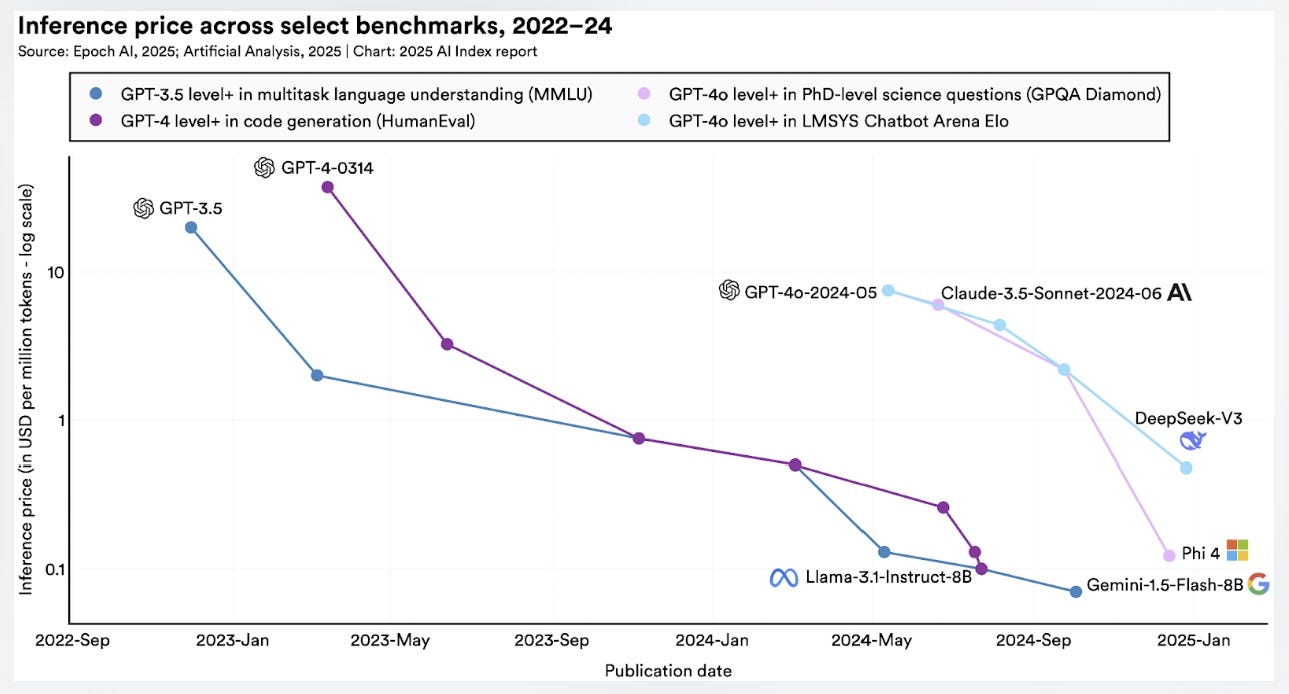
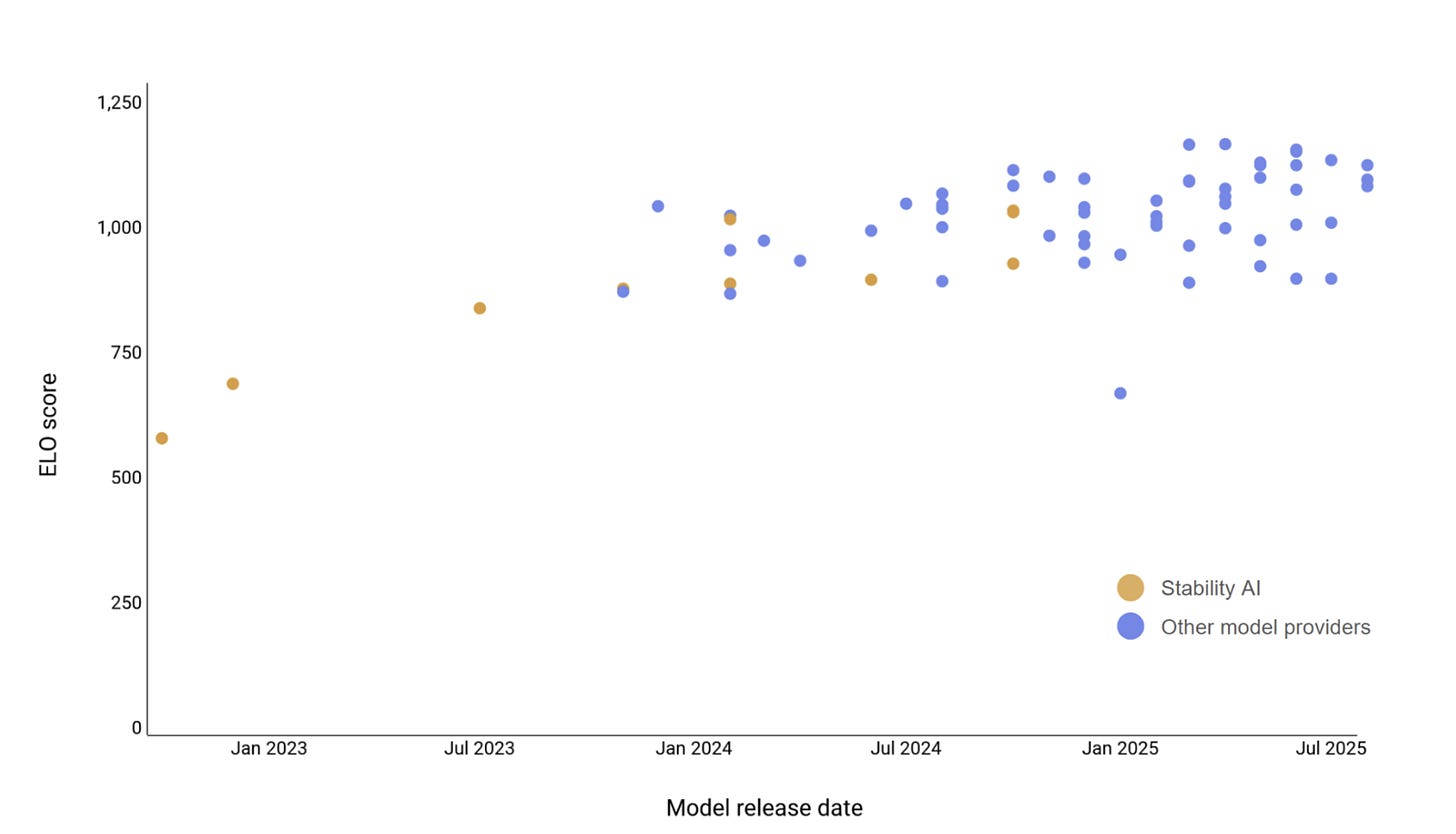
The trajectory of generative AI, however, is dramatically altering this landscape. The quality of AI-powered image and video generation tools has seen a meteoric rise, while concurrently, the market for these technologies appears to be moving towards commoditization. Data from sources like the Stanford AI Index Report 2025 (Graph 2) illustrates a significant decrease in the cost of AI inference over time, a trend that is expected to continue. This commoditization is evident in the diminishing competitive advantage of early market entrants, such as Stability AI, as depicted in Graph 1. Moreover, the performance scores of various AI models are clustering, indicating a general convergence in capability across different platforms. While current pricing for image and video generation remains relatively stable, the historical trajectory of similar AI technologies suggests a rapid decline in costs is imminent.
This confluence of higher quality and decreasing cost is fundamentally reshaping the creative ecosystem. In the coming years, the ability to generate any desired creative asset, with any content or style, will become a commonplace reality. This translates to an effectively infinite pool of creative options available to marketers and advertisers. The prospect of “infinite creative” signifies a paradigm shift, moving the challenge from “can we make it?” to “what should we make?”

Navigating the Creative Fitness Landscape
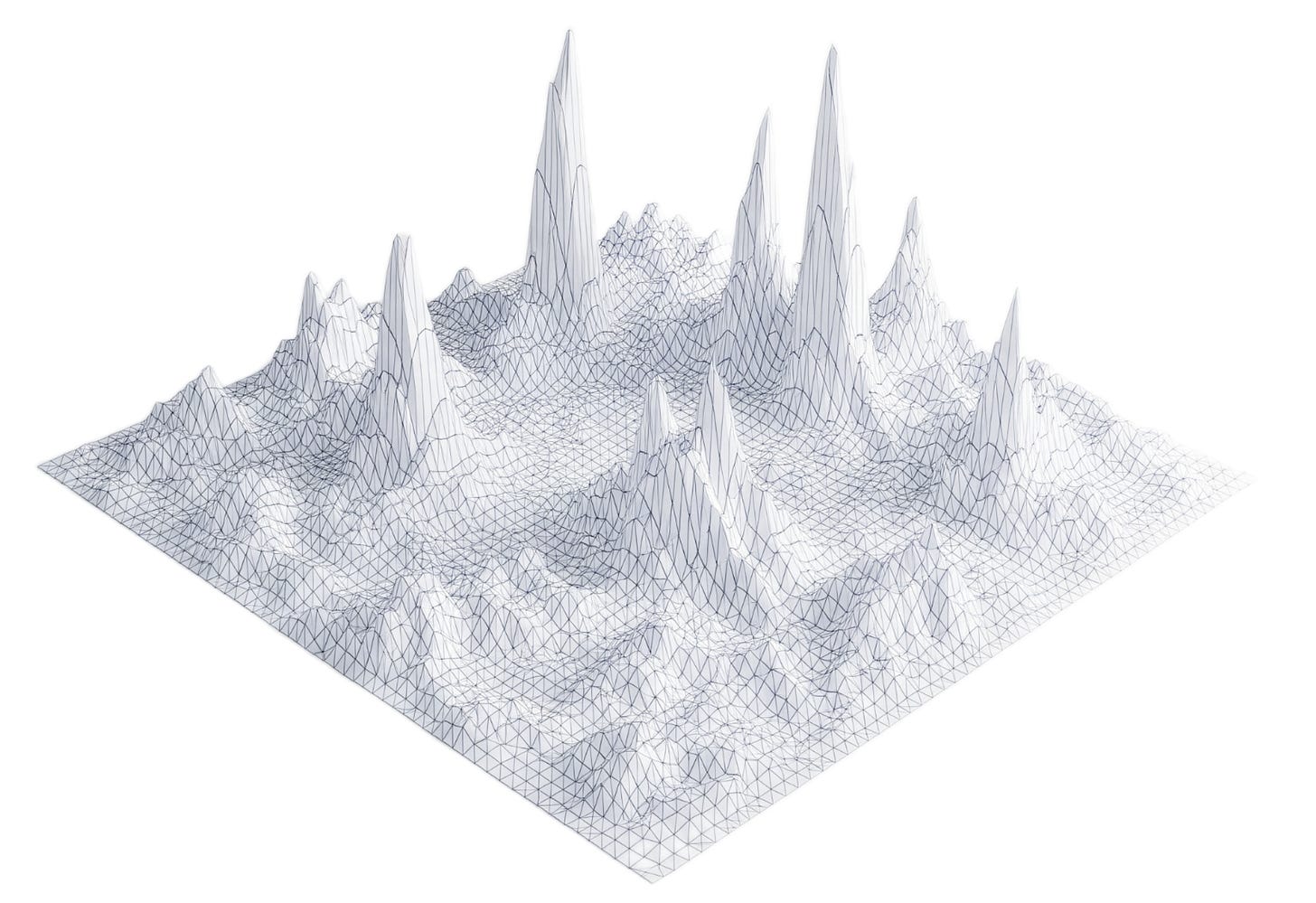
To conceptualize this new reality, imagine every possible creative variation existing within a vast, multi-dimensional space. For simplicity, we can visualize this as a 2D grid (Figure A), where each point represents a distinct creative asset, and adjacent points signify minor variations. Now, let’s introduce a third dimension: “fitness,” loosely defined as creative performance. The peaks in this landscape represent highly effective advertisements, while the valleys represent those that perform poorly (Figure B).
The challenge arises from the sheer scale of this landscape. While real-world testing—through A/B testing or live campaign data—is the only way to determine the fitness of any given creative, testing every single possibility within an infinite landscape is an insurmountable task. Even considering one million creative variants, the volume of clicks or conversions for each would be so low as to render statistical analysis meaningless. This creates a paradox: while the ability to generate creative is virtually unlimited, the capacity to gather statistically significant performance data for testing is not.
The core dilemma is therefore clear: generative AI has liberated us from the traditional creative production bottleneck, but the newfound limitation of data availability necessitates intelligent strategies for navigating this “creative fitness landscape.” The fundamental question becomes: how can we intelligently select the next creative variant to test to maximize our chances of improvement over a control, effectively optimizing our journey through this landscape?
The Navigator’s Toolkit: Exploit and Explore
To address this navigation challenge, a dual-pronged strategy is essential, leveraging the power of generative AI to enhance both approaches.
The “Exploit” Strategy: Precision Optimization
The “Exploit” strategy is designed to meticulously map a known high-performing area of the creative landscape to uncover its absolute highest peak. This involves a process of continuous, data-driven refinement.
Goal: To thoroughly explore a specific, successful segment of the creative landscape and identify its most effective iterations.
Method: This approach utilizes generative AI to produce a series of micro-variations based on an existing high-performing creative asset. These variations are generated in close proximity within the fitness landscape. The process then involves selecting the best-performing variant from this batch and using it as the “seed” for generating the next round of micro-variations. This creates a rapid, iterative cycle of improvement.
Why it Works: The “Exploit” strategy offers two primary benefits. Firstly, it increases creative diversity within advertising platforms. This enhanced variety provides bidding algorithms with more options, enabling them to more effectively match the right creative to the right user at the opportune moment and context. Secondly, by continuously using the top performer as the basis for subsequent generations, a data-driven feedback loop is established, leading to gradual, incremental improvements over time. This methodical approach allows for the fine-tuning of successful creative concepts. Early explorations at agencies like Brainlabs have demonstrated the efficacy of this technique in increasing creative diversity and optimizing towards local optima, as evidenced by examples of generated text and visual assets.
The “Explore” Strategy: Strategic Breakthroughs
While the “Exploit” strategy is excellent for incremental gains, relying on it exclusively can lead to stagnation on a “local peak.” Without venturing into new territories, there’s a risk of missing out on significantly higher-performing creative avenues. The “Explore” strategy is designed to overcome this limitation.

Goal: To break free from the confines of “local peaks” and discover entirely new, potentially much more effective creative territories.
Method: This strategy involves making data-informed “big jumps” across the creative landscape. It leverages historical performance data to guide these leaps. By analyzing the attributes of past high-performing creatives, marketers can identify other regions within the landscape that are likely to yield promising results. This involves labeling successful creatives to understand their core content and stylistic elements, and then generating new creatives based on these insights. Alternatively, creatives can be directly “cross-bred” without necessarily reducing them to discrete labeled components.
Why it Works: This method transforms exploration from a random guess into a calculated, strategic endeavor. By understanding what made past creatives successful, marketers can make informed decisions about where to direct their exploration efforts. For instance, an insurance company might analyze top-performing trailers in the film industry, identifying attributes like “fast-paced editing” and “rising emotional scores.” These identified principles could then be applied to generate a novel and surprisingly dynamic advertisement concept, potentially leading to a significant performance breakthrough. This strategic exploration allows for the discovery of uncharted, high-potential creative territories.
The Future Frontier: Eliminating Data Constraints
While both “Exploit” and “Explore” strategies are powerful enablers of creative discovery, their ultimate effectiveness is constrained by the speed and cost of acquiring real-world performance data. The next frontier in unlocking the full potential of the infinite creative landscape lies in removing this data limitation.
This ambitious goal may be achievable through the development and deployment of “synthetic audiences.” A synthetic audience is a sophisticated simulation of a target demographic, constructed from a combination of large language model (LLM) outputs and real-world data. The aim is to create a highly accurate representation of an audience, calibrated to behave and respond in ways that mimic human consumers.
By using these synthetic audiences, it may become possible to generate synthetic datasets of performance metrics at an unprecedented scale. While compute costs will still be a factor, the ability to pre-test creatives with synthetic audiences could dramatically accelerate the exploration process. This could allow for much faster movement within the “Exploit” strategy and significantly de-risk the “big jumps” associated with the “Explore” strategy. In an optimistic scenario, if model speeds continue to increase and costs decline—a likely outcome given their LLM-based nature and the trend towards commoditization—it’s conceivable that these exploratory searches for the most effective creative could occur in real-time, even at the point of ad auction. Leveraging real-time signals, these strategies could hone in on the optimal creative for an individual user, effectively eliminating the guesswork from dynamic creative optimization (DCO).
However, a significant caveat exists: this future is contingent on the assumption that synthetic audiences can accurately predict the real-world performance of creatives when exposed to actual human audiences. The efficacy and reliability of such predictive capabilities remain a critical area of ongoing research and validation.
Conclusion: Embracing the Infinite Creative Era
The marketing and advertising industries are standing at the cusp of a profound transformation. The decades-long bottleneck of creative production is dissolving, replaced by an expansive, virtually limitless landscape of creative possibilities, all fueled by the advancements in generative AI. While this presents an extraordinary opportunity, it fundamentally shifts the core challenge from creation to selection and strategic navigation.
As explored, thriving in this new paradigm demands a dual approach: the meticulous “Exploit” strategy, which refines known successes through precise micro-variations, and the bold “Explore” strategy, which undertakes data-informed leaps into novel creative territories. The future portends an even greater acceleration of this process, with the potential for synthetic audiences to entirely dismantle the data constraint, enabling creative testing at a scale previously confined to theoretical discussions. The ability to intelligently navigate this infinite creative landscape, armed with these evolving tools and strategies, will define the next generation of marketing success.