rifanmuazin
Choosing the right e-commerce platform as a YouTuber transcends mere features and pricing; it hinges on seamless integration with your channel and robust support for your specific sales strategies, whether that involves merchandise, digital downloads, coaching, or comprehensive online courses. This article delves into the top e-commerce solutions available to content creators on YouTube, offering a detailed comparison and analysis to guide YouTubers in transforming their passion into a sustainable business. From scaling a branded empire to launching a simple print-on-demand line, the ideal platform is within reach.
The Evolving Monetization Landscape for YouTubers
For years, AdSense revenue was the primary financial engine for many YouTubers. However, the platform’s evolving algorithm, fluctuating ad rates, and the inherent unpredictability of ad income have spurred creators to diversify their revenue streams. This diversification has increasingly focused on direct sales to their audience, leveraging the trust and community built through their content. The ability to offer exclusive merchandise, share valuable digital products, or provide in-depth educational content through courses and coaching has become crucial for long-term creator sustainability and growth.
The integration of e-commerce directly into the YouTube ecosystem represents a significant shift. Features like the product shelf under videos, channel storefronts, and shoppable livestreams empower creators to monetize their audience in a more integrated and frictionless manner. This evolution necessitates a strategic choice of e-commerce platform, one that not only facilitates sales but also enhances the viewing and purchasing experience for the audience.
Key Takeaways for YouTubers Navigating E-commerce
- Direct Integration is Key: Platforms that offer native YouTube Shopping features, such as product shelves and channel stores, provide a significant advantage in conversion rates and user experience.
- Scalability Matters: While simplicity is appealing for initial launches, consider platforms that can grow with your channel and business aspirations.
- Product Specialization: Different platforms excel at selling different types of products. Identify what you intend to sell (merch, digital, courses) to narrow down your choices.
- Cost vs. Value: Factor in not just monthly fees but also transaction costs, app store expenses, and the overall value proposition for your specific needs.
- Creator-Focused Tools: Look for platforms that offer built-in marketing tools, analytics, and customer management features tailored for content creators.
Quick Comparison: Top 7 Ecommerce Platforms for YouTubers

| Platform | Best For | Starting Price (USD) | YouTube Shopping Integration | Highlights |
|---|---|---|---|---|
| Shopify | Scalable, long-term ecommerce brands | $39 per month | Yes | Advanced features, massive app store |
| Spring | Print-on-demand merch | Free to start | Yes | Supports YouTube shelf and channel store |
| Sellfy | Digital products and light merch | $22 per month | No | Clean creator-focused stores with email tools |
| Gumroad | Fast digital sales and simple checkout | Free, 10 percent fee | No | Low-friction setup, great for digital assets |
| Kajabi | Courses, memberships, and coaching | $149 per month | No | All-in-one creator business platform |
| WooCommerce | Advanced control with WordPress sites | Free plugin | No | Full flexibility for experienced users |
1. Shopify: Best for Building a Serious Brand
- Starting price: $39 per month
- YouTube Shopping integration: Yes, with Google Merchant Center setup
- Built for: Scalable e-commerce businesses and full product catalogs
Shopify stands as a titan in the e-commerce world, renowned for its robust features and scalability. For YouTubers aspiring to build a lasting brand beyond the confines of the platform, Shopify offers an unparalleled foundation. Its comprehensive suite of tools caters to businesses of all sizes, from burgeoning creators to established enterprises.
During rigorous testing, Shopify’s dashboard proved to be a professional command center, equipped with advanced functionalities like abandoned cart recovery, product bundling, upsell capabilities, and detailed analytics. The extensive app store further amplifies its power, allowing for near-limitless customization and integration with third-party services, from advanced marketing automation to sophisticated inventory management.
While YouTube Shopping integration requires an initial setup via Google Merchant Center, the payoff is substantial. Once connected, creators gain access to a full suite of native YouTube sales tools, including the prominent product shelf beneath videos, a dedicated channel store tab, shoppable Shorts, and integration with live stream shopping events. This seamless integration transforms the YouTube viewing experience into a direct purchasing pathway. For YouTubers serious about establishing a professional, long-term e-commerce presence, Shopify provides the infrastructure to grow and scale across multiple channels.
- Pros:
- Highly scalable for long-term business growth.
- Extensive app store for customization and advanced features.
- Robust native YouTube Shopping integration.
- Professional dashboard and analytics.
- Supports a wide range of product types, including physical and digital goods.
- Cons:
- Higher starting price point.
- Can have a steeper learning curve for beginners.
- Additional costs for premium apps.
- Recent updates from Shopify: Ongoing enhancements to AI-powered tools for content creation and marketing, improved checkout experiences, and expanded B2B capabilities.
- How Much Does Shopify Cost? The Basic Shopify plan starts at $39 per month, offering core e-commerce features. Higher tiers like Shopify and Advanced Shopify provide more staff accounts, reporting, and lower transaction fees, starting at $105 and $399 per month respectively. Transaction fees also vary based on the plan and whether you use Shopify Payments.
- Why Use Shopify in 2026? Shopify is ideal for YouTubers treating their channel as a serious business and aiming for a professional, scalable e-commerce presence. It’s built for brands that want to grow, expand their reach, and eventually sell across multiple platforms. If your ambition extends beyond simple merchandise drops, Shopify is the platform to build upon.
- Shopify is suitable for:
- Creators aiming to build a significant e-commerce brand.
- Those selling a diverse range of products.
- YouTubers with a long-term vision for their business.
- Creators who want robust analytics and marketing tools.
- Shopify isn’t suitable for:
- Creators on a very tight budget with minimal sales.
- Those looking for the absolute simplest, quickest setup for a single product.
2. Spring: Best for Simple Print-on-Demand Merch
- Starting price: Free to start
- YouTube Shopping integration: Yes
- Built for: Creators launching their first merch lines
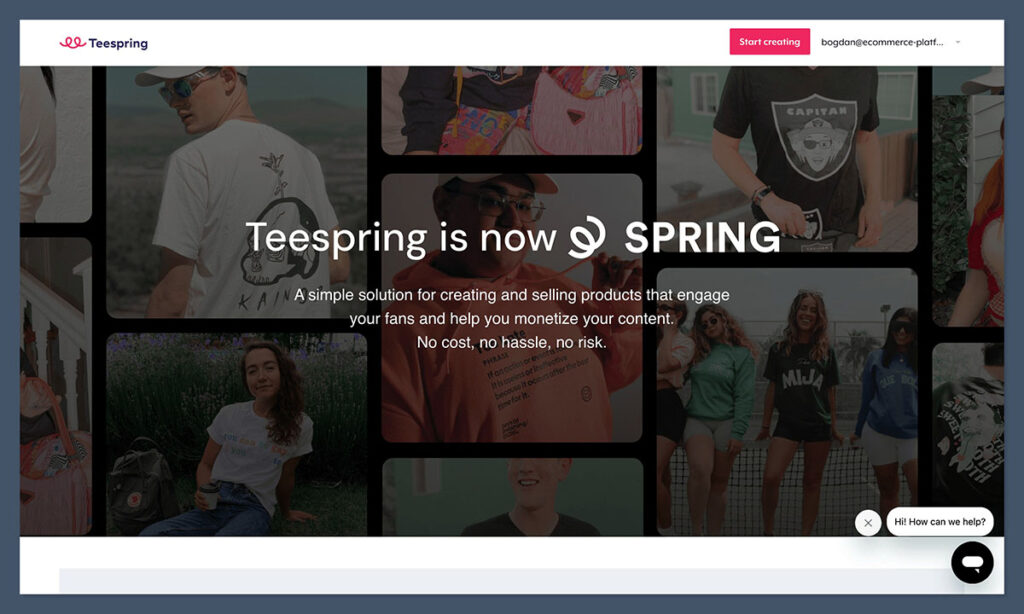
Spring, formerly known as Teespring, has long been a cornerstone for YouTubers venturing into merchandise. Its primary appeal lies in its zero-cost entry point and the complete elimination of inventory management, logistics, and fulfillment responsibilities. This model allows creators to focus solely on design and promotion, with Spring handling the backend operations.
The platform’s direct integration with YouTube is a significant advantage. Creators can effortlessly enable product shelves under their videos, showcase items in a dedicated channel store, and tag products in Shorts and livestreams. This streamlined approach ensures that merchandise is readily accessible to the audience, directly within the YouTube interface, thereby maximizing visibility and potential sales.

While Spring’s design tools and dashboard may appear more basic compared to premium platforms, its core functionality is robust and user-friendly. The risk-free model, where creators only profit after an item sells, makes it an excellent avenue for testing new design ideas and gauge audience interest without financial commitment. For YouTubers prioritizing ease of use and immediate YouTube integration for their first merch line, Spring remains a highly attractive option.
- Pros:
- Zero upfront cost, making it accessible to all creators.
- Full print-on-demand service, handling production and shipping.
- Seamless YouTube Shopping integration.
- Easy to set up and manage.
- Low risk for testing new product ideas.
- Cons:
- Lower profit margins compared to self-fulfilled or other platforms.
- Limited customization options for product types and designs.
- Dashboard and design tools are less advanced.
- Recent updates from Spring: Continued focus on expanding product offerings and improving the creator experience within the YouTube ecosystem, including enhanced livestream shopping features.
- How Much Does Spring Cost? Spring operates on a commission-based model. There are no monthly fees. The cost to you is the base cost of the product, and you set your own profit margin on top. Spring takes a percentage of the sale, which varies by product type and region.
- Why Use Spring in 2026? If you want to sell merchandise with no upfront investment and full integration into YouTube, Spring is one of the most straightforward solutions. It requires no prior e-commerce knowledge. It’s fast, simple, and designed to function seamlessly within the YouTube platform.
- Spring is suitable for:
- Creators launching their first merchandise.
- Those who want to avoid inventory and shipping complexities.
- YouTubers prioritizing direct YouTube integration.
- Creators on a tight budget.
- Spring isn’t suitable for:
- Creators who want to build a distinct, branded merchandise line with unique products.
- Those who prioritize higher profit margins per item.
3. Sellfy: Best for Selling Digital Products with Branding Control
- Starting price: $22 per month (billed annually)
- Built for: Digital product sales and light merch
- YouTube Shopping integration: No
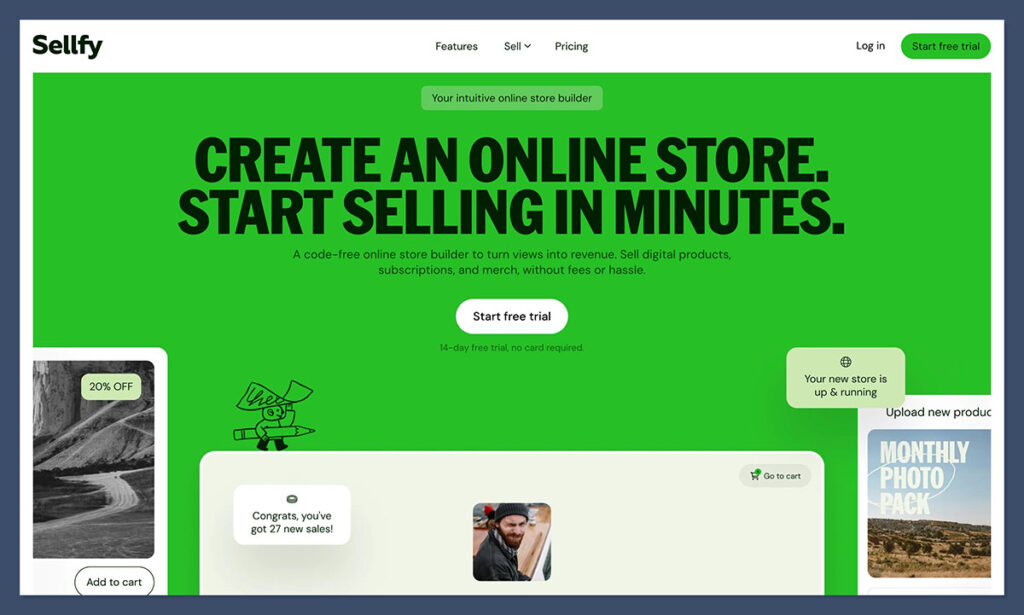
Sellfy emerges as a creator-centric e-commerce platform that strikes an excellent balance between ease of use and design control, particularly for selling digital products. It empowers creators to establish sleek, branded storefronts that feel more like dedicated online shops than simple landing pages. This is crucial for YouTubers who want to present a cohesive brand identity across all their online ventures.
The platform is adept at handling a variety of digital goods, including e-books, software, music, design templates, and more. It also supports physical products and subscriptions, offering versatility for creators with diverse offerings. While Sellfy does not integrate directly with YouTube Shopping’s native features, its customizable storefronts and built-in marketing tools, such as email marketing and discount codes, enable creators to effectively drive traffic from their YouTube audience.
Sellfy’s subscription model offers predictable costs, which is beneficial for creators expecting consistent sales or traffic. The all-in-one nature of the platform, encompassing storefront design, product hosting, and marketing capabilities, simplifies the process of launching and managing digital product sales without the need to stitch together multiple third-party tools.
- Pros:
- Sleek, customizable storefronts for strong branding.
- Excellent for selling digital products.
- Built-in email marketing and discount tools.
- Predictable monthly pricing.
- Supports subscriptions and physical products.
- Cons:
- No direct YouTube Shopping integration.
- Transaction fees apply on top of the subscription.
- Less robust for complex e-commerce operations or large physical product catalogs.
- Recent updates from Sellfy: Enhancements to customization options, improved analytics, and expanded integration capabilities with marketing tools.
- How Much Does Sellfy Cost? Sellfy offers tiered plans. The "Starter" plan is $29 per month ($22 billed annually) and includes unlimited products, 5% transaction fees, and basic features. The "Business" plan at $79 per month ($59 billed annually) reduces transaction fees to 2% and adds more advanced marketing tools. The "Premium" plan is $159 per month ($119 billed annually) with 0% transaction fees and advanced features.
- Why Use Sellfy in 2026? If you desire a more branded store for selling templates, LUTs, e-books, or even some merchandise, Sellfy offers a great blend of design control and simplicity. It’s best for creators who are already generating consistent sales or wish to establish a more professional storefront.
- Sellfy is suitable for:
- Creators focused on selling digital products.
- Those who want strong branding and a dedicated store experience.
- YouTubers looking for integrated email marketing tools.
- Creators seeking predictable monthly costs.
- Sellfy isn’t suitable for:
- Creators who need direct YouTube Shopping integration.
- Those primarily focused on high-volume physical merchandise.
4. Gumroad: Best for Selling Digital Products Fast
- Starting price: Free to start, 10% platform fee per sale
- Built for: Instant digital product delivery
- YouTube Shopping integration: No
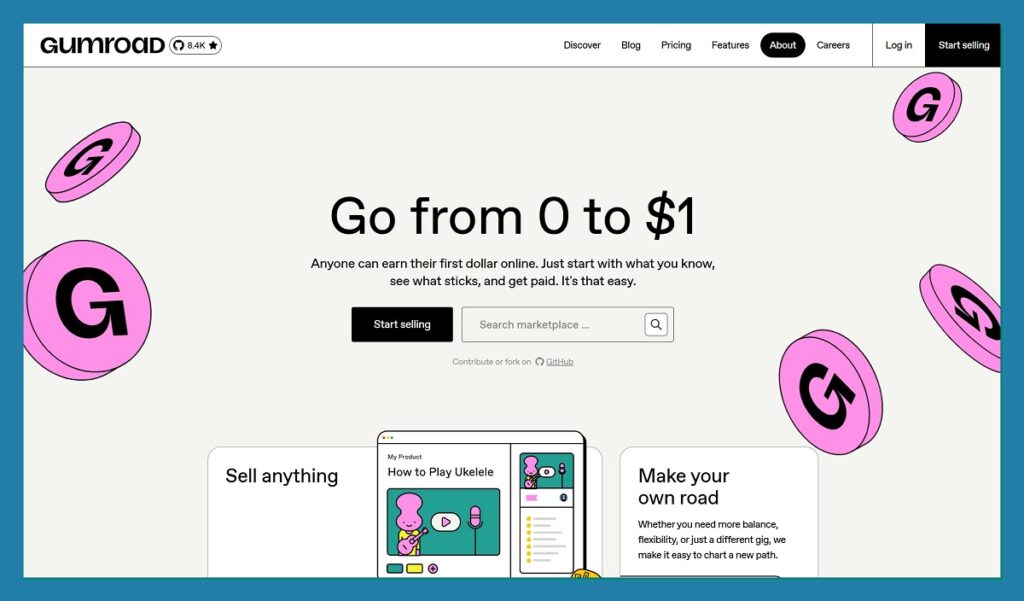
Gumroad has carved out a niche as the go-to platform for creators needing to sell digital products with unparalleled speed and simplicity. The barrier to entry is virtually non-existent: upload your file, add a title, set a price, and you can begin selling within minutes. This low-friction approach is ideal for YouTubers looking to quickly monetize a piece of content, a guide, or any digital asset.
The platform’s straightforward model means that creators can easily link directly from their video descriptions, social media posts, or any other promotional channel, driving immediate sales. While Gumroad doesn’t offer extensive storefront customization or native YouTube Shopping integration, its strength lies in its efficiency. It’s perfect for testing product ideas, launching limited-time offers, or selling to an audience that is already highly engaged and ready to purchase.
The 10% transaction fee, while higher than some subscription-based models, covers all operational aspects, including payment processing and delivery. This makes it a compelling choice for creators who prioritize immediate market entry and minimal setup hassle over granular control or the lowest possible per-sale cost.
- Pros:
- Extremely fast and easy setup for digital products.
- Free to start, with fees only applied on sales.
- Low-friction checkout process for buyers.
- Ideal for quick product launches and testing.
- Cons:
- Higher transaction fees compared to subscription models.
- Limited branding and storefront customization.
- No direct YouTube Shopping integration.
- Less suitable for complex product catalogs or physical goods.
- Recent updates from Gumroad: Continued focus on streamlining the creator experience, improving payment processing, and enhancing discoverability for creators on the platform.
- How Much Does Gumroad Cost? Gumroad charges a flat 10% fee on all sales, which includes payment processing. There are no monthly subscription fees, making it a cost-effective option for creators with sporadic sales or those just starting out.
- Why Use Gumroad in 2026? Gumroad is the easiest way to start selling digital content to your audience. It’s frictionless, fast, and ideal for creators who don’t need fancy branding or advanced e-commerce features. For testing product ideas or selling to a warm YouTube audience, it works exceptionally well.
- Gumroad is suitable for:
- Creators selling digital products like e-books, presets, or software.
- Those who need to launch products quickly.
- YouTubers prioritizing ease of use and minimal setup.
- Creators testing new product ideas.
- Gumroad isn’t suitable for:
- Creators focused on building a significant, branded e-commerce store.
- Those who want to sell physical merchandise at scale.
- YouTubers who need direct YouTube Shopping integration.
5. Kajabi: Best for Courses, Coaching, and Memberships
- Starting price: $149 per month (billed annually)
- Built for: Course creators, coaches, and knowledge-based businesses
- YouTube Shopping integration: No
Kajabi is a premium, all-in-one platform designed for creators who monetize their expertise through online courses, coaching programs, memberships, and community building. It consolidates essential business tools—website building, email marketing, landing pages, video hosting, and payment processing—into a single, integrated ecosystem. This unified approach is particularly valuable for YouTubers looking to transition their knowledge-sharing content into structured, revenue-generating offerings.
The platform’s strength lies in its ability to facilitate the entire customer journey, from initial lead generation through sophisticated marketing funnels to the delivery of high-quality educational content and ongoing community engagement. Kajabi’s robust features enable creators to build professional-looking course platforms, manage recurring membership payments, and engage with their audience through advanced email automation.
While Kajabi does not offer direct YouTube Shopping integration, its powerful marketing and sales capabilities allow creators to effectively drive their YouTube audience to their Kajabi-hosted offerings. For YouTubers whose primary monetization strategy revolves around educational content and community building, Kajabi represents a significant investment in a comprehensive business solution that can support long-term growth and recurring revenue.
- Pros:
- All-in-one platform for courses, coaching, and memberships.
- Powerful marketing and automation tools.
- Professional course delivery and community features.
- Streamlined customer journey management.
- High-quality templates and design options.
- Cons:
- Highest starting price point among the platforms reviewed.
- No direct YouTube Shopping integration.
- May be overkill for creators solely focused on merchandise or simple digital downloads.
- Recent updates from Kajabi: Continuous improvements to course creation tools, AI-powered marketing assistance, and enhanced community engagement features.
- How Much Does Kajabi Cost? Kajabi offers tiered pricing. The "Basic" plan starts at $149 per month (billed annually), allowing for up to 3 products and 1,000 marketing contacts. The "Growth" plan is $199 per month (billed annually) with 10 products and 10,000 contacts. The "Pro" plan is $399 per month (billed annually) with unlimited products and 20,000 contacts, offering advanced features like custom code editing.
- Why Use Kajabi in 2026? Kajabi is the premier choice if you’re transforming your YouTube channel into a serious business centered on transformation—whether that involves learning a skill, joining a program, or becoming part of a premium community. It’s an all-in-one suite that allows you to deliver content, market to your audience, and build long-term relationships without juggling separate tools.
- Kajabi is suitable for:
- Creators focused on selling online courses.
- Coaches and consultants offering programs.
- Those building membership sites and online communities.
- YouTubers whose core offering is knowledge-based.
- Kajabi isn’t suitable for:
- Creators primarily selling physical merchandise.
- Those looking for the most budget-friendly option.
- YouTubers who need direct YouTube Shopping integration.
6. WooCommerce: Best for WordPress Users Who Want Full Control
- Starting price: Free plugin (extra costs for hosting, extensions, and themes)
- Built for: Custom e-commerce on WordPress websites
- YouTube Shopping integration: No
WooCommerce stands as the dominant e-commerce solution for WordPress users, offering unparalleled flexibility and customization. As an open-source plugin, it empowers creators to build highly tailored online stores that are deeply integrated with their existing WordPress websites. This is particularly advantageous for YouTubers who maintain a blog or website alongside their video content and wish to maintain a unified digital presence.
The extensive customization capabilities of WooCommerce mean that creators can control every facet of their store, from product presentation and checkout flow to SEO optimization and marketing integrations. However, this level of control comes with a greater degree of responsibility. Users must manage hosting, plugins, themes, and ongoing updates themselves, making it a more technically demanding option.
While WooCommerce does not directly integrate with YouTube Shopping, its deep customization allows for creative workarounds, such as embedding product links or using third-party tools to create a more seamless experience. For creators who are already invested in the WordPress ecosystem and desire complete command over their e-commerce operations, WooCommerce offers a powerful and adaptable solution.
- Pros:
- Maximum control and customization over your store.
- Seamless integration with WordPress websites.
- Vast library of extensions and themes for customization.
- Cost-effective for those with existing WordPress infrastructure.
- Strong community support.
- Cons:
- Requires a WordPress website and self-hosting.
- Steeper learning curve and more technical management.
- No direct YouTube Shopping integration.
- Additional costs for hosting, premium themes, and extensions can add up.
- Recent updates from WooCommerce: Ongoing development of core features, improved performance, and enhanced integration with the broader WordPress ecosystem.
- How Much Does WooCommerce Cost? The WooCommerce plugin itself is free. However, you will incur costs for WordPress hosting (ranging from $3-$30+ per month), a domain name (around $10-$20 per year), and potentially premium themes and extensions that can range from $50 to several hundred dollars.
- Why Use WooCommerce in 2026? WooCommerce is the optimal choice if you’re already operating a WordPress site or desire maximum customization and control. You can design every aspect of your store, manage your content and e-commerce in one place, and use plugins to match your exact business model. It’s a more advanced setup, but for creators already integrated into WordPress, it’s a natural fit.
- WooCommerce is suitable for:
- Creators with existing WordPress websites.
- Those who want complete control over their store’s design and functionality.
- YouTubers with technical proficiency or a willingness to learn.
- Businesses with complex or unique product requirements.
- WooCommerce isn’t suitable for:
- Creators who want a standalone, hosted e-commerce solution.
- Beginners with no experience in website management.
- Those who need immediate, out-of-the-box YouTube Shopping integration.
How to Choose the Best Ecommerce Platform as a YouTuber
The ideal e-commerce platform for a YouTuber is not a one-size-fits-all solution. It hinges on what you sell, how you sell it, and your long-term business aspirations.
- For immediate merchandise with YouTube integration: Spring offers the quickest and most cost-effective route to get your designs featured directly on YouTube.
- For building a robust, scalable e-commerce brand: Shopify is the industry standard, providing the tools and flexibility to grow into a significant online business beyond your YouTube audience.
- For digital products and asset sales: Begin with Gumroad for rapid deployment and low barriers to entry. As your sales grow and you desire more brand control, Sellfy offers a more polished storefront and better profit margins.
- For knowledge-based monetization (courses, coaching, memberships): Kajabi consolidates all necessary tools into a single, powerful platform, simplifying the management of educational offerings and communities.
- For creators deeply embedded in the WordPress ecosystem: WooCommerce provides unparalleled control and integration, keeping your content and commerce within a single, customizable environment.
The most critical advice for any creator is to start. The platform chosen today may not be the one that serves you at 100,000 subscribers, and that’s perfectly acceptable. Begin with the simplest tool that aligns with your current goals, test your offerings rigorously, and actively seek feedback from your audience. The sooner you can place a product in front of your viewers, the faster you’ll gain insights into what truly resonates and drives sales.
Our Testing Methodology: A Creator-Centric Approach
Over a six-week period, this evaluation focused on how effectively each e-commerce platform serves YouTubers, moving beyond general e-commerce use cases. Every platform was assessed from a creator’s perspective: the ease of setting up a store, the feasibility of connecting it to a YouTube channel (where applicable), the process of uploading sample products, and the end-to-end buyer experience.
| Criteria | What We Evaluated |
|---|---|
| YouTube Integration | Native Product Shelf support, channel store availability, Shorts and livestream tagging, and setup complexity. |
| Creator Fit | How well the platform handles the mix of merchandise, digital products, and memberships that most YouTubers sell. |
| Pricing Transparency | Actual costs at 10, 100, and 1,000 sales per month, including platform fees, payment processing, and required add-ons. |
| Setup and Ease of Use | Time from signup to first live product, dashboard clarity, and onboarding quality. |
| Branding and Storefront Control | Design customization, domain options, and the professional appearance of the final storefront. |
| Scalability | Whether the platform supports a creator’s growth from 1,000 to 100,000 subscribers without forced migration. |
| Support and Operations | Fulfillment handling, customer service quality, and tax compliance, including Merchant of Record status where applicable. |
Platforms that did not meet at least two key criteria were excluded, even if they performed well in general e-commerce reviews. The overarching goal was to identify which platform offers YouTubers the most direct and sustainable path to revenue generation, without hindering future growth.
Final Verdict: Navigating Your Optimal Platform Choice
There isn’t a single platform that reigns supreme for every creator. The optimal choice is a confluence of factors: your product offerings, channel size, and your desired level of operational involvement.
- For Scaling a Serious E-commerce Brand: Shopify is the undisputed leader. If your ambition extends beyond your YouTube audience, Shopify is architected to evolve with you into a comprehensive commerce business, boasting the most extensive feature set available.
- For a First Merch Drop with Zero Cost: Spring remains the simplest, most accessible method to introduce merchandise directly into your YouTube presence, requiring no upfront financial commitment and offering native integration.
- For Selling Digital Products: Start with Gumroad for its immediate deployment capabilities and transition to Sellfy as your sales volume increases, offering better profit margins and a more robust storefront.
- For Courses, Coaching, and Memberships: Kajabi is the all-encompassing solution if your YouTube content naturally leads to paid programs rather than physical goods. It centralizes all your necessary tools.
- For Creators Already on WordPress: WooCommerce offers complete control, limitless customization, and the synergy of content and commerce within a familiar ecosystem.
For most YouTubers embarking on their e-commerce journey today, a combination of Spring for merchandise and Gumroad for quick digital product sales often provides the most effective starting point. Remember, migration between platforms is a possibility as your channel matures. Therefore, prioritize the platform that minimizes friction in launching your initial product this week.
Frequently Asked Questions
-
How many subscribers do I need before I can sell products on YouTube?
You can link products from your video descriptions at any subscriber count. To access native YouTube Shopping features like the product shelf and channel store, you generally need at least 10,000 subscribers, an active monetized channel, and eligibility in a supported country. Platforms like Spring offer faster onboarding, and creators below the YouTube Shopping threshold can still utilize direct links for sales.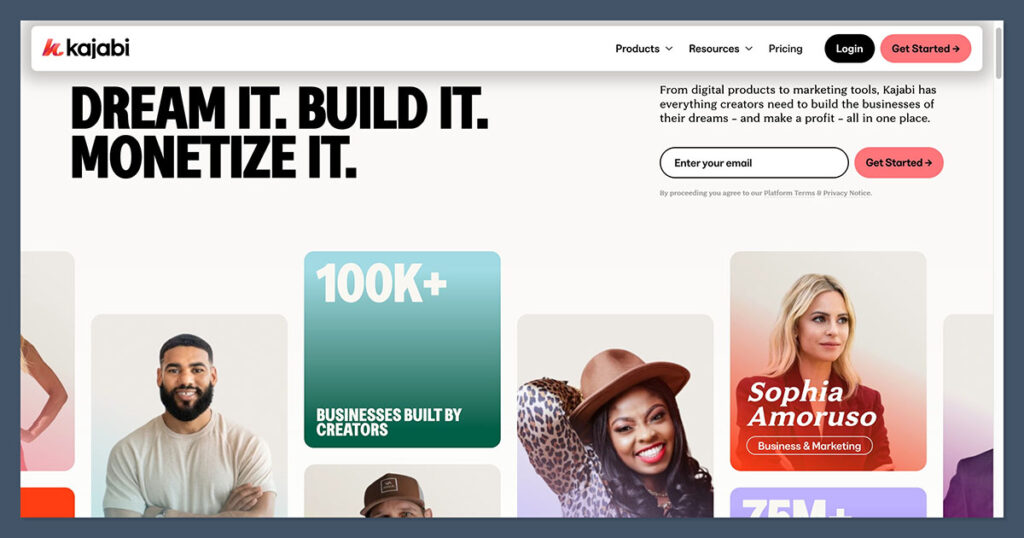
-
Does YouTube take a cut of my e-commerce sales?
No. YouTube does not charge commissions on products sold through your integrated store, regardless of the platform used (Shopify, Spring, etc.). You retain your full profit margin as set by your chosen platform. YouTube’s revenue sharing applies only to content monetization such as ads and channel memberships, not direct product sales. -
Can I use more than one e-commerce platform at the same time?
Absolutely. Many YouTubers strategically use multiple platforms – for instance, Spring for merchandise, Gumroad for digital downloads, and Kajabi for advanced courses. The primary trade-off is fragmented analytics and the need to manage multiple dashboards. For beginners, it’s advisable to start with one platform and expand only when a clear need arises. -
What’s the difference between YouTube Shopping and a regular store link in the description?
A store link in the description directs viewers away from YouTube to your external website. YouTube Shopping, conversely, surfaces your products directly within the YouTube platform—under videos, on the channel store tab, in Shorts, and during livestreams—without requiring viewers to leave the app. This native integration typically leads to higher conversion rates due to reduced friction. -
Do I need an LLC to sell merch on YouTube?
Technically, no. You can often sell as a sole proprietor, and platforms like Spring may handle tax documentation as the Merchant of Record for their catalog products. However, many creators opt to establish an LLC or equivalent entity once their sales become consistent. This separates personal and business finances and offers liability protection. Consulting with an accountant in your region is recommended. -
Which platform is cheapest for a creator with under 10,000 subscribers?
Platforms with free-to-start models, such as Spring and Gumroad, incur no costs until a sale is made, making them ideal for smaller channels. Shopify and Kajabi require monthly fees regardless of sales volume, making them more suitable for creators with predictable revenue. The absolute cheapest option depends on your product type: Gumroad excels for occasional digital products, while Spring is best for low-volume merchandise. -
Can I switch platforms later without losing customers?
Generally, yes. Customer lists, product designs, and digital files can be manually migrated. However, subscription or membership billing history typically cannot be transferred, meaning active members might need to re-subscribe on the new platform. Most creators manage this transition with promotional discounts and clear communication. Platforms like Shopify and Kajabi offer dedicated migration support. -
Do I need to handle shipping and customer service myself?
Only if you choose to. Platforms like Spring and most print-on-demand integrations available for Shopify manage manufacturing, shipping, and customer support on your behalf. Spring also functions as the Merchant of Record, handling tax calculations and remittances. If your priority is focusing on content creation, select a platform that alleviates operational burdens.