


The global digital optimization landscape is currently undergoing a fundamental shift as enterprises move away from isolated experimentation toward integrated data ecosystems. For modern experimentation teams, the efficacy of an A/B testing tool is no longer measured solely by its statistical engine or visual editor, but by its ability to communicate seamlessly with the broader technology stack. As data silos become increasingly detrimental to corporate agility, the depth of integration with analytics, Customer Relationship Management (CRM) systems, Customer Data Platforms (CDP), and data warehouses has emerged as the primary differentiator between basic testing utilities and comprehensive optimization platforms.
This evolution comes at a critical time for the industry. Following the sunsetting of Google Optimize in July 2023, the market has seen a surge in demand for sophisticated alternatives that can bridge the gap between user behavior and business outcomes. Organizations are discovering that without robust connections to their existing tools, test data remains fragmented, leading to disconnected workflows and insights that fail to influence high-level business strategy.
The Evolution of the Experimentation Ecosystem
The history of A/B testing has transitioned through three distinct eras. In the early 2010s, experimentation was largely a "front-end" activity, focused on superficial changes such as button colors or headline variations. By the mid-2010s, the focus shifted to "full-stack" testing, allowing developers to experiment with backend logic and product features. Today, we have entered the "integrated" era, where experimentation is a core component of a company’s data architecture.
In this current environment, the value of an experiment is tied directly to its context. A landing page test is no longer just about conversion rates; it is about how that variation affects lead quality in Salesforce, customer lifetime value (LTV) in Snowflake, and retention cohorts in Google Analytics 4 (GA4). This interconnectedness allows teams to move beyond "vanity metrics" and align their optimization efforts with actual revenue and long-term growth.
Core Integration Categories and Their Strategic Value
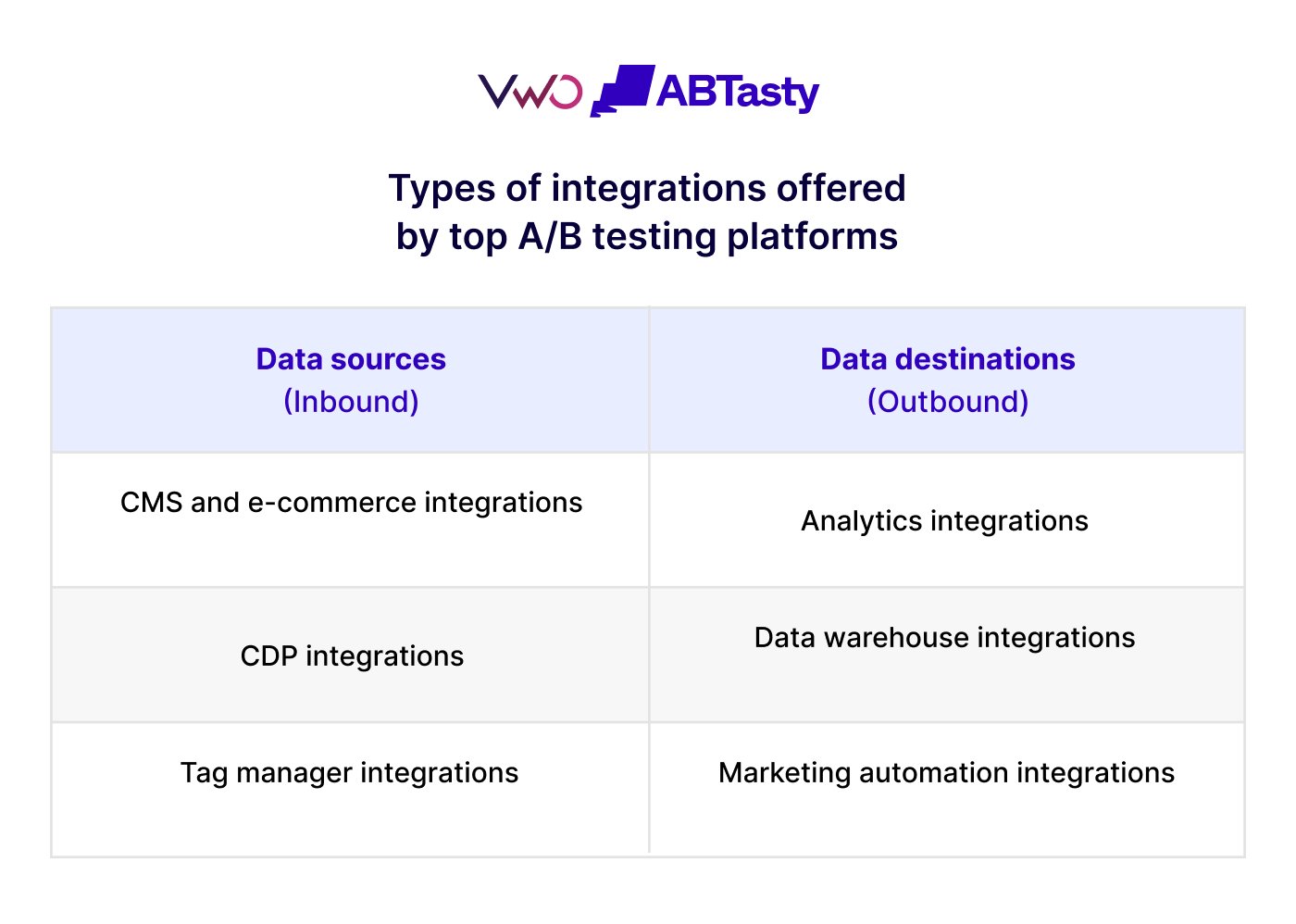
To understand the modern optimization landscape, one must analyze the specific types of integrations that top-tier platforms like VWO, AB Tasty, and Optimizely now provide. These connections are generally categorized into seven functional areas:
1. Analytics and Behavioral Feedback Loops
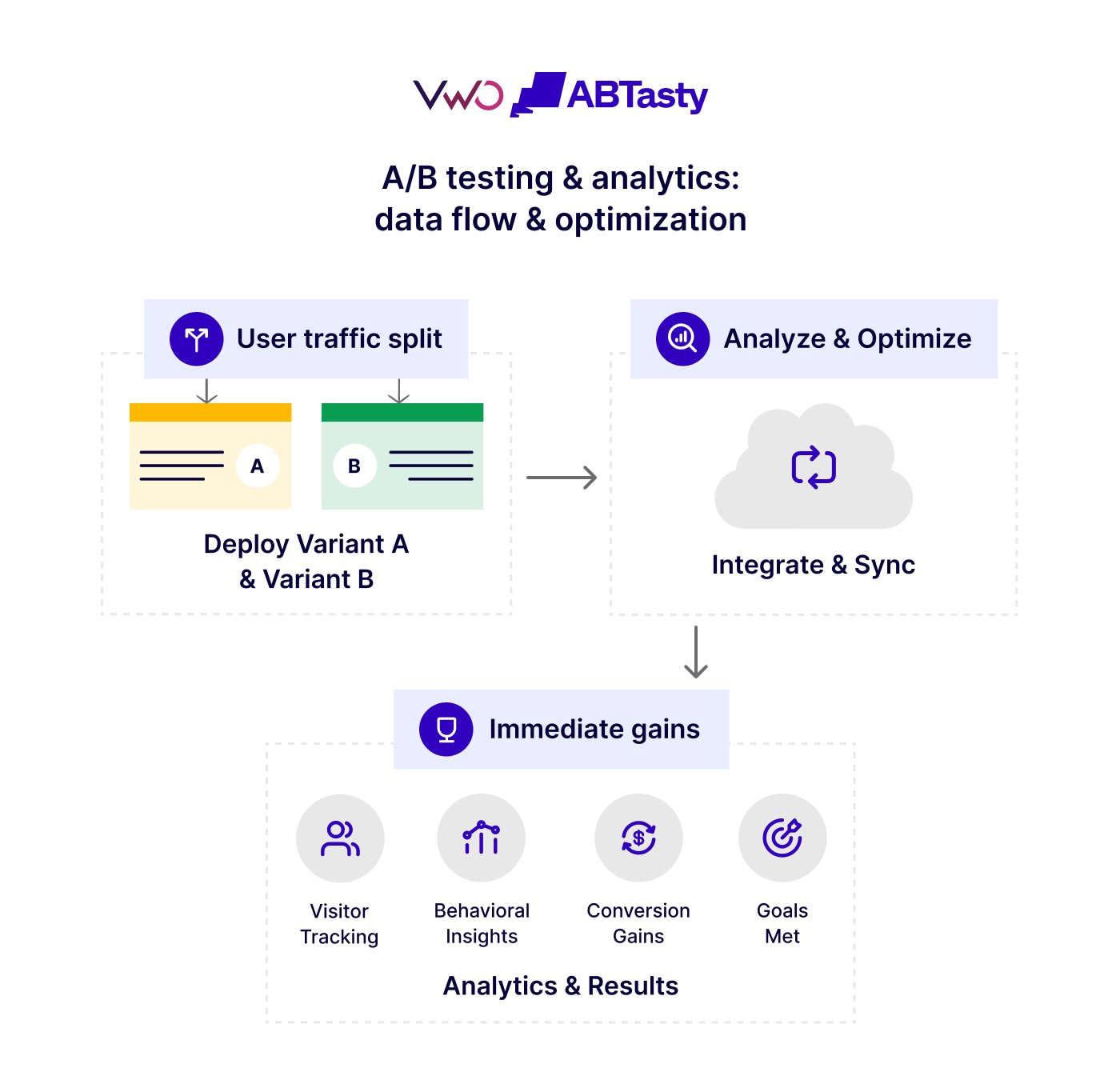
Analytics integrations serve as the foundational layer of any testing program. By connecting experiment data—including campaign IDs, variation assignments, and visitor IDs—to platforms like GA4, Adobe Analytics, Mixpanel, and Amplitude, teams can analyze test results alongside comprehensive user behavior data.
The primary advantage of these integrations is the ability to view experiments through the lens of complex user segments. For instance, a two-way integration allows a testing platform to push variation data into GA4 while simultaneously pulling GA4 audiences back into the testing tool for hyper-targeted experiments. This bidirectional flow ensures that data remains consistent across platforms, reducing the "data drift" that often plagues disconnected systems.
2. CRM and Lead Quality Alignment
CRM integrations, such as those with Salesforce and HubSpot, link experiment data directly to individual customer records. This is particularly vital for B2B organizations where the conversion event on a website (e.g., a form fill) is only the beginning of a long sales cycle.
By tying a specific A/B test variant to a lead profile, marketing teams can track the downstream impact of their experiments. They can determine if a specific variant, while perhaps producing fewer total leads, actually generated higher-quality Marketing Qualified Leads (MQLs) that progressed faster through the sales pipeline. This level of insight turns A/B testing from a marketing tactic into a strategic business tool.
3. Customer Data Platforms (CDP) for Identity Resolution
As privacy regulations tighten and third-party cookies disappear, CDPs like Segment, Tealium, and mParticle have become essential for maintaining a unified view of the customer. CDP integrations enable bidirectional data flow where experiment exposure events enrich a user’s profile in real-time.
This enables "identity resolution," ensuring that a user sees the same test variation whether they are on a mobile app, a desktop browser, or interacting with a customer support portal. It also allows for advanced audience segmentation based on real-time traits and cross-channel behaviors, providing a level of personalization that was previously impossible.
4. The Rise of Warehouse-First Experimentation
A significant trend in 2024 is the shift toward "warehouse-first" experimentation. Integrations with data warehouses like BigQuery, Snowflake, and Redshift allow organizations to route raw experiment events directly into their primary source of truth.
For data-mature teams, this is the ultimate integration. It allows for custom statistical analysis that goes beyond the "black box" models of most testing tools. It also enables the joining of experimental data with sensitive internal business metrics—such as actual profit margins or return rates—that are often too sensitive to be exported to a third-party testing vendor.
5. Marketing Automation and Scalable Personalization
Connecting testing platforms to marketing automation tools like Braze or Klaviyo allows for experiment-driven messaging. If a user is assigned to a specific variant on a website, that information can trigger a tailored email or push notification sequence. This ensures a consistent brand experience across every touchpoint, reinforcing the hypothesis being tested on the web.
The Technological Frontier: LLM Integrations via MCP
One of the most innovative developments in the experimentation space is the integration of Large Language Models (LLMs) through the Model Context Protocol (MCP). This technology allows AI assistants like Claude, ChatGPT, and Gemini to securely access experiment data, campaign performance metrics, and optimization insights directly from the testing platform.
Emily Isted, Director of CRO at Hype Digital, highlights the impact of this technology: "The Claude MCPs allow us to centralize all data points—Google Ads, Meta Ads, VWO testing data, and behavioral data. We can centralize this data, enabling easier cross-silo work between our PPC and CRO teams. It helps us strategize based on cold, hard data."
By using natural-language interfaces, teams can now ask complex questions like, "Which variations are performing best for users who arrived via LinkedIn ads but haven’t purchased in the last 30 days?" and receive instant, data-backed answers. This significantly lowers the barrier to entry for complex data analysis.
Market Analysis: Comparing Top Platforms
The current market is populated by several key players, each offering varying levels of integration depth:
- VWO & AB Tasty: These platforms are recognized for having some of the most extensive integration libraries in the industry, covering everything from standard analytics to niche eCommerce platforms and AI-driven MCP servers.
- Optimizely: Known for its enterprise-grade "Digital Experience Platform" (DXP) approach, it offers deep integrations with Digital Asset Management (DAM) and content management systems.
- Kameleoon: This platform has gained traction through its focus on privacy and its strong server-side testing capabilities, which integrate deeply with CDPs.
- GrowthBook & Statsig: These represent the new wave of "developer-first" tools that prioritize data warehouse integrations and feature flagging.
Navigating Challenges: Data Inconsistency and Performance
Despite the benefits, building an integrated stack is not without challenges. Industry experts point to four primary hurdles that organizations must overcome:

1. Data Discrepancies: Different tools use different methods for tracking sessions and users. A 5-10% discrepancy between a testing tool and an analytics platform is common, but without proper alignment, these gaps can lead to conflicting conclusions.
2. Identity Resolution Gaps: Connecting an anonymous website visitor to a known customer in a CRM requires a consistent shared identifier. If this "glue" is missing, the integration provides little value.
3. Performance Impact: Every integration adds a layer of complexity. Excessive client-side scripts can increase page load times, which can negatively impact SEO and user experience. To mitigate this, many enterprises are moving toward server-side integrations or using asynchronous loading techniques.
4. Integration Drift: APIs change, and platforms update. An integration that worked perfectly six months ago may break silently today. Continuous monitoring and documentation are essential for maintaining a healthy stack.
Strategic Recommendations for 2025 and Beyond
As organizations look toward the future, the following best practices are recommended for building a resilient experimentation integration stack:
- Establish a Data Foundation First: Before selecting an A/B testing tool, ensure your core analytics and data warehouse layers are stable. The testing tool should fit into your data strategy, not dictate it.
- Prioritize Bidirectional Flow: Look for integrations that both send and receive data. Static, one-way pushes are no longer sufficient for dynamic personalization.
- Embrace Server-Side When Possible: For mission-critical applications, server-side testing offers better security, performance, and data integrity than traditional client-side "snippet" based testing.
- Invest in Governance: Document every integration point. Know who owns the data at each stage and how it is being transformed as it moves between systems.
Conclusion: The Unified Experimentation Vision
The future of digital optimization lies in the death of the "standalone" tool. As experimentation becomes a standard part of the product development and marketing lifecycle, the ability to weave testing data into the fabric of the organization is paramount. Platforms like VWO and AB Tasty are leading this charge by transforming from simple testing tools into central nervous systems for customer insight.
By breaking down the walls between testing, analytics, and customer data, businesses can finally move at the speed of their customers’ expectations. The goal is no longer just to find a "winning" variant, but to build a continuous loop of learning that informs every aspect of the business, from product features to personalized marketing campaigns. In 2024, the most successful companies won’t be those who run the most tests, but those who best integrate the results of those tests into their core business logic.







