

India has officially ascended to become the world’s second-largest ecosystem for A/B testing and experimentation software companies, trailing only the United States. According to 2026 data from Tracxn, the South Asian nation now hosts a dense concentration of founders and engineering teams dedicated to conversion rate optimization (CRO), signaling a tectonic shift in the global SaaS landscape. This growth is driven by a unique combination of high-velocity Direct-to-Consumer (D2C) growth, a maturing SaaS sector, and an urgent need for Indian brands to maximize the efficiency of their digital marketing spend.

For Indian D2C and SaaS teams, the choice of an experimentation platform is no longer limited to expensive legacy tools from the West. A robust domestic industry, led by home-grown giants and agile newcomers, now offers solutions tailored to the specific challenges of the Indian market, including mobile-first performance and local currency billing. This guide provides a comprehensive analysis of the top A/B testing tools currently dominating the Indian market, evaluating their technical capabilities, economic viability, and strategic fit for various business models.
The Economic Context: Why Experimentation is Non-Negotiable in India
The Indian digital economy is characterized by thin margins and intense competition. With the majority of traffic for D2C brands originating from paid social media and search engines, the Cost of Acquisition (CAC) has become a primary concern for founders. In a market where most users access the internet via mobile devices on often inconsistent network connections, every millisecond of load time and every friction point in the user journey can result in lost revenue.

A/B testing serves as a critical tool for "recovering" ad spend. By comparing two versions of a webpage or user flow, brands can identify which configuration drives higher conversions without increasing their advertising budget. Experts in the field, such as Himanshu Gaur, CRO at OptiPhoenix, suggest that for brands reaching the ₹50–300 Crore revenue mark, experimentation acts as a "multiplier" on existing traffic. However, Gaur warns that the true value of A/B testing lies in its compounding effect over time—viewing it as a "compound interest account" rather than a one-off lottery ticket.
Leading Indian-Built A/B Testing Platforms
1. VWO (Wingify): The Pioneer and Global Contender
Founded in New Delhi in 2010 by Paras Chopra, VWO (Visual Website Optimizer) is perhaps the most recognizable name in the Indian experimentation space. Originally a bootstrapped success story, the company underwent a significant transformation in recent years. In January 2025, Singapore-based Everstone Capital acquired a majority stake, followed by a landmark merger in January 2026 with Paris-based AB Tasty.
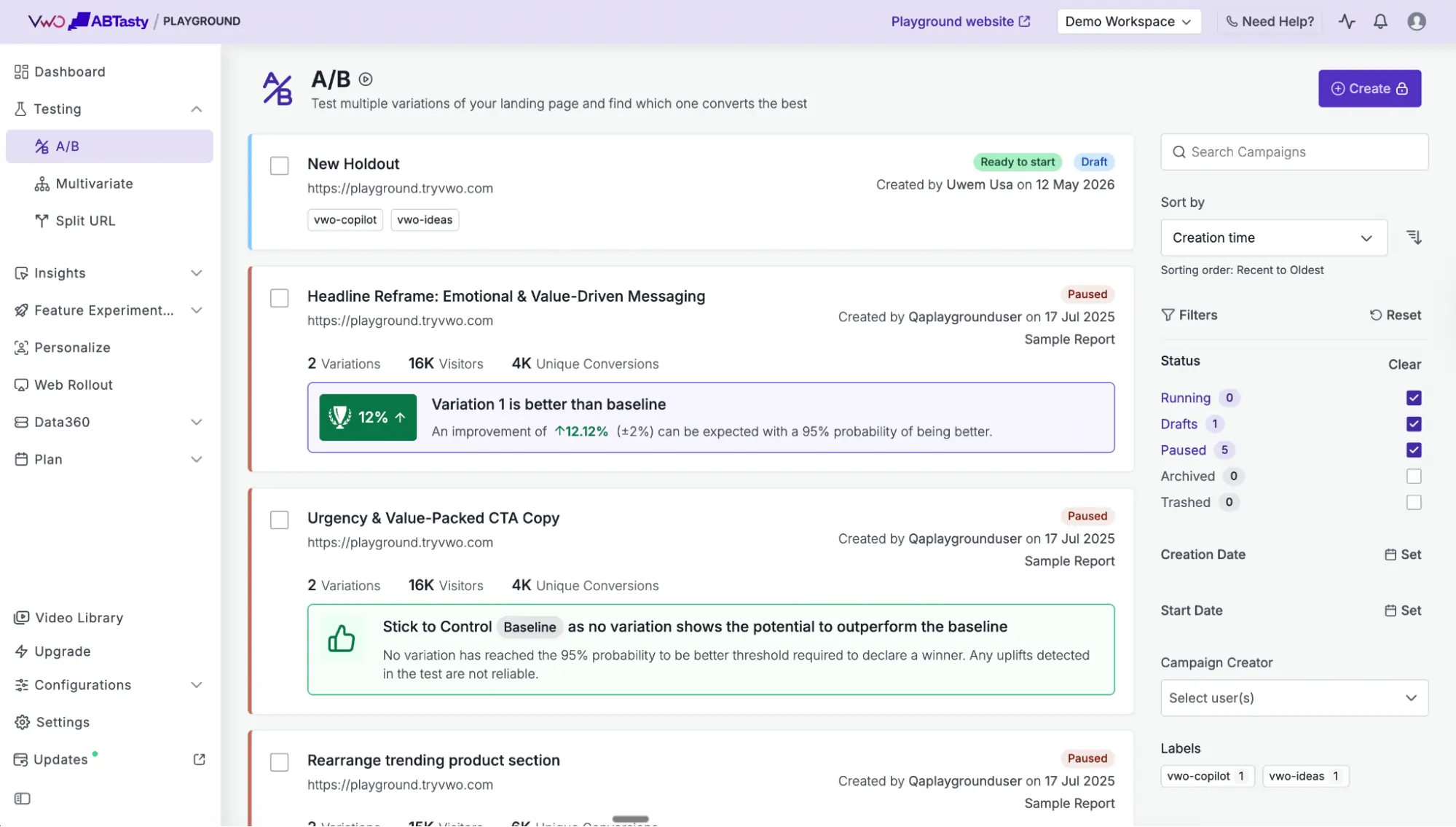
Today, VWO operates as a global powerhouse with its headquarters remaining in New Delhi. It offers a full-stack platform that includes A/B testing, multivariate testing, heatmaps, and session recordings. Its visual editor is designed for marketing teams, while its server-side capabilities cater to complex product-led experiments. Despite its global reach, VWO’s leadership remains rooted in India, with co-founder Sparsh Gupta serving as CEO of the merged entity.
2. Zoho PageSense: The Integrated Powerhouse
Zoho Corporation, the Chennai-based giant led by Sridhar Vembu, entered the CRO space with PageSense in 2018. True to Zoho’s philosophy of a "unified operating system for business," PageSense integrates seamlessly with the broader Zoho suite, including its CRM and analytics tools.

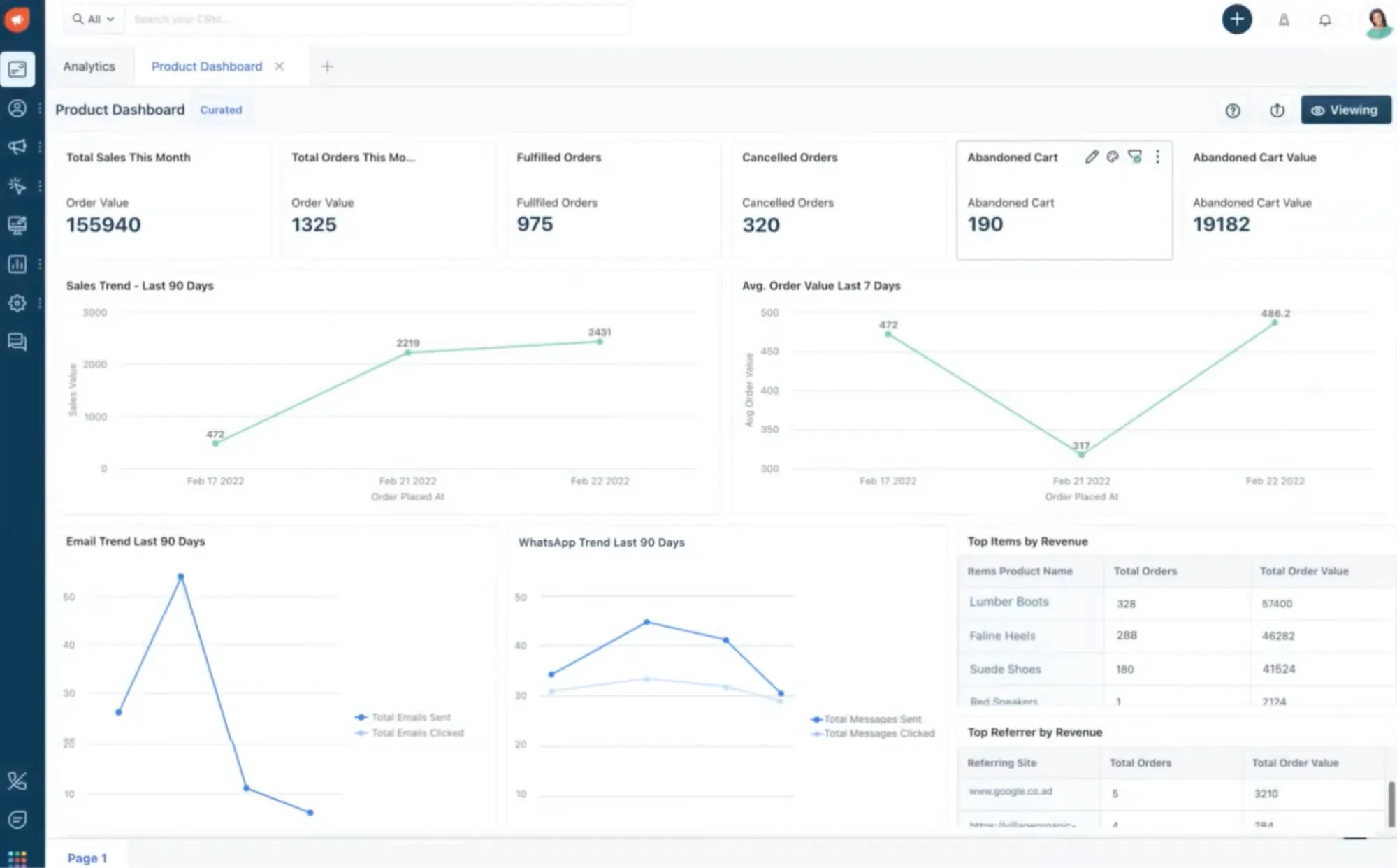
For Indian businesses, Zoho offers a distinct advantage: the ability to pay in Indian Rupees (INR) with GST-compliant invoicing. PageSense combines A/B testing with funnel analysis and form analytics, making it a "one-stop-shop" for small to mid-sized teams that prefer a consolidated tech stack over a fragmented best-of-breed approach.
3. CustomFit.ai: The No-Code Specialist
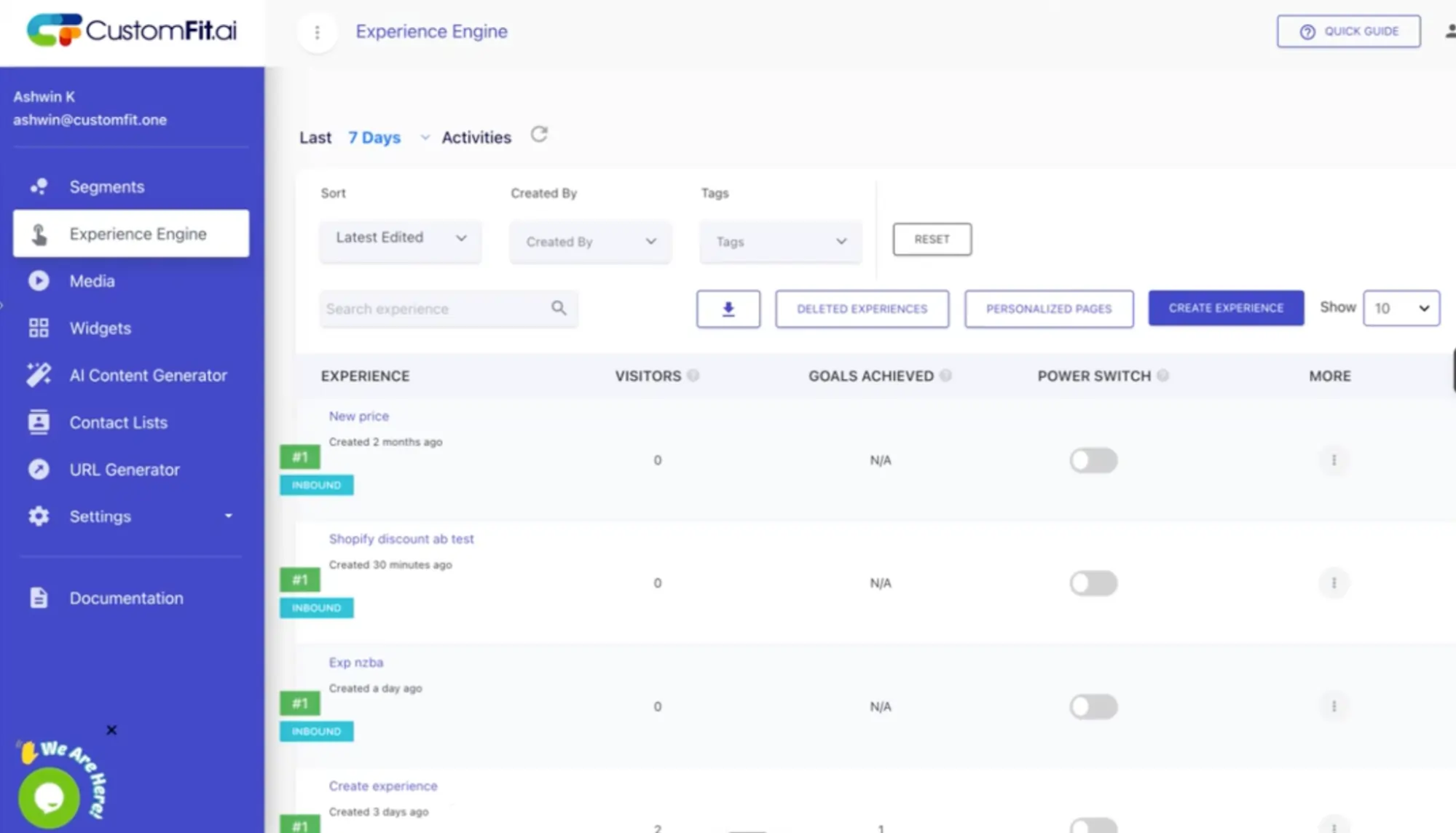
Founded in Bengaluru in 2017 by Ashwin Kumar, CustomFit.ai has carved a niche by focusing on the specific needs of D2C and e-commerce brands, particularly those on platforms like Shopify and WooCommerce. Its primary selling point is speed and the elimination of "flicker"—the brief flash of original content before a test variation loads. In a mobile-first market like India, where site speed is a critical ranking and conversion factor, CustomFit.ai’s lightweight script provides a competitive edge. Although it is built in India, it primarily bills in USD, targeting brands that operate on a global scale.
4. FreshMarketer (Freshworks): The Automation-First Approach
FreshMarketer represents the evolution of Zarget, a Chennai-based startup acquired by Freshworks in 2017. Now integrated into the Freshworks marketing automation suite, FreshMarketer allows teams to run A/B and split URL tests alongside email and SMS campaigns. It is particularly suited for smaller teams that want to experiment with user journeys without the complexity of a dedicated enterprise experimentation platform.
Global Platforms with a Strong Indian Presence
While domestic tools are thriving, several global platforms maintain a significant footprint in India, often serving the enterprise segment or specialized niches.

5. Convert Experiences
Based in the United States, Convert Experiences has gained traction among Indian CRO agencies and mid-market firms due to its "region-friendly" flat-rate pricing. While it bills in USD, it applies GST at checkout for Indian customers and filters out bot traffic to ensure brands only pay for qualified visitors. Its technical architecture is highly optimized for Single Page Applications (SPAs) and mobile performance, making it a favorite for teams that prioritize Core Web Vitals.
6. Adobe Target and Optimizely
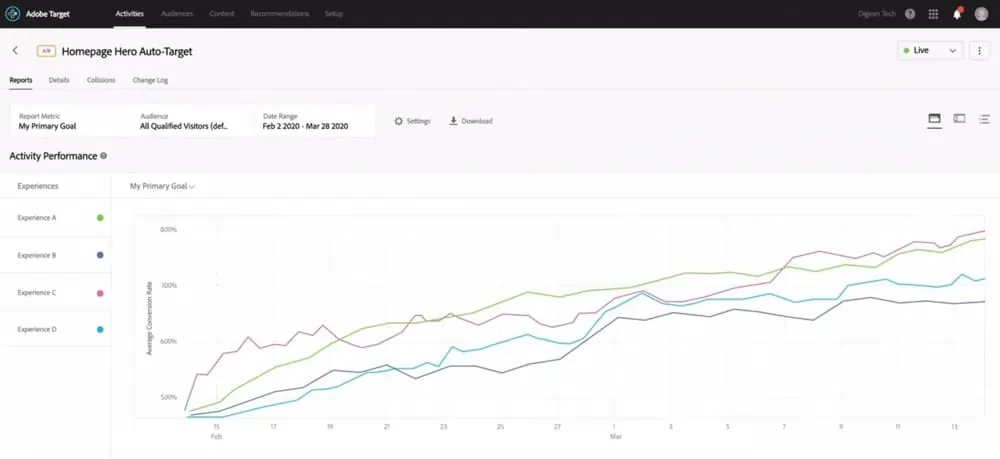
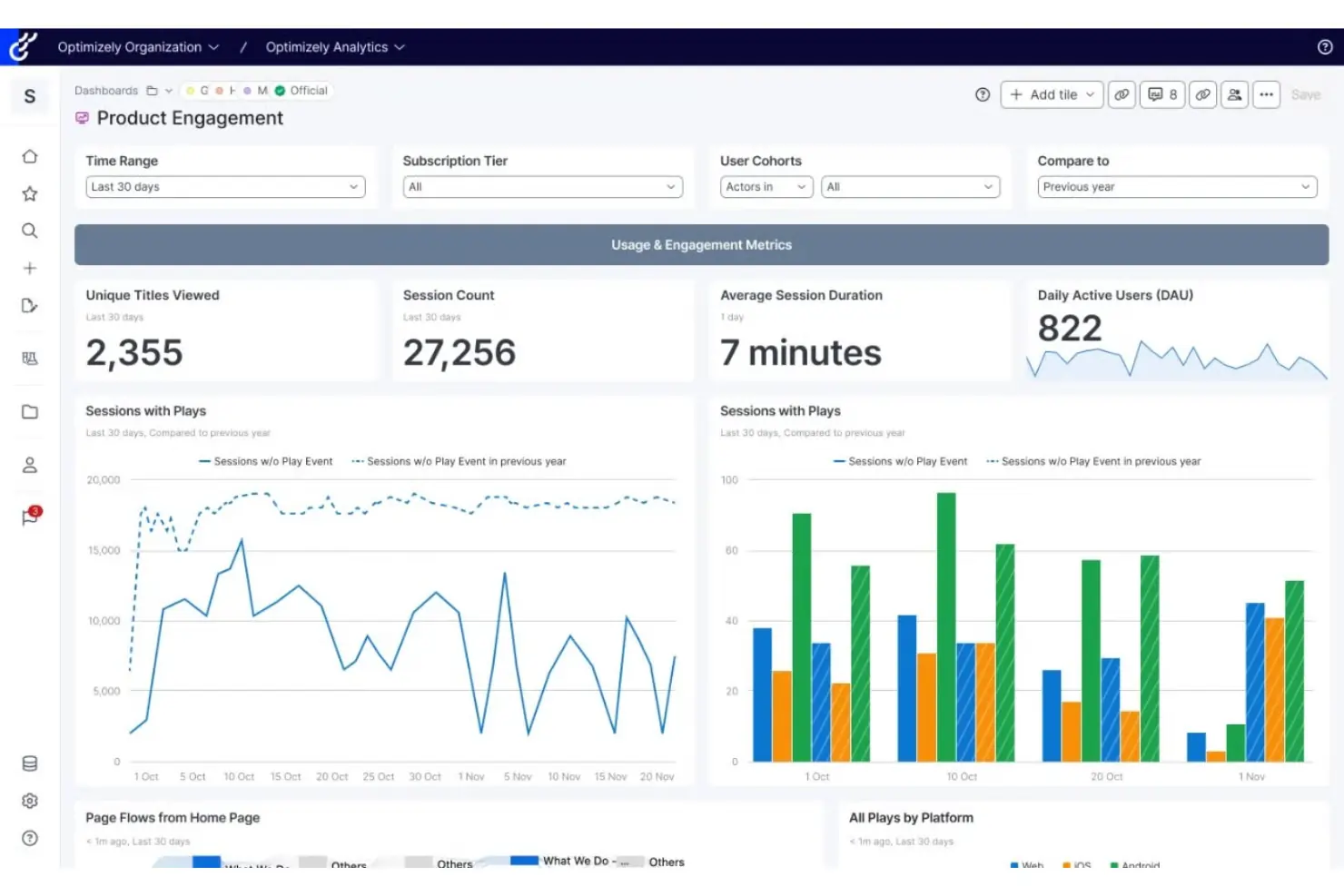
These platforms represent the high-end enterprise tier. Adobe Target is frequently used by large Indian conglomerates, such as Tata CLiQ, to run sophisticated geo-personalization and AI-driven experiments. Optimizely, one of the oldest names in the industry, serves large-scale enterprises that require rigorous, structured experimentation programs across both web and mobile applications. These tools are typically sold through enterprise sales channels and require a dedicated internal team to manage.

7. Amplitude
Amplitude differs from traditional page-testing tools by focusing on product analytics. In India, it is famously used by platforms like Disney+ Hotstar (now JioHotstar) to drive user retention and engagement through feature-level experiments. It is the tool of choice for product-led companies with strong internal engineering teams.
The Technical Challenge: Solving for the Indian Mobile User
A recurring theme in the Indian experimentation market is the "mobile-first" requirement. Data suggests that over 80% of Indian e-commerce traffic is mobile. This creates a specific technical hurdle: script weight. A heavy A/B testing script can increase page load times, leading to higher bounce rates.
Furthermore, the "anti-flicker" capability is paramount. When a testing tool takes too long to load a variation, the user sees the original page for a split second before it changes. This creates a jarring user experience that can skew test results. Indian-built tools like CustomFit.ai and global platforms like Convert have invested heavily in synchronous and asynchronous script loading techniques to mitigate these issues, ensuring that experiments do not compromise the site’s performance on 4G or patchy 5G networks.
The Economic Debate: INR vs. USD Billing
For Indian Chief Financial Officers (CFOs), the currency of billing is more than just a matter of convenience; it is a matter of budget predictability. The Indian e-commerce calendar is defined by massive, high-traffic events like Diwali sales and "Big Billion Days."

Under many USD-based pricing models, these traffic spikes can lead to massive overage charges. Furthermore, the volatility of the USD-to-INR exchange rate adds a layer of financial uncertainty. Tools like Zoho PageSense and Freshworks, which offer fixed INR pricing, provide a level of budgetary stability that is highly attractive to domestic firms. This "predictable tech spend" allows marketing teams to scale their efforts during peak seasons without fearing a punitive bill from their software provider.
Strategic Implementation: In-House vs. Agency
As the market matures, Indian brands are facing a critical decision: should they build an internal CRO team or partner with a specialized agency?
The internal route offers the benefit of institutional knowledge and long-term culture building. However, it requires significant investment in a dedicated strategist, a designer, and—most importantly—developer time. In many Indian startups, engineering resources are heavily prioritized toward the product roadmap, leaving little room for building A/B tests. This "dev bottleneck" is the most common reason for the failure of in-house programs.
Conversely, the agency model—represented by firms like OptiPhoenix—offers speed and a proven playbook. Agencies can often ship tests in a fraction of the time it takes an internal team and bring cross-industry insights to the table. For many mid-stage D2C brands, the agency model serves as a bridge until their testing volume justifies a full-time internal department.

The Future: From Tool Acquisition to Culture Building
The trajectory of the Indian market suggests a shift from simply "buying a tool" to "building a culture of experimentation." The recent rise of in-person experimentation roundtables in cities like Jaipur and Bengaluru indicates a growing community of practitioners who are moving beyond basic button-color tests toward complex, hypothesis-driven experimentation.
As India continues to solidify its position as the world’s second-largest home for A/B testing software, the focus is shifting toward integration and AI. The merger of VWO and AB Tasty, for instance, points toward a future where Indian engineering and global scale combine to offer predictive experimentation. For Indian founders, the message is clear: the tools and the talent are now locally available, and the ability to experiment is no longer a luxury—it is a prerequisite for survival in a hyper-competitive digital economy.







