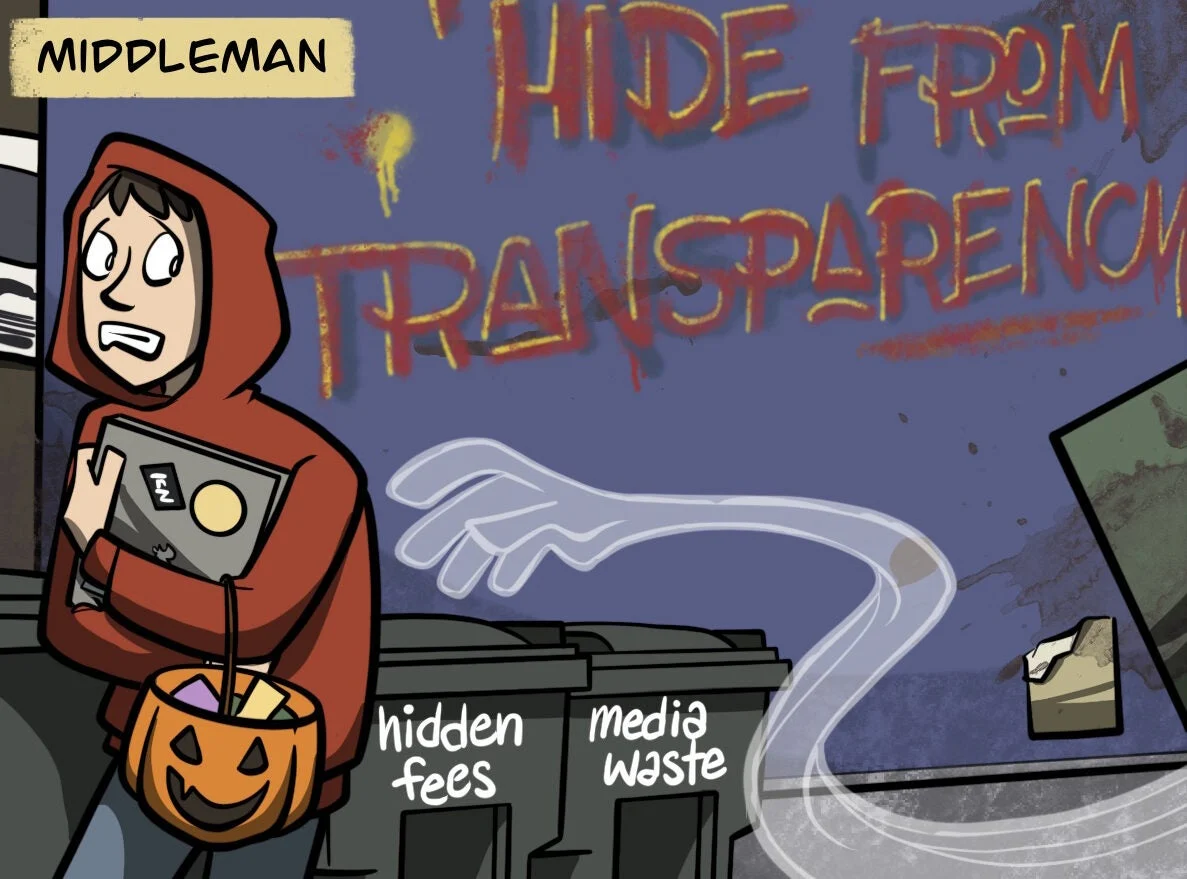
The digital advertising industry, a sector perpetually touting its commitment to transparency and the eradication of opaque practices, is facing a significant contradiction. Demand-Side Platforms (DSPs), the intermediaries that facilitate ad buying for advertisers, are increasingly scrutinizing potential clients, seeking to vet them before granting access to their sophisticated platforms. This desire stems from a fundamental business need: no reputable DSP wants to be associated with untrustworthy advertisers or facilitate ad placements that could damage their own reputation or that of their partners. However, this vetting process has revealed a new, unsettling trend: a reluctance to onboard buyers who express an interest in thoroughly examining the DSP’s supply chain. This creates a peculiar situation where the industry’s vocal advocacy for transparency clashes with a demonstrated hesitancy to allow in-depth scrutiny.
Check My Ads, a nonprofit organization that has spent years establishing itself as a programmatic industry watchdog, has found itself at the forefront of this emerging tension. According to Arielle Garcia, COO of Check My Ads, many ad tech vendors have been quick to highlight their collaborations with the organization as a testament to their dedication to transparency. Yet, when Check My Ads sought to gain actual access to a DSP’s platform – a move that would allow it to perform inventory analysis akin to any other buyer – the proposition proved to be "a bridge too far" for at least one prominent DSP.
The incident in question, involving an unnamed DSP, underscores this paradox. After extensive discussions and even the co-signing of a Master Service Agreement (MSA), the DSP abruptly halted the onboarding process for Check My Ads. AdExchanger has reviewed emails between the parties, provided by Check My Ads, which corroborate the existence of the MSA and the DSP’s initial eagerness to collaborate. This eagerness was so pronounced that the DSP reportedly waived its minimum spending requirement, a common prerequisite for new clients.
A Stalled Partnership: The Unfolding of the Check My Ads Case
The journey began with Check My Ads’ strategic decision to pursue a DSP seat, a move described by Garcia as its first formal attempt to secure such access. The primary objective was to bolster its research into programmatic buying. By gaining firsthand experience on a DSP platform, Check My Ads aimed to identify inefficiencies and publish best practices to help smaller advertisers avoid wasteful spending in their programmatic campaigns. This initiative aligns with the organization’s broader mission; for instance, they recently released a comprehensive report on Google’s Performance Max, leveraging their direct experience with the platform.
Furthermore, Check My Ads harbored ambitions to eventually offer "agency-lite" managed services to small advertisers on a nonprofit basis. To achieve this, establishing a DSP seat comparable to that of a traditional agency was deemed a logical and necessary step.
Beyond its research and service-oriented goals, Check My Ads also sought a DSP seat for more practical reasons: to promote its own work. The organization actively markets its services, newsletters, and branded merchandise. Iesha White, Director of Intelligence at Check My Ads, who brings a decade of experience as a media buyer, emphasized the importance of technical expertise and staying current with industry evolution. "In order for us to do that, we have to have skin in the game and spend money," White stated, highlighting the necessity of practical engagement for their research and promotional efforts.
White’s prior experience with the unnamed DSP facilitated the initial outreach. Earlier this year, she contacted an individual at the DSP, expressing interest in securing a platform seat. The response, as evidenced by the email exchanges, was overwhelmingly positive. In April, the DSP provided a platform demonstration, and shortly thereafter, White’s contact confirmed the DSP’s agreement to waive the minimum spending requirement. An MSA was subsequently sent to Check My Ads in mid-May, which was then signed by both entities.
A post-demonstration recap email provided by Check My Ads offered a candid insight into the DSP’s understanding of Check My Ads’ objectives. It outlined their goals as: "Moving beyond Google PMax / Demand Gen into ‘real’ programmatic with full transparency and control, no black box. Running small but meaningful test campaigns ($1k-$20k/month range) for your own research and analysis, and for select advertisers where you can learn and potentially generate revenue. Evolving over time into a selective mini-agency model. (woot woot! SO honored you’re thinking of us)." This communication clearly indicated a mutual understanding and initial enthusiasm for the partnership.
Shifting Sands: Concerns Over Supply Chain Scrutiny
The positive momentum, however, began to falter in late May. On May 20, White’s contact at the DSP informed her that the DSP seat should be live within the following week. However, this was accompanied by a request for more detailed information regarding planned test campaigns, the brands involved, expected budgets, and campaign objectives.
White responded on May 21, explaining that commitments from brand clients were still being finalized. She disclosed Check My Ads’ intention to run its own brand lift campaign and a Cost Per Acquisition (CPA) campaign targeting newsletter sign-ups, with an initial test budget of $1,000 – a figure well within the previously approved range.
A follow-up on June 3 by White for a status update yielded a less definitive response: "still confirming next steps." This was followed by a crucial question from the DSP contact: "In the meantime, I have one last question: If you identify any vendor performance concerns on [redacted], can we agree to loop us in first before escalating externally?"
This query immediately raised a red flag for Check My Ads, signaling a potential suspicion about their investigative intentions and a growing discomfort on the DSP’s part about granting a platform seat to a self-proclaimed watchdog. White responded by reiterating their standard practice: "We would absolutely inform [redacted] of any supply issue first, and we would reach out to any impacted SSP vendors, as is our standard practice."
Despite this assurance, the situation escalated. After a further follow-up from White on June 5, an unequivocal rejection was received from the DSP’s head of client partnerships. The email stated, "we have decided not to move forward with this partnership." The rationale provided was a failure to achieve comfort with "the scope of protections extended to our vendor and supply partners." The response elaborated, "We have an obligation to consider the downstream impact on them before bringing on new clients, particularly in cases where the nature of the research or activation may intersect with those partners in ways that fall outside what our MSA covers."
Garcia expressed her disappointment to the DSP’s representative, given that an MSA had already been cosigned. The head of client partnerships acknowledged her personal advocacy for the partnership and the inability to find a resolution, stating that the decision was made "above my level" and was driven by feedback from their supply and legal teams, first raised internally on May 20. The representative concluded by respecting Check My Ads’ mission and expressing hope for future collaboration under different circumstances.
The Vetting Landscape and Broader Implications
It is important to acknowledge that the vetting of potential buyers by DSPs is a standard industry practice. DSPs have legitimate reasons to conduct due diligence, including assessing a buyer’s financial stability. An ad tech consultant, who requested anonymity to speak freely, noted that DSPs may conduct their own audits and could become hesitant if they uncover any financial red flags in a prospective client’s filings. However, Garcia maintains that the DSP in question never initiated any such financial audit of Check My Ads.
Instead, the DSP’s stated concern revolved around the protection of its supply partners. The exact nature of this protection was left unspecified, leading Check My Ads to infer that the DSP was apprehensive about a watchdog investigating its supply chain. The consultant agreed that this is a "reasonable concern for any DSP," adding, "No DSP is going to knowingly onboard a party whose stated purpose is to turn that seat into an exposé."
This reluctance, however, stands in stark contrast to the industry’s persistent emphasis on transparency. The situation highlights a potential disconnect between the rhetoric and the reality of how programmatic platforms operate when faced with genuine scrutiny.
A Pattern of Hesitation: Beyond a Single Incident
The experience with the unnamed DSP is not an isolated incident. Check My Ads reports similar hesitations from other programmatic platforms. In one instance, another DSP, which also requested anonymity, reached out to White for a podcast collaboration. Following the recording, White inquired about gaining platform access for testing, only to be refused.
A comparable situation occurred with Thrad, a platform specializing in placing advertisements within generative AI responses. Emails shared with AdExchanger by Check My Ads indicate that Thrad initially approved their platform access. However, issues arose during the campaign setup. Thrad flagged concerns regarding Check My Ads’ selection of sensitive targeting topics (politics, abortion, mental health, and LGBTQ) where contextual LLM response ads could not be placed. Additionally, the Check My Ads merchandise storefront was not configured for European shipping, despite European audiences being included in the campaign.
Even after White addressed these issues by removing sensitive targeting categories and rectifying the storefront error, Thrad ultimately declined to launch the campaign. Thrad CEO Andrea Tortella later informed Garcia that Check My Ads did not align with their ideal customer profile. Thrad did not respond to multiple requests for comment from AdExchanger.
These repeated instances suggest a broader trend within the programmatic advertising ecosystem. The industry’s purported commitment to transparency appears to have its limits, particularly when it involves entities actively seeking to scrutinize the inner workings of ad platforms and their supply chains. Garcia and White believe they are encountering these boundaries.
Despite these challenges, Check My Ads remains committed to its mission. The organization continues to seek partnerships with DSPs that are genuinely willing to foster transparency and collaborate in making programmatic advertising more accessible and understandable for small businesses. "If there are any DSPs out there that are confident in their supply and want to help us make programmatic accessible to small businesses," Garcia urged, "reach out to us." The organization’s plea underscores a critical need for greater openness and a willingness from industry players to engage with scrutiny, not as a threat, but as an opportunity for collective improvement. The ongoing tension between the desire for transparency and the resistance to in-depth examination will likely remain a key narrative in the evolution of programmatic advertising.