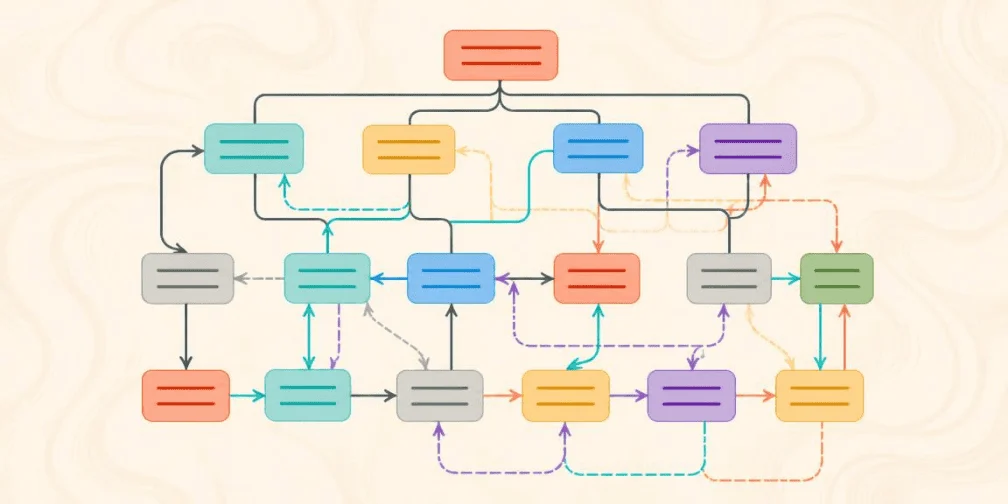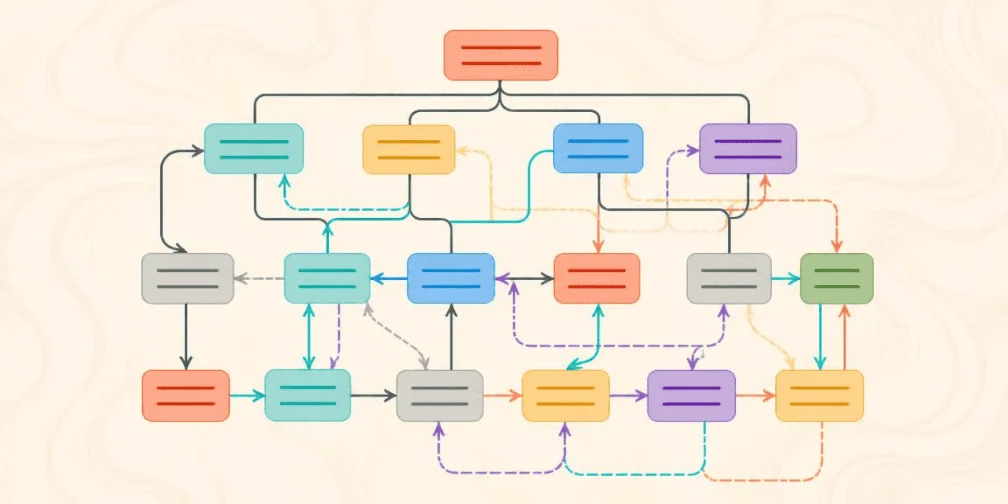
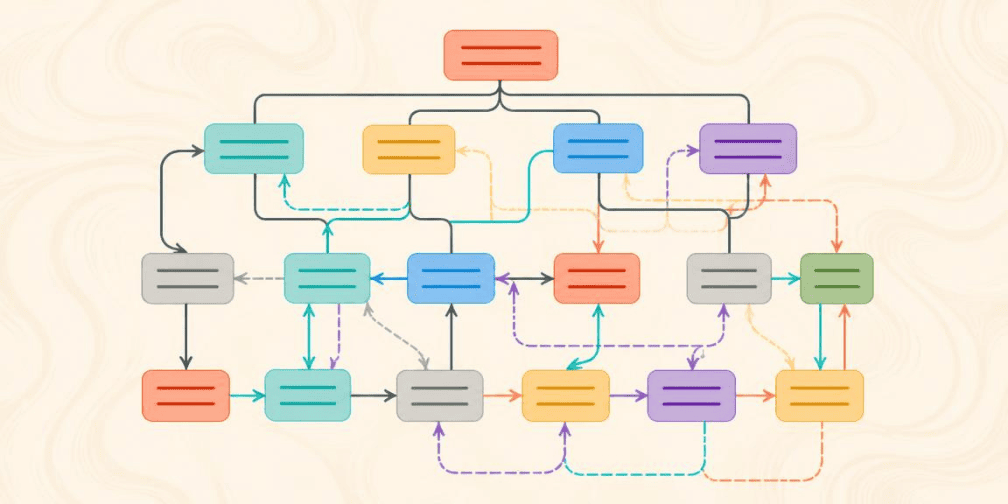
Organizational charts, the visual blueprints of how companies are structured, often come into existence not through deliberate design but through a series of incremental, often reactive, decisions. A new hire made under pressure to meet a deadline, a team absorbed into another when a manager departs unexpectedly, or a function that persists long after its original purpose has shifted – these are the common origins of structures that have drifted far from their intended design. This phenomenon, as highlighted by Lisa Heay, Vice President of Business Operations at Heinz Marketing, leads to significant inefficiencies, including duplicated efforts, delayed decision-making processes, and breakdowns in crucial inter-team handoffs. The core issue lies in the growing chasm between the organizational chart a company has and the one it needs to effectively execute its current work.
The roots of this structural drift are often found in anecdotal justifications rather than strategic planning. When questioned about the rationale behind their team’s setup, leaders frequently recount a "story" rather than a deliberate strategy. This narrative might involve a former employee whose responsibilities were distributed among an already overburdened team due to a lack of immediate capacity to redefine roles. Alternatively, a specific function might have been created around an individual’s unique skillset, with subsequent reporting lines solidifying around this initial, perhaps temporary, arrangement. Even defunct product lines can leave behind teams that continue to exist out of inertia, their original mandate long obsolete. Each of these individual decisions, while perhaps logical in its immediate context, was not part of a larger, intentional architectural plan. The cumulative effect is an organizational chart that no longer accurately reflects the dynamic flow of work within the company.
This issue can be understood as a higher-level manifestation of the "job description problem," which refers to how individual roles can evolve and drift from their initial written descriptions, particularly with the advent of AI tools that absorb certain tasks without formal updates to role definitions. At the organizational level, this same drift means that team boundaries no longer align with how work actually flows between individuals. Reporting lines can become misaligned with who truly needs to collaborate to achieve specific outcomes. This misalignment, when scaled across an entire organization, creates systemic friction.
The consequences of these inherited organizational structures are rarely announced with fanfare; instead, they manifest as subtle but persistent inefficiencies. One common symptom is duplicated work, where two separate teams inadvertently tackle the same tasks because the boundaries of their responsibilities have become blurred. Another is the paralysis of decision-making. A critical decision might languish for weeks because the individual with the authority to approve it is no longer the one with the contextual understanding of the work, as that knowledge has migrated to another department during an incomplete or poorly executed reorganization. Handoffs that were once seamless can become circuitous, routing through multiple individuals as responsibilities have been fragmented and absorbed over time.
Consider a hypothetical demand generation function that began with a single individual responsible for email campaigns and web form management. Over several years, as the team’s capacity and the company’s needs evolved, this individual might have absorbed responsibilities for lead scoring, event follow-up, and even sales enablement content creation due to a lack of bandwidth elsewhere. Crucially, these additions were likely made without a formal discussion about whether demand generation was the most logical home for these new functions. They were simply absorbed by a competent individual already within the department.
The situation is further complicated when this demand generation function reports through a director whose primary expertise lies in brand management, not lifecycle marketing. Furthermore, a significant portion of the team’s day-to-day stakeholders might reside within sales operations, a department with which they have no formal reporting relationship. This structural disconnect can lead to work being reprioritized based on the loudest advocate in different departments rather than on strategic pipeline generation. This chaotic prioritization is not the result of malicious intent but a consequence of growth outpacing the willingness of leadership to pause and redefine organizational boundaries.
The accelerating integration of Artificial Intelligence (AI) tools into business operations does not inherently fix these structural problems; in fact, it often exacerbates them by exposing the underlying inefficiencies more rapidly. AI can indeed accelerate initial drafts and preliminary analyses across various functions. However, if the subsequent approval chain remains routed through individuals whose roles within that chain no longer align with the actual workflow, the speed of AI-generated inputs simply leads to faster accumulation at the same broken bottlenecks. Enhanced speed does not rectify a fundamental structural misalignment.
A Strategic Rethink: Questioning the Status Quo
To address this pervasive issue, a shift in the fundamental questions asked by leadership is required. Instead of inquiring about who currently owns a particular task or function, a more impactful question is: "If we were building this function from scratch today, with our current understanding of the work required, would we structure it this way?" For many organizations, the honest answer to this question is a resounding "no." The gap between this candid response and the existing organizational chart represents the core problem that requires attention.
A more effective approach to structural analysis involves mapping outcomes to teams, rather than simply assigning people to boxes on an org chart. By clearly defining the results each team is accountable for, the ideal structure to achieve those outcomes becomes much more apparent. This process also highlights where the current organizational setup is failing to support those desired results.
It is crucial to emphasize that this examination of organizational structure is not about assigning blame. Structures evolve organically within fast-paced business environments, and the demands of day-to-day operations often leave little room for dedicated time to question long-standing arrangements, especially when they appear to be "mostly working." However, the cumulative effect of these inherited structures can eventually lead to significant operational friction. Addressing these issues does not necessarily necessitate a complete overhaul of the organizational chart. Often, the most impactful changes can be made by rectifying a single, problematic handoff between two teams or by addressing a function that has outgrown its initial placement. Regardless of the scale of the intervention, an honest assessment of how the current structure aligns with the actual work being performed is a vital precursor to any new initiatives, particularly those involving the implementation of AI technologies.
Identifying and Addressing Friction Points
To begin addressing these inherited structural inefficiencies, organizations are advised to focus on one specific function that currently exhibits the most entanglement. Within that function, three targeted questions can help surface the root causes of misalignment:
- What are the core outcomes this function is responsible for achieving? This question forces a focus on the desired end results, moving away from a description of tasks.
- Which individuals or teams outside of this function are critical partners for achieving those outcomes? This identifies key dependencies and potential bottlenecks in inter-departmental collaboration.
- If this function were to double its impact tomorrow, what organizational or process changes would be necessary to support that growth? This forward-looking question encourages proactive identification of structural limitations.
These questions consistently reveal a pattern: work that has outgrown boundaries established long ago, often by individuals addressing different problems. This insight serves as the genuine starting point for improvement. The goal is not necessarily a wholesale rebuilding of the entire organizational chart, but rather an honest evaluation of where the current structure has ceased to align with the demands of the work being executed.
The Broader Impact and Implications
The implications of an organizational structure that has drifted from its intended design are far-reaching. Beyond the direct costs of duplicated effort and stalled decisions, there is a significant impact on employee morale and productivity. When individuals are constantly navigating inefficient processes, unclear responsibilities, and broken handoffs, it leads to frustration and a sense of futility. This can hinder innovation, as teams may be hesitant to propose new ideas if they anticipate them getting bogged down in bureaucratic hurdles.
Furthermore, in today’s competitive landscape, agility and the ability to adapt quickly are paramount. An organization hobbled by outdated structures will struggle to respond effectively to market shifts, competitive threats, or emerging opportunities. The time and resources spent compensating for structural inefficiencies could otherwise be invested in strategic growth initiatives, product development, or customer acquisition.
The increasing reliance on data and analytics within modern businesses also highlights the need for clear organizational alignment. Without well-defined roles and reporting lines, it becomes challenging to accurately attribute success or failure to specific teams or initiatives, making data-driven decision-making more difficult.
Moving Forward: A Call for Intentional Design
The principle of "designing for outcomes" is paramount. When organizational structures are intentionally crafted around the desired results, they become powerful enablers of business success. This involves a continuous process of evaluation and adaptation, ensuring that the structure remains a fluid and responsive framework that supports, rather than hinders, the execution of strategic objectives.
For organizations finding their team structures more inherited than intentionally built, a critical examination is warranted. By asking the right questions and focusing on the flow of work and desired outcomes, leadership can begin to bridge the gap between the organizational chart they possess and the one they truly need to thrive.
For companies experiencing significant friction due to misaligned organizational structures, professional guidance can be invaluable. Emailing [email protected] can initiate a conversation to explore these challenges and identify potential pathways toward a more effective and intentionally designed organizational framework.