In an increasingly digitized world where social media platforms serve as critical arteries for communication and commerce, the strategic management of digital presence has become paramount for businesses of all sizes. Social media scheduling tools, software platforms designed to plan, automate, and optimize content dissemination, have emerged as vital assets, streamlining operations and significantly enhancing the effectiveness of marketing efforts. This detailed analysis delves into the functionality, benefits, and leading solutions within this dynamic segment, providing a comprehensive overview for organizations navigating the complexities of multi-platform engagement in 2025 and beyond.

The Evolving Landscape of Social Media Management
The journey of social media marketing has seen a dramatic transformation from its nascent stages of manual, ad-hoc posting to today’s sophisticated, data-driven strategies. Initially, businesses simply aimed to establish a presence, sharing updates manually as they occurred. However, as the number of platforms proliferated – from early giants like Facebook and Twitter to newer entrants like TikTok and Threads – and audience expectations for consistent, high-quality content grew, the challenges mounted. Marketers found themselves grappling with the sheer volume of content creation, the need to post at optimal times across different time zones, and the imperative to maintain a cohesive brand voice across disparate channels.

This burgeoning complexity necessitated a shift towards more structured and automated approaches. The early 2010s saw the rise of the first generation of social media management platforms, pioneering the concept of scheduling posts in advance. This marked a pivotal moment, freeing marketers from the real-time posting treadmill and enabling a more strategic, planned approach. Today, these tools are not merely schedulers; they are integrated command centers offering features from content curation and visual planning to advanced analytics and team collaboration, addressing the multifaceted demands of modern digital marketing.
Key Advantages Driving Adoption
The widespread adoption of social media scheduling tools is underpinned by a compelling array of benefits that directly impact operational efficiency and strategic outcomes. According to recent industry reports, marketers can save upwards of 6 hours per week by utilizing scheduling software, equating to significant cost savings and reallocation of resources towards more creative or strategic tasks.
- Enhanced Efficiency and Time Management: The most immediate and tangible benefit is the ability to batch-create and schedule content. Instead of daily interruptions for posting, marketers can dedicate specific blocks of time to plan and schedule weeks or even months of content. This systematic approach reduces last-minute scrambles and ensures a consistent flow of information.
- Consistency Across Platforms: Maintaining a uniform brand voice, messaging, and visual identity across multiple social networks is crucial for brand recognition and trust. Scheduling tools facilitate this by providing a centralized content calendar and publishing interface, ensuring that all posts align with predefined brand guidelines and strategy.
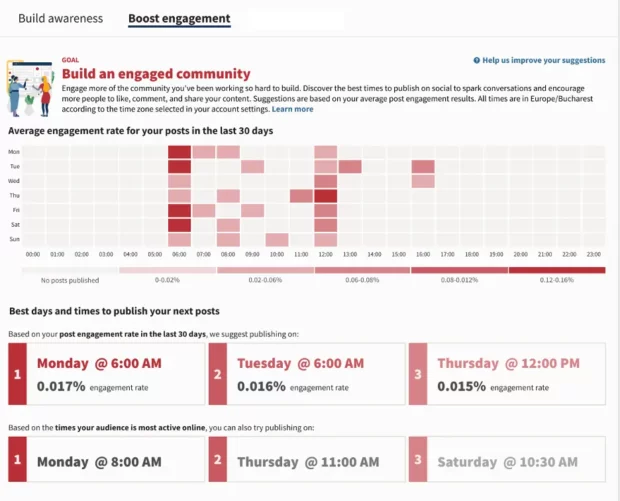
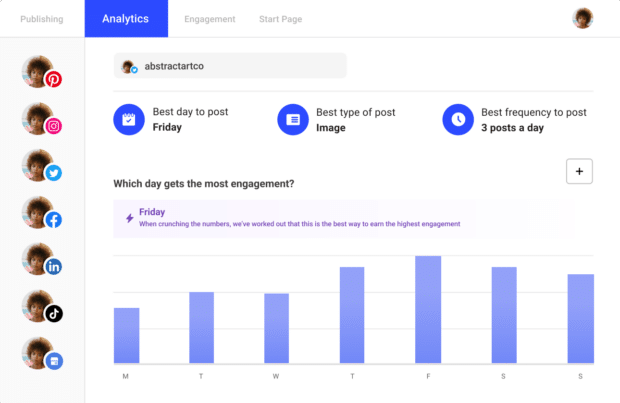
- Optimized Engagement: Algorithms on platforms prioritize content that resonates with users. Scheduling tools often integrate analytics to identify peak engagement times for specific audiences, allowing posts to go live when they are most likely to be seen and interacted with, thereby maximizing reach and impact.
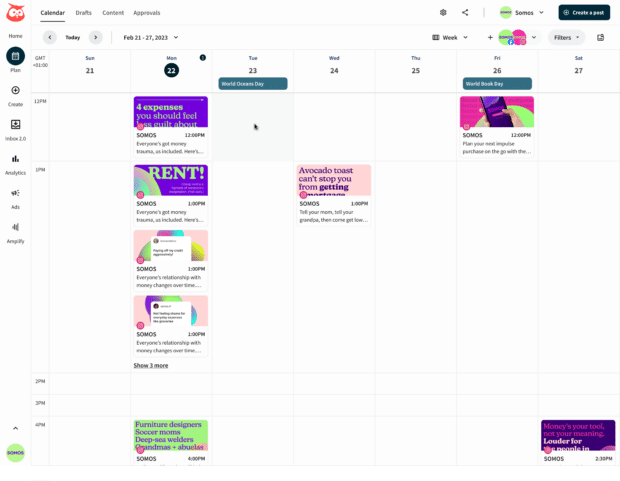
- Strategic Planning and Campaign Management: These platforms enable marketers to visualize their content calendar, align social posts with broader marketing campaigns, product launches, or seasonal promotions. This strategic overview ensures that social media efforts are integrated into the overall marketing ecosystem.
- Facilitating Team Collaboration and Workflow: For larger organizations, scheduling tools offer robust features like role-based permissions, approval workflows, and shared calendars. This ensures that content is reviewed and approved by relevant stakeholders before publication, maintaining quality control and brand safety, especially critical for enterprises managing multiple brands or regions.
- Data-Driven Insights and ROI Measurement: Beyond simple scheduling, advanced tools provide comprehensive analytics on post-performance, audience engagement, and campaign effectiveness. This data is invaluable for refining strategies, identifying successful content formats, and ultimately demonstrating the return on investment (ROI) of social media activities.
Leading Social Media Scheduling Solutions in 2025
The market for social media scheduling tools is robust and diverse, offering solutions tailored to various business needs, from individual creators to multinational corporations. Here’s an in-depth look at some of the prominent platforms, their unique strengths, and how they cater to specific segments of the digital marketing landscape.
1. Hootsuite: The Enterprise Powerhouse
- Best for: Large teams and enterprises requiring comprehensive social media management.
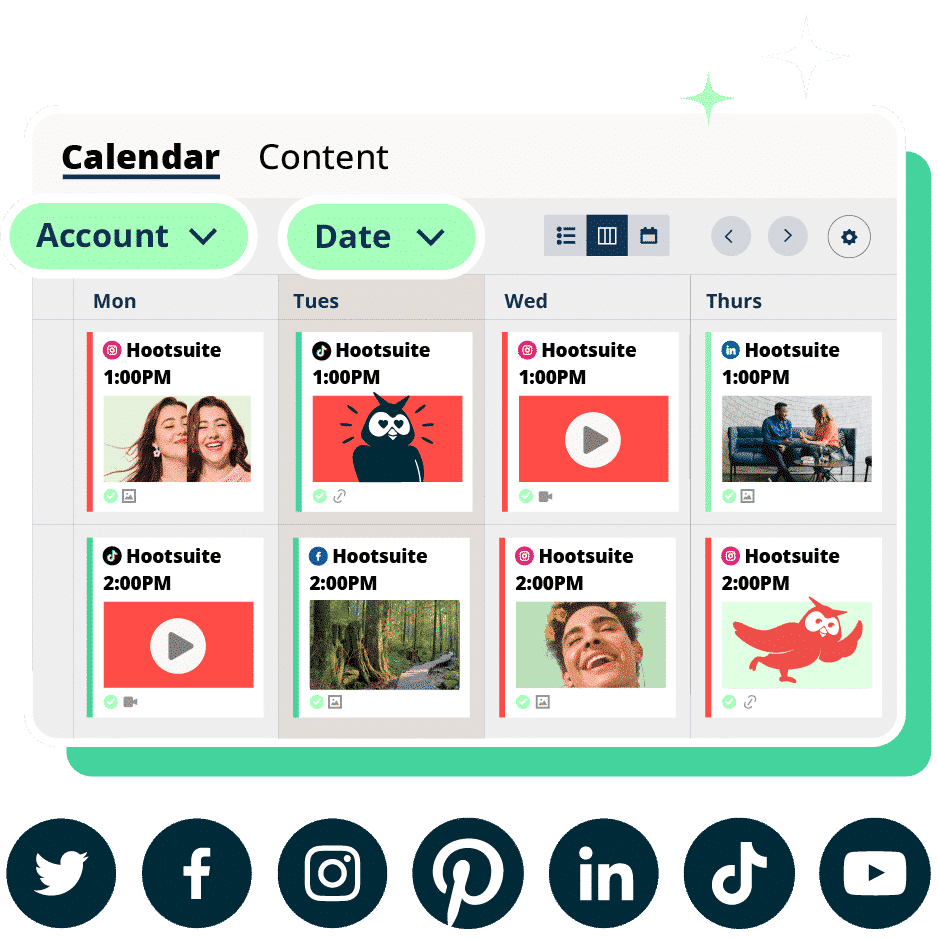
- Why it stands out: Hootsuite remains a benchmark for all-in-one social management. Its robust suite of features, including advanced analytics, team collaboration tools, and extensive platform support, makes it ideal for complex organizational structures. The platform’s ability to centralize multiple social accounts, brands, and regions within a single dashboard, coupled with its sophisticated approval workflows and granular permissions, is invaluable for maintaining brand governance and operational efficiency at scale.
- Key scheduling features: Bulk scheduling, best-time-to-post recommendations, drag-and-drop visual calendar, content curation, integration with content creation tools like Canva.
- Platforms supported: Facebook, Instagram (Posts, Stories, Reels), X (Twitter), TikTok, YouTube, Pinterest, LinkedIn, Threads.
- Pricing (as of 2026): Plans start at $99/month.
2. Later: Visual Content Planning for Creators
- Best for: Smaller creators and brands focused on visual content and aesthetic planning.
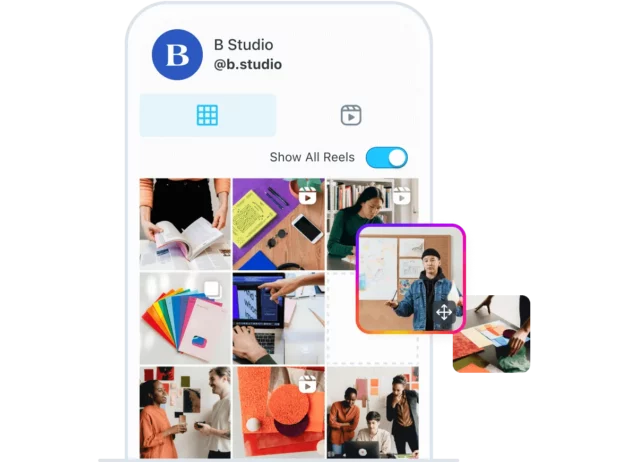
- Why it stands out: Later excels in visual content planning, particularly for Instagram. Its intuitive visual planner allows users to preview their Instagram grid before publishing, ensuring a cohesive aesthetic. This focus on visual appeal makes it a strong contender for fashion brands, influencers, and any entity where image curation is paramount.
- Key scheduling features: Visual Instagram feed planner, media library, drag-and-drop scheduling, Linkin.bio feature.
- Platforms supported: Facebook, Instagram, X, TikTok, YouTube, Pinterest, LinkedIn.
- Pricing (as of 2026): Paid plans start at $25/month.
3. Canva: Design and Publish in One Flow
- Best for: Design-led content teams seeking integrated design and scheduling.
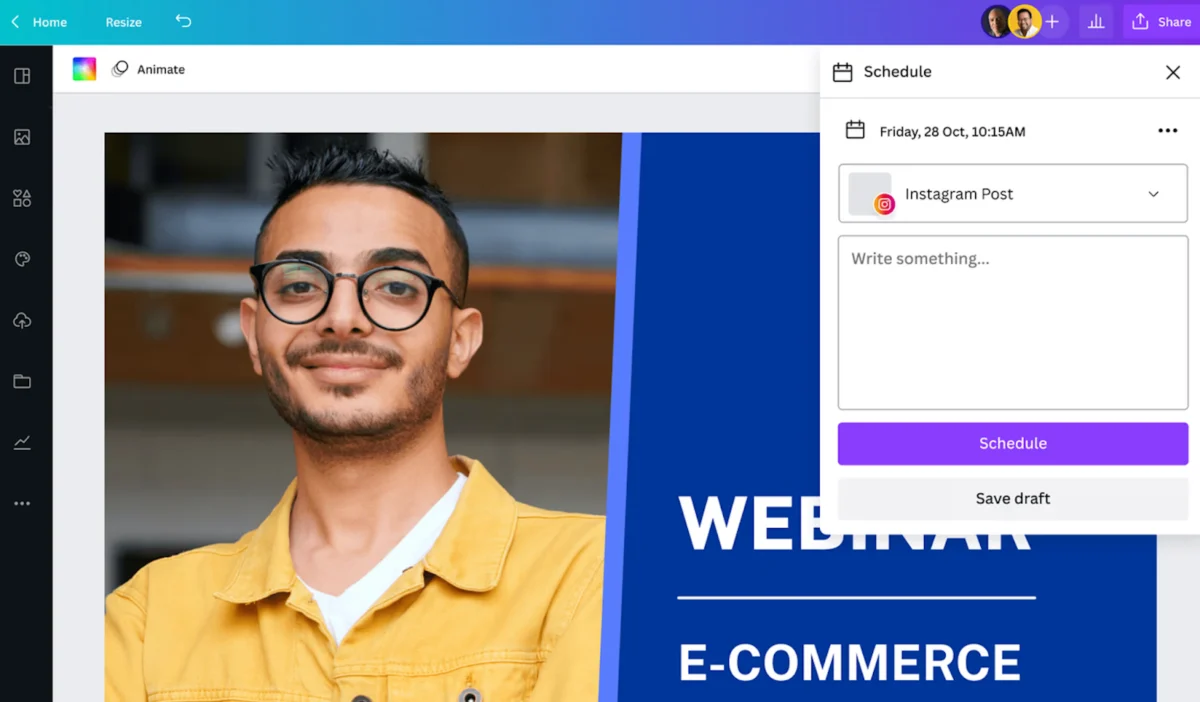
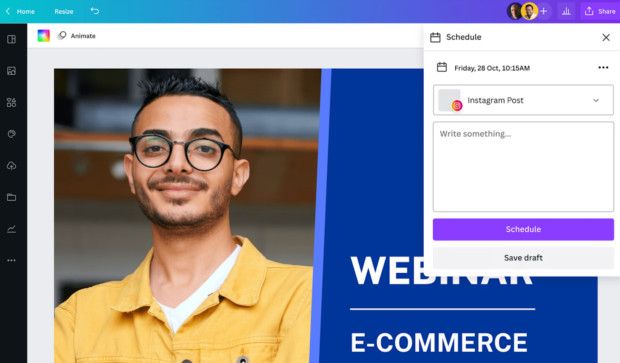
- Why it stands out: Canva has revolutionized graphic design for non-designers, and its integrated social media scheduler offers unparalleled convenience. For teams that primarily create their social assets within Canva, the ability to design and then directly schedule posts without leaving the platform is a significant time-saver, streamlining the content creation-to-publication workflow.
- Key scheduling features: Direct publishing from design canvas, content calendar, pre-designed templates.
- Platforms supported: Facebook, Instagram, X, LinkedIn.
- Pricing (as of 2026): Canva Pro costs $120/year per user.
4. HubSpot: CRM-Integrated Marketing
- Best for: Marketing teams leveraging a CRM-based workflow.
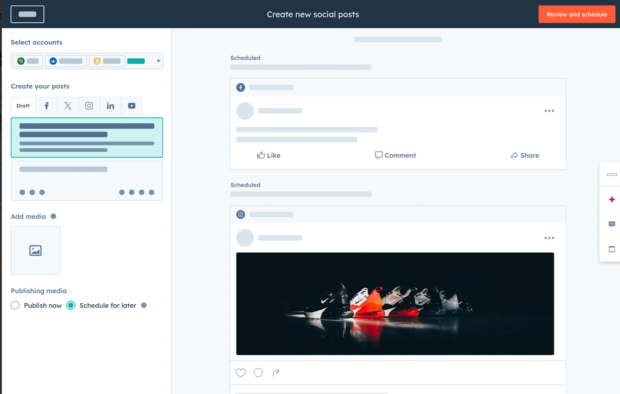
- Why it stands out: HubSpot’s social media scheduler is a component of its larger Marketing Hub, offering a unified view of marketing efforts. Its integration with CRM data allows for social media activities to be tied directly to lead generation, customer journeys, and broader campaigns, providing a holistic perspective on marketing performance.
- Key scheduling features: Social post scheduling, campaign integration, audience segmentation through CRM data, reporting.
- Platforms supported: Instagram, Facebook, X, LinkedIn.
- Pricing (as of 2026): Marketing Hub Professional plan (3 seats) at $890/month.
5. Buffer: Simplicity and Core Scheduling
- Best for: Small businesses and individuals prioritizing straightforward scheduling.
- Why it stands out: Buffer is lauded for its clean interface and ease of use. It strips away complex features to focus on core scheduling and publishing functionality, making it accessible for users who need to manage multiple accounts without a steep learning curve. Its direct approach is perfect for those seeking efficiency without overwhelming options.
- Key scheduling features: Intuitive scheduling dashboard, optimal posting times, content queues, basic analytics.
- Platforms supported: Facebook, Instagram, X, TikTok, YouTube, LinkedIn, Mastodon.
- Pricing (as of 2026): Free plan available, paid plans start at $5/month.
6. Meta Business Suite: Native Scheduling for Meta Platforms
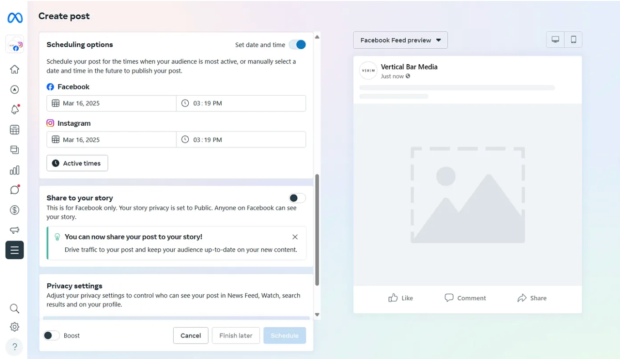
- Best for: Businesses exclusively focused on Facebook and Instagram and seeking a free, native solution.
- Why it stands out: As a free, proprietary tool from Meta, it offers seamless integration with Facebook and Instagram. While it lacks the advanced features and cross-platform capabilities of third-party tools, it’s an excellent starting point for small businesses or individuals who only need to manage these two platforms without additional investment.
- Platforms supported: Facebook, Instagram.
- Pricing (as of 2026): Free.
7. Tailwind: Pinterest and Visual Discovery Optimization
- Best for: Businesses heavily reliant on Pinterest and Instagram for visual discovery.
- Why it stands out: Tailwind specializes in optimizing content for Pinterest’s unique ecosystem, offering features like interval pinning and community engagement tools (Tailwind Communities). Its personalized posting schedules ensure content is delivered when it has the highest chance of being discovered and repinned, crucial for driving traffic from visual search.
- Key scheduling features: SmartSchedule, interval pinning, Pinterest analytics, Instagram scheduling with SmartBio.
- Platforms supported: Pinterest, Instagram, Facebook.
- Pricing (as of 2026): Advanced plan (2 accounts) at $29.99/month.
8. RSS Autopublisher: Content Synchronization
- Best for: Automatically sharing RSS-based content across social channels.
- Why it stands out: This tool is a set-it-and-forget-it solution for content creators with blogs or podcasts. By automatically pulling new content from an RSS feed and publishing it to social media, it ensures that fresh content is always promoted without manual intervention, saving considerable time and ensuring timely distribution.
- Key scheduling features: Automated RSS feed integration, customizable post templates.
- Platforms supported: Facebook, LinkedIn, X.
- Pricing (as of 2026): $6.99/month (free for Hootsuite Enterprise users).
9. Airtable: Workflow Automation for Content
- Best for: Automation-driven teams seeking flexible content planning and publishing workflows.
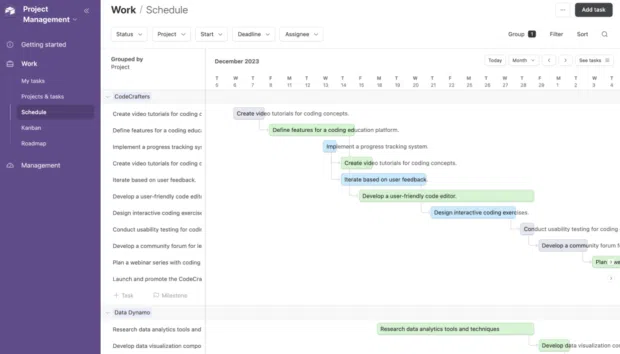
- Why it stands out: Airtable, while not a traditional social scheduler, serves as a powerful backend for content operations. It allows teams to build custom workflows for content creation, approvals, and scheduling, which can then trigger automated posts through integrations. Its strength lies in its adaptability and ability to integrate social publishing into complex project management systems.
- Key scheduling features: Customizable content databases, automation rules, integrations for publishing.
- Platforms supported: Facebook, X (more via integrations).
- Pricing (as of 2026): Team plan starts at $20/month per seat.
10. KAWO: Gateway to Chinese Social Media
- Best for: Brands targeting Chinese social media platforms.
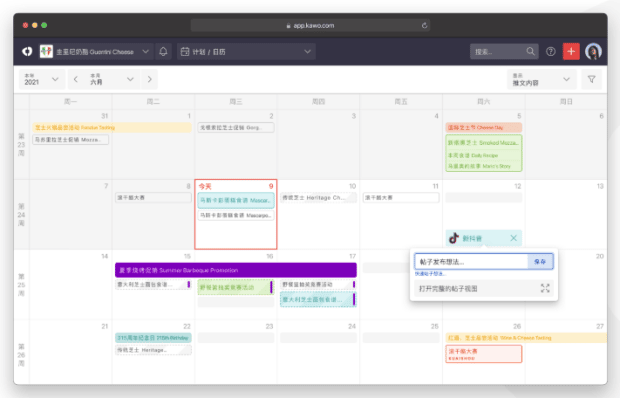
- Why it stands out: KAWO is indispensable for international brands aiming to penetrate the unique and complex Chinese social media landscape. It provides specialized scheduling and management tools for platforms like WeChat, Weibo, Kuaishou, and Douyin (the Chinese version of TikTok), which are largely inaccessible to Western tools. Its local expertise and platform-specific optimizations are critical for success in this market.
- Key scheduling features: Content calendar for Chinese platforms, local posting recommendations, analytics.
- Platforms supported: WeChat, Weibo, Kuaishou, Douyin.
- Pricing (as of 2026): Plans start at $4,000/year.
11. MeetEdgar: Evergreen Content Recycling
- Best for: Freelancers, entrepreneurs, and small businesses focused on maximizing evergreen content.
- Why it stands out: MeetEdgar’s unique selling proposition is its ability to automatically recycle evergreen content. Instead of posts disappearing after one publication, Edgar organizes content into categories and continuously reshares it, ensuring that valuable content gets maximum exposure over time and feeds never go dormant.
- Key scheduling features: Evergreen content library, automated recycling, category-based scheduling.
- Platforms supported: Instagram, Facebook, X, LinkedIn, Pinterest, TikTok, Threads.
- Pricing (as of 2026): Edgar plan costs $299/year (billed annually).
12. Post Studio – Social Auto Post: Shopify Integration
- Best for: Shopify e-commerce stores seeking automated product promotion.
- Why it stands out: Tailored specifically for Shopify merchants, this app automates the promotion of products directly from the store’s inventory. It ensures constant visibility for products on social media without requiring manual selection or scheduling, making it an efficient tool for driving traffic and sales for e-commerce businesses.
- Key scheduling features: Automatic product posting, daily/weekly scheduling, customizable templates.
- Platforms supported: Pinterest, Instagram, Facebook, X.
- Pricing (as of 2026): Pro plan at $7.99/month.
13. Mailchimp: Email and Social Synergy

- Best for: Businesses integrating social media posts with email marketing campaigns.
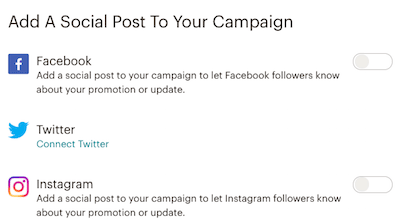
- Why it stands out: For organizations already using Mailchimp for email marketing, its integrated social media scheduling offers a convenient way to synchronize campaigns. The ability to create and schedule social posts directly alongside email blasts ensures a cohesive message across different customer touchpoints, simplifying cross-channel campaign management.
- Key scheduling features: Campaign synchronization, unified reporting, social post creation within Mailchimp interface.
- Platforms supported: Instagram, Facebook, X.
- Pricing (as of 2026): Standard plan costs $20 USD/month.
The Mechanics: How Scheduling Tools Connect and Publish
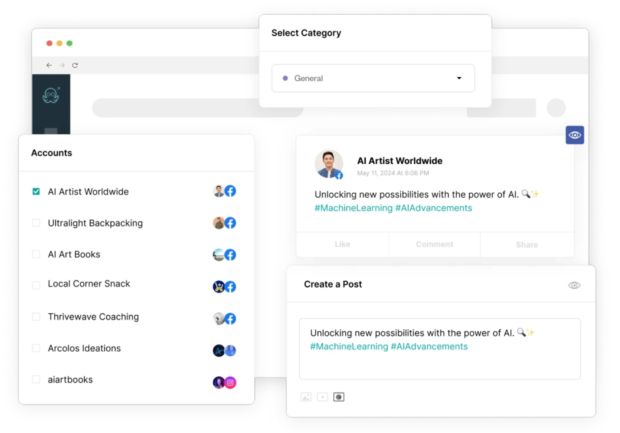
Social media scheduling tools operate through the respective platforms’ Application Programming Interfaces (APIs). An API acts as a secure digital bridge, allowing the scheduling software to communicate with a social network, transmit content, and publish it on behalf of the user. This “secure handshake” ensures that posts appear authentically and comply with platform guidelines.
The general workflow involves users connecting their social profiles to a central dashboard provided by the scheduling tool. From this unified interface, content can be created, edited, and scheduled. The tool then automatically publishes the content at the designated time, adhering to platform-specific requirements. For instance, while most platforms allow direct auto-publishing for standard posts, certain content types like Instagram Stories or YouTube videos may require specific handling (e.g., Stories might prompt a manual push from the mobile app for full creative features, and YouTube videos are often uploaded as “private” by the tool and then set to “public” at the scheduled time).
A significant efficiency gain comes from bulk scheduling, where marketers can upload a spreadsheet of pre-written posts, images, and scheduled times. The tool then ingests this data and queues all posts for automatic publication, allowing for large-scale content planning in a single operation. This capability is particularly beneficial for managing seasonal campaigns, recurring content, or distributing content across numerous regional accounts.
Measuring the Return on Investment
For businesses, the investment in social media scheduling tools is justified by measurable returns. ROI is typically assessed by comparing the cost of the tool against the tangible gains in efficiency, engagement, and direct business outcomes. Key metrics include:
- Time Saved: Quantifying the hours saved through automated scheduling and content batching, translating this into reduced labor costs or increased capacity for other strategic tasks.
- Engagement and Reach: Tracking improvements in likes, shares, comments, and overall content visibility directly attributable to consistent posting and optimal timing facilitated by the tool.
- Website Traffic and Lead Generation: Monitoring click-through rates from social posts to websites, landing pages, or e-commerce stores, and then tracking conversions (e.g., sign-ups, downloads, purchases).
- Brand Sentiment and Awareness: While harder to quantify directly, consistent, high-quality social presence contributes to positive brand perception and increased awareness, which can be tracked through social listening features often integrated into comprehensive tools.
- Compliance and Governance: For regulated industries, the audit trails and approval workflows offered by enterprise-level tools provide a measurable benefit in risk mitigation and regulatory adherence.
By meticulously tracking these metrics through the integrated analytics dashboards of scheduling tools, businesses can clearly articulate the value derived from their social media management strategy.
The Future of Social Media Scheduling
Looking ahead, the evolution of social media scheduling tools is expected to be influenced by several key trends. Artificial intelligence and machine learning will likely play an even more prominent role, offering predictive analytics for content performance, AI-driven content creation assistance, and dynamic optimization of posting schedules based on real-time audience behavior. Deeper integrations with CRM, e-commerce platforms, and customer service systems will further embed social media into the broader business ecosystem. As social platforms continue to innovate with new content formats like live streaming and interactive experiences, scheduling tools will adapt to facilitate the planning and promotion of these dynamic content types.
Ultimately, social media scheduling tools have transitioned from mere conveniences to indispensable strategic assets. They empower businesses to navigate the complex social media landscape with efficiency, precision, and measurable impact, ensuring that their digital voice is heard consistently and effectively in an ever-crowded online world.

Use Hootsuite to manage your digital marketing in one place. Schedule all of your social media posts, engage with your followers, and track the success of your social marketing efforts.